A complete, practical diagnostic guide to yellowing houseplant leaves, including watering, light stress, nutrients, pests, temperature swings, and what to do...
Yellow leaves on a pothos can feel like a personal betrayal because this plant has a reputation for being “unkillable.” I get it. My first pothos was the plant that made me think I had finally figured houseplants out… until it started yellowing and I panic-watered it even more. Spoiler: that did not help.
The good news is that yellowing is your pothos being very honest with you. With a few simple checks, you can usually pinpoint the cause in under 10 minutes and make a fix that actually sticks.
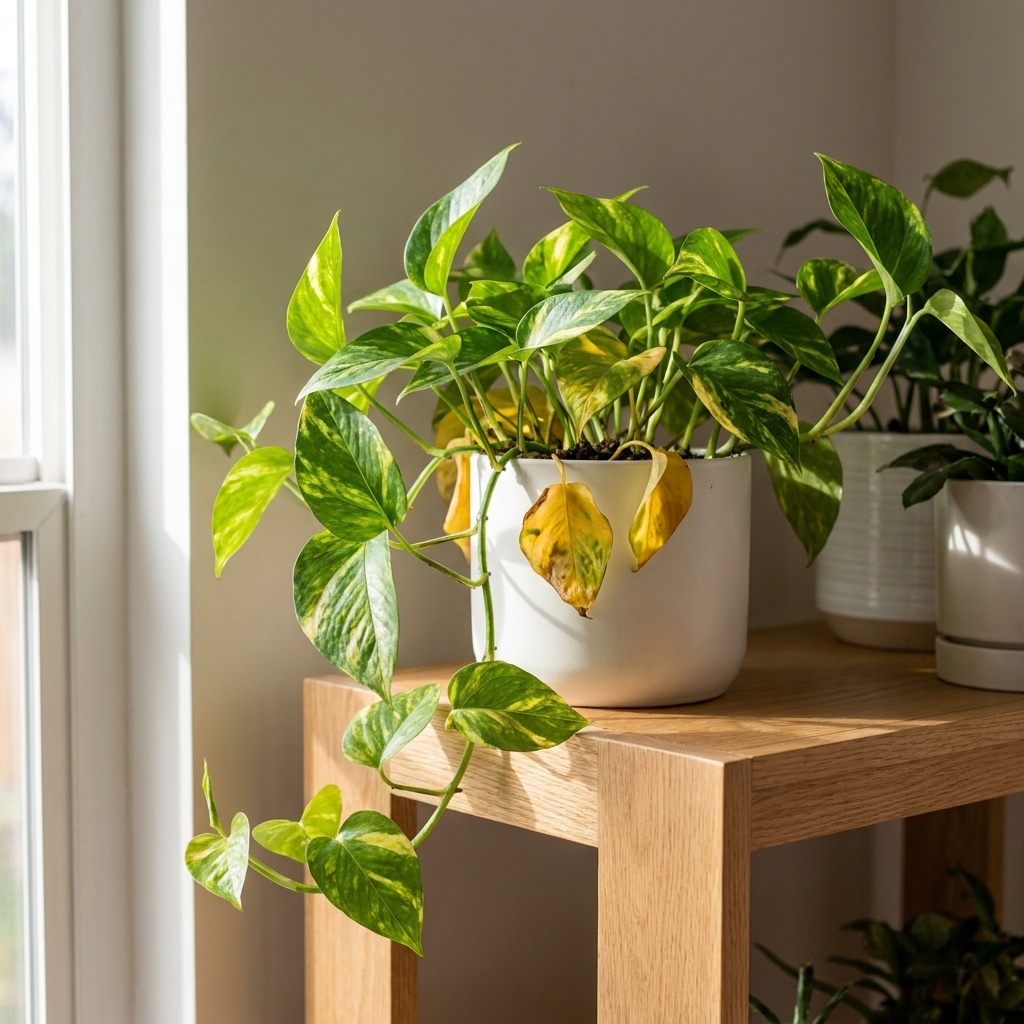
First, don’t panic: which yellow leaves are we talking about?
Before you change anything, take a quick snapshot (literally, with your phone) and answer these two questions:
- Are the yellow leaves mostly older leaves near the soil line? That often points to watering, low light, or normal aging.
- Are the yellow leaves scattered all over the vine, including newer growth? That can point to root stress, pests, temperature swings, or nutrient issues.
One or two older leaves turning yellow now and then is normal. A steady stream of yellow leaves is a message.
Quick diagnosis: the 60-second pothos check
If you only do one thing, do this. It separates “simple fix” from “needs intervention.”
- Finger test: Stick a finger about 2 inches into the soil. If it feels wet, cool, and muddy or compacted, pause watering.
- Lift test: Pick up the pot. If it feels heavy days after watering, it is likely staying too wet.
- Drainage check: Confirm there is a drainage hole and the pot is not sitting in runoff water.
- Leaf feel: Limp or droopy plus yellow can point to root or watering stress (too wet or too dry). Crispy yellow often points to drought or sun stress.
- Fast pest scan: Look under leaves and at nodes for tiny dots, webbing, sticky residue, or cottony clumps.
Cause #1: Overwatering (the most common culprit)
If your pothos is yellowing and the soil stays damp, overwatering is the top suspect. Pothos hate sitting in soggy soil because their roots need oxygen. When the soil stays wet, roots can start to suffocate and rot, and yellow leaves follow.
Signs it’s overwatering
- Multiple yellow leaves appearing in a short time
- Soil smells musty or swampy
- Leaves feel soft, limp, or a little “waterlogged”
- Fungus gnats hovering around the pot
Quick fix
- Pause watering until the mix actually dries a bit, then reset your routine. For most homes, that means watering again when the top 2 to 4 inches are dry (or roughly the top 25 to 50 percent of the pot). Smaller pots dry faster than big pots, so go by feel, not the calendar.
- Dump the saucer and never let the pot sit in water.
- Increase airflow around the plant and move it to brighter indirect light to help the mix dry more evenly.
If you suspect root rot
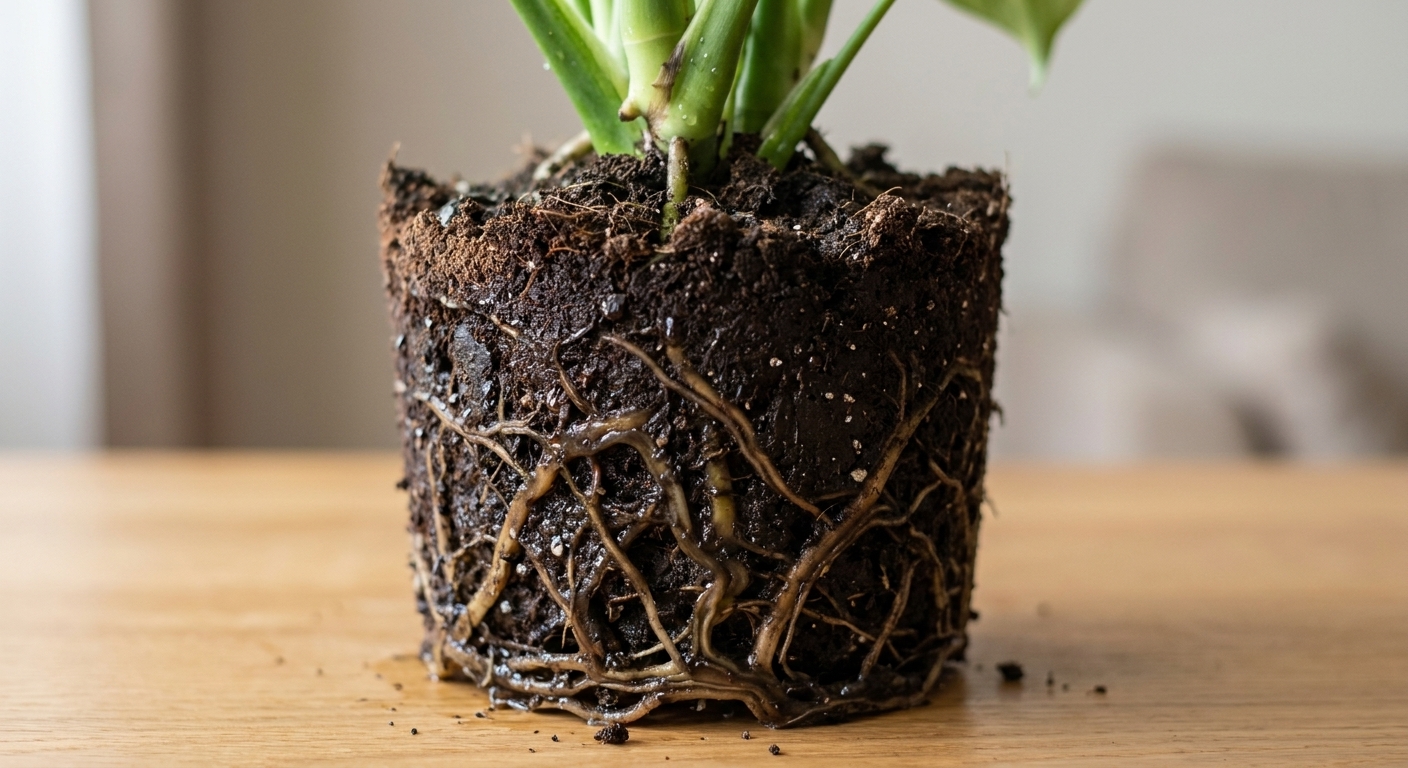
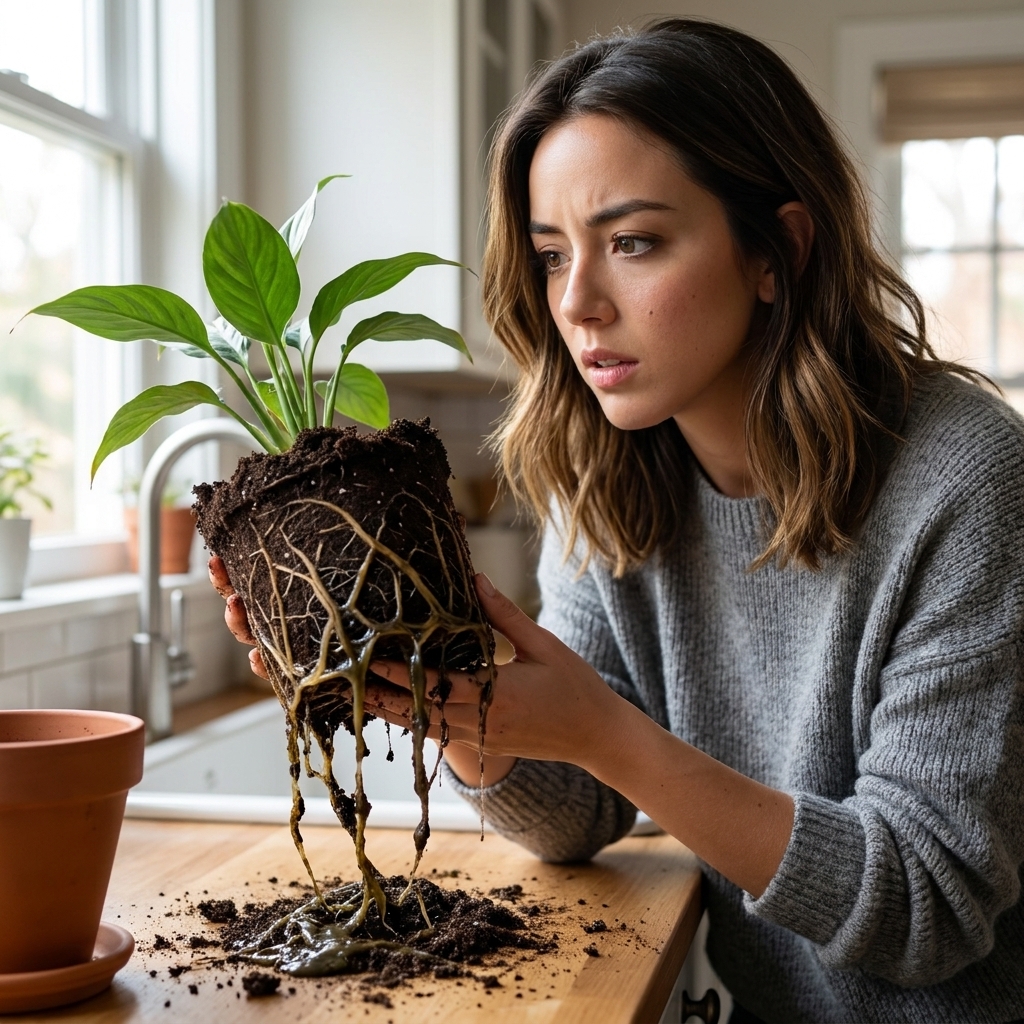
If yellowing keeps spreading and the soil stays wet for a week or more, it is time to check the roots.
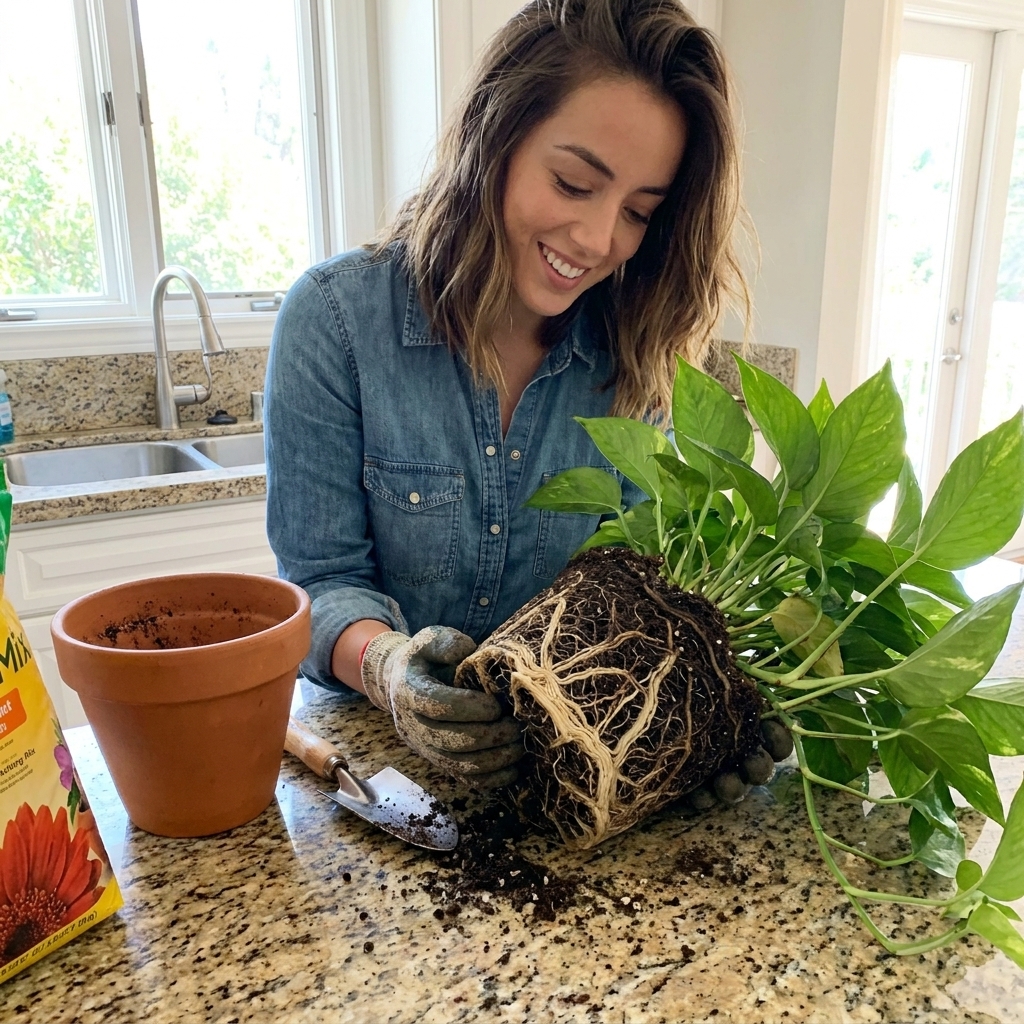
- Slide the plant out of the pot.
- Healthy roots are firm and pale. Rotten roots are brown or black and feel mushy.
- Trim rotten roots with clean scissors.
- Repot into fresh, airy mix (more on that below).
Cause #2: Underwatering (yes, pothos can yellow from drought)
Underwatering usually shows up after the plant has been dry for too long, or when a pot dries so hard that water runs down the sides without soaking in (hydrophobic soil). Early on, severe thirst can also look like droopy yellowing before the leaf edges crisp.
Signs it’s underwatering
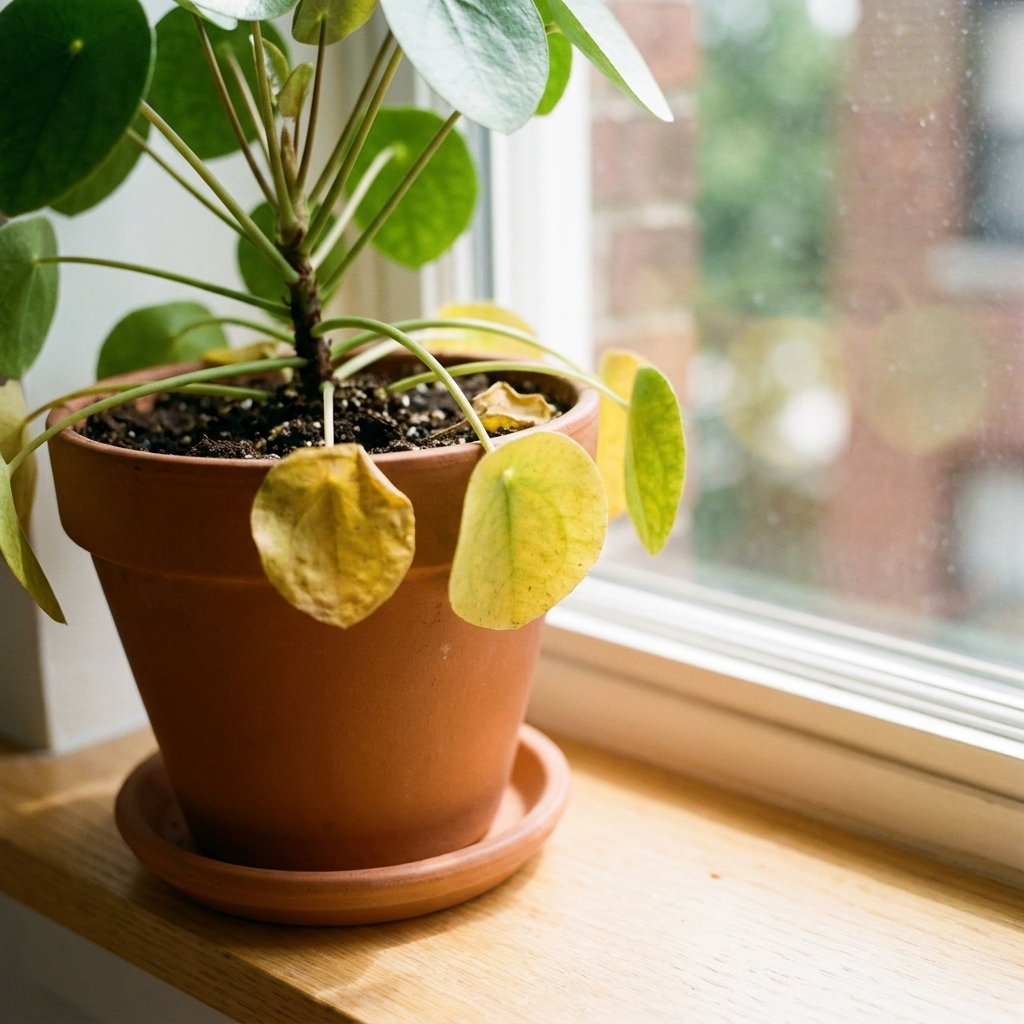
- Yellow leaves that turn crispy or papery at the edges
- Soil pulling away from the pot walls
- Plant looks droopy, then perks up quickly after watering
Quick fix
- Bottom water once: set the pot in a bowl of water for 20 to 30 minutes, then let it drain thoroughly.
- Reset your rhythm: water when the top 2 to 3 inches are dry, not on a strict calendar.
Cause #3: Low light (common with Marble Queen and Neon)
Pothos tolerate low light, but “tolerate” is not the same as “thrive.” In dim rooms, pothos use water more slowly, which can lead to chronically wet soil and yellowing. Variegated types often appreciate brighter light to maintain their color and energy.
What low light yellowing looks like
- Longer gaps between leaves on the vine (leggy growth)
- Small new leaves
- Yellowing that slows down after the plant is moved brighter
Quick fix
- Move the plant closer to a bright window with indirect light.
- If you only have low light, consider a simple grow light for 8 to 12 hours a day.
Variety note: Marble Queen often needs brighter indirect light than Golden to stay happy. Neon typically keeps its best color in brighter spots too, but every home is different, so treat this as a nudge, not a rule.
Cause #4: Too much direct sun
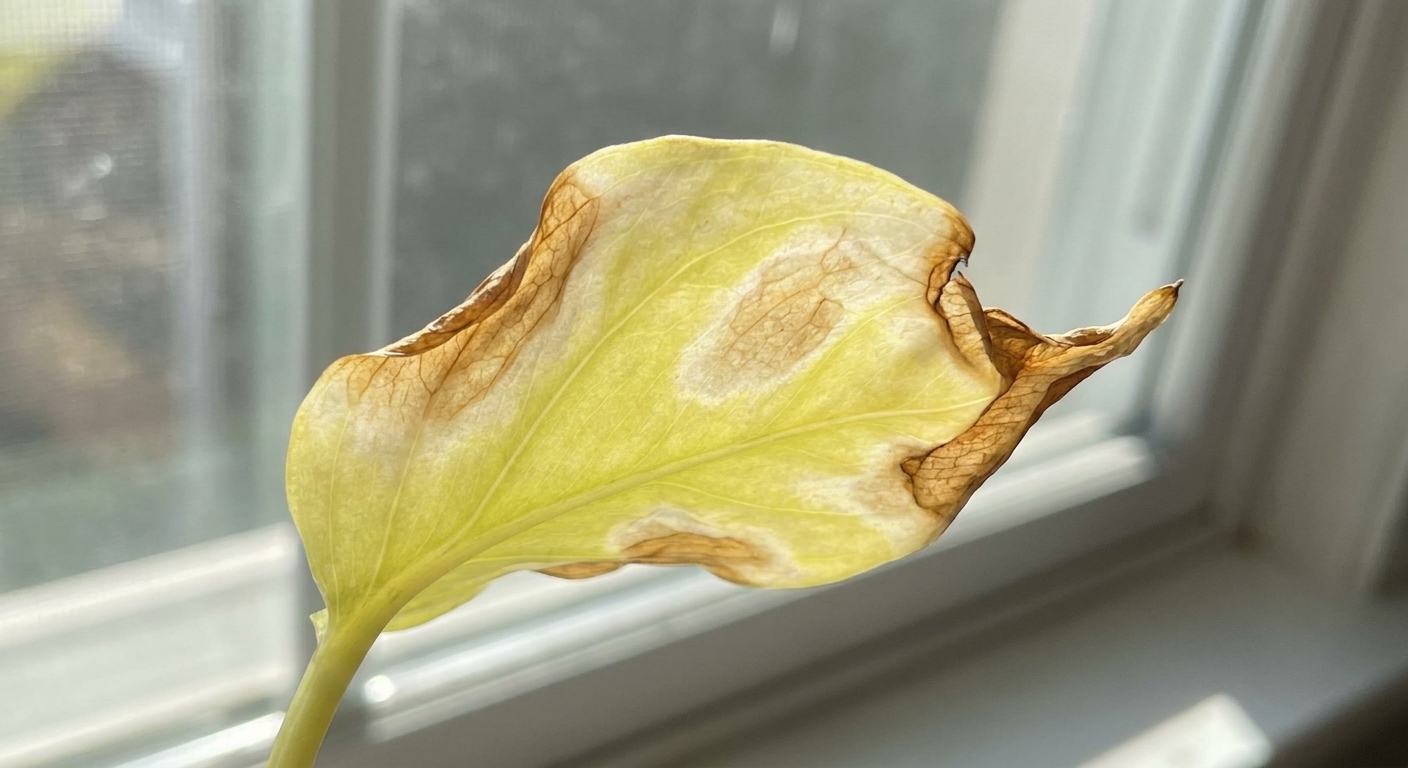
Pothos love bright light, but harsh direct sun can bleach leaves yellow or create pale patches that later turn brown and crispy.
Signs it’s sun stress
- Yellowing is strongest on the side facing the window
- Bleached patches or tan crispy spots
- Leaves feel thinner or papery in damaged areas
Quick fix
- Pull the plant back a few feet from the window or use a sheer curtain.
- Remove the most damaged leaves once you see healthy new growth coming in.
Cause #5: Poor drainage or compacted soil
Sometimes you are watering correctly, but the potting mix is holding water like a sponge or the pot has no real drainage. Pothos do best when water can move through the pot and fresh air can reach the roots.
Signs it’s a soil or pot problem
- Water pools on top and drains very slowly
- Soil stays wet for 7 to 10 days or longer
- You are using a cachepot or decorative planter with no drainage, and water collects at the bottom
What about a rootbound pothos?
A rootbound pothos is not automatically unhappy, but tight roots can make watering uneven. Some areas stay soggy while others dry fast, which can contribute to yellowing and leaf drop over time.
Quick fix: repot with an airy mix
My favorite simple pothos blend:
- 2 parts quality indoor potting mix
- 1 part perlite or pumice
- 1 part orchid bark (optional but amazing for airflow)
Choose a pot with a drainage hole. Only size up 1 to 2 inches wider than the current pot.
Pot size note: Oversized pots dry slowly, especially in low light. If your pothos is swimming in a big pot, downsizing can be the kindest move.
Cause #6: Temperature stress and drafts
Pothos prefer steady indoor temps. Cold drafts, heat blasts, or a plant pressed against a chilly window can trigger yellowing.
Signs
- Yellow leaves appear after a weather change or HVAC season switch
- Leaves near a vent or window yellow first
Quick fix
- Move the plant away from heating and cooling vents.
- Keep it off cold windowsills in winter.
- Aim for a stable range around 65 to 85 F (18 to 29 C). If your space regularly dips below about 55 to 60 F (13 to 16 C), expect stress.
Cause #7: Pests
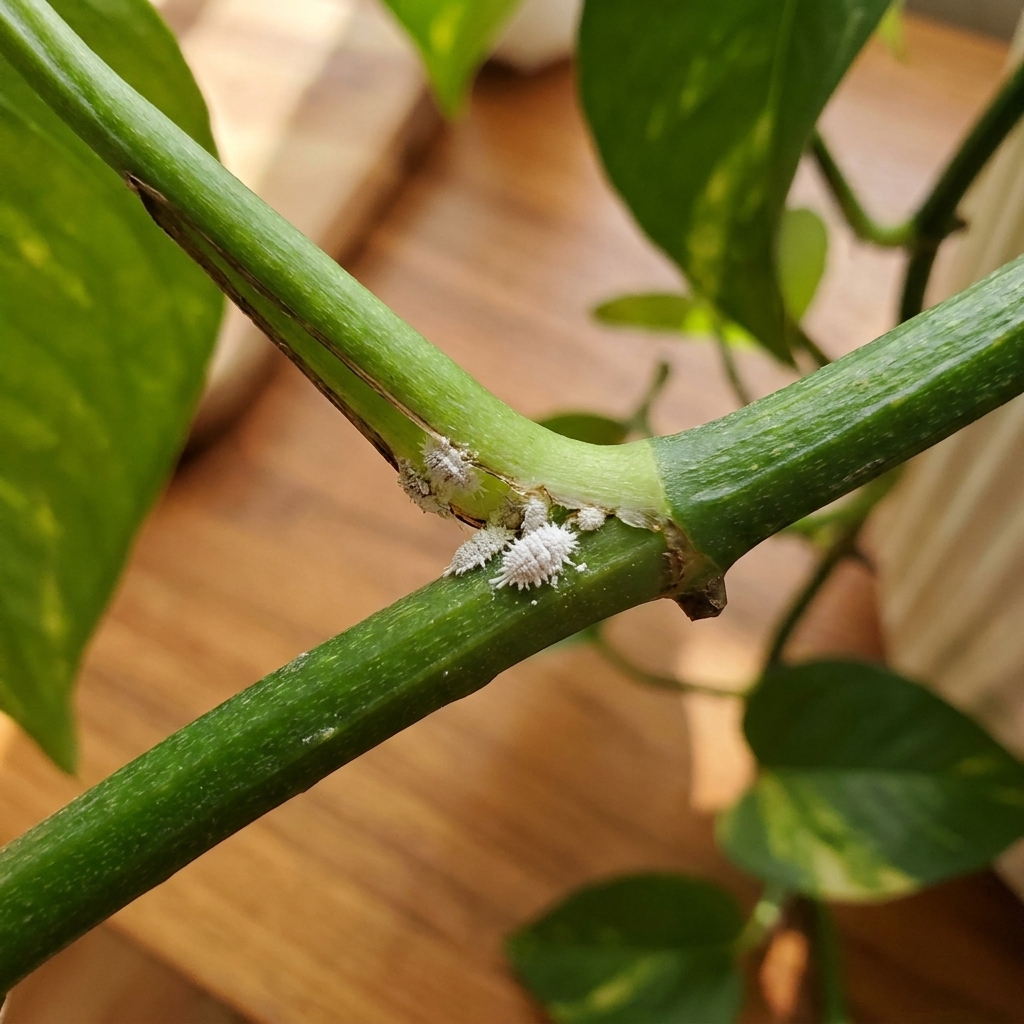
Pests can cause yellow stippling, dullness, and leaf drop. The earlier you catch them, the easier they are to manage.
What to look for
- Spider mites: fine webbing, tiny specks, leaves look dusty or stippled
- Mealybugs: white cottony clusters at nodes and under leaves
- Scale: small brown bumps on stems and leaf undersides
- Thrips: silvery scarring and tiny black dots (frass)
Quick fix
- Isolate the plant.
- Rinse the foliage in the shower or sink, focusing on leaf undersides.
- Wipe leaves and stems with insecticidal soap following the label directions. If you use castile soap instead, keep it very dilute (about 1 teaspoon per quart of water) and test on a leaf first, since stronger mixes can burn foliage.
- Repeat every 5 to 7 days for 3 to 4 rounds.
If the infestation is persistent, a ready-to-use horticultural oil can help. Always test on a small section first and keep treated plants out of strong light until dry.
Cause #8: Nutrient issues
Pothos do not need heavy feeding, but long-term nutrient depletion can show up as pale leaves and slow growth. On the flip side, too much fertilizer can burn roots and trigger yellowing.
Signs it’s nutrient-related
- Underfed: overall pale color, smaller new leaves, slow growth during spring and summer
- Overfed: yellowing soon after fertilizing, leaf tips browning, crusty white buildup on soil surface
Quick fixes
- If underfed: fertilize in spring and summer with a balanced houseplant fertilizer at half strength every 4 to 6 weeks.
- If overfed: flush the soil with plenty of water (let it fully drain) or repot into fresh mix if salt buildup is heavy.
Winter note: Most pothos slow down in low light seasons. Fertilizing a resting plant often causes more problems than it solves.
Cause #9: Water quality
If your care routine seems fine but the plant still looks “off,” take a quick look at what you are watering with. Hard water, softened water, or mineral-heavy tap water can leave salts behind in the soil over time. This more commonly shows up as browning tips, but it can contribute to overall dullness and yellowing too.
Quick fix
- If possible, use filtered water or let tap water sit out overnight.
- Once every month or two, water thoroughly so excess water runs out the bottom to help rinse salts from the mix.
Cause #10: Natural leaf drop
It is normal for pothos to shed an older leaf occasionally, especially after:
- Moving to a new spot
- A recent repot
- A change in season or indoor humidity
If it is one yellow leaf every so often and new growth looks healthy, you can simply remove the leaf and carry on.
Yellow leaves by variety
Golden pothos
- Most forgiving in average indoor light.
- Yellowing is most often watering related.
Marble Queen pothos
- Often needs brighter indirect light to keep variegation and avoid stress.
- In low light, it uses less water and can yellow from staying wet too long.
Neon pothos
- Color is best in bright indirect light.
- Neon leaves can look “paler” naturally, but problem yellowing usually comes with softness, droop, or rapid leaf loss.
Quick rule: The more variegated or bright-colored the pothos, the more it tends to appreciate brighter indirect light and careful watering.
What to do with yellow leaves
Yellow leaves usually do not turn fully green again once they have faded, especially if they are completely yellow. You have two options:
- Leave it temporarily if it is only partly yellow and you are still diagnosing. The plant may stabilize, and it may also reabsorb a little energy.
- Remove it once it is mostly yellow, especially if it is soft or dropping. Snip the leaf stem close to the vine with clean scissors.
My simple “save my pothos” plan
- Stop and assess water: check soil moisture 2 inches down.
- Fix the environment: bright indirect light, stable temps, no soggy saucers, and no hidden pools of water in cachepots.
- Inspect for pests: undersides, nodes, stems.
- Check drainage and soil: if it stays wet too long, repot.
- Trim yellow leaves: after your first correction, remove the worst ones.
- Watch new growth: success looks like healthy new leaves, not old leaves recovering.
FAQ
Why are only the bottom leaves turning yellow?
Bottom leaves are older, so occasional yellowing can be normal. If it is happening often, suspect overwatering or low light, since both tend to show up first near the base.
Can I cut back a pothos that’s yellowing?
Yes. If the plant is leggy or dropping leaves, pruning encourages bushier growth. Just make sure you also fix the underlying cause so the new growth stays healthy.
Should I mist my pothos to stop yellowing?
Misting rarely fixes yellowing. It does not raise humidity for long and can keep foliage wet, which is not helpful. Focus on watering, light, drainage, and pests first.
How long does it take a pothos to recover?
You will usually see improvement in 1 to 3 weeks as yellowing slows down. The real sign is new growth coming in healthy over the next month or two.
When to escalate: signs your pothos needs a full reset
If you see rapid yellowing plus mushy stems, a strong rotten smell, or the plant feels unstable in the pot, treat it as a root emergency.
At that point, I recommend: unpot, trim rot, repot into fresh airy mix, and consider taking a few healthy cuttings as “insurance.” Pothos propagate easily, and it is one of the kindest ways to give yourself a backup while the mother plant recovers.
Quick safety note: Pothos is toxic if chewed (pets and kids), so keep it out of reach if that is a concern in your home.