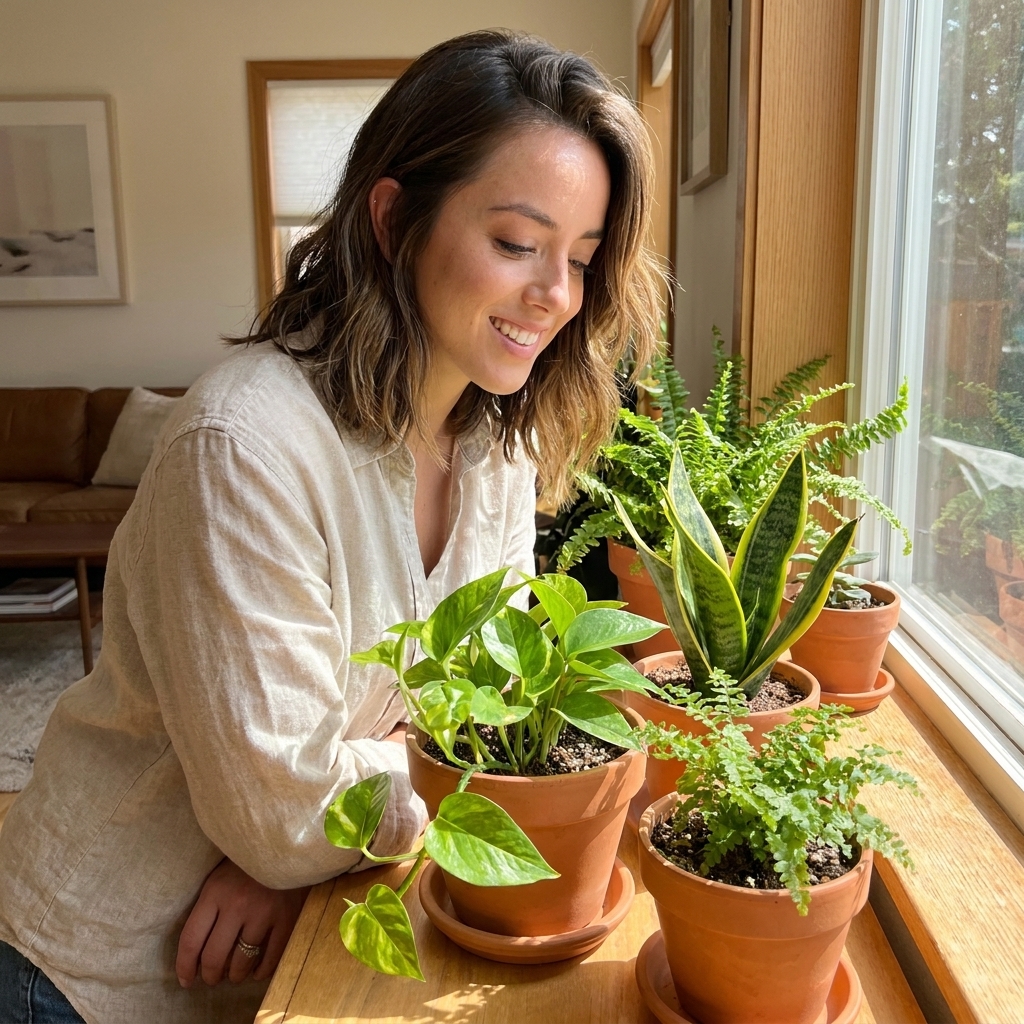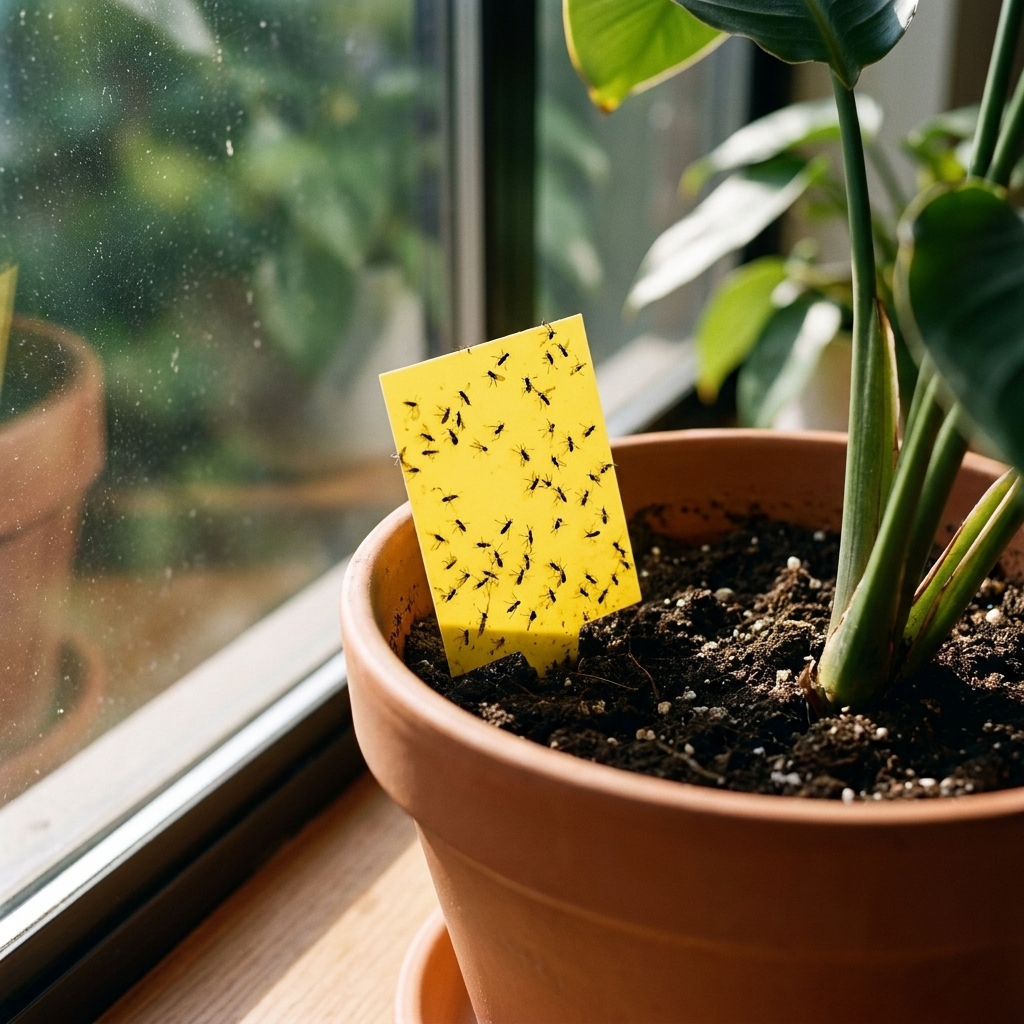
Break the fungus gnat life cycle indoors using BTI, sticky traps, and soil fixes. A realistic, plant-safe routine that actually lasts.
If you have ever stared at your watering can wondering if you are doing it “the right way,” you are in very good company. I used to think watering was just… watering. Then I drowned three succulents in college by “loving them” too hard, and I realized the method matters as much as the schedule.
Bottom watering and top watering both work. The best choice depends on your plant’s root system, your pot and soil, and what problem you are trying to solve (dry patches, fungus gnats, leaf spotting, or the dreaded root rot).
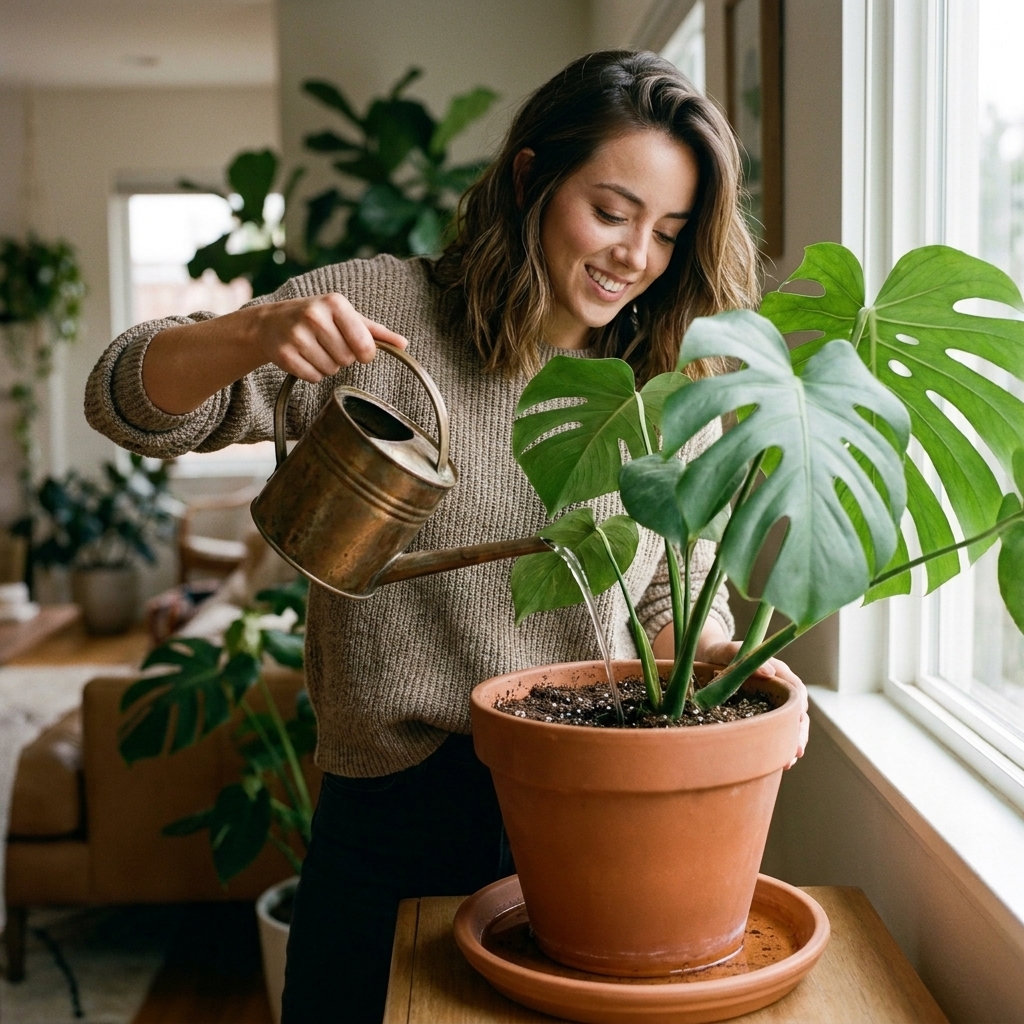
What top watering does
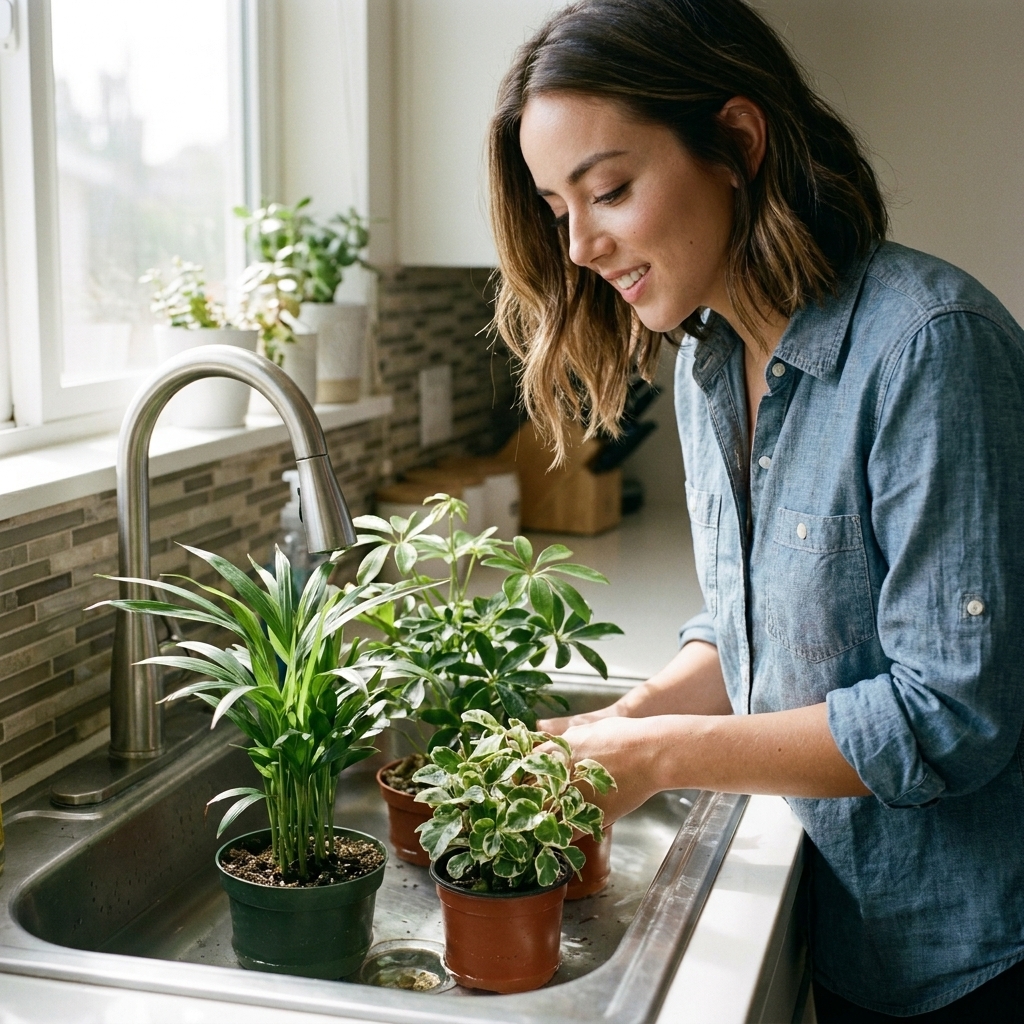
Top watering is pouring water onto the soil surface until it runs out of the drainage holes. This is the classic method, and when it is done thoroughly, it is also one of the healthiest because it:
- Re-wets the whole soil column (not just the bottom).
- Flushes out excess salts from fertilizer and tap water minerals.
- Lets you check drainage right away. If water sits on top or takes forever to come out, that is useful information.
Top watering pros
- Fast and simple for big plant collections.
- Better long-term soil health because it helps prevent mineral buildup.
- Good for chunky mixes (aroids, hoyas, many tropicals) that are meant to be watered through.
Top watering cons
- Easy to do too lightly (a quick splash) which leaves the center of the pot dry.
- Can invite fungus gnats if the top layer stays consistently damp.
- Can spot or damage foliage on plants that hate wet crowns or wet leaves (African violets, some begonias).
- Messier indoors if you do not have saucers, trays, or a sink routine.
What bottom watering does
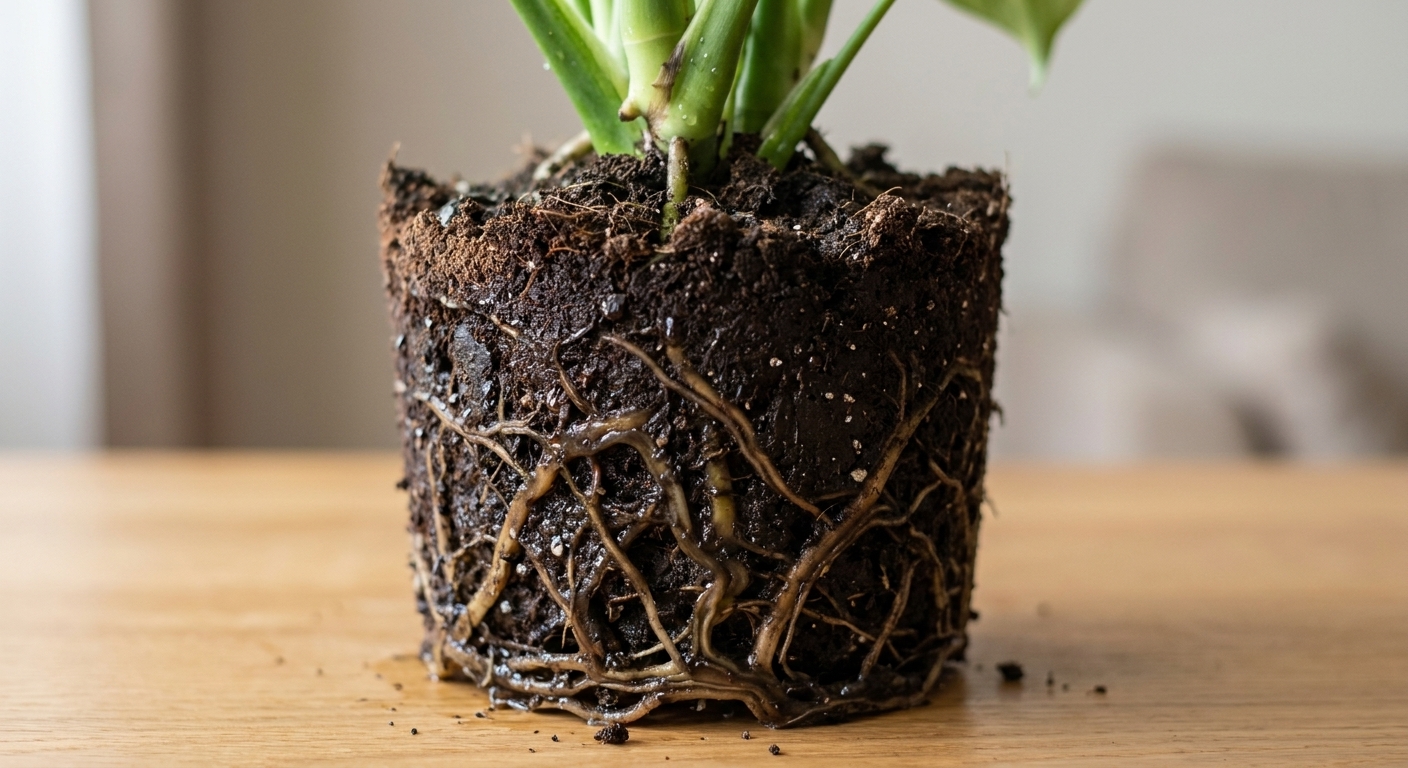
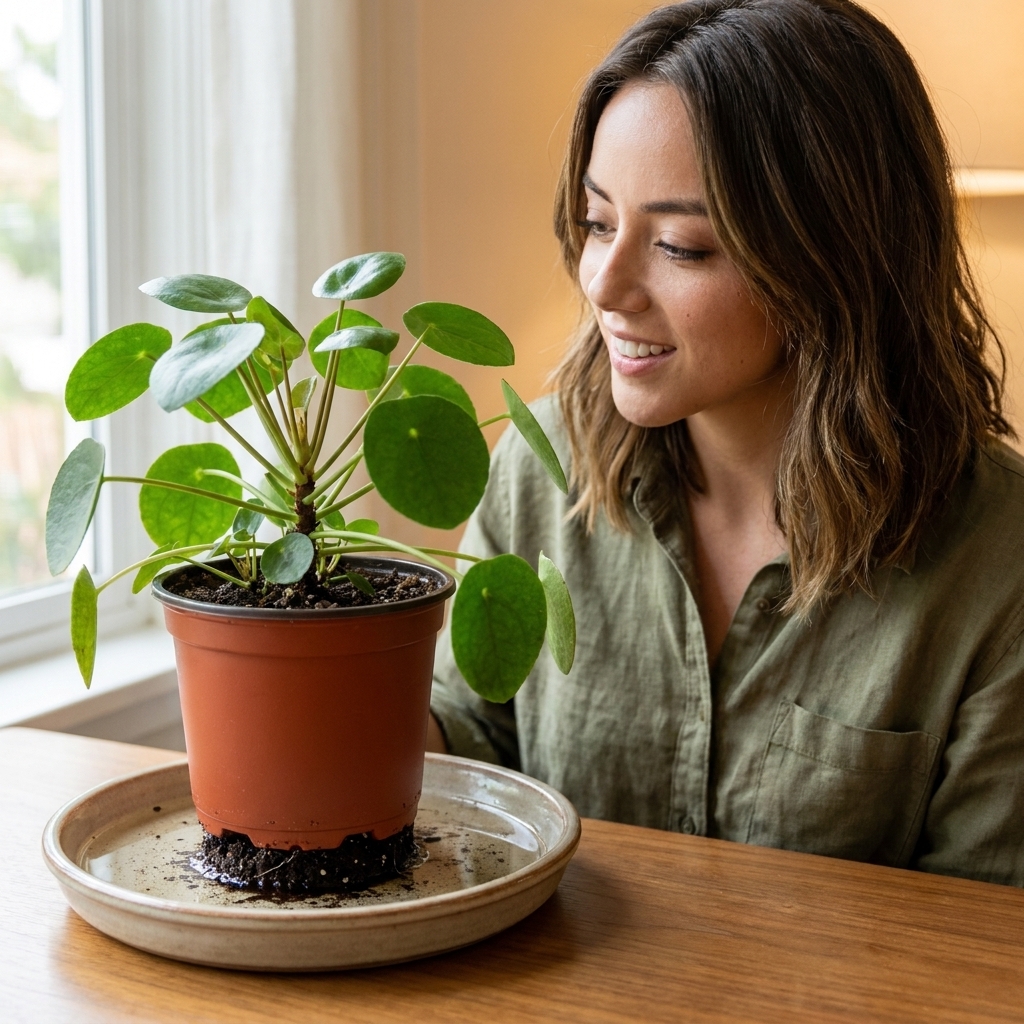
Bottom watering means placing the pot in a tray, bowl, or sink of water and letting moisture wick up through the drainage holes. The soil drinks from the bottom until the top feels slightly damp, then you remove the plant and let it drain.
Bottom watering pros
- Helps evenly rehydrate hydrophobic soil (soil that has dried out so much it repels water).
- Can reduce fungus gnat pressure because the top layer stays drier, though larvae can still survive deeper in consistently moist mix.
- Less splashing on leaves, which is great for plants that dislike wet foliage.
- May encourage roots to grow into the lower pot where moisture is more reliable, depending on your mix and how you water.
Bottom watering cons
- Does not flush salts well, so mineral and fertilizer buildup can become an issue.
- Takes time and is harder with large, heavy pots.
- Can hide drainage problems. A compacted or overly peat-heavy mix may wick slowly, making you think the plant is “fine” when it is actually struggling.
- Risk of soggy soil if you forget it in the water too long, especially in low light.
Which is better?
Neither method is universally “best.” Here is the way I decide in real life:
- If your soil is drying unevenly or pulling away from the pot: bottom watering helps rehydrate the root zone without water racing down the sides.
- If you fertilize regularly or have hard tap water: top watering (thoroughly, to runoff) is your friend because it flushes excess salts.
- If you are fighting fungus gnats: bottom watering can help by keeping the surface drier, but it is not a complete fix. You still need to let the mix dry appropriately between waterings and handle the adult gnats too.
- If your plant has a crown that rots easily: bottom watering is often safer.
- If you have a chunky aroid mix: top watering usually works best because the water moves through quickly and refreshes the air pockets.
In most homes, the sweet spot is using both: bottom water when the soil is being stubborn or you are targeting gnats, and top water every few waterings to flush the pot.
Best method by plant
Often good for bottom watering
- African violets: keeps water off fuzzy leaves and the crown.
- Rex begonias and some begonias: reduces leaf spotting and mildew risk.
- Peace lilies (especially when they dry dramatically): helps rehydrate evenly.
- Small, dense-rooted plants in nursery pots that dry too fast on top.
Often best with thorough top watering
- Pothos, philodendrons, monsteras: especially in airy mixes, a full soak to runoff is efficient and healthy.
- Hoyas in chunky, fast-draining substrates: easier to water through than to wick from below.
- Ficus: benefits from a full wetting and then a proper dry-down.
- Cacti and succulents: typically prefer a full drench and complete dry-out, not frequent light sips from below.
Flexible plants
- Calatheas and marantas: you can do either, but avoid leaving them sitting in water and watch for mineral buildup.
- Snake plants and ZZ plants: method matters less than not watering too often. If you bottom water, keep it brief and let them drain extremely well.
How to bottom water
- Choose a container (tray, bowl, sink) that lets the pot sit flat. If you are watering multiple plants, start with a clean tray and fresh water to reduce the chance of spreading pests or pathogens.
- Add water to about 1 to 2 inches deep for small pots, more for larger ones. Adjust based on pot size and mix. Use room-temperature water.
- Set the pot in and start a timer.
- Wait 10 to 30 minutes, then reassess. Fine, peat-heavy mixes may wick quickly. Bark-heavy mixes can wick slowly. The goal is even moisture, not a long soak.
- Check the top. You want the surface to feel slightly damp, not swampy.
- Remove and drain for 5 to 15 minutes. Do not let the pot keep sitting in water after it has wicked what it needs.
- Dump and rinse the tray when you are done, especially if you reuse it for other plants.
My rule: if the top never gets slightly damp after 30 to 40 minutes, your mix may be too compacted to wick properly, or it may be so dry it has become hydrophobic. In that case, do one deep soak from the top in the sink to reset the soil, then return to your preferred method.
How to top water
- Bring the plant to a sink, tub, or tray if possible.
- Water slowly and evenly over the soil surface. Do not dump it all in one spot.
- Keep going until you get runoff from the drainage holes. This is the key step most people skip.
- Let it drain thoroughly (at least a few minutes). Empty the saucer or outer pot.
- Keep water out of crowns when needed (especially rosette plants). Aim at the soil, not the plant’s center.
If water runs straight down the sides and out the bottom in seconds, your soil may be pulling away from the pot. Bottom watering or a slow, repeated top watering in stages (water, wait 5 minutes, water again) usually fixes it.
Common mistakes
“I bottom watered and now my plant feels heavy for days”
Your mix may be too moisture-retentive for your light levels, or the pot is too large for the root ball. Let it dry more between waterings, and consider repotting into a better-draining mix if the plant stays wet longer than a week in average indoor conditions.
“I top water but the middle is always dry”
This is classic hydrophobic soil. Try bottom watering once or twice, or water from the top in two rounds with a short pause in between. If the potting mix is old and breaking down, a refresh (repot) is often the real solution.
“I keep getting fungus gnats”
Bottom watering can help, but the bigger win is letting the top couple inches dry and improving airflow. Remove decaying leaves and avoid keeping soil constantly damp. For a more reliable one-two punch, use Bti (often sold as mosquito bits) for larvae and yellow sticky traps for adults. A gritty top dressing (like sand) works for some people, but results vary and it is optional, not magic.
“My plant got white crusty stuff on the soil”
That is usually mineral or fertilizer salt buildup. Do a few thorough top waterings to runoff (or one careful flush in the sink), and consider using filtered water if your tap water is very hard. If you use a water softener, keep in mind that softened water can add sodium, which can contribute to salt issues over time.
A simple routine
If you want an easy, low-stress approach, here is a routine I recommend for many apartment plant parents:
- Default to top watering deeply until runoff, then fully drain.
- Bottom water as a tool for plants that hate wet leaves, for stubborn dry soil, or during fungus gnat season.
- Flush periodically if you mostly bottom water or if you fertilize often. For many homes, every 4 to 8 weeks is a good ballpark, and hard water or heavy fertilizing pushes you toward the more frequent end.
- Check moisture below the surface before watering again. A finger test, a wooden chopstick, or simply lifting the pot for weight works well. Moisture meters can help, but they are not foolproof.
- Let the plant tell you: slow growth, mushy stems, or a sour smell points to staying wet too long, not to “needing a different watering method.”
And if you have ever killed a plant with kindness, please hear this: switching methods is not admitting defeat. It is just learning your plant’s language.
FAQ
Is bottom watering better for root rot?
Not automatically. Root rot is usually from soil staying wet too long, not from whether water entered from the top or bottom. Bottom watering can reduce overwatering for some people because it slows the process and encourages you to time it. But if you leave the pot soaking or your mix is too dense, bottom watering can still lead to rot.
How long should I bottom water?
Most small to medium houseplants do well with 10 to 30 minutes, but treat that as a starting point. Pot size, root density, and substrate make a big difference. The goal is evenly moist soil, not a saturated pot for hours. Always let it drain afterward.
Can I bottom water plants in decorative pots with no drainage?
I would not. No drainage makes it too easy to trap water at the bottom where roots suffocate. If you love the look of a cachepot, keep your plant in a nursery pot inside it and remove it for watering and draining.
Do self-watering pots count as bottom watering?
Basically, yes. They provide water from below through a reservoir. The same cautions apply: watch for salt buildup, flush occasionally from the top, and make sure the plant is appropriate for consistently available moisture.
Which method is best in low light?
In low light, soil dries slower, so the “best” method is the one that helps you avoid watering too often. Many low-light plant parents like bottom watering because it feels controlled, but the bigger factor is frequency. Extend the time between waterings and confirm moisture below the surface before watering again.