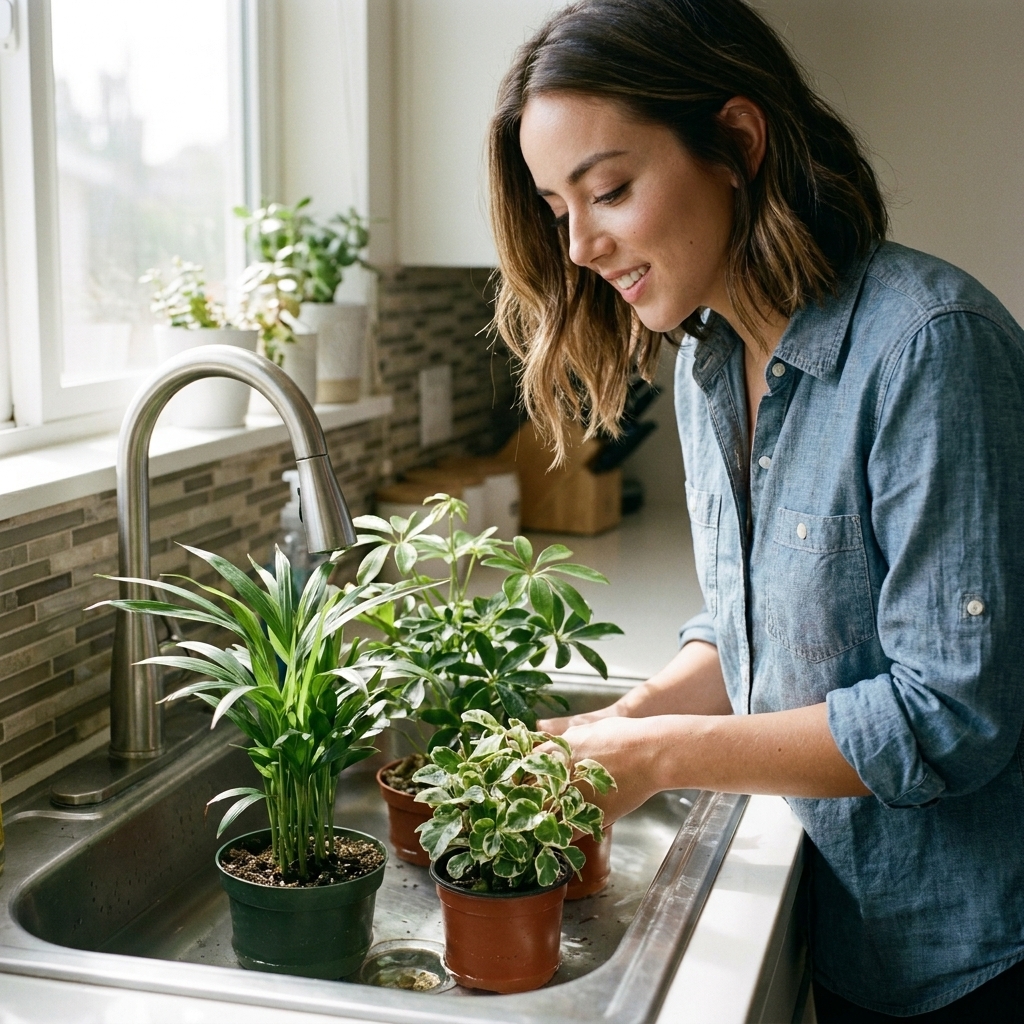
A calm, step-by-step root rot rescue: how to unpot, trim mushy roots, repot in fresh mix, and prevent future rot in any houseplant.
If you have ever stared at a wilted plant thinking, “How can it look thirsty when I just watered it?” you are in excellent company. I did this for years, and in college I famously “loved” three succulents right into the compost bin.
Here is the truth that makes indoor plant care so much less stressful: overwatering and underwatering can look similar on the surface. The difference is happening below the soil line. This guide will help you decode the clues and choose the fix that actually helps, instead of accidentally making things worse.

The core difference
Underwatered plants are short on moisture. Cells lose pressure, so leaves droop and edges crisp.
Overwatered plants are short on oxygen. Roots sit in soggy soil, cannot breathe, and begin to decline. Ironically, that can also cause wilting because damaged roots cannot move water upward.
So the key question is not “Does it look sad?” It is: Are the roots able to function?
Fast diagnosis
1) Feel the soil, not the vibes
- Dry soil 1 to 2 inches down: likely underwatered (or hydrophobic soil that is refusing water).
- Wet soil 1 to 2 inches down: likely overwatered or poor drainage.
- Dry on top, wet deeper down: common in larger pots. The plant can still be overwatered even if the surface looks dry.
2) Lift the pot
- Very light pot: usually underwatered.
- Heavy pot days after watering: soil is staying waterlogged, pointing to overwatering, compacted mix, or low light slowing dry-down.
3) Check the leaves
- Crispy tips and edges, papery texture: often underwatering (low humidity can add crisping too).
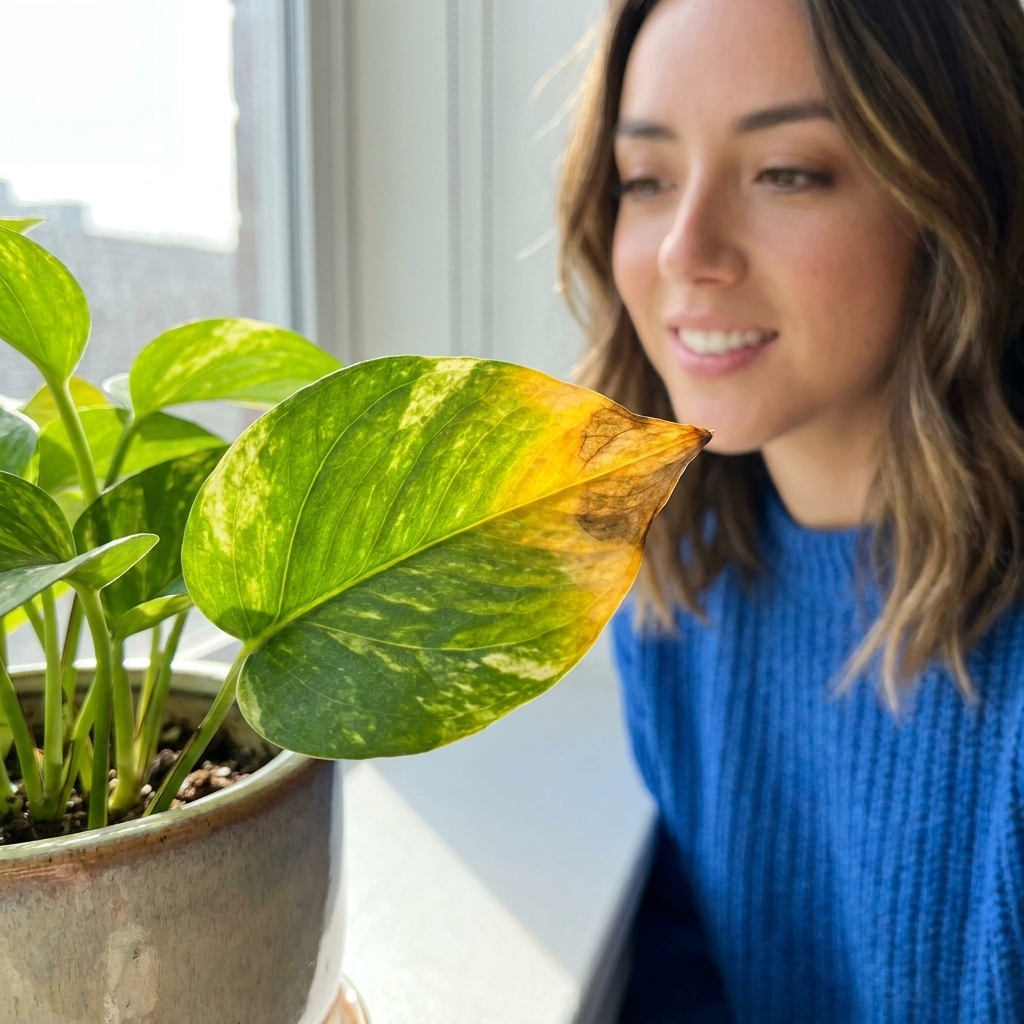
- Yellowing leaves that feel soft, especially lower leaves: a strong overwatering clue, but not a guarantee. Yellow leaves can also come from normal aging, low light, temperature swings, or nutrient issues.
- Wilting + yellowing + wet soil: overwatering is a very common culprit, but rule out cold stress, pests, and sudden location changes too.
- Wilting + dry soil: underwatering is the most likely culprit.
4) Smell test
- Earthy smell: normal.
- Sour, swampy, or “rotting” smell: overwatering and root trouble are likely.
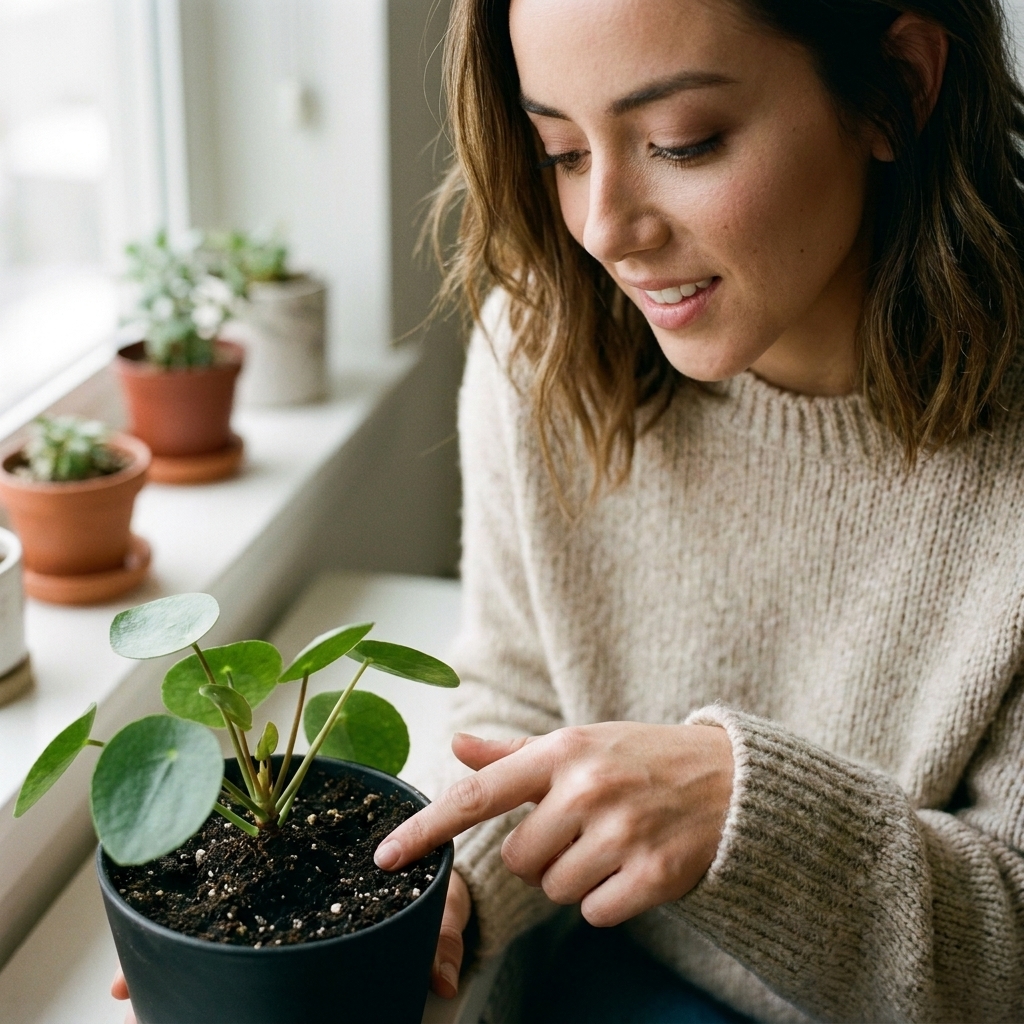
Symptom decoder
Wilting
Underwatered wilt often looks like a plant that is folding inward or drooping dramatically, and it perks up within a few hours after a thorough watering.
Overwatered wilt tends to look limp but stubborn. The soil stays wet, and the plant does not rebound after watering because the roots are not working well.
Yellow leaves
Overwatered: yellowing is common, especially on older, lower leaves. Leaves may drop easily with a gentle tug.
Underwatered: leaves can yellow too, but it is usually paired with dryness, crisping, and slower leaf drop.
Note: one or two yellow lower leaves on an otherwise healthy plant can also be normal leaf turnover.
Leaf drop
Overwatered: sudden leaf drop plus wet soil is a big red flag, especially if stems feel a bit mushy near the base.
Underwatered: leaf drop often follows repeated dry-downs. You may see older leaves sacrificed first.
Brown tips and edges
Underwatered: crispy brown tips are common, especially on Calatheas, Marantas, Dracaenas, and palms.
Overwatered: browning can happen, but it is more likely to be soft spots, blotches, or sections that yellow first, then brown.
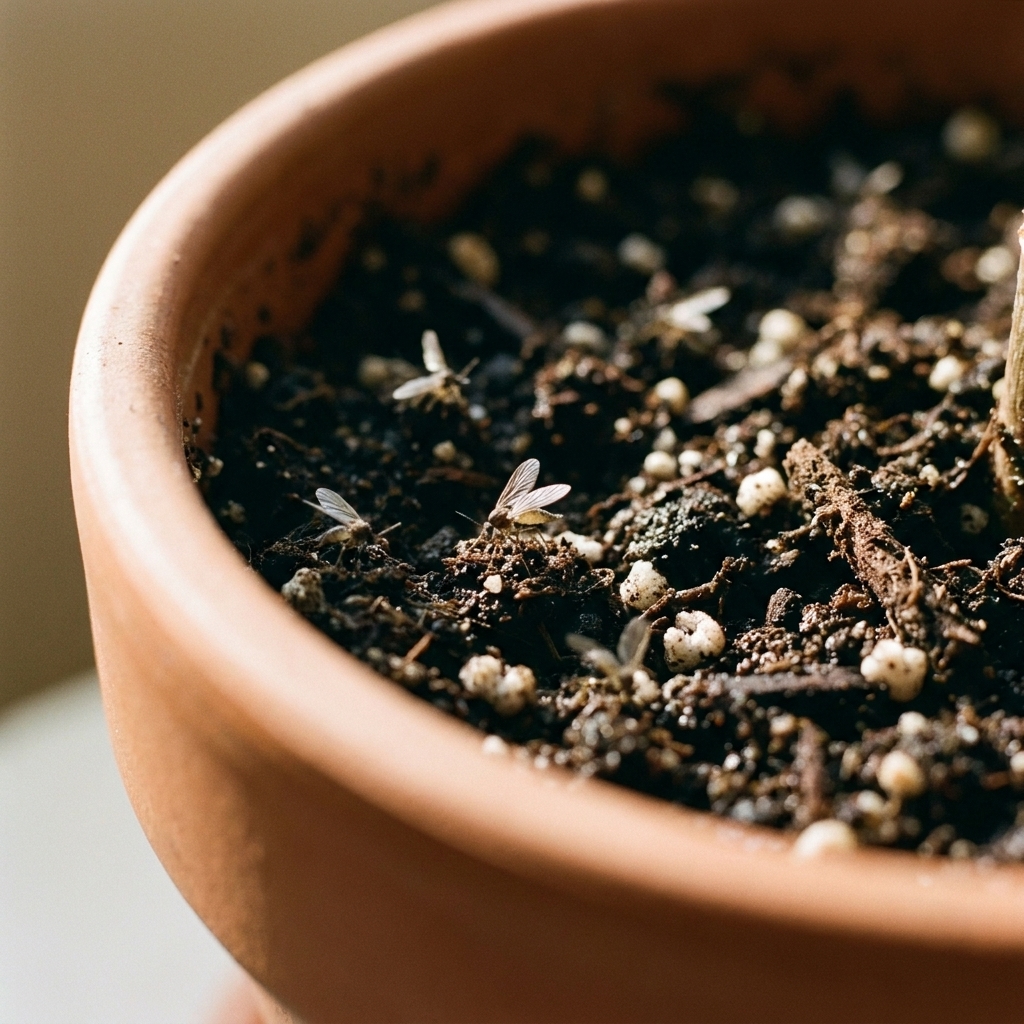
Fungus gnats
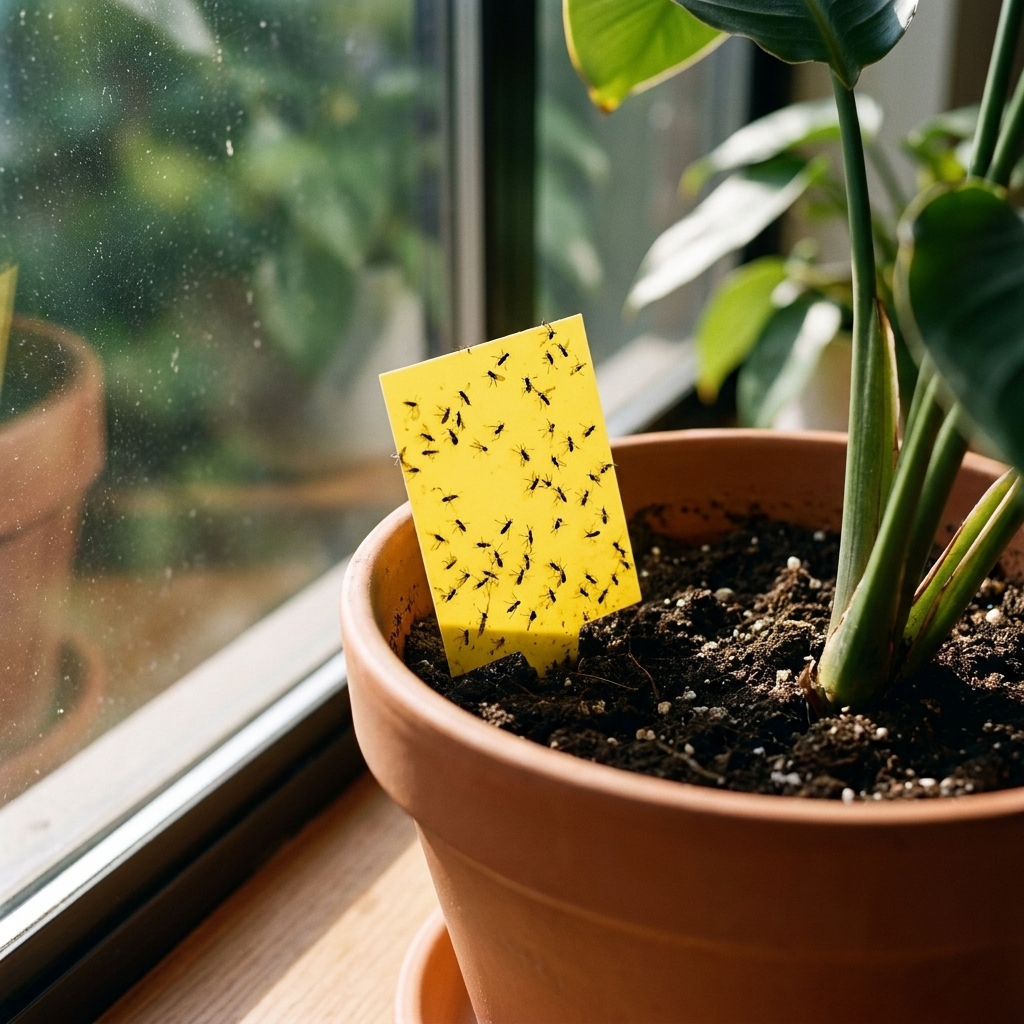
If you have fungus gnats, your soil is staying moist for long stretches. That is not automatically “bad,” but it is a strong hint that you are watering too often, the potting mix is too dense, or drainage is weak.
Fix underwatering
Step 1: Rehydrate thoroughly
Most underwatered plants do not need “a little sip.” They need a full soak.
- Water slowly until water runs from the drainage holes.
- Wait 5 to 10 minutes, then water again. This helps evenly re-wet dry pockets.
Step 2: Treat hydrophobic soil
When potting mix gets too dry, it can repel water and let it run down the sides of the pot.
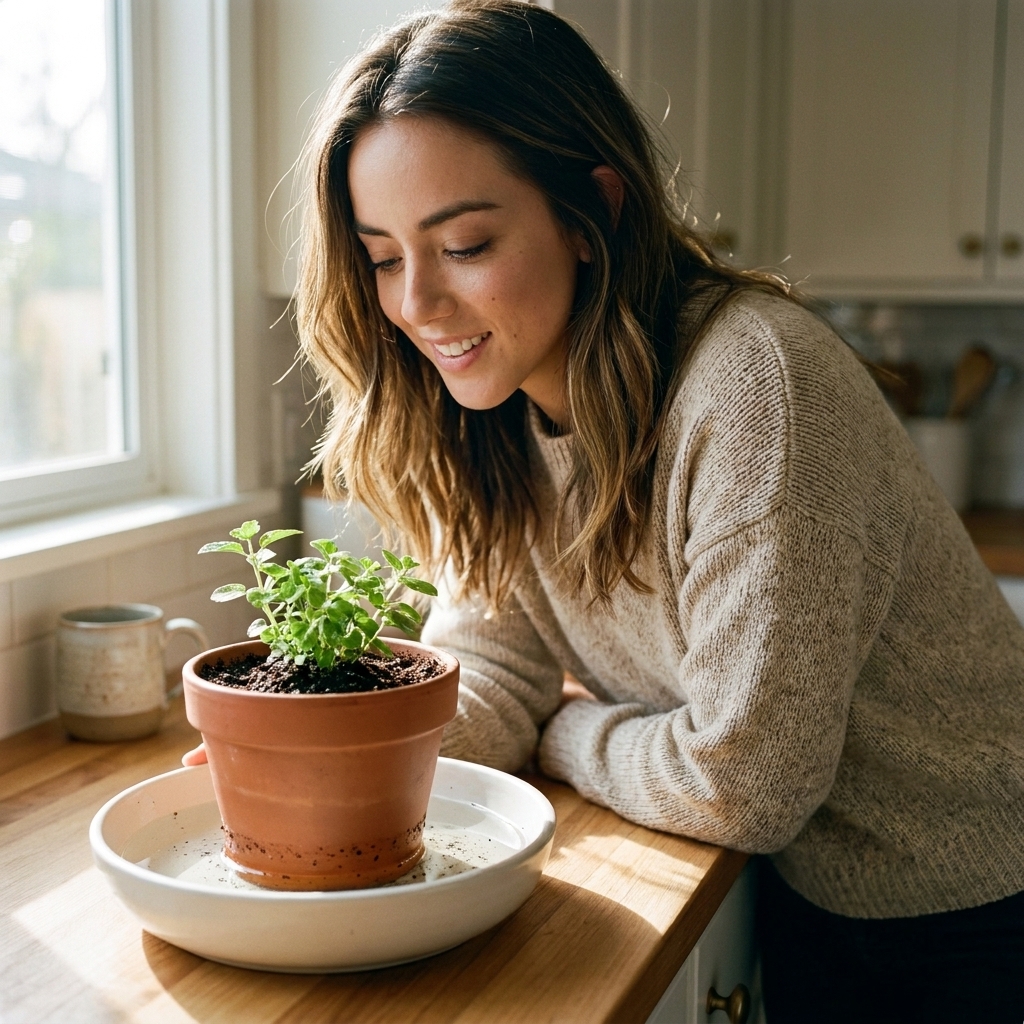
- Bottom water: place the pot in a bowl of water for 20 to 45 minutes, then let it drain well.
- Soil poke method: use a chopstick to gently create a few channels, then water slowly to help it absorb.
Step 3: Remove stress for a week
- Keep it out of harsh direct sun while it recovers.
- Skip fertilizer for 3 to 4 weeks.
- Avoid extremes: no hot sunbathing, no cold windowsills, and no fan blasting directly at the plant.
Step 4: Adjust your routine
Set a reminder to check, not to water. Most plants do best when you water based on soil dryness, pot weight, and season.
Fix overwatering
If the soil is wet and the plant is declining, the goal is to restore oxygen around the roots as quickly and safely as possible.
Step 1: Pause watering and add airflow
- Move the plant to bright, indirect light if possible.
- Improve air circulation with a small fan across the room, not pointed directly at the plant.
- Make sure no water is sitting in the cachepot or saucer. (A cachepot is a decorative outer pot that often has no drainage.)
Step 2: Check the pot and drainage
- If there is no drainage hole, repot is not optional. It is the fix.
- If the plant is in a nursery pot inside a decorative pot, remove it and let it drain freely.
Step 3: Decide if you need an emergency repot
Repot soon if several of these are true:
- Soil is still wet many days after watering in average indoor conditions, especially in bright light and a well-draining mix.
- You smell sour soil.
- The plant is wilting in wet soil.
- Stems at the base feel soft or look dark.
- You are seeing a steady stream of fungus gnats.
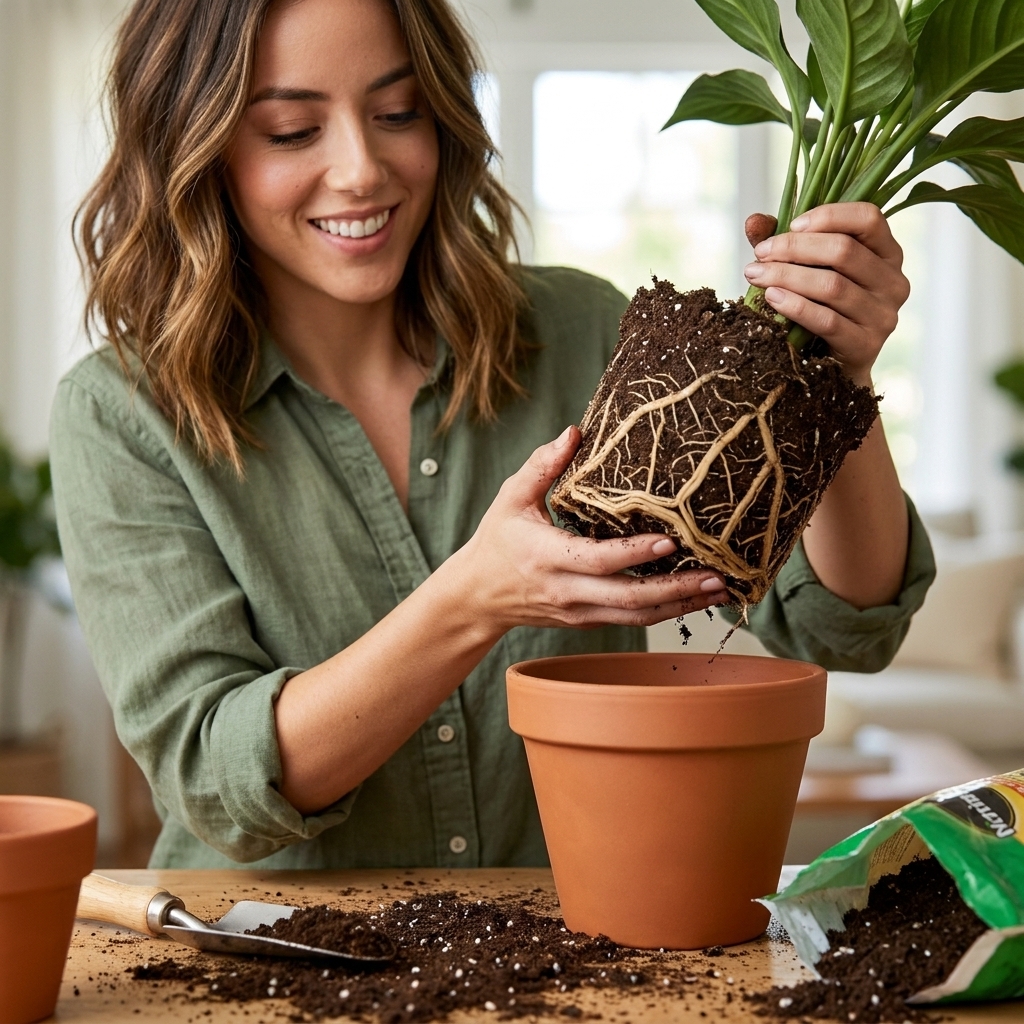
How to do it:
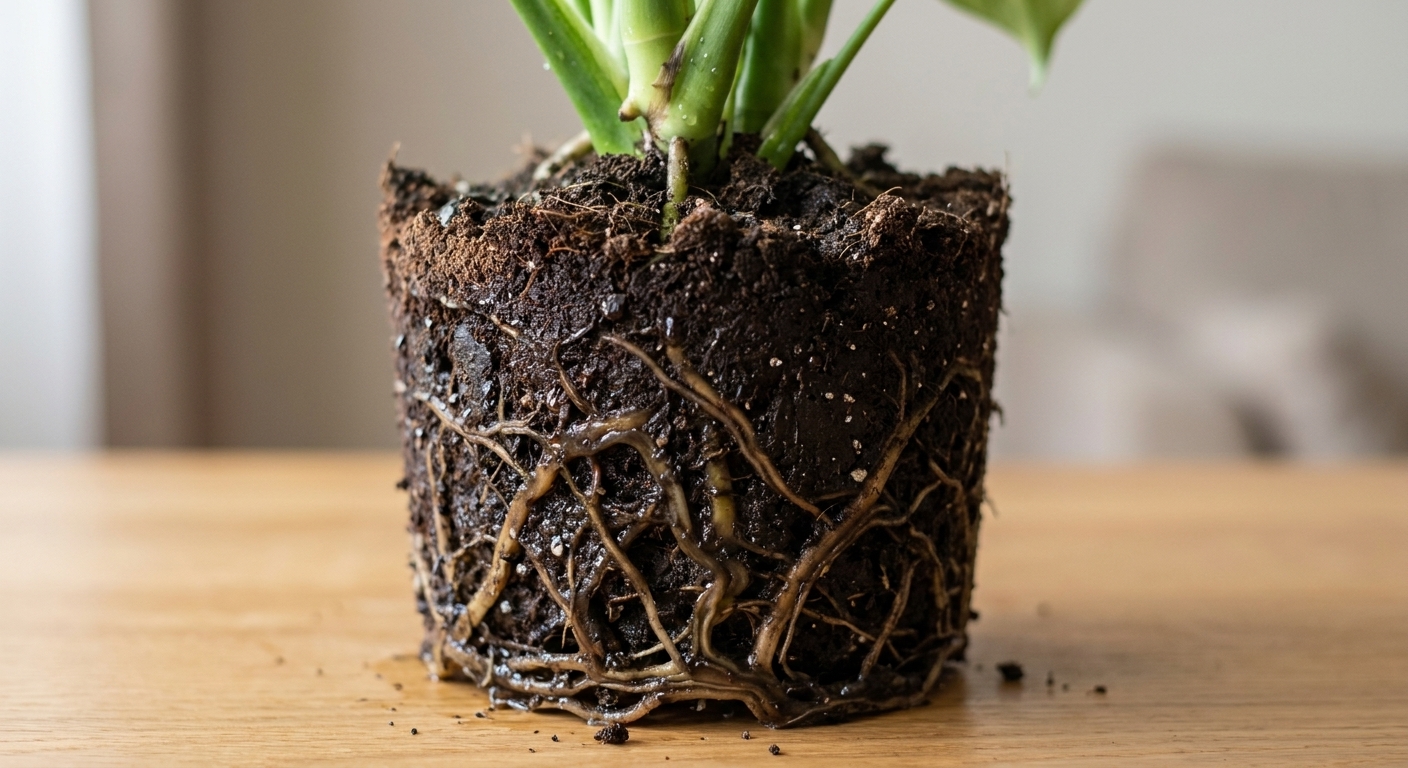
- Slide the plant out and gently remove wet soil from the root ball.
- Inspect roots. Healthy roots are typically firm and pale (color varies by plant). Rotting roots are often brown or black, mushy, and may smell.
- Trim mushy roots with clean scissors.
- Repot into fresh, airy mix in a pot with drainage. Do not oversize the pot.
Step 4: Aftercare
- Wait a few days before watering again unless the mix is bone dry. Fresh mix often holds enough moisture for a short period.
- When you do water, water thoroughly and let it drain completely.
- Hold fertilizer for 4 to 6 weeks. Damaged roots cannot handle salts well.
Why it gets misdiagnosed
Trap 1: “Wilting means water”
Wilting means the leaves are not being supported by water pressure. That can be from lack of water or from damaged roots. Always check the soil before you water.
Trap 2: The pot is too big
A pot that is much larger than the root ball holds extra wet soil the roots cannot use quickly. That extra wetness can linger and suffocate roots.
Trap 3: Dense potting mix indoors
Many bagged mixes are okay outdoors but stay too wet inside, especially in low light. If you are constantly fighting soggy soil, consider adding aeration like perlite, pumice, or orchid bark.
Trap 4: Low light slows everything down
In lower light, plants drink less. If your plant moved farther from a window or daylight hours shortened, your old watering schedule may suddenly be too frequent.
Before you blame water
If your soil checks do not match what you are seeing, take 2 minutes to rule out the usual imposters:
- Pests: spider mites (fine webbing, stippling), thrips (silvery streaks), scale (bumps on stems), mealybugs (cottony clusters).
- Temperature stress: cold drafts, hot vents, or a plant pressed against a chilly window can cause droop and leaf drop.
- Light shock: moving from low light to direct sun can scorch leaves fast. Moving into much lower light can slow drying and trigger yellowing.
- Nutrients and salts: nutrient deficiencies or fertilizer buildup can cause yellowing and crispy edges. If you fertilize regularly, an occasional top-watering flush can help wash out excess salts.
Prevention
Use a check window
Pick two days a week as your check-in days. On those days, test soil moisture and pot weight. Water only the plants that need it.
Match the method
- Top watering is best for most plants, as long as you water thoroughly and let excess drain.
- Bottom watering is great for plants that hate wet crowns (like African violets) or for rehydrating dry soil. If you bottom-water often, do an occasional top-water flush to reduce mineral salt buildup.
Water less in winter
Shorter days plus cooler temps usually mean slower growth and slower drying. Many houseplants need significantly less frequent watering during winter, even if your heat is running.
Upgrade drainage
- Always use a pot with a drainage hole when possible.
- Empty saucers and cachepots after watering.
- Consider a chunkier mix for aroids (Pothos, Monstera, Philodendron) and a lighter, fast-draining mix for succulents and cacti.
About moisture meters
Soil moisture meters can be helpful for beginners and for large pots, but treat them as one clue, not the final verdict. Cheap meters can be inaccurate in airy mixes and they are not great at detecting soggy pockets lower in the pot. Pair the reading with a finger test, pot weight, and how long the soil has stayed wet.
Do this now
If the soil is dry
- Water thoroughly until it drains.
- Bottom water if the soil is resisting absorption.
- Move out of harsh sun for a couple of days.
If the soil is wet
- Do not water again.
- Empty any standing water.
- Increase light and airflow.
- Repot if multiple red flags show up, like sour smell, wilting in wet soil, or consistently slow dry-down.
FAQ
Can an overwatered plant have crispy leaves?
Yes. If roots are damaged, the plant can become functionally “thirsty” even while sitting in wet soil. That is why soil moisture and root health matter more than a single symptom.
Should I mist an underwatered plant?
Misting is not a substitute for watering. It can make you feel helpful, but it does not meaningfully hydrate the root zone. If humidity is low, a humidifier is more consistent. A pebble tray can provide a small, very localized bump, but it rarely changes whole-room humidity.
How long does it take a plant to recover?
Underwatering recovery can be fast, sometimes hours to a couple of days. Overwatering recovery often takes longer, usually weeks, because roots have to regrow and the plant needs time to stabilize.
Do I need to remove yellow leaves?
If a leaf is mostly yellow, it will not turn green again. You can remove it once it pulls away easily, or snip it with clean scissors. Focus on fixing the cause first.