Identify and eliminate common indoor plant pests naturally using practical, non-toxic methods you can do at home.
If you have tiny black flies hovering near your pots, you are not imagining things. Fungus gnats love warm homes, consistently damp soil, and the cozy organic “snack bar” found in potting mix. The good news is you do not need harsh chemicals, and you do not need to throw out your whole plant collection. You just need to break their life cycle on purpose.
This is the exact approach I use in my own indoor jungle: a one-two punch of sticky traps for the adults plus BTI (mosquito dunks or bits) for the larvae, supported by a few soil and watering tweaks that make your pots a lot less inviting.
Quick ID: gnats or something else?
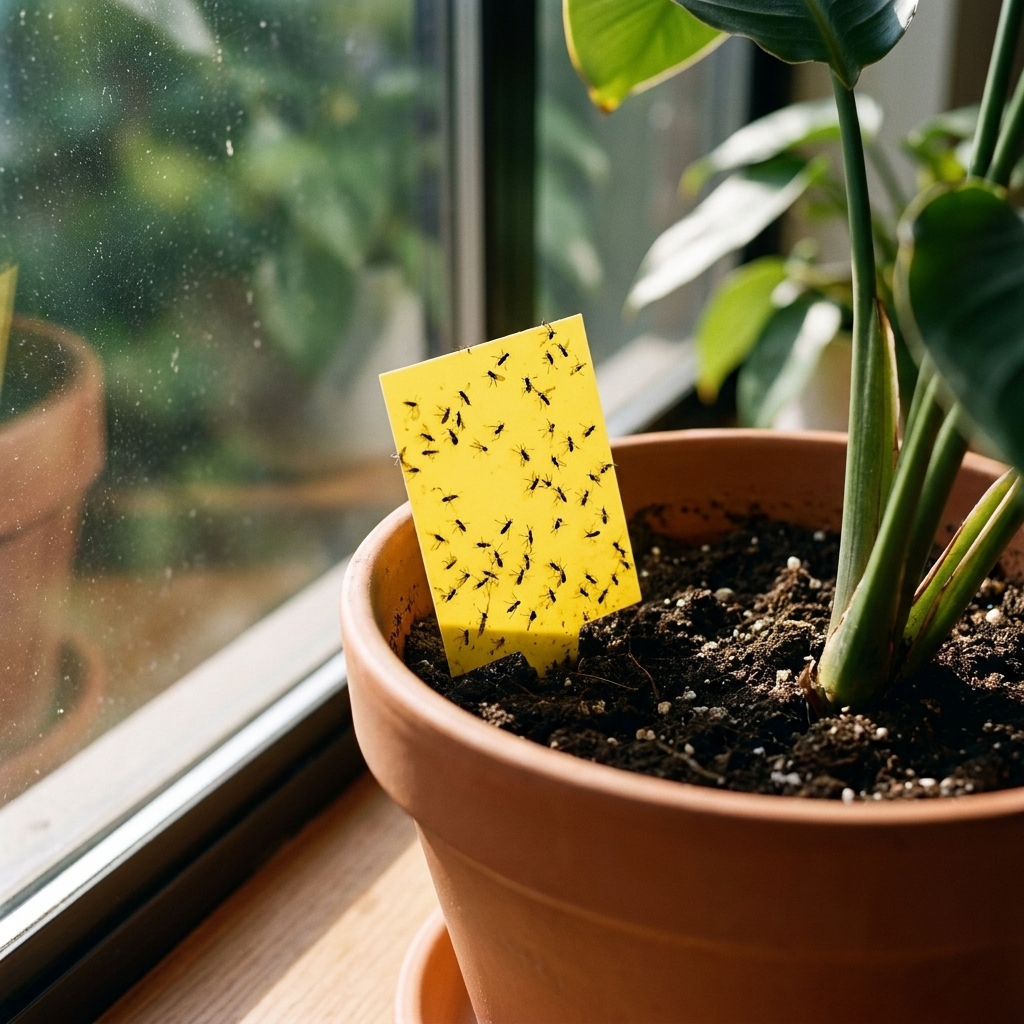
Before you treat, do a quick sanity check. Fungus gnats usually hover around soil and pots and scuttle on the soil surface.
- Fruit flies tend to hang around ripening fruit, trash, and recycling, not potting mix.
- Drain flies (moth flies) often rest on bathroom or kitchen drains and look fuzzier, almost like tiny moths.
If they are clustering at your pots, assume fungus gnats and focus on the soil, not just the air.
Know the life cycle
Permanent control is really just code for: stop new gnats from growing up.
- Adults look like tiny dark flies. They flutter around the soil surface and windows. Adults are annoying, but they are not the main problem.
- Eggs and larvae live in the top layer of moist potting mix. Larvae are the ones feeding on fungi and decaying organic matter, and sometimes nibbling delicate roots.
- Pupae develop in the soil, then emerge as new adults.
Indoors, this cycle often completes in about 2 to 4 weeks, and it can be faster in warm, consistently moist conditions. That is why a one-time “treatment” usually fails. You need steady pressure for a few weeks so no new adults can replace the ones you catch.
Quick-start plan
If you want the shortest path to results, do these three steps in the same day:
- Let the soil surface dry (as dry as your plant can safely tolerate).
- Put out yellow sticky traps to catch flying adults.
- Water with BTI-treated water to control larvae so they cannot develop into new adults.
That combo hits both the “flying” problem you see and the “hidden” problem you do not.
Step 1: Dry the surface
Fungus gnats thrive when the top layer of soil stays consistently damp. Your goal is not to turn your plant into a desert. Your goal is to stop keeping the soil surface wet all the time.
What to do
- Pause watering until the top layer feels dry to the touch. For many houseplants, that is the top 1 to 2 inches. For small pots, seedlings, and shallow containers, it may be safer to target the top 1 inch and reassess.
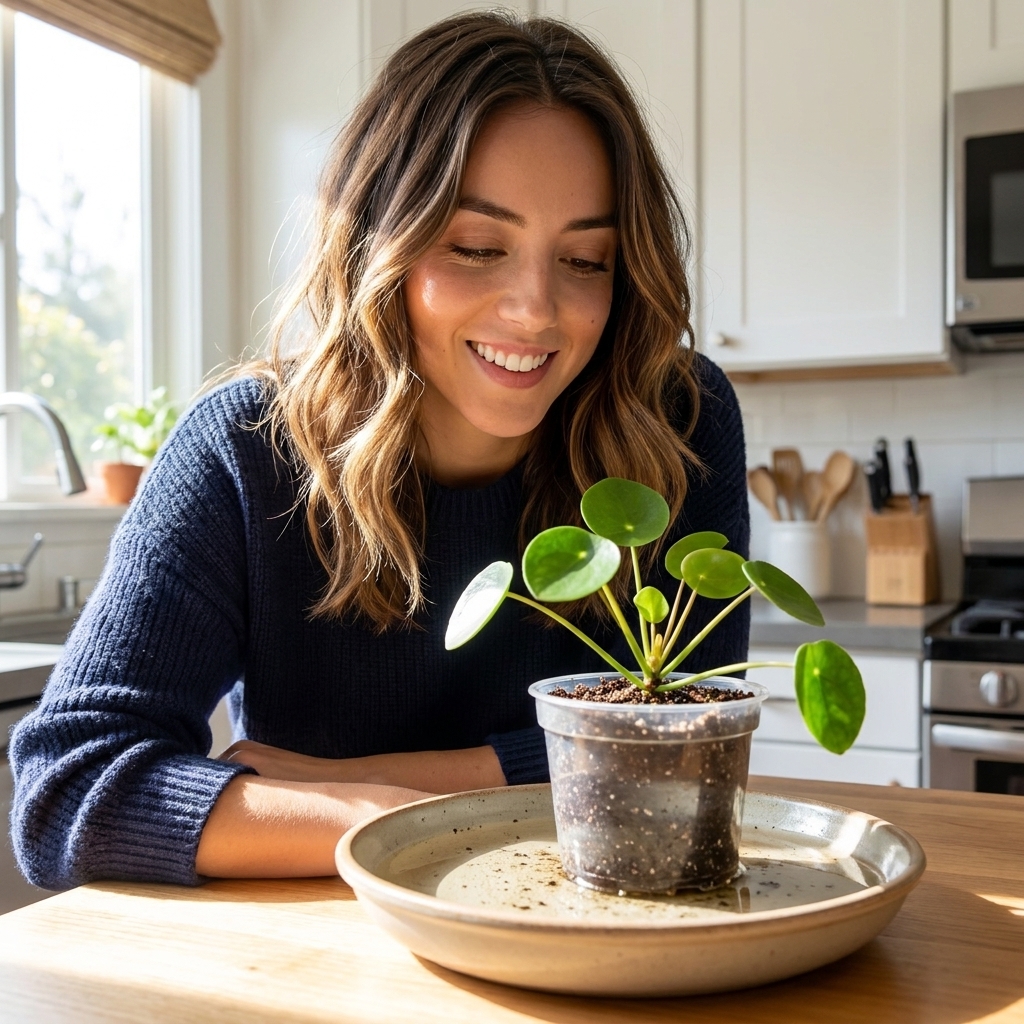
- Bottom-water for a while if your plant allows it. Set the pot in a tray of room-temperature water for 15 to 30 minutes (most plants do not need longer), then let it drain fully. This hydrates roots while keeping the surface drier.
- Empty saucers after watering. Standing water keeps the area humid and inviting.
Gentle reminder: If you have been watering frequently to “help” a struggling plant, gnats are often a symptom of the bigger issue: too-wet soil and low oxygen around the roots. Fixing moisture habits helps your plant and removes the gnat habitat.
Step 2: Sticky traps
Sticky traps do not solve the whole infestation alone, but they are incredibly useful for two reasons:
- They reduce the number of adults laying eggs.
- They tell you if your plan is working. Fewer gnats on traps week to week means you are winning.
Placement tips
- Put traps right at the soil line, not across the room. Adults hang out where they emerged.
- Use 1 to 2 traps per medium pot, more for big pots or heavy infestations.
- Replace when covered in dust or bugs, usually every 7 to 14 days.
Tip: Sticky traps catch other tiny flyers too. That is helpful, but if you are seeing lots of gnats and your soil stays wet, treat the soil, not just the air.
Step 3: BTI for larvae
BTI stands for Bacillus thuringiensis israelensis, a naturally occurring bacteria that targets the larvae of certain flies and mosquitoes. For fungus gnats, BTI is one of the most reliable, low-effort tools I have found once you build it into your normal watering routine.
How BTI works
Larvae have to ingest BTI in the soil. It disrupts their ability to feed, and they die before becoming adults. It is targeted, which is why it is commonly used for mosquito control.
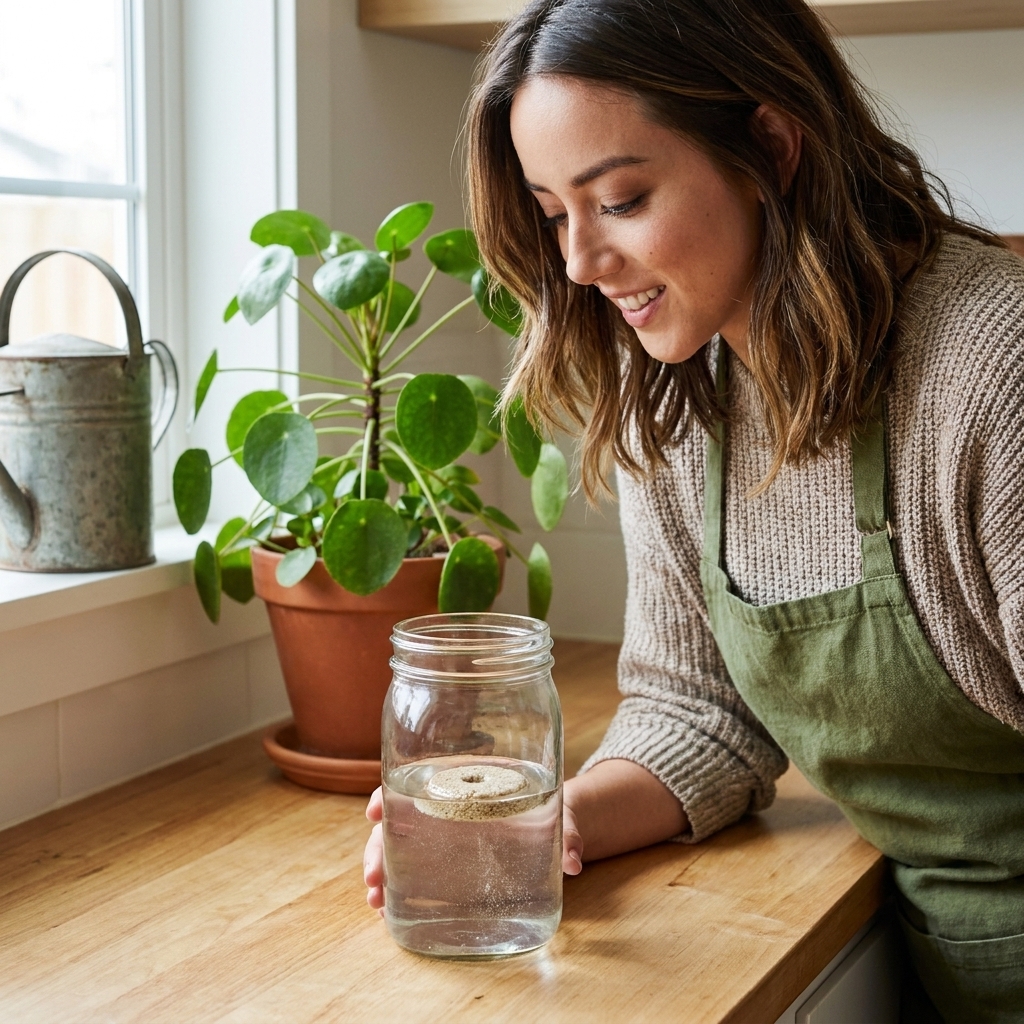
How to use mosquito dunks
- Follow your product label first, since dosing varies by brand and use.
- A common approach is to steep 1/4 dunk in 1 gallon of water.
- Let it sit for at least 30 minutes, longer is fine.
- Use that water to water thoroughly so the top layer of soil gets treated.
How to use mosquito bits
- Option A (my favorite): Make a “tea” by soaking bits in water for 30 minutes, then pour through a strainer so you do not leave corn granules on the soil.
- Option B: Sprinkle bits on the soil surface and water them in. This can work, but on very damp soil the granules can get fuzzy.
How long to keep using it
Use BTI-treated water for at least 3 to 4 weeks. If your home is warm or the infestation was heavy, go 6 to 8 weeks. Consistency matters more than intensity.
Safety note: Use BTI products as directed on the label, and store dunks and bits out of reach of kids and pets.
Keep them from coming back
Once the population drops, this is how you keep it from rebooting.
Refresh the top layer
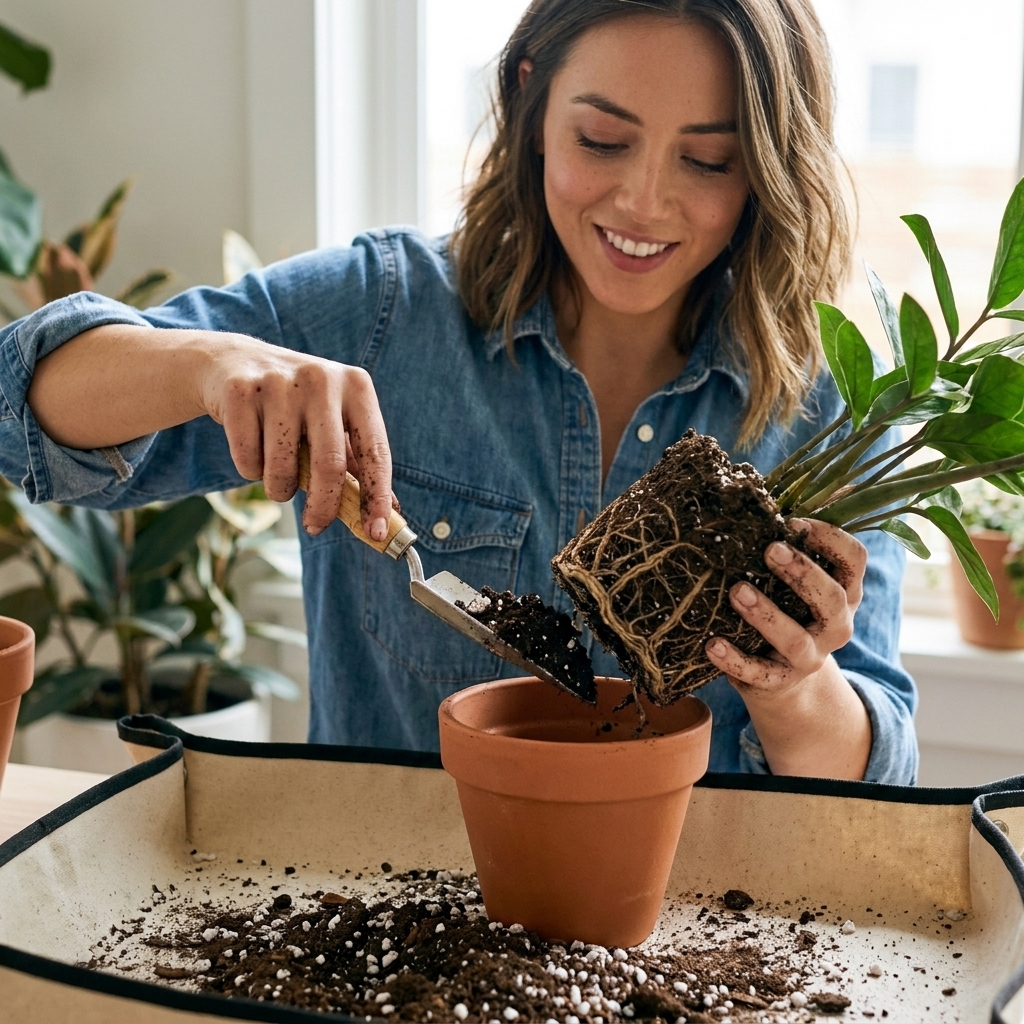
If the top of your potting mix is old, compacted, or stays wet for days, gently remove and discard the top 1 to 2 inches and replace with fresh, well-draining mix. This removes eggs, larvae, and decaying material they love.
Improve drainage
- Check the pot for a drainage hole. If there is no hole, consider repotting. Gnats adore waterlogged soil.
- Use a chunkier mix for plants that tolerate it. Adding perlite, pumice, or orchid bark increases air pockets and helps the top layer dry faster.
- Do not let plants sit in runoff. Dump excess water every time.
Top dressings: proceed carefully
You will hear suggestions like sand, gravel, or decorative stones. Sometimes they help, sometimes they backfire by trapping moisture underneath.
If you want a top dressing, prioritize what helps the surface dry between waterings, not what seals it in.
Hydrogen peroxide, neem, cinnamon
You will see these suggested constantly, so here is my honest take as someone who has tried most of them at least once.
Hydrogen peroxide drench
A diluted hydrogen peroxide drench can kill some larvae on contact, but it does not provide lasting control the way BTI does. It can also be stressful to sensitive roots if overused. If you use it, treat it like a short-term reset, not your main plan.
Neem oil
Neem can help with certain pests, but for fungus gnats it is usually disappointing because the real problem is larvae in the soil. Also, any oil can burn leaves if applied too heavily or used under strong light, and some people dislike the smell.
Cinnamon on the soil
Cinnamon has mild antifungal properties, but it does not reliably wipe out an established gnat population. If cinnamon helps at all, it is usually because it nudges people to keep the soil surface drier. I would not rely on it alone.
How to tell it is working
Use your sticky traps like a scoreboard:
- Week 1: traps may fill quickly. That is normal and honestly encouraging.
- Week 2 to 3: you should see a noticeable drop in trapped adults if you are using BTI and adjusting watering.
- Week 4: you should be down to the occasional stray gnat.
If nothing changes after 2 to 3 weeks, it usually means one of these is happening:
- The soil is still staying wet on top most days.
- BTI is not being applied consistently with every watering.
- There is another breeding spot nearby, like a damp bag of potting soil, a drip tray full of water, or a forgotten propagation jar.
Hidden breeding spots
Fungus gnats do not always come from your favorite pothos. They also love “plant-adjacent” moisture.
- Open potting soil bags: Seal them tightly or move soil into an airtight bin.
- Overfilled cachepots: Decorative pots without drainage can trap water beneath the nursery pot.
- Humidity trays: If you use pebbles and water, keep water below the pebble line and refresh regularly.
- Self-watering reservoirs: Algae and constant moisture can support gnats.
- Leaky windowsills: Damp wood and organic debris can host gnats too.
Emergency mode
If you have clouds of gnats or seedlings that are suffering, go a little harder for two weeks:
- Sticky traps on every pot, even the ones that look unaffected.
- BTI water every time you water, no exceptions.
- Quarantine the worst plants to one area so you can monitor traps and reduce spread.
- Consider repotting plants with sour-smelling, compacted soil that never dries.
Repotting is not always required, but if your soil is staying wet for a week or more, the mix may be too dense for your light levels and indoor airflow.
FAQ
Are fungus gnats harmful to houseplants?
Adult gnats are mostly just annoying. The larvae can damage fine roots, especially in seedlings, cuttings, and already-stressed plants. Even when damage is minimal, gnats often signal that the soil is staying too wet, which increases root rot risk.
Why do I have fungus gnats even though I do not overwater?
Sometimes it is not “too much water,” it is “too often,” or “soil that holds water too long.” Low light, cool rooms, dense potting mixes, oversized pots, and cachepots that trap runoff can keep soil wet for days.
Will I ever get rid of them permanently?
You can absolutely get to a place where they are gone. “Permanent” comes from breaking the cycle (BTI plus traps) and then keeping conditions less favorable (letting the surface dry, improving drainage, and avoiding constantly damp soil).
Do I need to throw away my plant?
No. In the vast majority of cases, you can keep the plant and fix the environment. I only recommend starting over if the plant is already failing from severe root rot and the soil is chronically soggy and foul-smelling.
How often should I use BTI?
Use it with every watering for at least 3 to 4 weeks. If you are still catching adults, keep going another couple weeks to fully collapse the population.
Weekly routine
- Once a week: check sticky traps, replace if needed.
- At watering time: use BTI-treated water for any plant that has had gnats.
- Every time you water: empty saucers and cachepots.
- Every month or two: reassess your soil. If it has compacted into a sponge, consider amending or repotting.
If you take nothing else from this, take this: fungus gnats are not a personal failure. They are a moisture and soil management puzzle. Once you solve that puzzle, you get your peaceful, fly-free plant corner back.