A practical, plant-parent-friendly guide to NPK, fertilizer types, and seasonal feeding schedules so your houseplants grow faster and healthier without ferti...
If you have ever stared at a fertilizer label like it is written in another language, you are not alone. I did that too, right after I “loved” my first plants a little too enthusiastically. The good news: feeding houseplants is not about having a perfect product. It is about understanding a few basics so you can feed lightly, consistently, and at the right time.
This guide will walk you through what NPK means, how to pick a fertilizer type, and how to build a low-stress schedule that keeps your plants growing steadily without the dreaded crispy leaf tips.

Do indoor plants need fertilizer?
In short: most do, eventually. Potting mix contains some nutrients, but indoor plants live in a closed system. Unlike outdoor plants, they are not getting a constant refresh of nutrients from soil life, decomposing leaves, and rainwater. Over time, they use up what is available in the pot.
Fertilizer is not “plant food” in the way sunlight is. Think of it as a multivitamin that supports the growth your plant is already capable of. If a plant is struggling because of low light, overwatering, or pests, fertilizer will not fix that. It can actually make things worse by stressing damaged roots.
Signs your plant might benefit
- New leaves are coming in smaller than usual (after light and watering have been ruled out)
- Growth has slowed during spring and summer even though conditions are stable
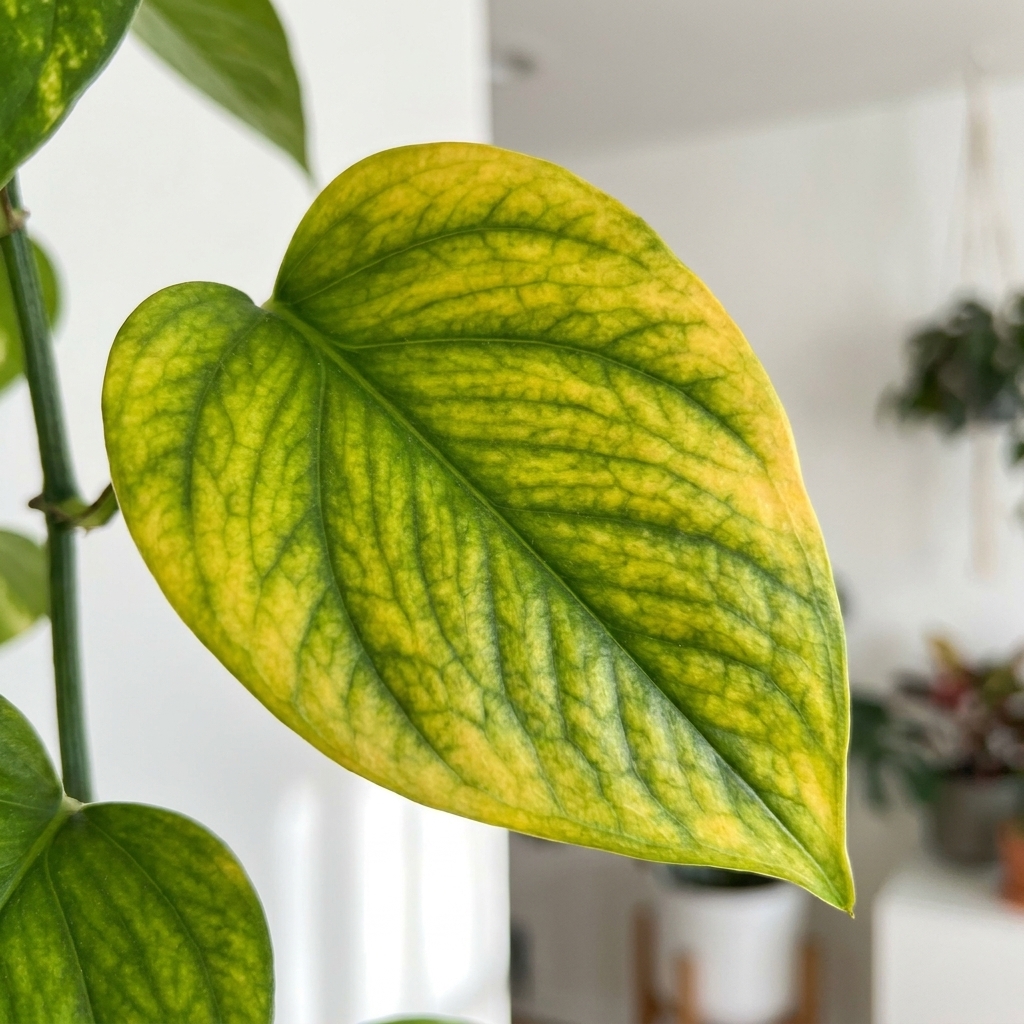
- Leaf color looks a little dull or pale across the whole plant (not just one old leaf)
- You have not repotted in a year or more and your plant is actively growing
When to hold off
- The plant is newly purchased (give it 3 to 4 weeks to adjust)
- You just repotted into fresh mix (often no fertilizer needed for 4 to 8 weeks)
- The plant is wilted, has root rot, or is recovering from major stress
- It is mid-winter and your plant is not putting out new growth
NPK, decoded
On most fertilizers you will see three numbers, like 10-10-10 or 3-1-2. That is the NPK ratio.
- N = Nitrogen: supports leafy growth and overall green color
- P = Phosphorus: supports roots and flowering processes
- K = Potassium: supports general plant function, stress tolerance, and strong growth
A quick but important label detail: in the U.S. (and many other places), those numbers are reported as N–P2O5–K2O, not pure elemental phosphorus and potassium. You can still use the ratio for choosing a fertilizer and comparing products, just know the “P” and “K” on the label are in those standard forms.
The numbers are percentages by weight of the nutrients listed in the guaranteed analysis. A higher analysis product generally means more nutrients per unit of fertilizer, so you typically dilute more or use less product to hit a gentle dose. Always follow the label, then err on the lighter side.
Best NPK ratio for houseplants
For most foliage houseplants, I like a fertilizer that is either:
- Balanced (like 10-10-10 or 20-20-20) used at a reduced strength, or
- Foliage-leaning (often close to a 3-1-2 pattern), which mirrors what many leafy plants use most
For flowering houseplants (like African violets or some Hoyas), you can use a bloom-friendly formula, but do not overdo phosphorus. More “bloom booster” is not automatically more blooms indoors. Light is still the boss.
Micronutrients matter too
Beyond NPK, plants also use smaller amounts of nutrients like calcium, magnesium, iron, and manganese. Many houseplant fertilizers include these as “micronutrients” or “trace elements.” If you only buy one fertilizer, choose one that includes micronutrients so you are covering your bases.
Organic vs synthetic
This is one of those topics where the best choice is the one you will use correctly. Both can work beautifully indoors.
Synthetic fertilizers
What they are: nutrients in a form plants can take up quickly, often dissolved in water.
Why people love them: predictable, fast-acting, easy to measure. Great for beginners because results are consistent.
Watch-outs: easier to overdo. Excess salts can build up in potting mix over time, especially if you fertilize heavily, use hard tap water, or rarely flush the soil.
Organic fertilizers
What they are: nutrients derived from natural sources (like fish emulsion, kelp, worm castings, bat guano). They often rely on microbes to break nutrients down into plant-available forms, although some (like certain fish-based liquids) can act fairly quickly.
Why people love them: often gentler, can be slower to release, and can support soil biology. Many plant parents feel they are more forgiving.
Watch-outs: they can smell, and if you add lots of organic matter to consistently moist soil, it can make the pot a more appealing place for fungus gnats. Results can also be slower or less predictable indoors where microbial activity varies.
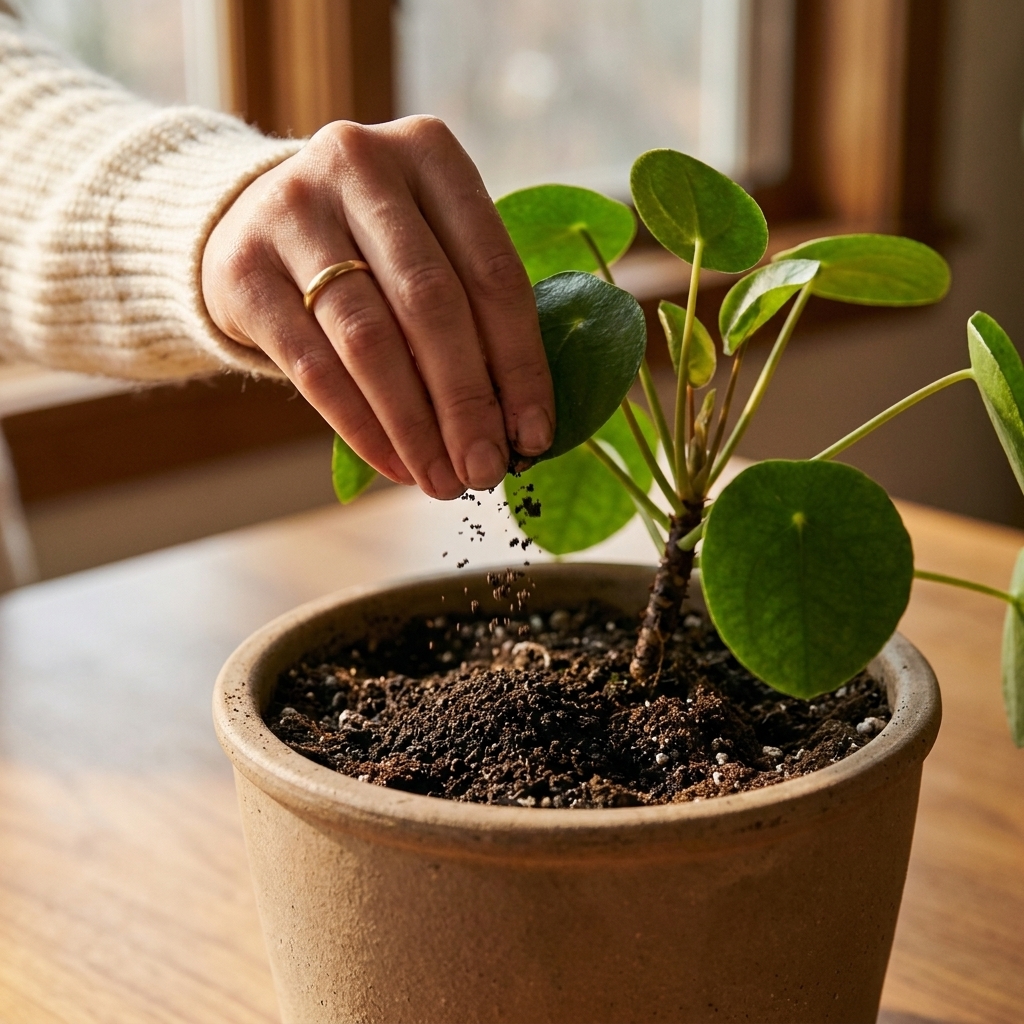
Fertilizer types
Liquid fertilizer
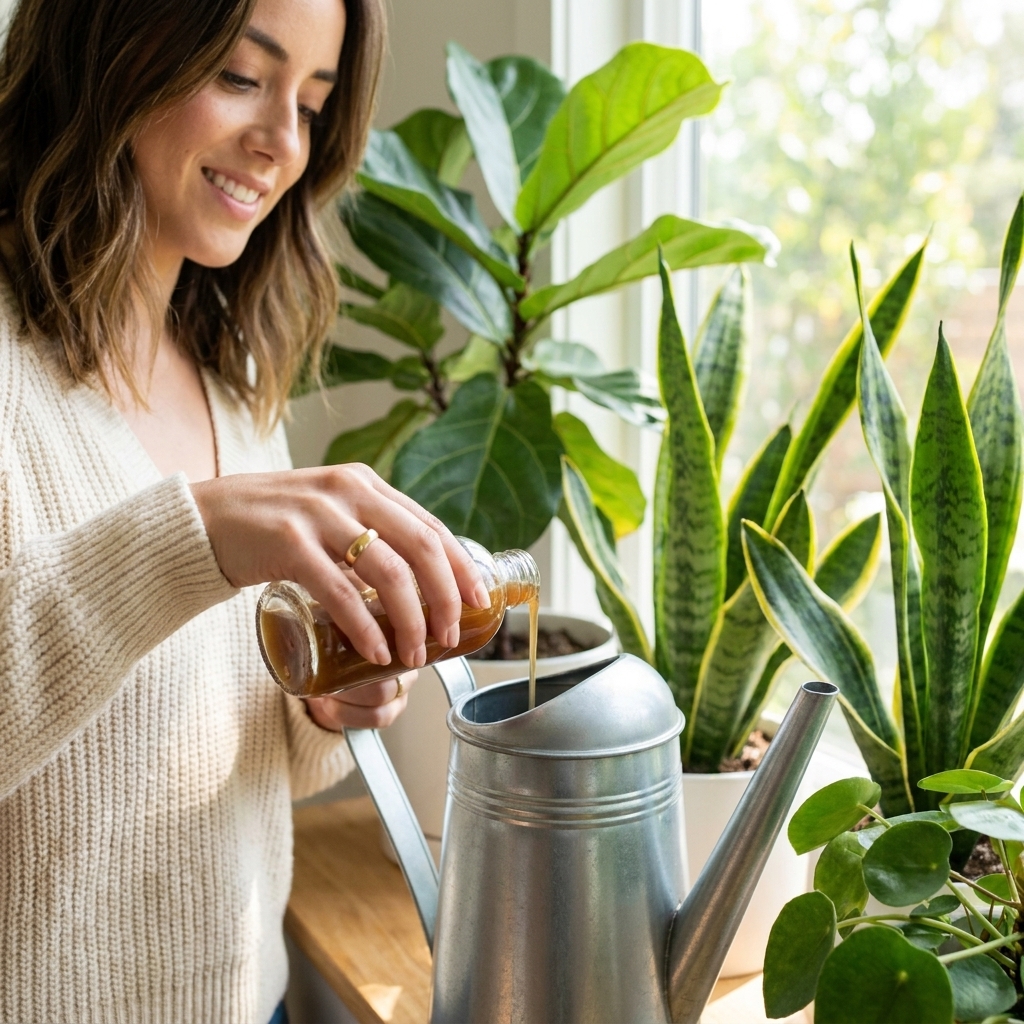
This is my go-to for indoor plants. You mix it into water and apply during watering. It is easy to dilute, easy to skip, and easy to adjust based on how your plant responds.
Slow-release granules
These are mixed into soil or sprinkled on top and release nutrients over weeks or months. They are convenient, especially if you have a lot of plants. The main risk is that you forget they are there and accidentally add liquid fertilizer on top. Also, warmer temperatures can increase release rates.
Fertilizer spikes
I rarely recommend spikes for houseplants. They concentrate nutrients in one spot, which can burn roots and lead to uneven feeding. If spikes are what you have, use them cautiously and follow label directions exactly.
Foliar sprays
Some plants can absorb small amounts of nutrients through leaves, but foliar feeding is not a replacement for root feeding. It can also leave residue and increase the risk of leaf spotting, especially in bright light. I keep it as an occasional tool, not a main strategy.
When to fertilize
Most houseplants want fertilizer when they are actively growing, which is usually spring through early fall. Growth slows in winter because light levels drop, even in warm homes.
A simple seasonal plan
- Spring and summer: fertilize regularly, lightly
- Early fall: taper down as growth slows
- Late fall and winter: pause for most plants
Two common exceptions:
- Plants under strong grow lights that are actively producing new leaves in winter can be fed lightly year-round.
- Winter bloomers may benefit from a gentle feeding during their active period, but only if they are truly growing.
How often to fertilize
If you want one beginner-friendly method, use this:
Weakly, monthly
- Choose a liquid fertilizer labeled for houseplants.
- Mix it at 1/4 to 1/2 the recommended strength.
- Apply once a month during spring and summer.
People often talk about “weekly, weakly” too. Monthly weak feedings are simply easier to remember, easier to recover from if you mess up, and still plenty for most indoor plants growing in average home light.
For fast growers
Plants like pothos, philodendron, monstera, spider plant, and many begonias can handle:
- 1/4 strength every 2 weeks during active growth
If you go this route, pay attention to leaf tips and overall vigor. If tips crisp or growth gets oddly weak, back off.
For slow growers and low light
ZZ plants, snake plants, and many succulents indoors often do best with:
- 1/4 strength every 6 to 8 weeks in spring and summer, or
- one very light feeding at the start of the growing season
Low light means slower growth, and slower growth means less fertilizer is needed. Overfeeding in low light is a classic path to stressed roots and pest problems.
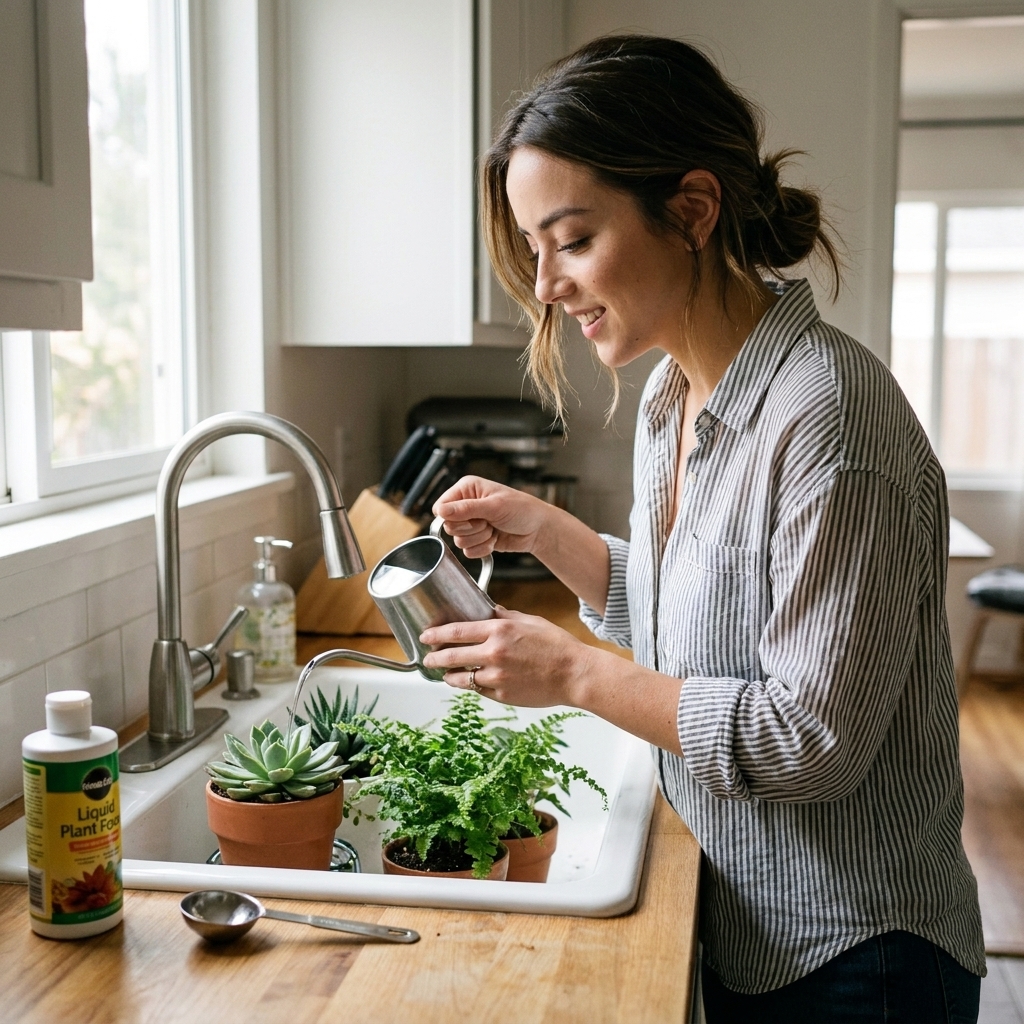
How to apply fertilizer
Step 1: Do not fertilize bone dry soil
Never fertilize a plant that is bone dry. Dry roots absorb salts quickly and are more likely to burn. If the pot feels very light, water with plain water first.
If you need to fertilize the same day, you can pre-water, wait about 10 to 30 minutes for the root ball to hydrate, then apply diluted fertilizer.
Step 2: Mix carefully
Measure. Guessing is where “oops” moments happen. If your fertilizer says 1 teaspoon per gallon, try 1/4 teaspoon per gallon to start. You can always increase later, but you cannot un-burn a root system. If your label uses metric, follow it as written (for example, mL per liter), then start at 1/4 to 1/2 strength.
Step 3: Water normally
Pour slowly until a little drains from the bottom. This helps distribute nutrients evenly and reduces salt buildup near the surface.
Step 4: Do not let pots sit in runoff
Empty the saucer after 10 to 15 minutes. Sitting in fertilizer solution can irritate roots and encourages soggy soil.
Step 5: Flush occasionally
Every 2 to 3 months during the growing season, it helps to flush the pot with plain water. Water thoroughly so plenty drains out the bottom. This rinses excess salts, especially if you use synthetic fertilizer or have hard water.
Plant cheat sheet
If you are standing in front of your plant shelf wondering who gets fed and who gets left alone, here is a simple starting point.
Foliage tropicals
(pothos, philodendron, monstera, syngonium)
- Fertilizer: balanced or foliage-leaning, with micronutrients
- Schedule: 1/4 to 1/2 strength monthly in spring and summer
Prayer plants
(calathea, maranta, stromanthe)
- Fertilizer: gentle liquid, ideally with micronutrients
- Schedule: 1/4 strength monthly, or every 6 weeks
- Tip: leaf edge browning can have a few causes (mineral buildup, low humidity, inconsistent watering, water quality). Flushing and a lighter fertilizer hand often help.
Succulents and cacti
- Fertilizer: cactus fertilizer or a diluted balanced fertilizer
- Schedule: 1/4 strength once or twice in spring and summer
- Tip: fertilize only when you are watering regularly and the plant is actively growing
Orchids
(common phalaenopsis)
- Fertilizer: orchid fertilizer
- Schedule: light feeding during active growth, commonly 1/4 strength every 2 to 4 weeks
- Tip: fertilize after watering the medium so roots are not dry
African violets
- Fertilizer: violet fertilizer or balanced fertilizer at low strength
- Schedule: small, regular feedings during active growth
Common mistakes
“I fertilized and my leaf tips turned brown.”
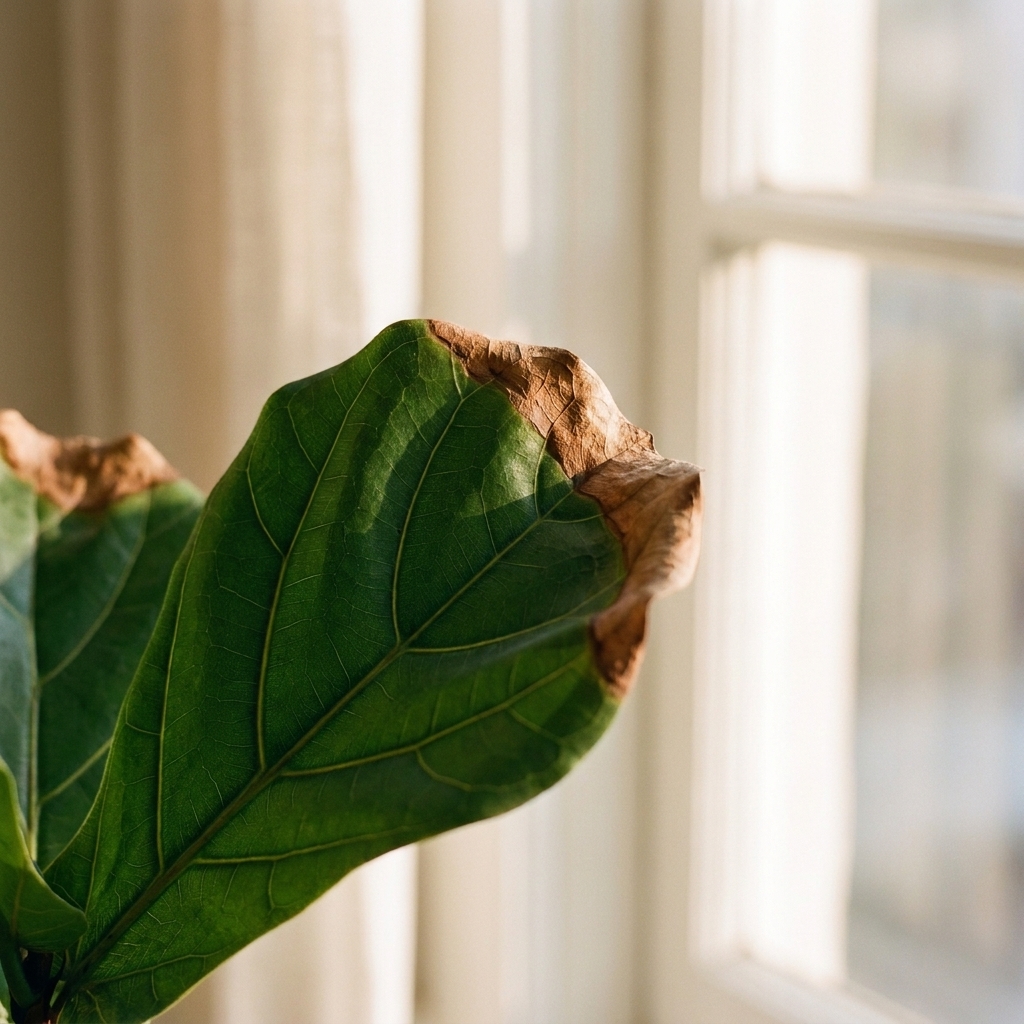
This is often fertilizer burn or salt buildup, but it can also overlap with low humidity and watering swings. Pause fertilizing for a month, flush the soil thoroughly, and trim only the fully dead parts of the tips. Then restart at 1/4 strength.
“My plant is not growing, so I fed it more.”
Totally understandable. Most of the time, slow growth indoors is a light issue, not a nutrient issue. Check light levels first, then watering rhythm, then root health. Fertilizer supports growth. It does not create it.
“I got fungus gnats after using organic fertilizer.”
Gnats love consistently damp soil with organic matter. Organic inputs can add to the buffet, but moisture is the main driver. Let the top inch or two of soil dry between waterings when your plant allows, use yellow sticky traps, and go lighter on organic top dressings if the surface stays wet. Bottom watering can also help keep the surface drier.
“I used slow-release and now I am not sure what to do.”
Do not stack fertilizers. If you used slow-release granules, skip liquid fertilizer until the granule window has passed. When in doubt, underfeed rather than overfeed.
FAQ
Before or after watering?
If the soil is already lightly moist, you can fertilize during your normal watering. If the soil is very dry, water with plain water first. If you need to fertilize that day, pre-water, wait 10 to 30 minutes, then apply diluted fertilizer.
Can I use outdoor fertilizer indoors?
Sometimes, but be careful. Outdoor fertilizers are often stronger and designed for heavy feeders in full sun. If you use one indoors, dilute more than you think you need, and make sure it includes micronutrients.
Best fertilizer for beginners?
A liquid houseplant fertilizer with micronutrients, used at 1/4 to 1/2 strength once a month in spring and summer, is a very safe and effective starting point.
Should I fertilize a plant dropping leaves?
Not right away. Leaf drop is usually stress related: watering, light changes, temperature swings, pests, or root issues. Stabilize care first. Once you see healthy new growth, then consider a gentle feeding.
A calm way to start
If fertilizer feels intimidating, start with one plant you know is actively growing and generally happy. Choose a simple liquid fertilizer, dilute it to 1/4 strength, and feed once a month for the season. Watch what happens. Plants are wonderful teachers when we make small, reversible changes.
And if you have ever overwatered, overfed, or panicked and tried three fixes at once, welcome to the club. There is no black thumb here, just learning.