Stop guessing. Use clear symptom clues, simple soil checks, and step-by-step rescue plans to fix overwatering or underwatering fast.
Winter can make even your “easy” plants act a little dramatic. One week they look fine, the next you’re sweeping up leaves like it’s their new hobby. Before you assume you have a black thumb, take a breath. Winter leaf drop is usually a predictable response to less light, colder air, and dry indoor air from heating, plus a watering routine that didn’t get the memo that growth has slowed.
The good news: most winter decline is fixable. The goal is not to force lush, summer-level growth. The goal is to keep roots healthy, prevent stress spirals, and set your plant up to bounce back when days lengthen.
What is normal winter leaf drop?
Some leaf loss can be totally normal, especially for plants that slow down in low light.
- Normal: A few older, lower leaves yellowing and dropping over several weeks, while new growth pauses.
- Not normal: Rapid leaf drop, many leaves turning yellow at once, mushy stems, a sour soil smell, or stems that wrinkle and collapse.
If your plant looks “off” quickly, think stress event (draft, heater blast, missed watering, overwatering) rather than “it just hates me.”
Quick winter triage
If leaves are falling, you’ll get answers faster with a quick check in this order:
- Feel the soil 2 inches down. Is it wet, lightly damp, or bone dry? (A wooden skewer is a great cheat code here. Stick it in, wait a minute, then pull it out and feel for moisture.)
- Check the temperature zone: is it within 3 feet of a drafty window or door, or directly over a heat vent?
- Look at the light at midday. Has the sun angle shifted so your plant is now in shade?
- Inspect for pests: check leaf undersides and stem joints for webbing, specks, or sticky residue.
Then pick the troubleshooting path below that matches what you’re seeing most.
Troubleshoot by symptom
1) Fast leaf drop after a cold night
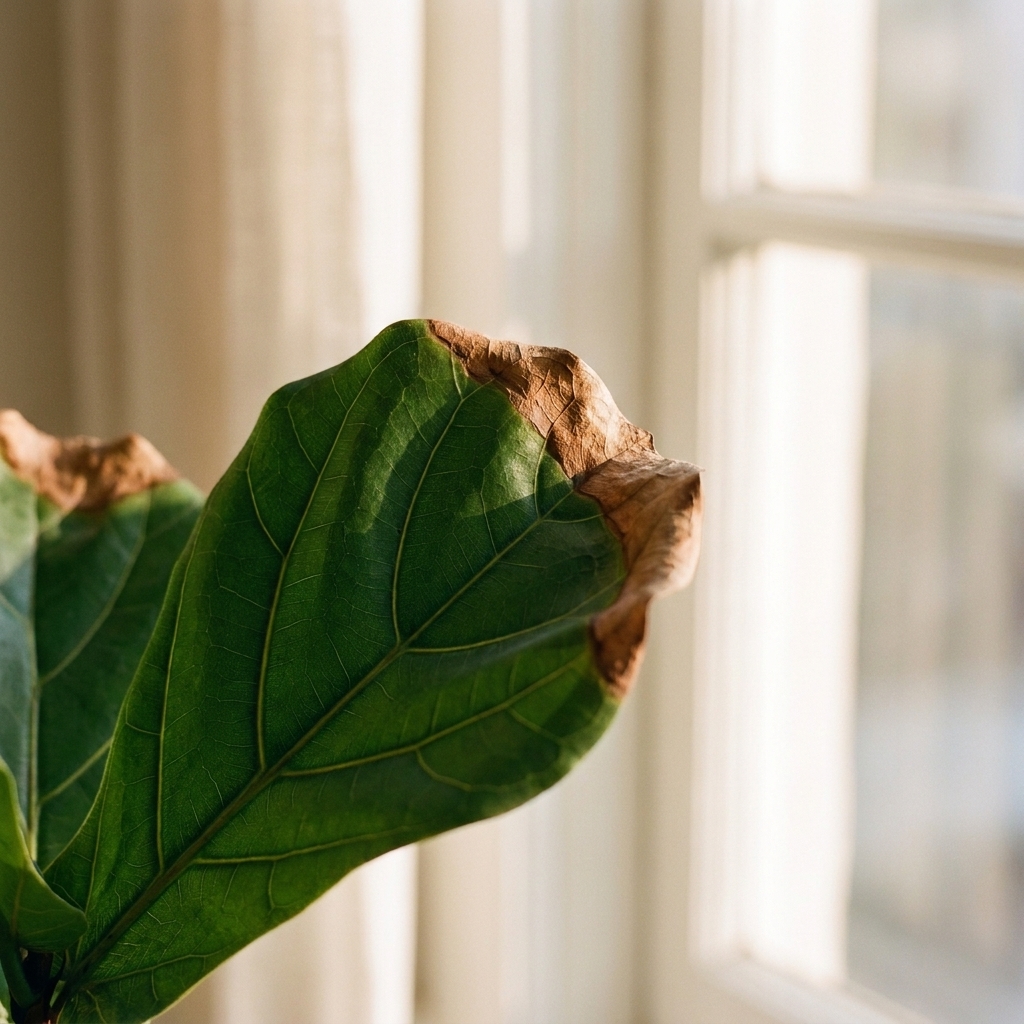
What it looks like: Leaves curl, turn translucent or black at the edges, then drop. Sometimes only the window-facing side is affected.
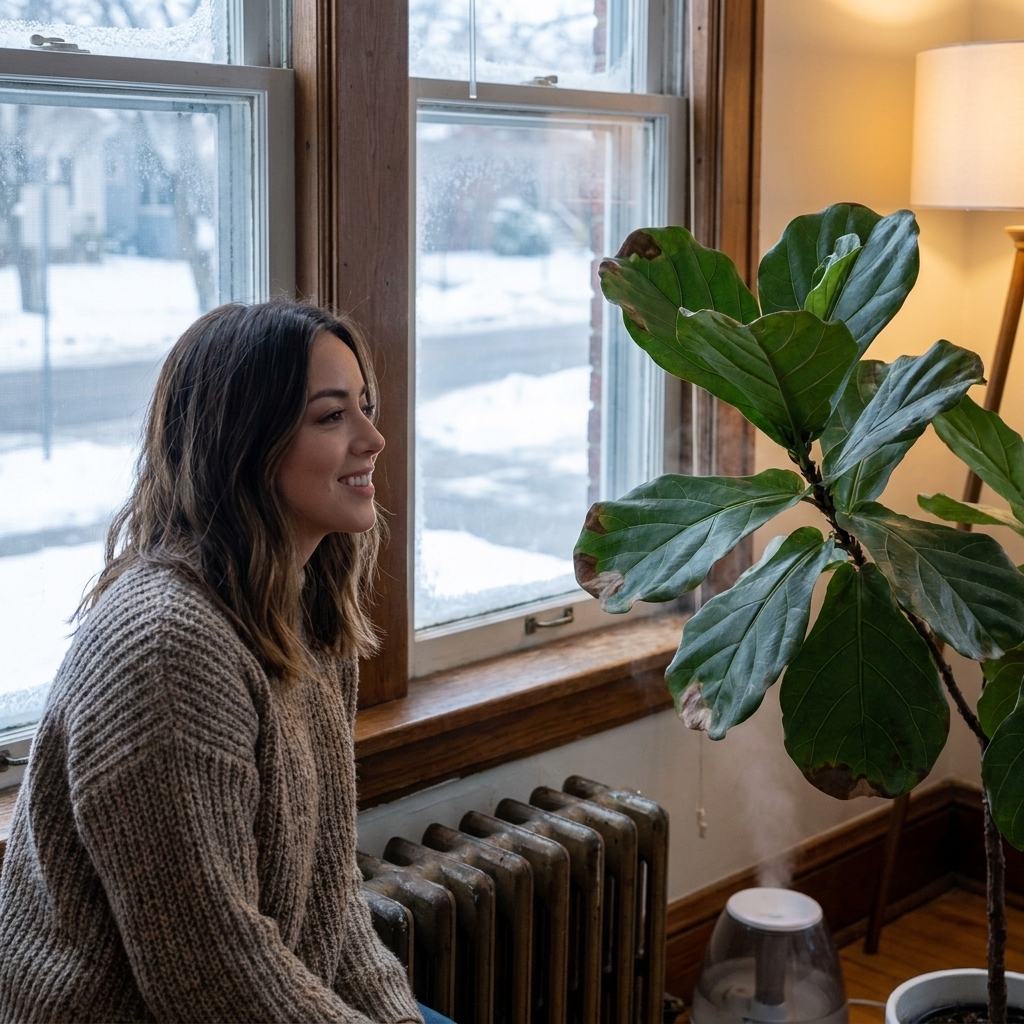
Why it happens: Many tropical houseplants get stressed when leaf tissue repeatedly dips below about 55 to 60°F, but tolerance varies by species. As a general rule, if you can keep most tropicals above 60°F, they behave a lot better. The tricky part is that even if your room reads 68°F, the air right against a single-pane window can be much colder, especially at night.
Fix it:
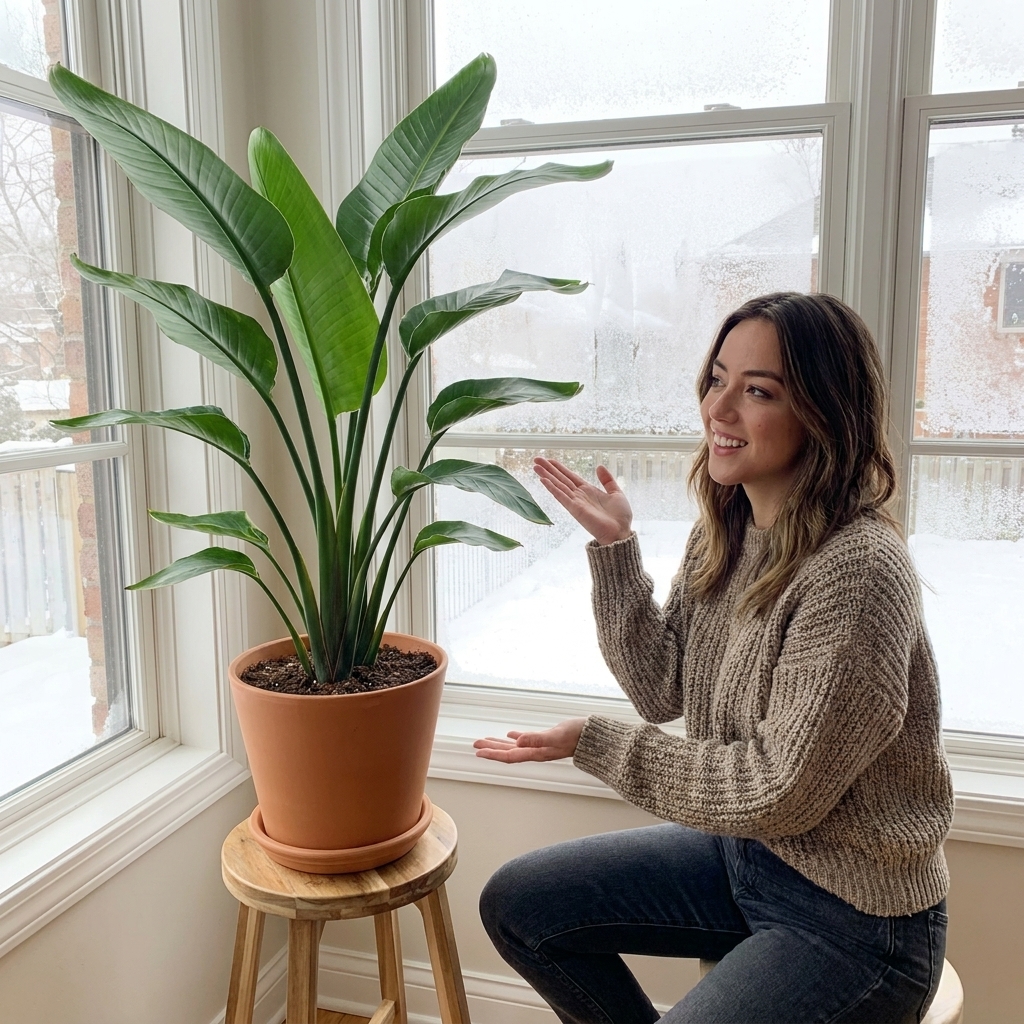
- Move the plant 12 to 24 inches back from the glass, especially overnight.
- Keep plants away from entry doors that open frequently.
- Use a curtain at night or apply temporary window insulation film in the coldest months.
- For very drafty windows, place plants on a stand so leaves do not touch the glass.
What to expect: Cold-damaged leaves will not “heal.” Your goal is to stop the damage and protect new growth.
2) Crispy brown tips and edges
What it looks like: Brown, crunchy edges, especially on Calathea, Maranta, Dracaena, palms, and ferns. Leaves may look dull and thirsty even after watering.
Why it happens: Heated indoor air can drop humidity very low, and vents create hot, dry microclimates that dehydrate leaves faster than roots can keep up.
Fix it (in order of impact):
- Move away from vents and radiators (even 2 to 4 feet helps).
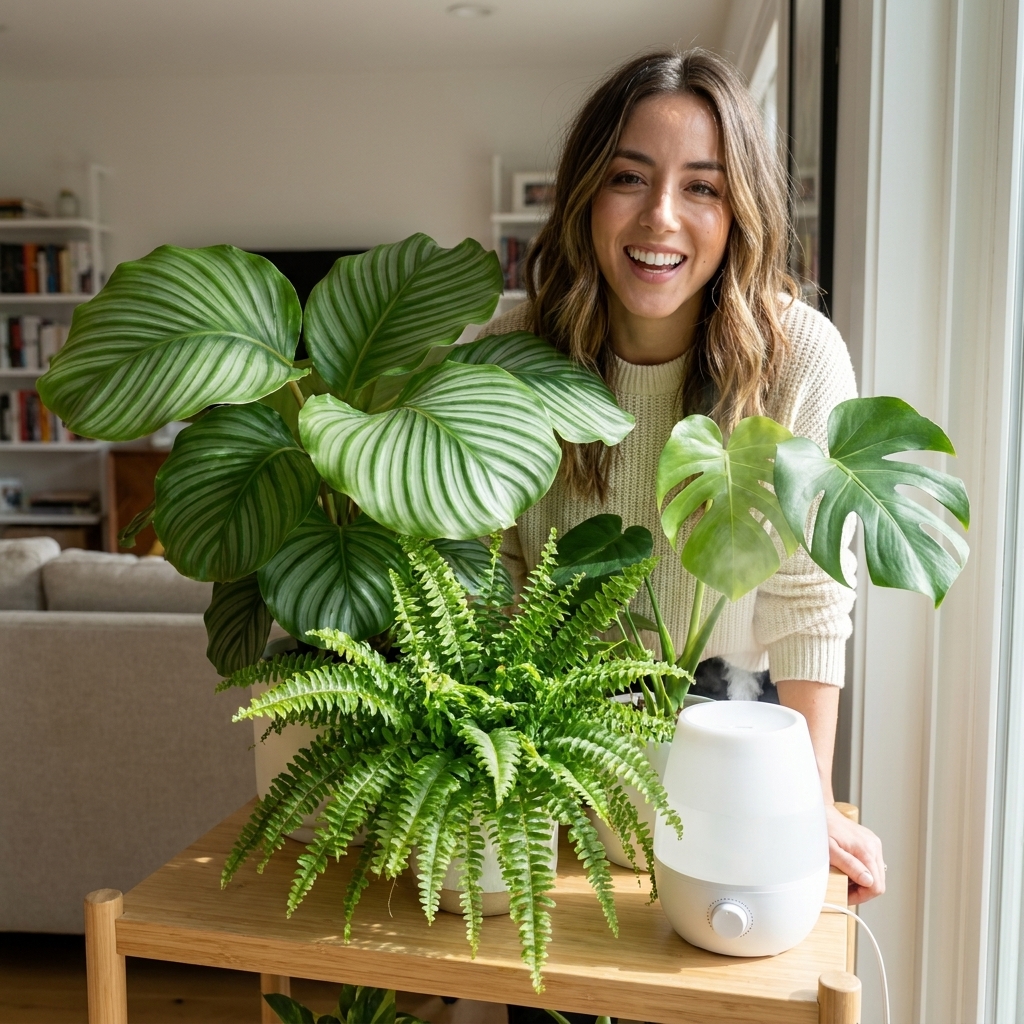
- Run a humidifier near your plant cluster. A good general target is roughly 40 to 60%, but keep your real life in mind. Some plants (like ferns and many calatheas) appreciate higher humidity, while many homes in cold climates risk window condensation and mold if you push too high for too long.
- Group plants together to create a slightly more humid pocket.
- Use a pebble tray as a small assist (helpful, but not a replacement for a humidifier in very dry homes).
A gentle truth: Misting is usually temporary and inconsistent. If you love misting, do it for enjoyment, but rely on better tools for real humidity support.
3) Yellow leaves with damp soil
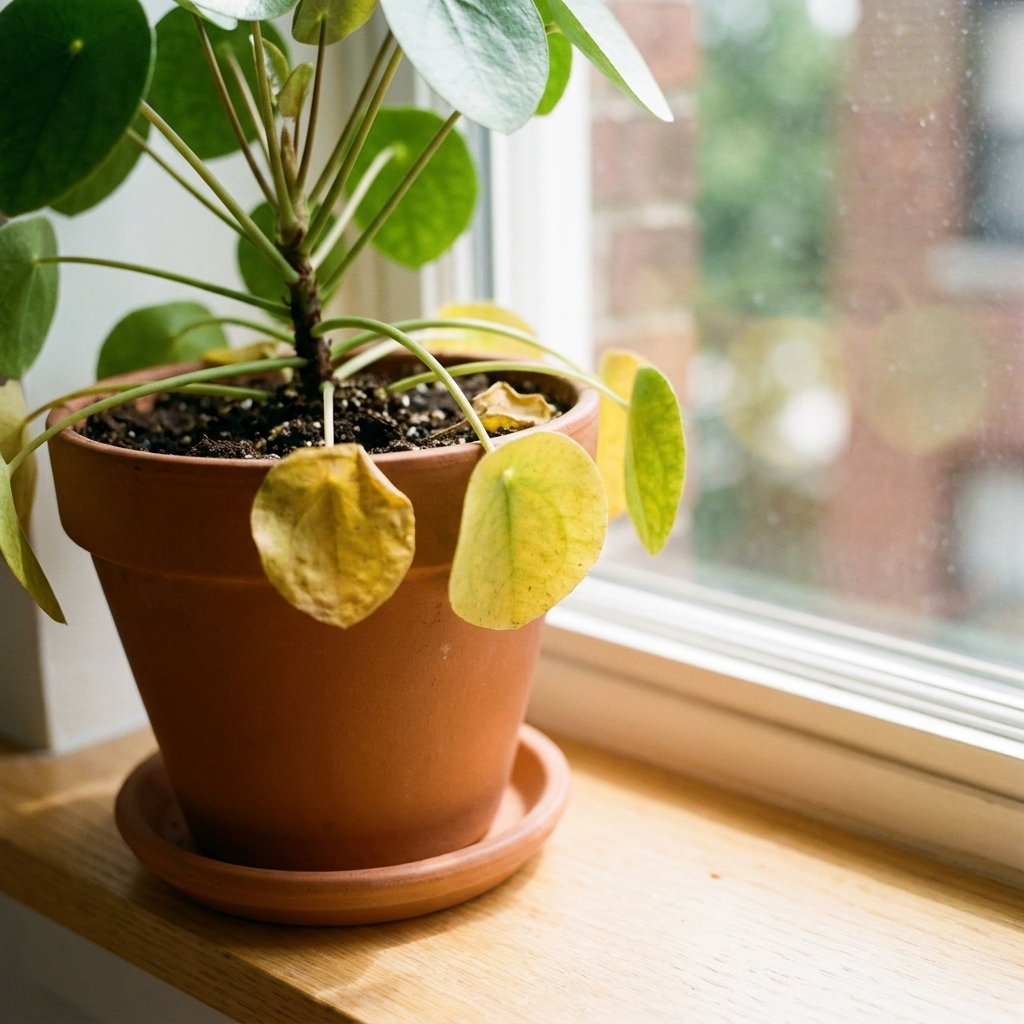
What it looks like: Yellowing leaves that feel soft, leaves dropping while soil stays wet for many days, fungus gnats, or a musty smell.
Why it happens: In winter, plants use less water because growth slows and light is weaker. If you keep the same watering schedule you used in summer, roots can sit wet too long, leading to root rot.
Fix it:
- Pause watering until the soil dries to the appropriate depth for your plant (for many, that’s the top 1 to 3 inches).
- Make sure the pot has drainage holes. If it does not, consider repotting.
- Empty saucers and cachepots so the plant never sits in runoff.
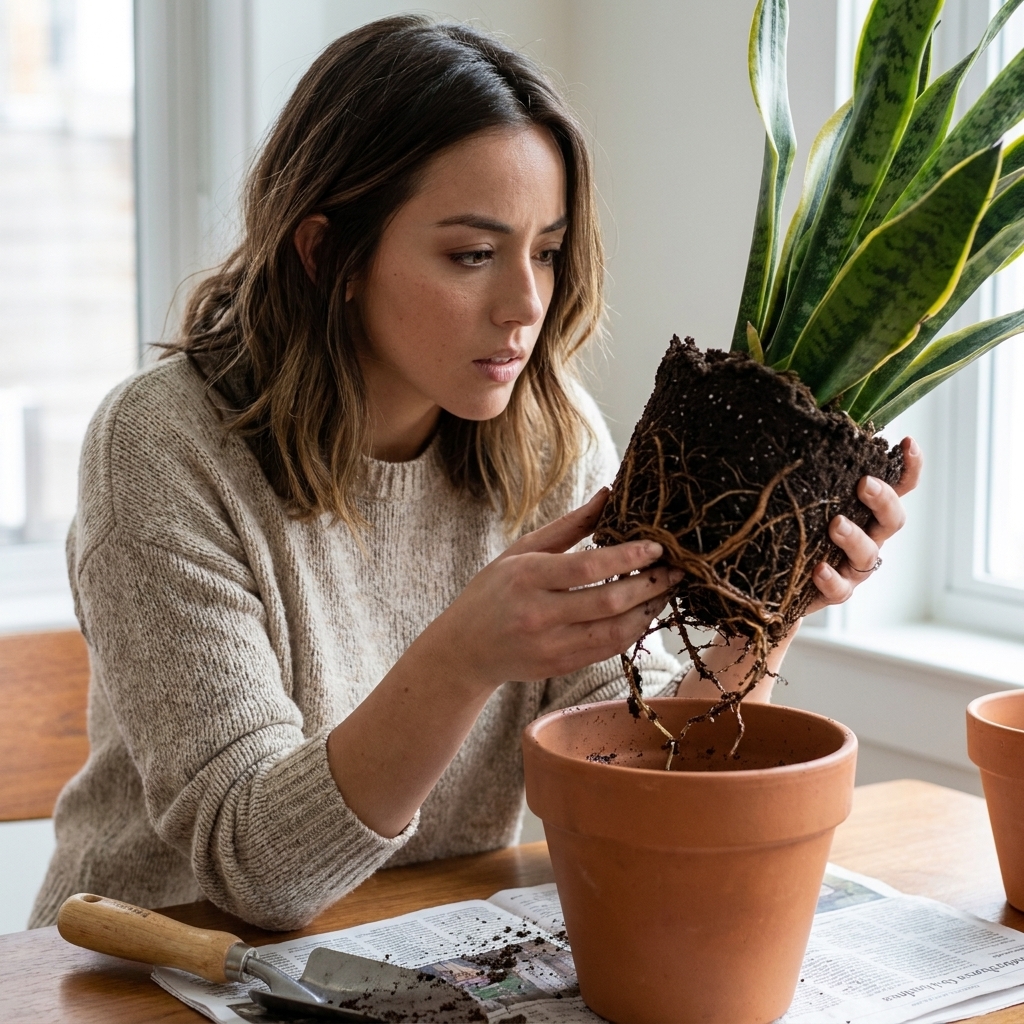
- Decide before you repot: If your plant is droopy but stems are still firm and the soil is just staying wet too long, improving light, warmth, and airflow and letting it dry down may be enough. If the soil smells sour, stems are mushy, or roots are black and slimy, unpot, trim damaged roots, and repot into fresh, airy mix.
Simple winter rule: Water by soil dryness, not by the calendar.
4) Limp leaves with dry soil
What it looks like: Soil pulls away from the pot edges, the plant droops, then drops leaves (especially on Ficus, Schefflera, some Hoyas). You may notice it right after your building heat kicks on.
Why it happens: Dry indoor heat speeds up evaporation. Some plants also get watered less often in winter, and occasionally we go too far in the “don’t overwater” direction.
Fix it:
- Give a deep watering until water runs freely from the drainage holes.
- If soil is very dry and water rushes through, bottom-water for 20 to 45 minutes, or until the top feels evenly damp, then drain well.
- After rehydration, adjust: in winter, you may still water less often, but do not let sensitive plants fully desiccate repeatedly.
What to expect: Some leaves may still drop. Focus on firm stems and improving consistency going forward.
5) Leggy growth and leaf loss
What it looks like: Longer spaces between leaves, smaller new leaves, leaning toward the window, older leaves dropping as the plant sheds what it cannot “afford” to keep.
Why it happens: Winter sun is weaker and the sun’s angle changes. A spot that was bright in summer can become surprisingly dim in December.
Fix it:
- Move the plant closer to your brightest window (without touching cold glass). In practical terms, this is often an unobstructed south or west window in the Northern Hemisphere, or north-facing in the Southern Hemisphere. If you have only one decent window, that is probably your “brightest window.”
- Clean the window and dust the leaves. It matters more than you’d think.
- Rotate the pot weekly for even growth.
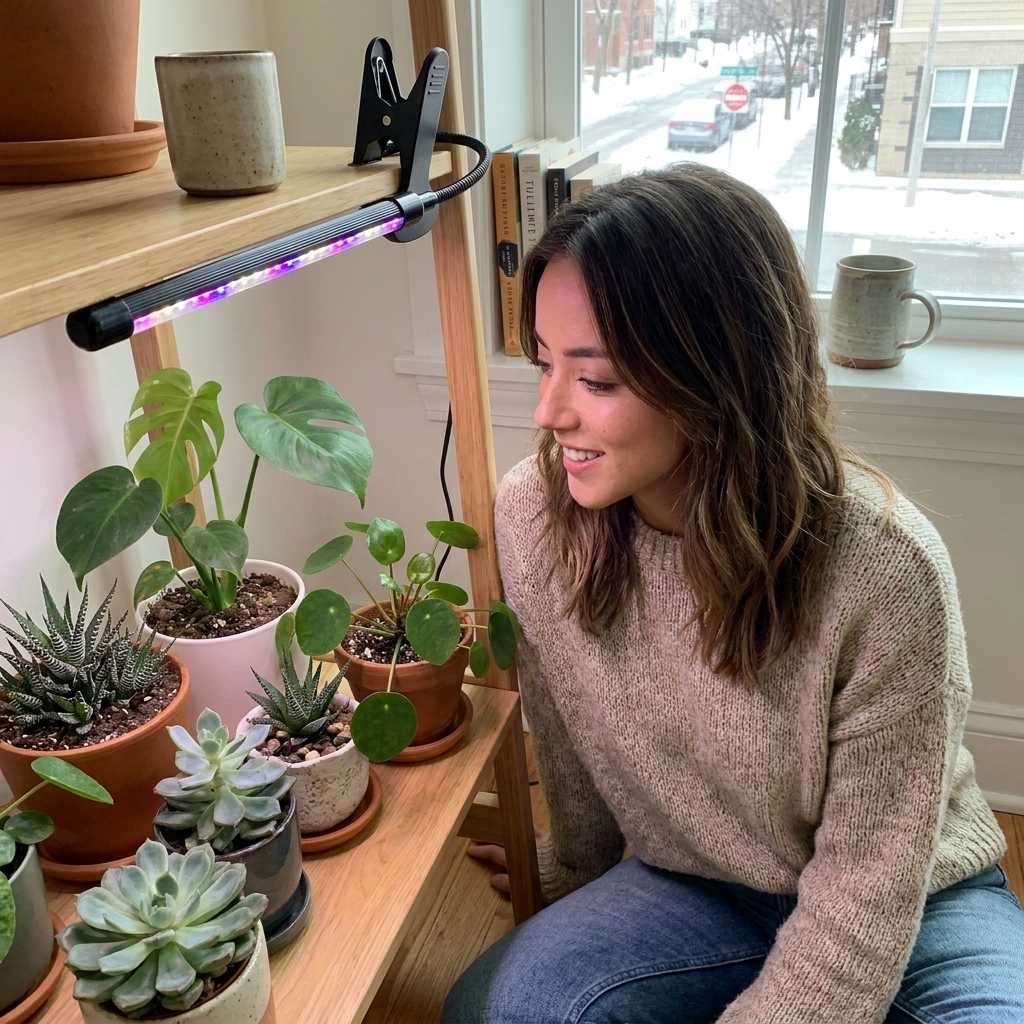
- Consider a simple LED grow light on a timer for 8 to 12 hours a day for light-hungry plants.
6) Leaf drop after moving or repotting
What it looks like: Your plant drops leaves after you brought it home, moved it to a new room, repotted it, or rearranged furniture for the holidays.
Why it happens: In winter, plants have less energy to adjust to big changes. A move can change light, temperature, and airflow all at once.
Fix it:
- Pick one stable spot and leave it there for a few weeks.
- Hold off on fertilizer until you see new growth.
- Water conservatively, and avoid additional stress like heavy pruning.
Winter microclimates
Winter decline is usually about microclimates. Two feet can be the difference between cozy and chaotic.
- Windows: Cold glass, nighttime temperature drops, and sneaky drafts.
- Doors: Repeated cold blasts when they open.
- Heat vents: Hot, dry airflow that dehydrates leaves and soil fast.
- Radiators and baseboards: Chronic warmth at root level can dry pots unevenly.
- Kitchen and bathroom: Often warmer and more humid. Great for many tropicals if light is decent.
If your plant is declining, try changing one variable, then watch for a week. Rapid-fire changes can make troubleshooting harder, not easier.
Watering in winter
Here’s my no-guilt winter watering method that keeps you from overcorrecting.
Step 1: Learn your plant’s “dryness depth”
- Most aroids (Pothos, Philodendron, Monstera): water when top 2 to 3 inches are dry.
- Snake plant and ZZ plant: let soil dry almost completely.
- Ferns and some Calatheas: keep lightly, evenly moist, not soggy. Let only the top 1 inch dry.
- Succulents and cacti: dry fully, then wait a bit longer.
Step 2: Water well, then drain
For standard pots with drainage, the biggest mistake is tiny sips. When it is time to water, water thoroughly until you get runoff, then discard runoff so roots are not sitting in it. This hydrates more evenly and helps prevent fertilizer salts from building up in the pot.
If you use a self-watering pot, wicking setup, or semi-hydro, the “water to runoff” rule may not apply the same way. In those systems, the goal is still the same: keep roots oxygenated and avoid staying constantly swampy in low light.
Step 3: Use lukewarm water
Cold tap water on cold roots can add stress. Lukewarm is gentler, especially for tropicals.
Step 4: Watch water quality and salts
If you have a plant that is famously sensitive (Calathea, Dracaena, some palms), winter tip-burn can be worse when tap water is hard or heavily treated. If you keep seeing brown tips even after you fix humidity and watering, try switching to filtered or distilled water for a few weeks. Also go easy on fertilizer in winter, since salt buildup is more likely when soil stays moist longer.
Fertilizer in winter
Usually, no. Most houseplants slow down in winter, and fertilizing a plant that is not actively growing can lead to salt buildup and stressed roots.
- Skip fertilizer if your plant is dropping leaves, recovering from root issues, or in very low light.
- Light feeding can be okay if you use grow lights and see steady new growth. Use a reduced dose.
When leaf drop is pests
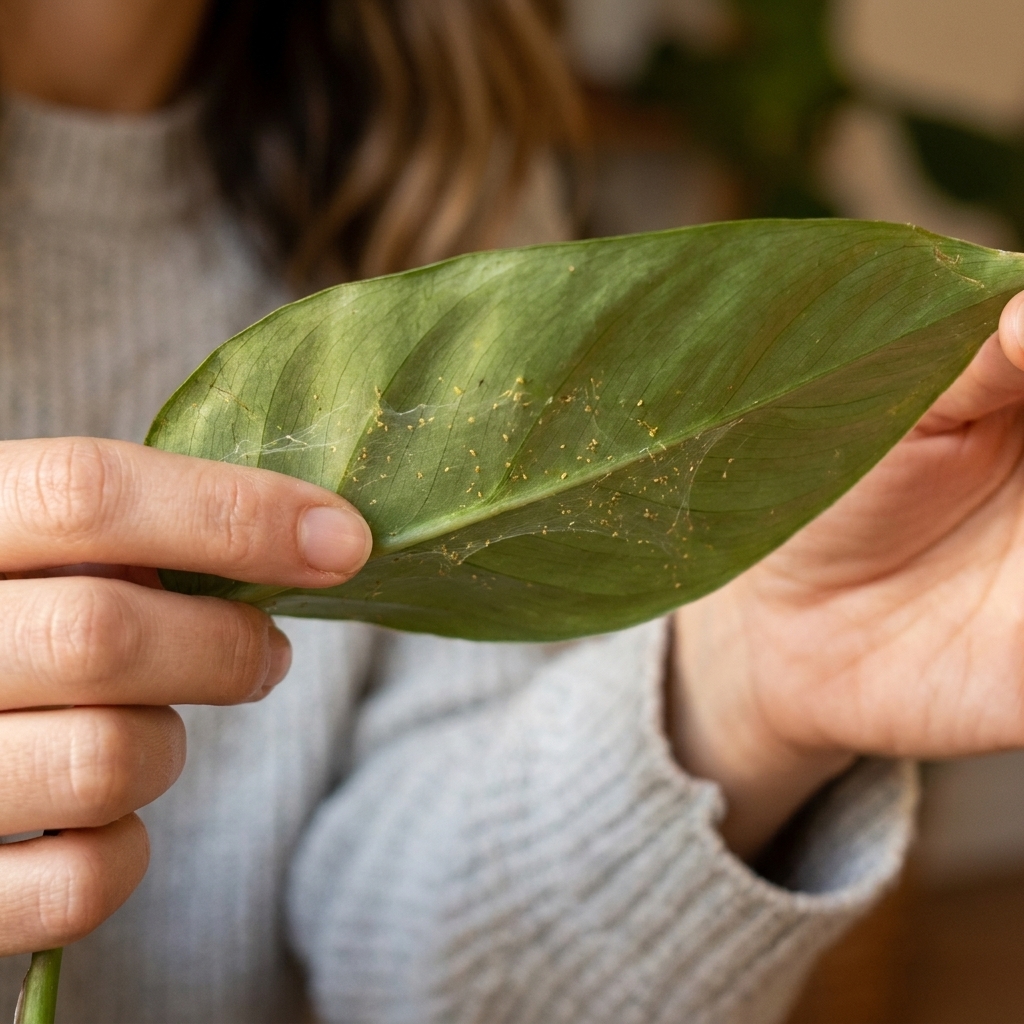
Dry indoor winter conditions can increase pest pressure, especially spider mites. If leaf drop comes with spotting, stippling, webbing, or sticky residue, investigate closely.
- Spider mites: fine webbing, dusty stippling, leaves that dull and drop.
- Thrips: silvery streaks, black specks (frass), distorted new growth.
- Scale: small brown bumps on stems and leaf veins, sticky honeydew.
- Mealybugs: cottony clusters in crevices.
First response: isolate the plant, rinse foliage in the shower (lukewarm water), then treat with insecticidal soap or horticultural oil per label directions, repeating weekly for a few rounds.
Pruning and cleanup
Winter is not the season for aggressive pruning, but cleanup helps your plant redirect energy.
- Remove fully yellow or brown leaves with clean scissors.
- Keep leaves that are mostly green, even if tips are crispy. They still photosynthesize.
- Do not cut aerial roots or healthy stems just because growth looks slower.
If you suspect rot, prioritize root inspection over cosmetic trimming.
How long will recovery take?
- Draft damage: improvement means no new damage. Existing damaged leaves will not recover.
- Underwatering: perk-up can happen in hours to a day, but leaf drop may continue for a week.
- Overwatering: recovery can take weeks, especially if roots were compromised. Watch for firm stems and new growth.
- Low light: you might not see strong improvement until days lengthen, unless you add a grow light.
In winter, success often looks like stability: slower growth, fewer new leaves, but no steady decline.
When to act fast
Some situations are “wait and watch,” and some are “do something today.”
- Act now if stems are mushy, the soil smells sour, leaves are dropping daily, the pot stays wet for a week or more, or you see pests.
- Give it 1 to 2 weeks if you made one change (moved it away from a draft, adjusted watering, added light) and the plant seems stable, even if it is not pretty yet.
Prevent winter decline
- Before winter hits, move plants away from drafty windows and vents.
- Set a simple humidifier near your most humidity-sensitive plants.
- Wipe leaves monthly to maximize light capture.
- Use a cheap thermometer near your plant shelf to catch cold zones and nighttime dips.
- Water by touch, not by schedule.
FAQ
Why is my plant dropping green leaves in winter?
Green leaf drop is usually acute stress: a cold draft, a heat vent blast, a recent move, or sudden swings between too dry and too wet. Check temperature exposure first (especially nighttime near windows), then soil moisture, then pests.
Should I repot a struggling plant in winter?
Only if you have a strong reason, like suspected root rot, no drainage, or severely compacted soil. Otherwise, wait for spring. Repotting is stressful, and winter light makes recovery slower.
Is it okay to use a grow light just in winter?
Absolutely. A simple LED grow light on a timer is one of the most reliable ways to reduce winter decline, especially in apartments. Keep the light consistent and adjust height based on the manufacturer’s guidance.
How close is too close to a window in winter?
If leaves touch the glass, it’s too close. If you can feel cold air when you place your hand near the plant at night, it’s too close. Try moving it back 12 to 24 inches and reassess after a week.
Do I need to water less in winter?
Most plants need water less often in winter, but not all plants want to dry out the same way. The best approach is checking soil depth dryness based on your plant type and your home’s heat levels.
A final pep talk
If you’re staring at a bare stem and a pile of leaves, I know it feels personal. It’s not. Winter is a stress test, not a verdict. Make one careful change, give your plant time, and focus on roots and stability. Spring does a lot of the heavy lifting, and with the right winter setup, your plant will be ready for it.