Boost humidity for Calatheas, ferns, Monsteras, and more with seven practical methods, plus what actually works (and what’s mostly a myth).
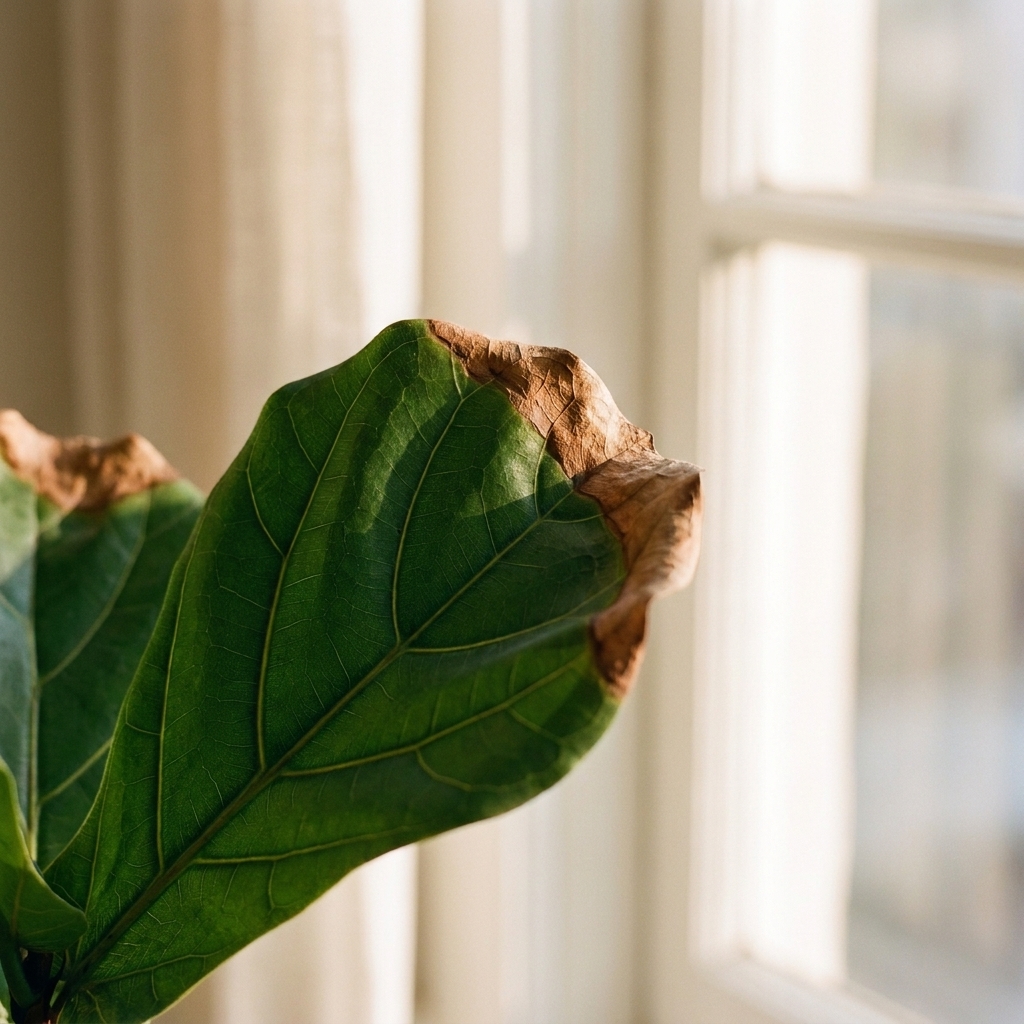
If your plant’s leaves look mostly fine but the very ends have turned brown and crunchy, you are not alone. I did this to my first few apartment plants, and I truly thought I was “bad at plants.” In reality, brown, crispy tips are a symptom, not a personality flaw.
Most of the time, crispy leaf tips come from a handful of common stressors: air that is too dry, inconsistent watering, mineral salt buildup, sensitivity to tap water additives and minerals, or a plant sitting in a rough window microclimate. Sometimes it is not just one thing, either. Low humidity plus salty soil can team up and make the damage look dramatic.
The good news: once you stop the stress, new leaves usually come in clean and healthy. The old crispy parts do not turn green again, but you can absolutely prevent it from spreading.
First, identify the pattern
Different causes leave different clues. Before you change your entire routine, take 60 seconds to look closely.
Quick clue check
- Crispy, papery tips with a sharp edge: usually low humidity or underwatering.
- Brown tips plus yellowing edges or soft patches: often overwatering, early root stress, or a drainage issue.
- Brown tips on many leaves at once, especially after fertilizing: salt buildup or fertilizer burn.
- Brown tips mostly on sensitive plants (Calathea, Dracaena, Spider Plant): tap water minerals or additives (including fluoride, chlorine, and chloramine).
- Only the leaf that touches glass gets damaged: cold window chill or heat scorch from sun on glass.
If you want to be extra sure, check the newest growth. If new leaves are emerging with clean tips, you are already back on track.
Quick rule-out: pests and normal aging
Brown tips are usually a care and environment issue, but two quick checks can save you weeks of guessing.
- Look for pests: check leaf undersides and along stems for fine webbing, speckling, silvery streaks, or tiny moving dots (spider mites and thrips are the usual suspects). Pest damage often shows up as stippling, scarring, or patchy browning, not just neat tip crisping.
- Consider leaf age: a little tip browning on an older, lower leaf can be normal, especially if the rest of the plant looks great and it is not progressing.
Cause 1: Low humidity
Indoor air can be surprisingly dry, especially in winter with heating or in summer with air conditioning. Many popular houseplants come from humid forests. When humidity is low, leaves lose water faster than roots can replace it, and the tips are the first place to dry out.
Plants that complain first
- Calathea and Maranta (prayer plants)
- Alocasia
- Ferns
- Peace lily
- Fittonia
How to confirm
If your plant needs frequent watering, the soil dries fast, and the leaf tips feel crisp and thin, low humidity is a very common culprit. A small hygrometer is inexpensive and takes the guesswork out. Many humidity-loving plants are often happier around 45 to 60 percent, though some tolerate less and some want more.
How to fix it (what actually works)
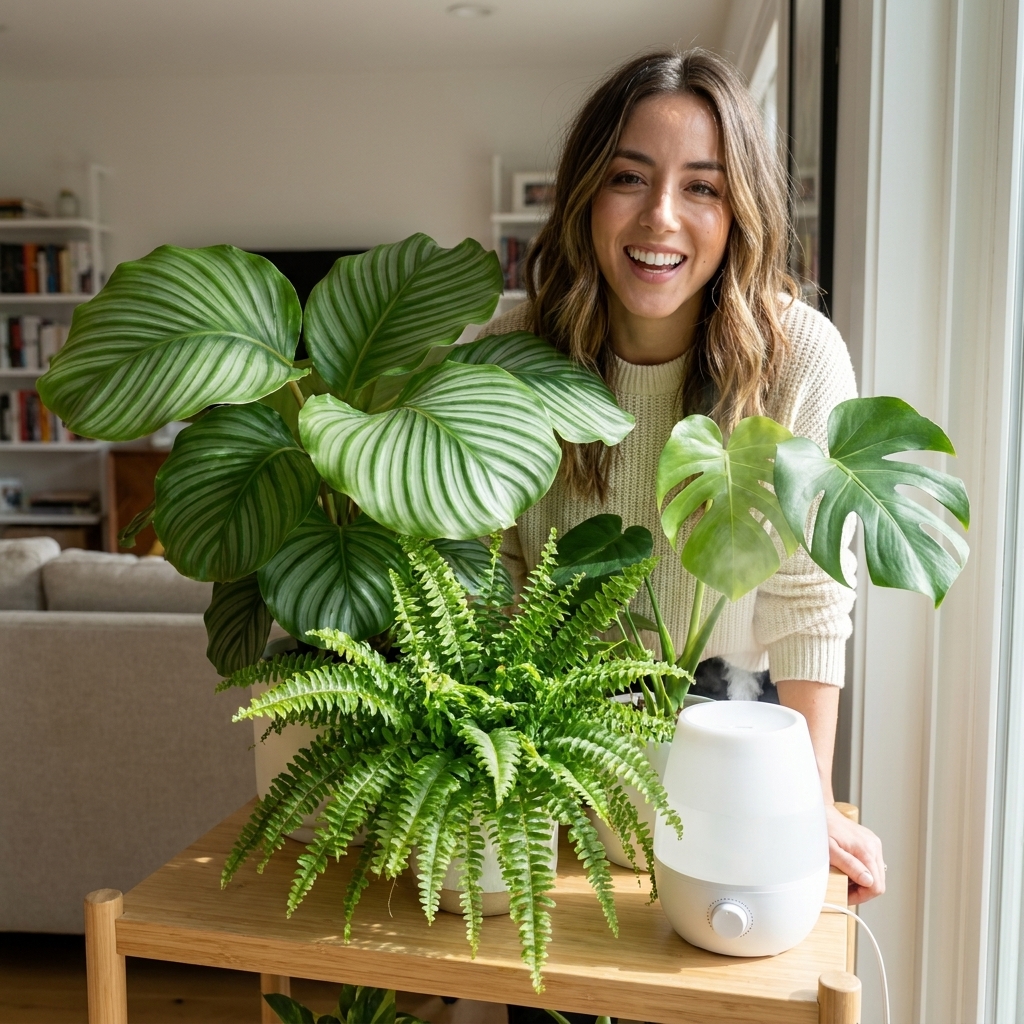
- Use a humidifier: the fastest, most reliable option. Aim it near the plant collection, not directly at foliage.
- Group plants together: they create a small, more humid microclimate.
- Move plants away from vents: forced air dries leaves quickly.
- Try a pebble tray: it can help a little in a small area, but it is not a substitute for a humidifier in very dry homes.
Do not rely on misting as your main strategy. It raises humidity briefly, and if foliage stays wet it can contribute to spotting or fungal issues on some plants.

Cause 2: Inconsistent watering
Brown tips often happen when a plant repeatedly swings between too dry and too wet. When the soil gets bone dry, fine roots can die back. Then when you water again, the reduced root system cannot keep up, so the plant still dehydrates at the leaf tips.
How to tell if this is your issue
- The pot feels feather-light before watering, then stays wet for a long time after.
- Leaves sometimes droop dramatically, then perk up after watering.
- Tip browning worsens after a few “oops, I forgot” dry spells.
How to stop the swings
- Use the soak and drain method: water thoroughly until it runs out the bottom, then let it drain completely. Never leave it sitting in a full saucer.
- Match your watering to the plant type: a pothos can dry more than a calathea. One schedule does not fit all.
- Check soil with your finger: for many common plants, water when the top 1 to 2 inches are dry. For thirstier plants, water when the top inch is dry. For succulents, wait until the mix is dry much deeper.
- Right-size the pot: an oversized pot stays wet too long and makes consistency hard.
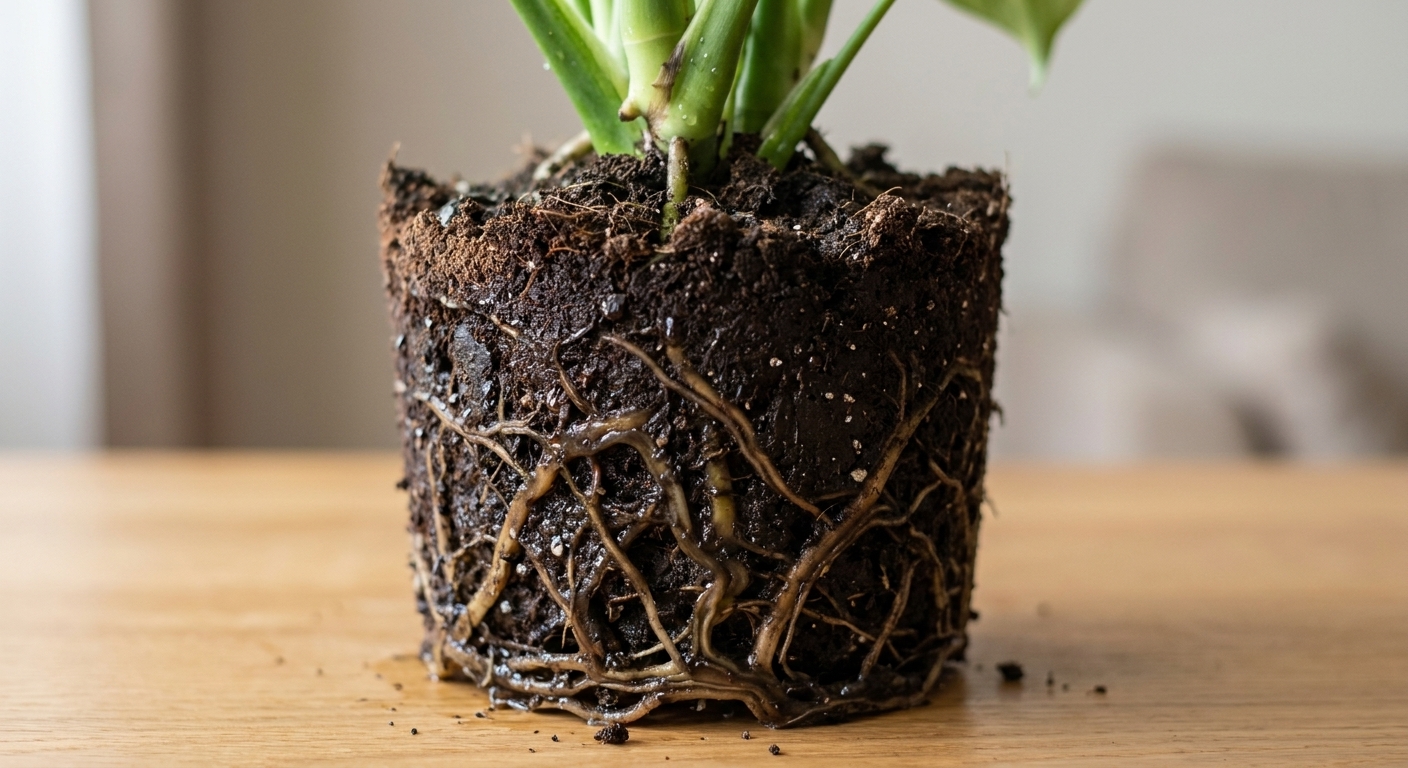
If you are unsure whether your plant is drying too fast or staying wet too long, look at the roots the next time you repot. Healthy roots are firm, not mushy, and for many common houseplants they are light-colored. Mushy, smelly roots point to overwatering or poor drainage.
Cause 3: Mineral salts and fertilizer buildup
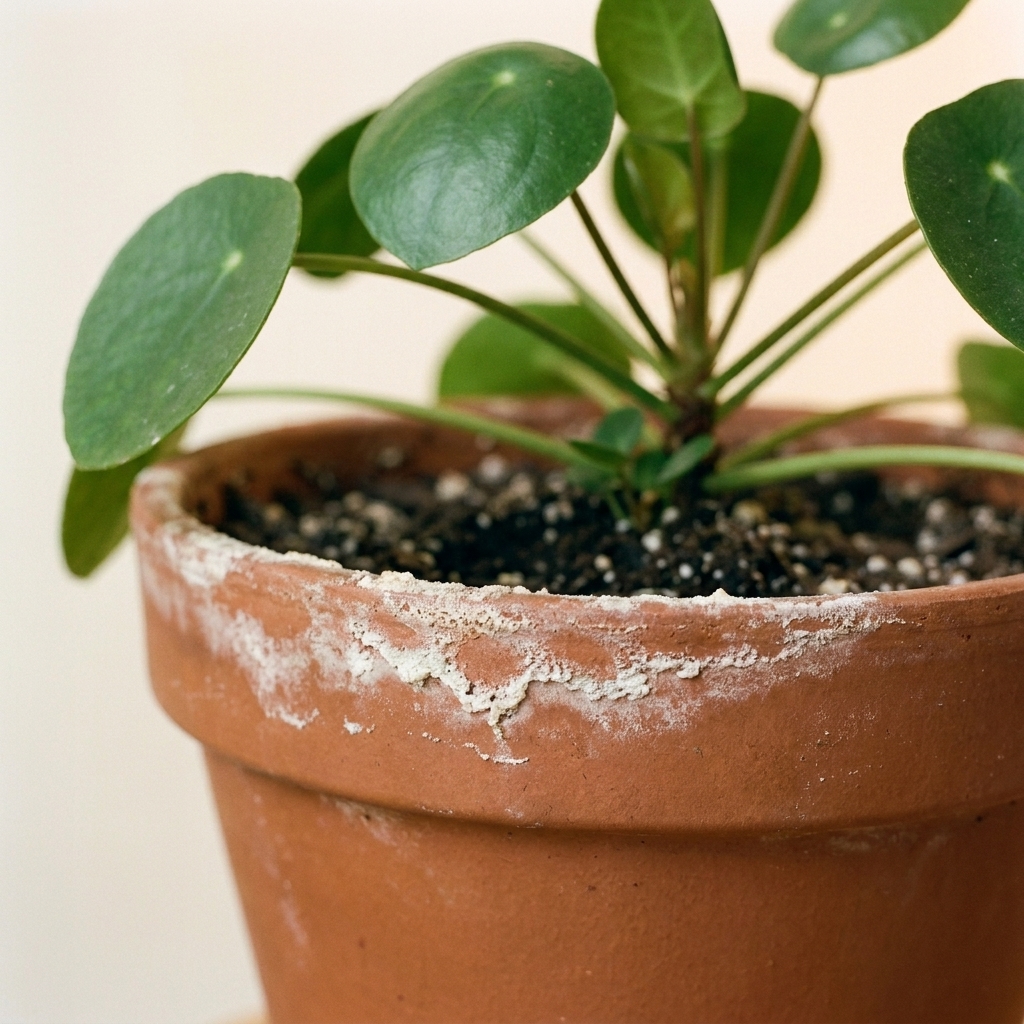
This is the one that surprises a lot of plant parents because you can be doing everything “right” and still get crispy tips. Minerals from tap water and leftover fertilizer salts accumulate in potting mix over time. As salts build up, they make it harder for roots to pull in water and they can scorch delicate root tips. Leaf tips are where that damage often shows.
Common signs
- A white crust on the soil surface or on the pot rim
- Tip burn that appears soon after fertilizing
- Older leaves get crispy tips first
How to fix it
- Flush the soil: take the plant to a sink or tub. Slowly run room-temperature water through the pot for several minutes, letting it drain freely. Repeat once more. This washes out excess salts. Make sure the pot drains quickly and is not left sitting in water.
- Dial back fertilizer: during slower growth (often fall and winter), fertilize less or pause entirely. In spring and summer, use a diluted dose more often rather than a strong dose occasionally.
- Repot if the mix is old: potting soil breaks down and holds salts more tightly over time. If it has been 1 to 2 years for a fast-growing plant, fresh mix can make a big difference.
Cause 4: Tap water sensitivity
Some plants are dramatic about tap water. Disinfectants like chlorine and chloramine, plus hard-water minerals, can contribute to brown tips. Fluoride is another big one, and it is a primary reason spider plants, dracaenas, certain palms, and many calatheas develop crispy tips even when everything else seems fine. Unlike chlorine, fluoride does not evaporate if you let water sit out.
What to use instead of straight tap water
- Use filtered water: a simple pitcher filter is often enough for sensitive plants. If chloramine is a concern where you live, check your filter’s specs to confirm chloramine reduction.
- Use rainwater if you can collect it safely: it is naturally low in minerals.
- Try distilled water for the fussiest plants: especially if your water is very hard or your plant is fluoride-sensitive.
- Avoid softened water: water softened by sodium can lead to tip burn over time.
- Let water sit out: this can help chlorine dissipate, but it does not reliably remove chloramine and it does not remove fluoride or minerals.
If switching water sources leads to clean new growth within a month or two, you found your culprit.
Cause 5: Window light and temperature
Sometimes “brown tips” are really minor scorch or chill damage.
Hot sun through glass
Direct sun on a leaf pressed near a window can overheat tissue, especially on thinner-leaved plants. The damaged area can dry and crisp.
Cold drafts and chilly glass
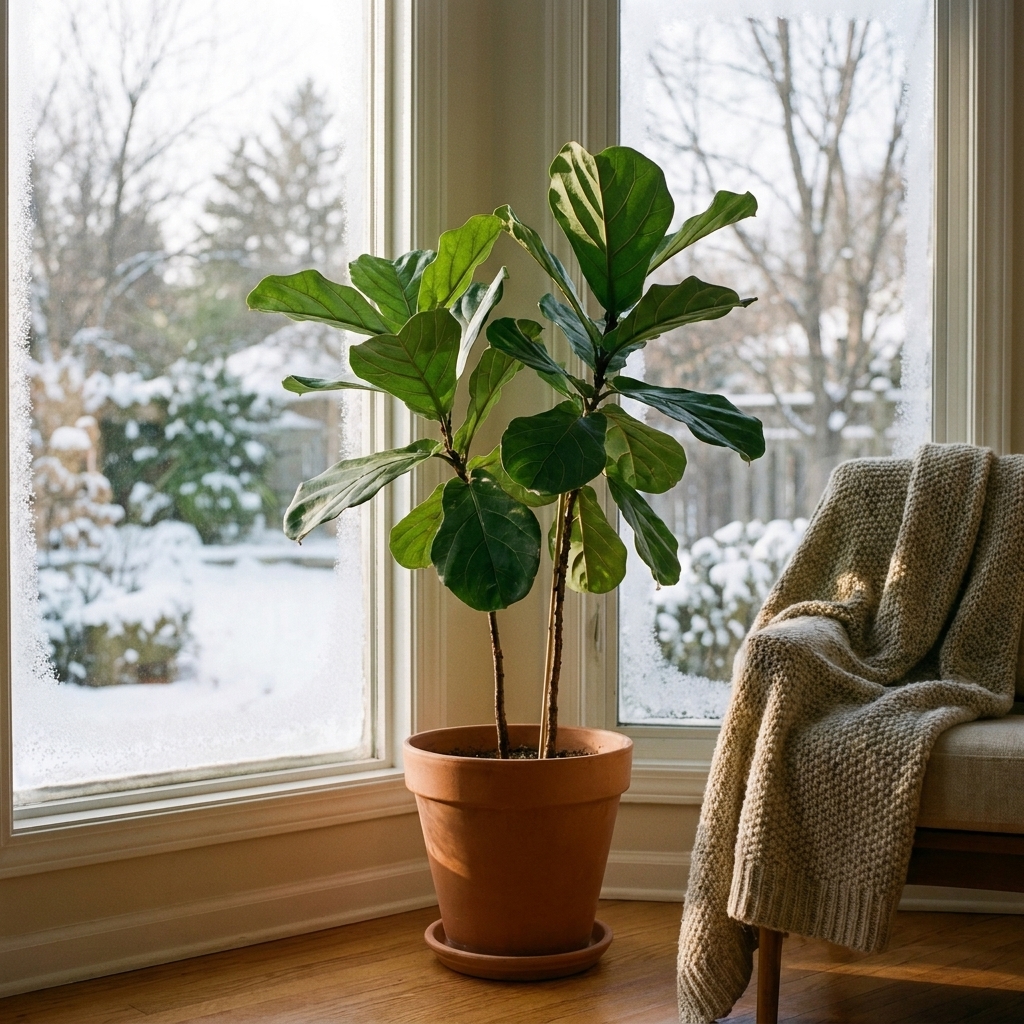
In winter, leaves touching cold glass can get damaged at the edges and tips. Drafty windows and doors can also dehydrate foliage.
Easy fixes
- Pull plants back a few inches from the glass.
- Use a sheer curtain to soften harsh direct sun.
- Keep plants away from drafty doorways and heat vents.
Cause 6: Pot and soil issues
Even if you water well, a plant can still develop crispy tips if the root zone is not functioning properly.
Most common root zone issues
- Poor drainage: no drainage hole or a saucer that stays full.
- Compacted soil: water runs down the sides and does not soak the root ball evenly.
- Rootbound plants: roots circle tightly, so water passes through too quickly and dries fast.
Fixes
- Make sure the pot has a drainage hole and the plant never sits in water.
- Repot into fresh, airy mix if soil is dense or hydrophobic.
- Size up 1 pot size if the plant is rootbound, or root-prune if you need to keep the same pot.
What to do with existing brown tips
Once leaf tissue is crispy, it will not heal. You have two choices, and both are valid.
- Leave them: if it is minor, you can keep the leaf as-is and focus on fixing the cause.
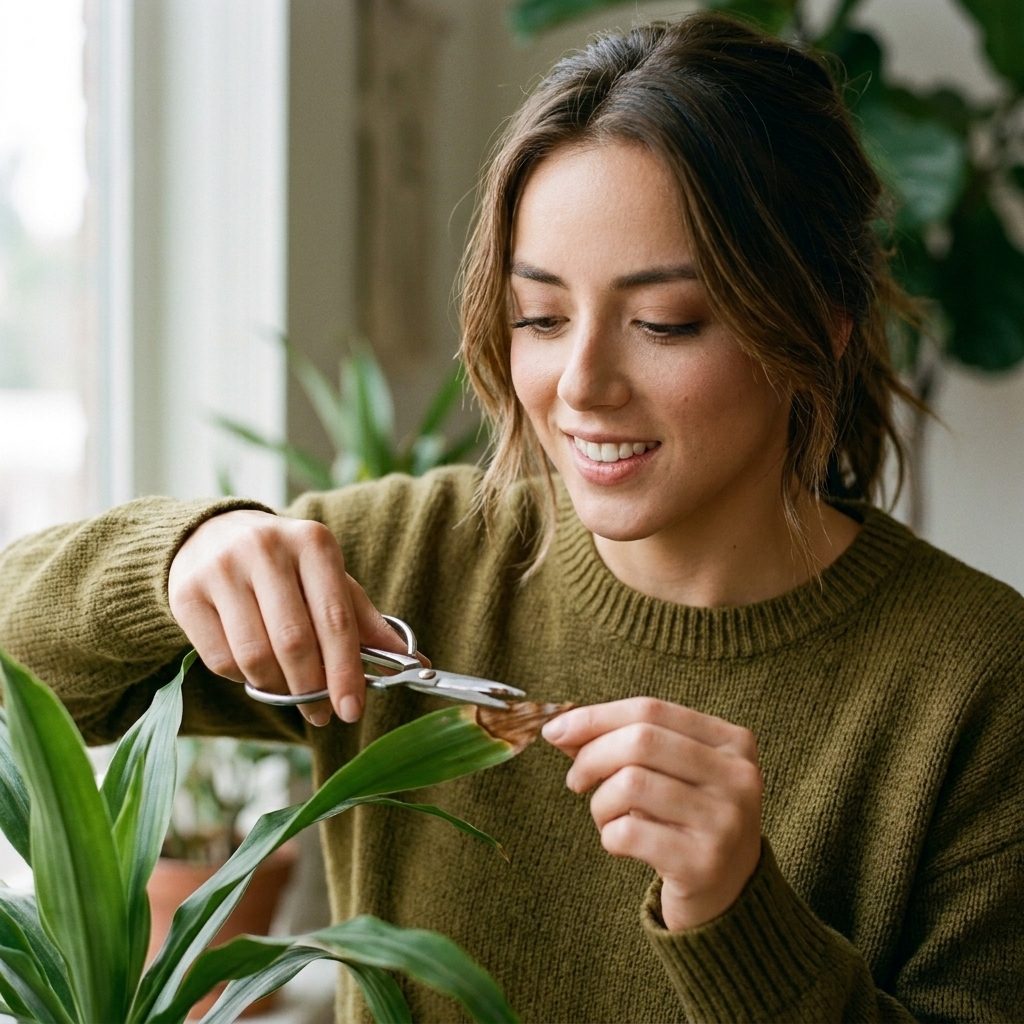
- Trim for looks: use clean scissors and follow the natural shape of the leaf tip. Do not cut into healthy green tissue more than necessary.
If more than about one-third of a leaf is damaged, I usually remove the whole leaf so the plant can focus energy on fresh growth.
Simple checklist
If you want the fastest path to improvement, start here. Make one or two changes, then give the plant a couple of weeks to respond.
- Humidity: keep it above about 45 percent for humidity-loving plants.
- Watering: water thoroughly, then let the soil dry to the right depth for that plant.
- Drainage: confirm a drainage hole and empty the saucer.
- Water quality: try filtered, rain, or distilled water for sensitive plants. Avoid softened water.
- Salt control: flush the soil periodically, often every 1 to 3 months if you fertilize or have hard water, and always make sure the pot drains fast.
- Placement: keep leaves off cold glass and away from vents.
FAQ
Will brown tips spread from leaf to leaf?
Not like a disease, no. Brown tips usually reflect ongoing stress. If the stress continues, you will see it on more leaves over time. If you correct the cause, new leaves typically come in with clean tips.
Can I just cut off all the brown parts?
Yes. Trimming is cosmetic, but it can make you feel better and help you see whether new damage is still happening. Use clean scissors and follow the leaf’s natural shape.
Why does my plant have brown tips even though I water regularly?
Regular watering can still be inconsistent for the plant if the pot stays wet too long, the soil is compacted, salts have built up, humidity is low, or the water itself is stressing the plant. In those cases, the roots are not delivering water efficiently to the leaves.
Is it always low humidity?
No, but it is common. If you have a calathea, fern, or peace lily in a heated or air-conditioned room, humidity is a good suspect. If you see a white crust on soil or you fertilize often, salts are a good suspect.
One last reassurance
Brown, crispy tips are one of the most common houseplant issues I see, and they are usually a sign that your plant is close to thriving, not doomed. A few small tweaks to air moisture, watering consistency, and water quality can make the next round of growth look dramatically better.
If you want help narrowing it down, note your plant type, what water you use, where it sits, and how often it dries out. Those four clues solve most mysteries.