Stop guessing. Use clear symptom clues, simple soil checks, and step-by-step rescue plans to fix overwatering or underwatering fast.
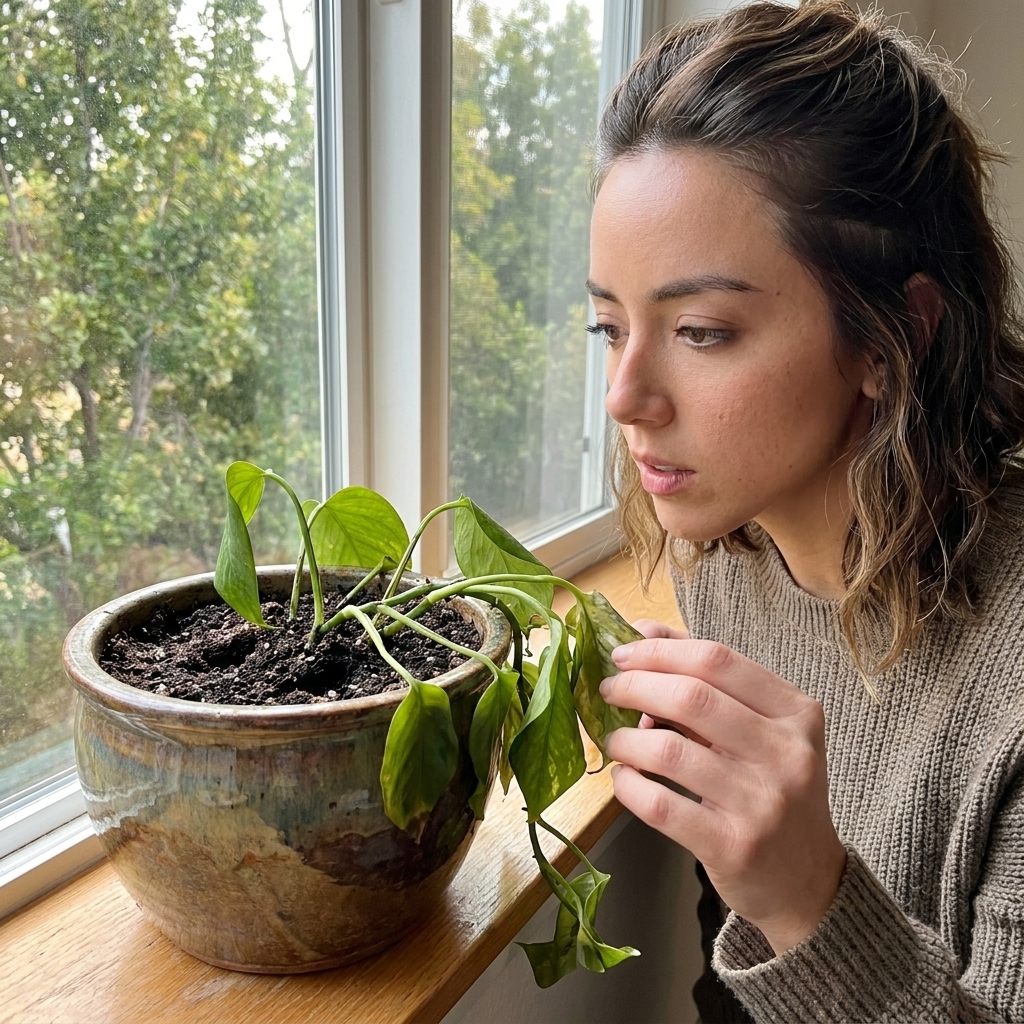
If your plant is limp, sad, and dramatic while the soil still feels wet, you are not imagining things. This is one of the most confusing houseplant problems because it looks like thirst, yet water is clearly not the missing ingredient.
Here’s the gentle truth: wilting is often a water-transport problem, not always a “needs more water” problem. Wilting is really a loss of turgor pressure in the leaves. In wet soil, the roots can get stressed, suffocated, chilled, or damaged. Then they stop moving water up to the leaves, and the plant wilts anyway.
Wet-soil wilting: what’s happening
A healthy plant stays perky because its roots take up water and send it upward through the stems to the leaves. When something interrupts that pipeline, leaves lose internal pressure and flop.
In wet soil, the interruption is usually one of these:
- Roots cannot breathe because air spaces in the mix are filled with water.
- Roots are damaged (often from rot), so they physically cannot absorb water.
- Water is present but inaccessible because the mix is compacted, hydrophobic in spots, or the container setup prevents proper drainage.
- Leaves are losing water faster than roots can replace it due to heat, cold, drafts, or sudden environment shifts.
First: a quick 60-second check
Grab a wooden skewer, chopstick, or even a clean knitting needle.
- Push it down near the pot’s edge to the lower half of the pot.
- Pull it out and feel it.
If the bottom is wet or muddy, your plant is dealing with too much water around the roots, even if the surface looks “fine.” If the skewer comes out barely damp but the top feels wet, you may have uneven moisture or a compacted layer.
Then do the simplest, most revealing check of all: look for a drainage hole. If the pot has no hole (or the hole is blocked), wet-soil wilting is extremely common.
Cause 1: Root suffocation
Roots need oxygen. When potting mix stays saturated, oxygen gets pushed out of the tiny air pockets in the soil. The plant responds by wilting because the roots are stressed and cannot function normally.
Clues
- Soil stays wet for many days (especially in a low-light room).
- Leaves are soft and droopy, sometimes with slight yellowing.
- The pot feels heavy all the time.
- New growth stalls.
What to do
- Stop watering until the pot dries to an appropriate depth for your plant (often the top 1 to 2 inches for many tropicals, more for succulents and cacti).
- Increase airflow and warmth: move slightly closer to bright, indirect light; run a fan across the room; avoid cold windows.
- Check the saucer: never let the pot sit in standing water.
If your plant perks up as the pot dries, you likely caught it early.
Cause 2: Early root rot
Root rot is not a mysterious curse. It is usually a combination of too much water + too little oxygen, which weakens roots. Once roots are stressed, pathogens such as Pythium or Phytophthora can take advantage, and decaying roots cannot take up water, even when surrounded by it.
Signs
- Wilting that does not improve after several days without watering.
- Yellowing leaves that drop easily.
- Mushy stems near the soil line (not always).
- A sour, swampy smell from the pot.
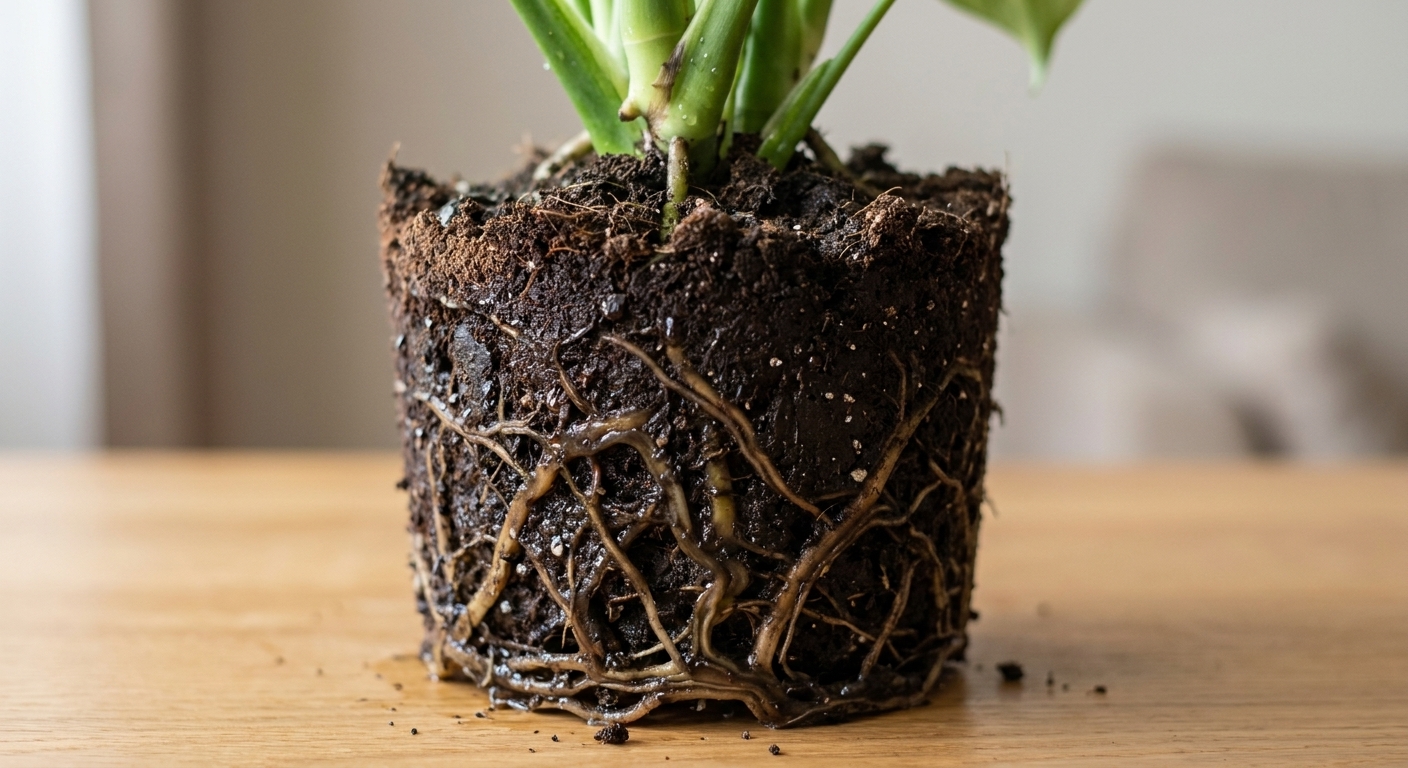
- Dark, soft roots if you slide the plant out to check.
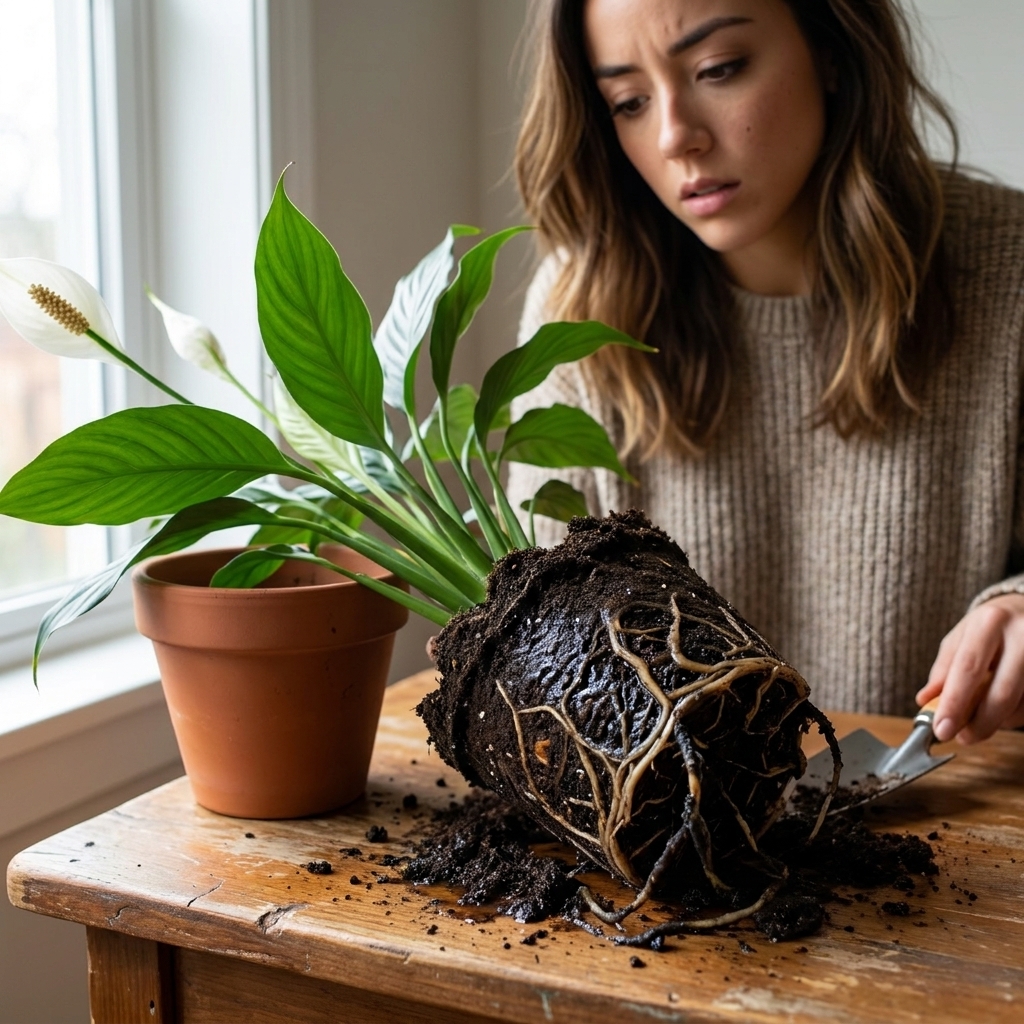
Check roots without panicking
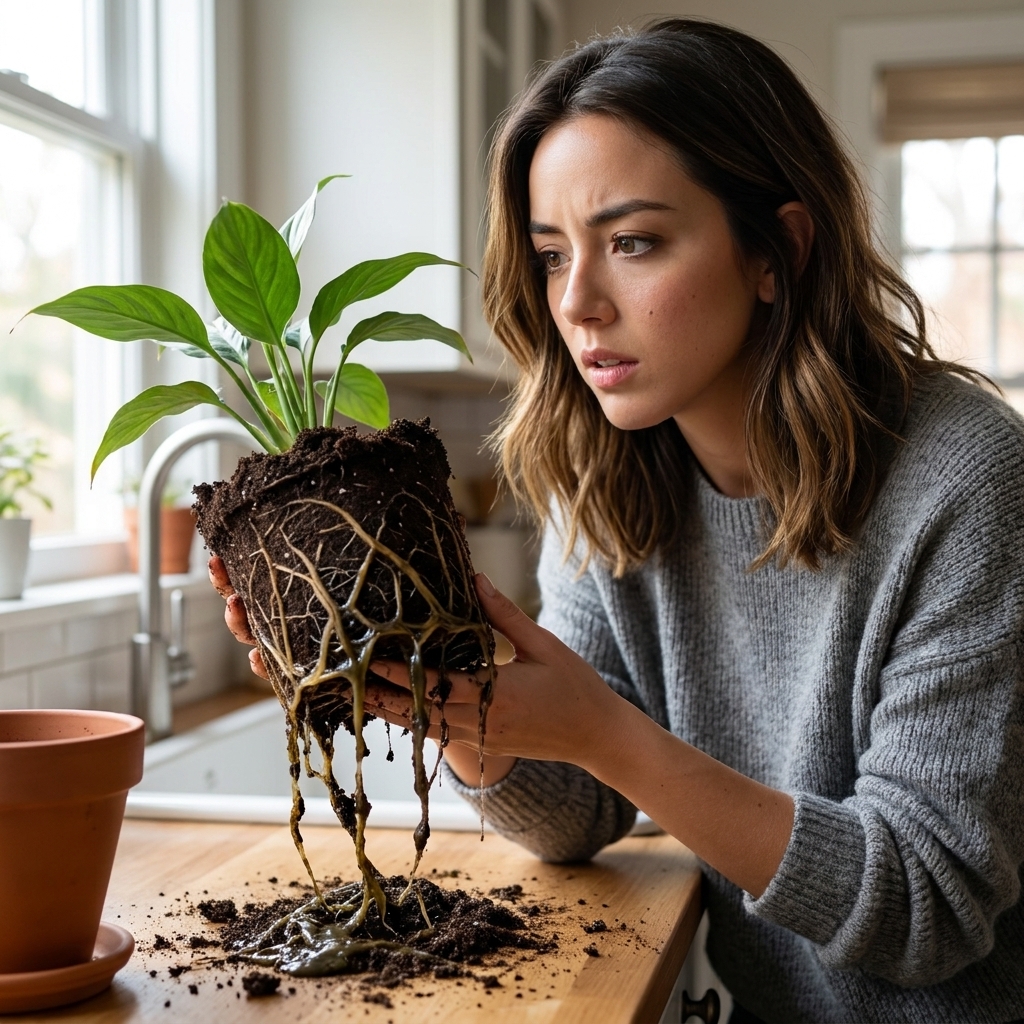
If your plant is still wilting and the mix is wet, a root check is worth it.
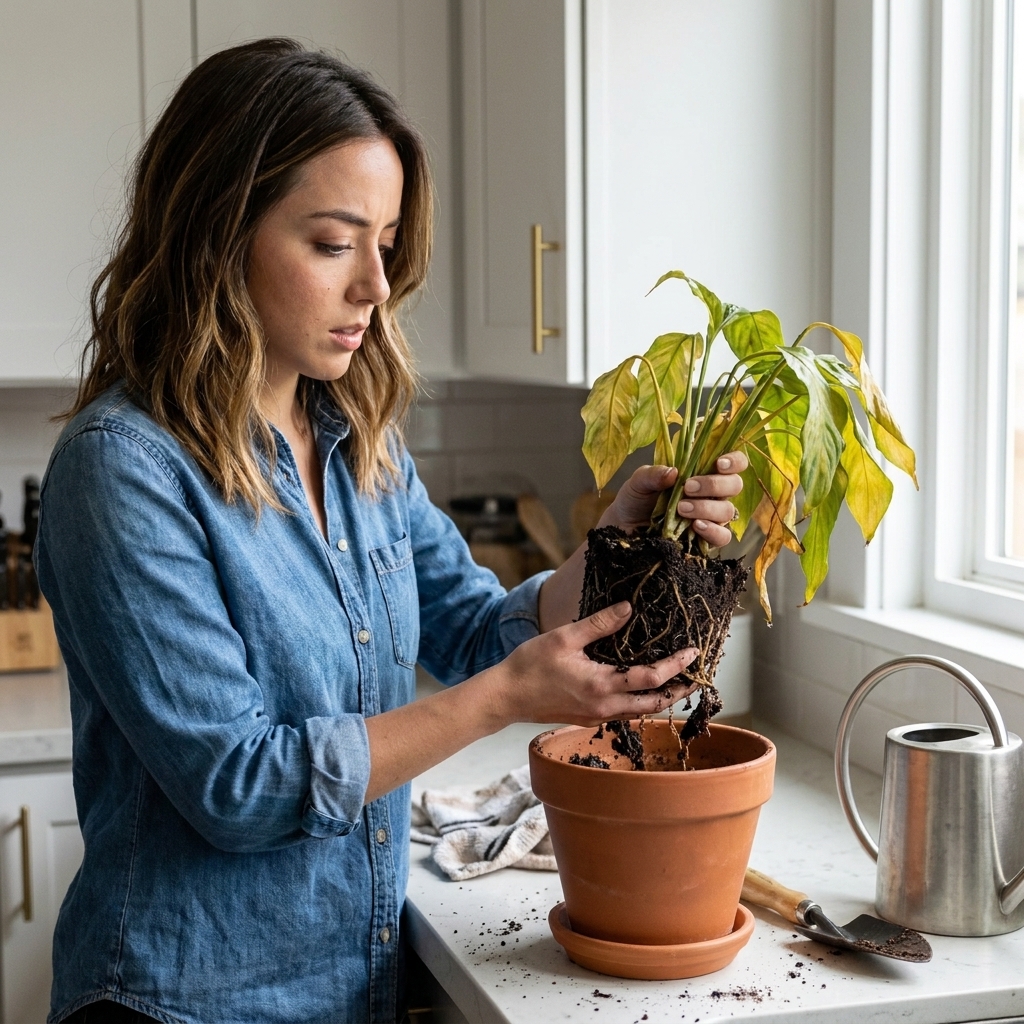
- Tip the plant out while supporting the base of the stems.
- Look at the roots: healthy roots are usually firm and pale (white, tan, or light brown depending on the plant). Rotting roots are dark, squishy, and may slough off.
- Smell test: healthy soil smells earthy. Rot smells sour or funky.
If you find rot: the recovery plan
- Trim dead, mushy roots with clean scissors.
- Disinfect your blades between cuts with rubbing alcohol (or wash with hot, soapy water and dry) to avoid spreading rot.
- Repot into fresh, airy mix in a pot with a drainage hole.
- Downsize the pot if the plant lost a lot of roots. Too much empty soil stays wet too long.
- Hold water briefly: after repotting, lightly water only if the mix is very dry and the plant is not a succulent. Otherwise, wait a few days so trimmed roots can callus slightly.
It sounds intense, but plants often bounce back from a root haircut better than they bounce back from sitting in soggy soil.
Cause 3: Compacted potting mix
Potting soil does not stay fluffy forever. Over time, peat or coco-based mixes can compress, fine particles settle, and roots fill the pot. The result is a dense mass that holds water and sheds oxygen.
Clues
- Water pools on top, then drains very slowly.
- The top forms a crust, or the mix looks shrunken and hard.
- The plant dries unevenly: wet at the bottom, dry patches near the sides.
- The plant has not been repotted in 1 to 2 years (faster for fast growers).
What to do
- Gently aerate the top inch with a chopstick (careful not to stab major roots).
- Repot into a chunkier blend: add perlite, pumice, orchid bark, or horticultural charcoal depending on the plant.
- Choose the right pot size: just 1 to 2 inches wider than the root ball for most houseplants.
Cause 4: Poor drainage setup
You can use the best soil in the world and still end up with wet-soil wilting if the container setup traps water.
Common problems
- No drainage hole (decorative cachepots are frequent offenders).
- Drainage hole blocked by compacted roots or a stuck pebble.
- Saucer overflow: the pot sits in runoff water.
- A rock layer at the bottom (it does not improve drainage through the soil; it simply moves the saturated zone higher, closer to the roots).
Fix it
- Use a nursery pot with holes inside a decorative cover pot and empty the cover pot after watering.
- Make sure water can freely run out, and the pot is not sealed to the saucer.
- Skip rocks at the bottom. Aim for airy mix throughout instead.
Cause 5: Cold, wet roots
Cold slows root activity. When roots are chilled, they absorb water sluggishly. Pair that with wet soil and you get a plant that wilts even though moisture is abundant.
Common triggers
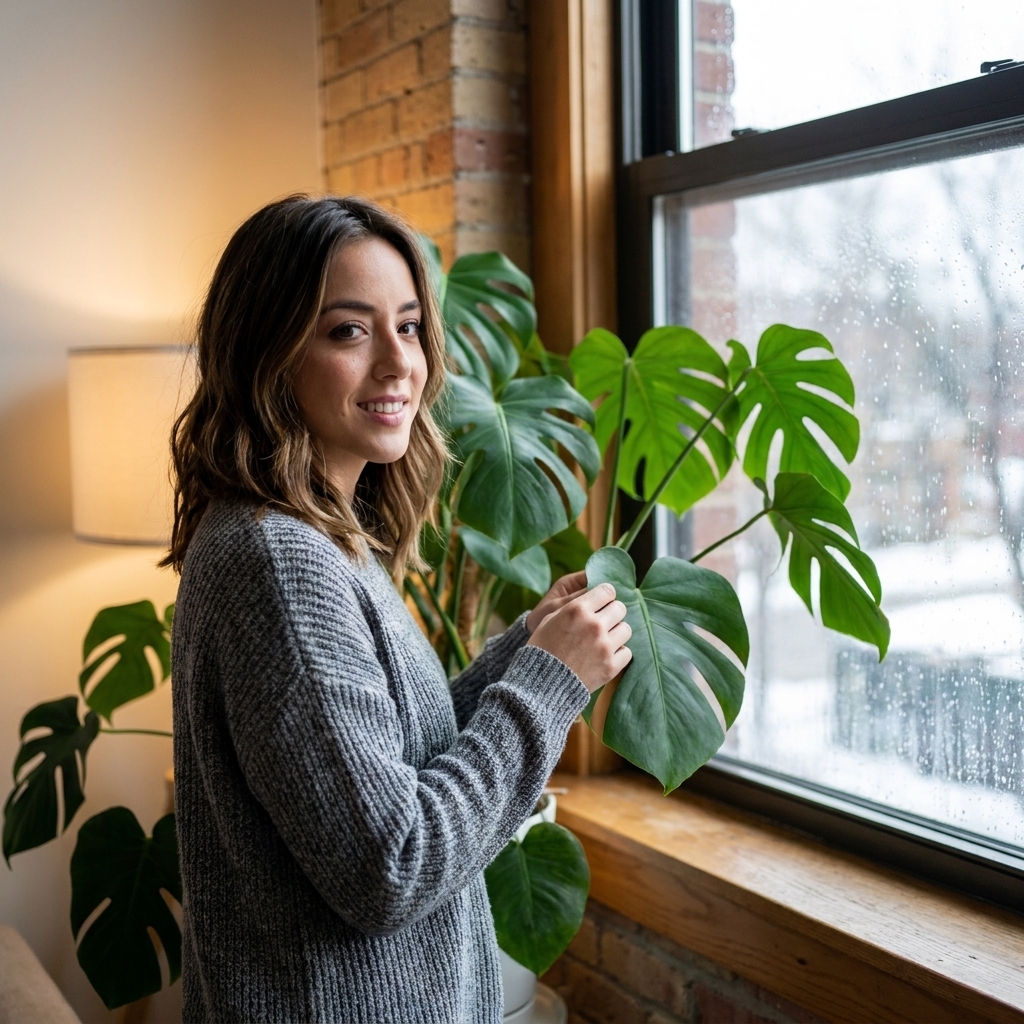
- A plant pressed against a cold window in winter.
- A blast from an AC vent.
- Watering with very cold tap water.
- Recently moved plants (new home, new room, new spot).
What to do
- Move the plant a few feet back from cold glass and away from vents.
- Keep temperatures steady. For many tropical houseplants, a comfortable range is roughly 65 to 80°F, with slightly cooler nights usually fine.
- Use room-temperature water.
- Let the mix dry a bit more between waterings when the room is cool or dim.
Cause 6: Hydrophobic pockets
This one is sneaky: sometimes the surface feels wet, but parts of the root ball are bone dry because the mix has become water-repellent or water is channeling down the sides of the pot.
Clues
- Water runs straight through quickly, yet the plant keeps wilting.
- The root ball pulls away from the pot edges.
- Some roots look dry and papery, others look soggy.
What to do
- Bottom-water until the root ball rehydrates evenly: often 20 to 30 minutes, longer for very dry, peat-heavy mixes. A good sign to stop is when the top of the mix feels slightly damp.
- After bottom-watering, let it drain completely.
- Consider repotting if the mix repeatedly repels water.
Cause 7: Fertilizer or mineral buildup
Yes, you can have wet soil and a wilting plant if the root environment is chemically stressful. Excess fertilizer salts can damage roots or interfere with water uptake, leading to limp foliage.
Clues
- Crusty white buildup on the soil surface or pot rim.
- Brown leaf tips and edges alongside wilting.
- Recent fertilizing, especially in low light or during winter.
What to do
- Pause fertilizing for 4 to 6 weeks.
- Flush the pot with room-temperature water (only if the pot drains well). Run about 2 to 3 times the pot volume through the mix, then let it drain fully.
- If drainage is poor or the mix is old, repot instead of flushing.
Quick pest check
If the soil is wet and your care routine looks reasonable, take 2 minutes to rule out pests. Some infestations cause droop and decline that can be mistaken for watering issues.
- Check the undersides of leaves and along stems for fine webbing (spider mites), silvery scarring (thrips), sticky residue (aphids or scale), or cottony clumps (mealybugs).
- If you spot anything, isolate the plant and treat before you keep troubleshooting soil.
Species notes
Not all plants telegraph stress the same way. Peace lilies can wilt dramatically when dry, when root-bound, or when roots are struggling. Succulents often feel soft and deflated when overwatered, but they do not always droop like a pothos. If you know the plant’s name, it is worth cross-checking its normal drying rhythm and preferred light before you make big changes.
Rescue plan
If you are not sure which cause you are dealing with, use this order. It minimizes harm and gets you answers fast.
- Stop watering. Give the plant breathing room.
- Confirm drainage. Hole present, hole clear, saucer empty.
- Check moisture deeper down with a skewer.
- Stabilize conditions. Bright indirect light, no drafts, no temperature extremes.
- If wilting persists 3 to 5 days and the pot is still wet, do a root check.
- Repot if needed into fresh, airy mix.
If your plant is severely collapsed and the soil is soggy, do not wait a full week. In that scenario, earlier root inspection is kinder.
When to take cuttings
If stems are blackening quickly, the base is getting mushy, the odor is foul, or the plant is sentimental or expensive, take a few healthy cuttings as an insurance policy. Propagation can save the plant even if the original root system is too far gone.
Prevent it next time
- Water by need, not by schedule. Light, temperature, and pot size change how fast soil dries.
- Use the right mix. Most common houseplants do best in a chunky, oxygen-rich blend rather than pure peat-heavy soil.
- Match pot size to the root ball. Oversized pots stay wet longer.
- Give more light in winter. Lower light means slower drinking.
- Empty runoff. Standing water is a quiet root killer.
FAQ
Should I water a wilting plant if the soil is wet?
Usually no. If the soil is genuinely wet below the surface, more water often makes the problem worse. First confirm deep moisture, then focus on drainage, warmth, and root health.
Can overwatered plants look underwatered?
Absolutely. Both scenarios cause wilting. Underwatering wilts because there is not enough water available. Overwatering wilts because roots cannot use the water that is there.
How long does it take a plant to recover from overwatering?
Mild cases can improve in a few days as the soil dries and oxygen returns. If roots were damaged, recovery after trimming and repotting can take several weeks, especially in low light.
What’s the fastest way to dry out wet potting soil?
Increase light and airflow, remove the plant from a decorative cover pot, and make sure the drainage hole is clear. You can also tilt the pot to encourage drainage. Avoid blasting it with heat. Stress on top of stress can backfire.
A final pep talk
If you feel confused or guilty, please do not. Wet-soil wilting tricks almost everyone at some point. The win here is that you noticed early. Focus on oxygen, drainage, and steady conditions, and your plant has a very real chance of bouncing back.