Stop guessing. Use clear symptom clues, simple soil checks, and step-by-step rescue plans to fix overwatering or underwatering fast.
If you have ever stood in your living room holding a pothos like a tiny green offering to the window gods, you are not alone. “Bright indirect light” is one of the most common plant care phrases and one of the most misunderstood. The good news is you do not need perfect south-facing windows or a degree in horticulture to get it right. You just need a couple of reliable ways to read the light in your own home.
This guide will help you understand what bright indirect light actually is, how to find it (even in an apartment), how to measure it with tools you already have, and which plants are happiest in it.
What “bright indirect light” means
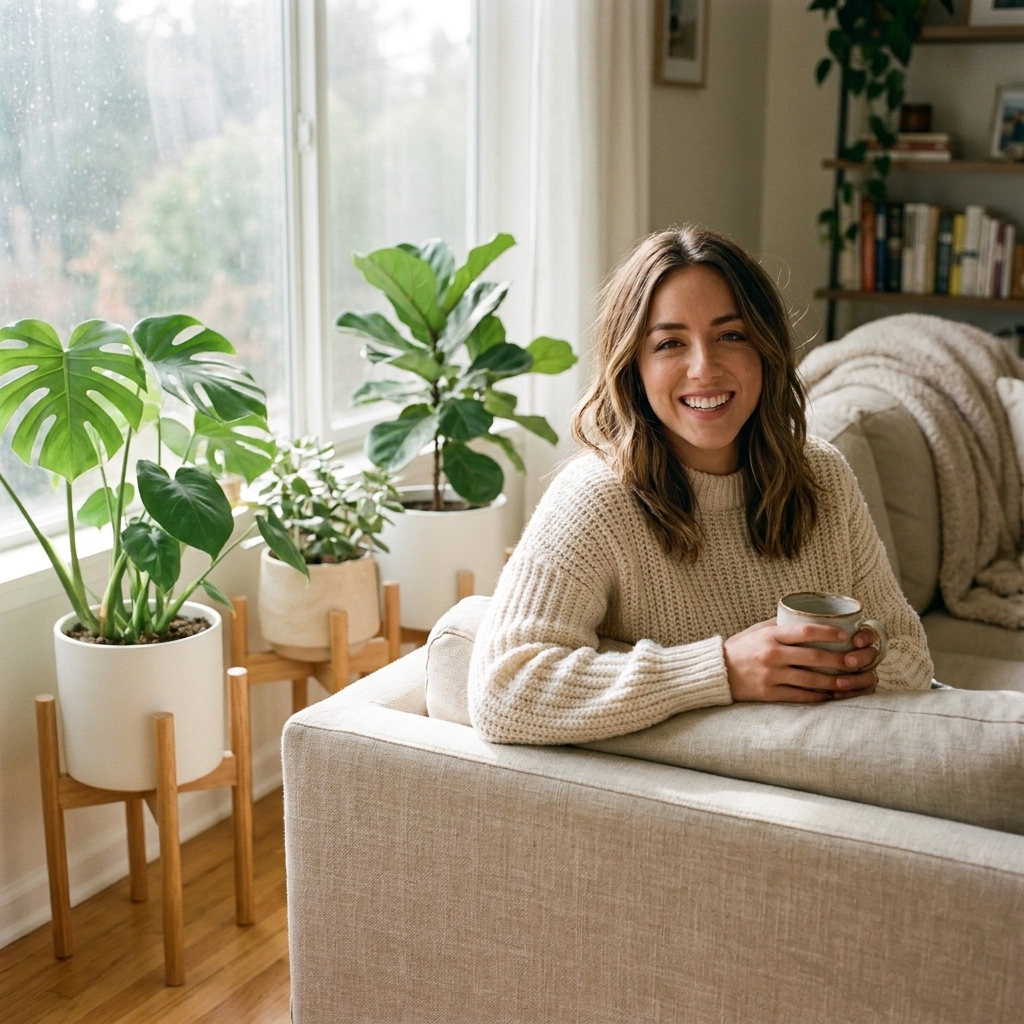
Bright indirect light is strong, abundant light that has been softened before it hits your plant’s leaves. Think: the room is bright enough to read comfortably during the day, but the sun is not actively shining on the plant.
In practical terms:
- Bright means the light level is high for an indoor space.
- Indirect means the light is not hitting the plant as a sharp, direct beam.
If direct sun lands on the plant for long stretches, many “bright indirect” plants will scorch, especially near midday in spring and summer.
One helpful nuance: outdoor “shade” can still be very bright because the sky itself is a powerful light source. Indoors, light is weaker, and glass can trap heat, so a sunny patch on the floor can feel gentle to you but still cook a leaf.
Direct vs indirect: a simple test
Here is the quick, no-gadget check I teach friends when they are overwhelmed:
The shadow test
- Direct light: you see strong sunbeams, and objects cast a crisp, hard-edged shadow.
- Bright indirect light: the room is bright, but shadows look softer and edges are blurry.
- Medium to low light: shadows are faint or hard to see, and the room feels dim away from the window.
This is not “scientific,” but it is surprisingly accurate for everyday plant placement.
What it looks like at home
Bright indirect light shows up in more places than you might think. The trick is understanding distance from the window, window direction, and any filtering (sheers, trees, overhangs, nearby buildings).
Common setups
- A few feet back from a bright window: A plant placed 2 to 6 feet from a sunny window often gets bright indirect light, depending on the direction and season.
- Near an east window, off to the side: East windows give gentle morning sun. If your plant is not in the beam, it is often perfect bright indirect.
- Behind a sheer curtain: Sheers turn many too-intense windows into bright indirect light.
- In a bright room with multiple windows: Ambient light can be bright indirect even when the plant is not close to any single window.

Window direction matters
People often hear “south window” and assume it is automatically best. It can be, but it can also be harsh. Direction is about the quality of light and how likely you are to get direct sun hitting leaves.
North-facing windows
Usually indirect all day, but often not truly “bright” unless the window is large and unobstructed. Many homes get medium indirect here rather than bright indirect.
East-facing windows
Bright in the morning, gentler overall. Great for bright indirect plants placed slightly back or just out of the sunbeam.
West-facing windows
Strong afternoon light that can be intense and hot. Bright indirect is achievable, but you often need distance, a sheer curtain, or placement to the side of the window.
South-facing windows
Often the brightest. Many “bright indirect” plants do best a few feet back from a south-facing window or with a sheer curtain, especially in summer.
How to measure it
If you are tired of guessing, measurement is your best friend. You do not need lab equipment, but you do need consistency. Light changes with time of day, season, and even whether your windows are shaded by a tree.
1) Use a lux meter app
Most smartphones can estimate light levels using a lux meter app. Some phones have a dedicated sensor, while others rely on the camera, which can be less accurate. Either way, these apps are best for comparing spots (relative readings) rather than treating the number as absolute truth.
- How to do it: Hold your phone where the plant’s leaves would be, facing the window, and take readings at a few times of day.
- What to look for: Bright indirect light is often cited around 5,000 to 20,000 lux indoors, with many solid “bright indirect” locations living in the middle of that range. Species, season, and window conditions can push this higher or lower.
Important: Direct sun can spike readings dramatically. If you see big jumps when a sunbeam hits that spot, that is direct light territory even if it only happens for an hour.
2) Measure foot-candles with a meter
If you want a more consistent reading, a basic light meter can measure foot-candles.
- Rule of thumb: Bright indirect is commonly cited around 500 to 2,000 foot-candles in homes. Very bright windows can run higher, and many perfectly healthy “bright indirect” homes run lower, especially in winter.
(For reference, 1,000 foot-candles is roughly 10,000 lux, so the two scales line up.)
3) Use the “read a book” check
This is my low-tech sanity test: can you comfortably read a book in that spot for most of the day without turning on a lamp? If yes, you are in the running for bright to medium indirect. If the room feels gloomy without lights on, it is likely medium to low.
Distance is your dial
One of the biggest light mistakes I see is treating the whole room like it has the same light. It does not. Light drops off fast as you move away from the window.
Starting points (then adjust)
- 0 to 1 foot from glass: Usually direct or very intense light (unless the window is shaded outside or filtered by sheers).
- 2 to 4 feet: Often bright indirect for many window directions.
- 5 to 8 feet: Often medium indirect, depending on how bright the room is.
- 9+ feet: Often low light unless the room is unusually bright or has multiple windows.
Key rule: if a sunbeam hits the leaves at any distance, that is direct sun during that time window.
If you are unsure, start a plant farther back and slowly move it closer over 1 to 2 weeks. Plants adjust better to gradual changes.
Filtered light
Not all light is created equal. Filtering can turn “too much” into “just right.”
- Sheer curtains: One of the safest ways to create bright indirect light near a strong window.
- Outdoor trees or awnings: Can produce excellent softened light.
- Nearby buildings: In apartments, reflected light and partial obstruction often create steady indirect light that many tropical plants prefer.

Plants that love bright indirect
This is the sweet spot for a lot of popular houseplants: enough light for growth, not so much that leaves fry.
Easy, reliable picks
- Pothos (Epipremnum aureum)
- Heartleaf philodendron (Philodendron hederaceum)
- Monstera deliciosa (best growth without harsh sun)
- Snake plant (tolerates lower, stays sturdier in brighter indirect)
- ZZ plant (tolerates lower, grows best in brighter indirect)
- Peace lily (more blooms in brighter indirect)
- Rubber plant (Ficus elastica, especially variegated types)
Bright indirect, but pickier
- Calathea and Maranta (prayer plants, avoid direct sun to prevent crisping)
- Fiddle leaf fig (bright, consistent light helps prevent leaf drop)
- Bird of paradise (bright indirect is a safe, scorch-resistant default; stronger growth usually comes with several hours of direct sun once acclimated)
- Anthurium (bright indirect supports blooms)
- Phalaenopsis orchids (moth orchids, typically happiest in bright, filtered light)
Little note from someone who has overwatered in panic before: Higher light usually means faster drying. If you move a plant into brighter indirect light, check soil moisture more often at first.
Does your plant want more or less?
Your plant will tell you what it thinks, but the signals can be subtle.
Signs it needs more light
- Leggy, stretched growth with long gaps between leaves
- Small new leaves (especially on pothos, philodendron, monstera)
- Slow growth during spring and summer
- Variegated plants turning more green
- Soil staying wet for a long time (in a healthy potting mix)
Signs it needs less light (or more filtering)
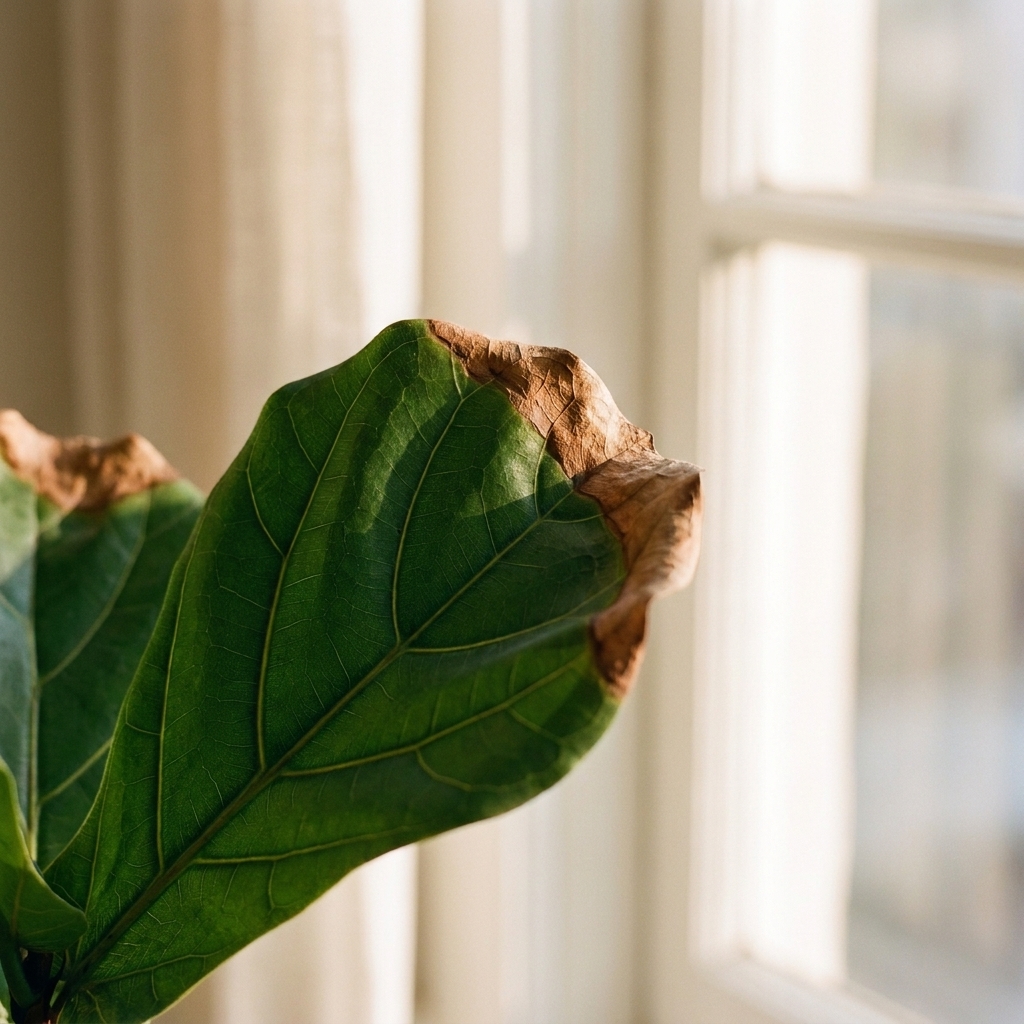
- Bleached patches on leaves
- Crispy brown areas that appear quickly on the side facing the window
- Leaves curling tightly during intense afternoon sun
- Very hot leaf surface near a window
If you see damage, do not beat yourself up. Move the plant back 1 to 3 feet, add a sheer curtain, and give it a couple of weeks to settle.
Bright indirect in dim apartments
I worked at a nursery in the Pacific Northwest, and I can tell you: lots of plant parents live with gray skies and tiny windows. You can still find bright indirect conditions more often than you think.
- Use the brightest room: Sometimes the best spot is the bedroom or kitchen, not the living room.
- Get plants off the floor: A plant stand near a window often gives you a real boost in usable light.
- Clean the glass: It sounds silly, but it can improve indoor light more than you would expect.
- Rotate weekly: Quarter turns keep growth even and prevent leaning.
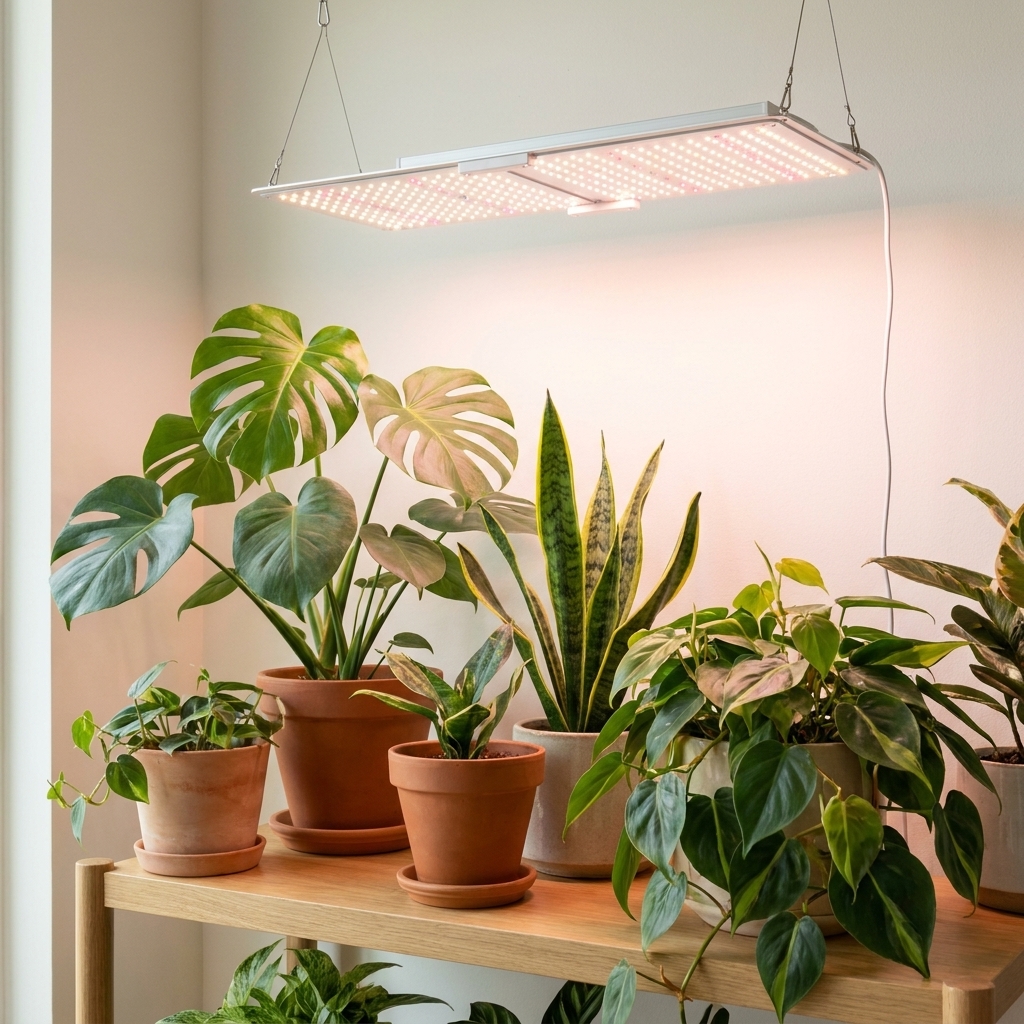
- Try a grow light if needed: If you cannot hit bright indirect naturally, a simple LED grow light on a timer can mimic it. A common starting distance is 8 to 18 inches above the leaves (follow the fixture guidance), and start with 8 to 10 hours a day.
One grow light caveat: lux readings can be misleading under LEDs because spectrum varies. Use lux numbers to compare window spots, and use the grow light’s recommended distance and your plant’s response to fine-tune.
Common myths
“Indirect light means no sun ever touches the plant.”
Many plants labeled “bright indirect” can handle a little direct sun, especially gentle morning sun. The risk is prolonged, intense midday or afternoon sun through glass.
“If it is bright to me, it is bright to the plant.”
Human eyes adapt. What feels bright at 6 pm might be low for a plant. Checking at midday and using a lux app removes a lot of guesswork.
“One window equals one light level.”
Light changes by the foot. A plant 1 foot from a window and the same plant 6 feet away are living in different worlds.
FAQ
Is bright indirect light the same as shade?
Not exactly. Outdoors, “shade” can still be very bright because ambient sky light is intense. Indoors, shade often translates to medium or low light. Bright indirect indoors is usually brighter than what most people call “shade.”
Can bright indirect light come from a south window?
Yes. South-facing windows often create excellent bright indirect light when the plant is a few feet back from the glass or when the light is filtered through a sheer curtain.
How many hours do plants need?
Most tropical foliage plants do well with 6 to 10 hours of bright ambient daylight, even if the peak brightness is only part of that window. Consistency matters as much as intensity.
What about winter?
Winter light is weaker and days are shorter. Many plants slow down naturally. If your plant looks stable but is not growing, that can be normal. If it starts stretching or dropping leaves, consider moving it closer to the window or supplementing with a grow light.
Quick cheat sheet
- If your plant is scorching: move it back 2 feet or add a sheer curtain.
- If your plant is stretching: move it closer 1 to 2 feet or choose a brighter window.
- If you are not sure: start 3 to 5 feet from a bright window, then adjust after 2 weeks based on new growth.
If you take one thing from this guide, let it be this: bright indirect light is not a mystery category. It is a specific, repeatable condition you can create on purpose. And once you can read your windows, plant care gets a whole lot less stressful.