A practical, reassuring guide to diagnosing winter leaf drop: drafts, low light, dry air, and watering shifts, plus exact fixes and recovery timelines.
I have a soft spot for poinsettias because they get blamed for so much that is not their fault. Most “poinsettia problems” are really transport shock, cold damage, poor drainage, or hot dry air. If you set yours up correctly from day one, it can stay full, glossy, and red well past New Year’s.
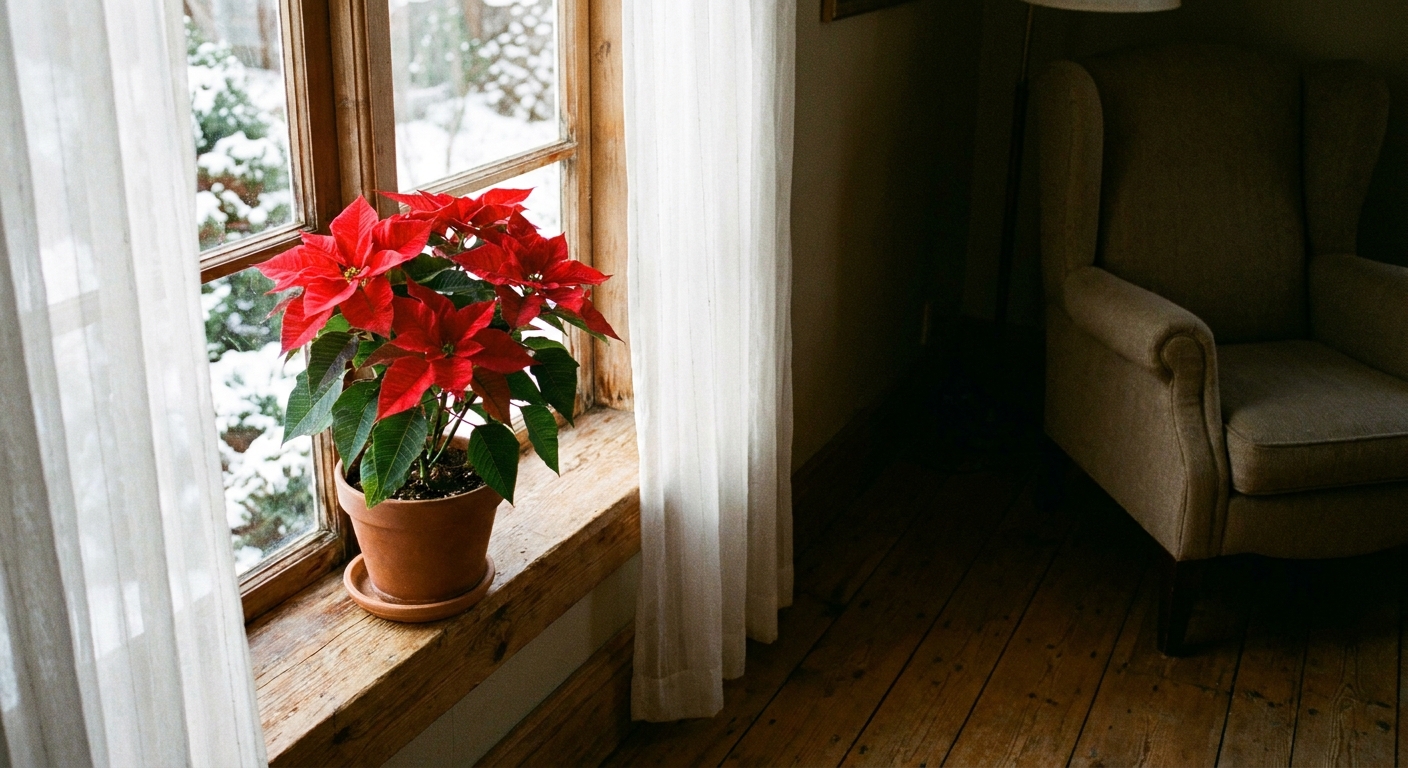
At the store: pick the poinsettia that lasts
The best care routine starts with choosing a plant that is already set up for success. Here’s what I look for when I’m standing in that holiday plant display aisle.
- Bracts (the red parts) should look crisp, not curled or crinkly. Slightly droopy bracts often mean it has been dry too long or chilled.
- Leaves should be dense down the stems. A bare lower stem at purchase usually stays bare.
- Check the true flowers in the center. Those tiny yellow buds should be mostly closed or just starting to open. If they are shedding yellow dust everywhere or look spent, the plant is already aging.
- Skip plants displayed in a cold entryway. Poinsettias hate cold drafts, and damage can show up days later.
- Feel the pot. Bone-dry and feather-light is a stress sign. Sopping wet is also a red flag.
Getting it home without cold damage
If you only follow one poinsettia rule, make it this: protect it from cold air. Poinsettias are tender, frost-sensitive Euphorbias (native to Mexico), and they can be injured by chilly temps surprisingly fast.
As a practical guardrail, try to avoid exposing them to temperatures below about 55°F (13°C). Many plants start showing damage when they dip toward 50°F (10°C), especially with wind or drafts.
Quick cold-protection checklist
- Ask for a sleeve or loosely wrap the plant in paper or a bag for the walk to the car.
- Warm up the car first if you can, then put the plant in the cabin, not the trunk.
- Minimize stops. A quick errand run with the plant in the car can chill it.
- At home, unwrap gently and keep it away from the open doorway while you take off shoes and bags.
What cold damage looks like: within a few days you may see limp leaves, grayish water-soaked patches, or sudden leaf drop even if the soil is moist. Once tissue is cold-burned, it does not “heal,” but the plant can still recover with new growth if you stabilize conditions.
Unwrap the pot: foil causes watering trouble
That shiny foil wrap is festive, but it is also a very common reason poinsettias crash indoors. It can trap water at the bottom of the pot and turn one overwatering into ongoing soggy roots.
Do this the day you bring it home
- Remove the foil sleeve completely, or at least cut drainage slits in the bottom and sides.
- Make sure there is a real drainage hole in the nursery pot. If it is a decorative cachepot with no hole, move it into something that drains.
- Set it on a saucer and empty any runoff after 10 to 15 minutes.
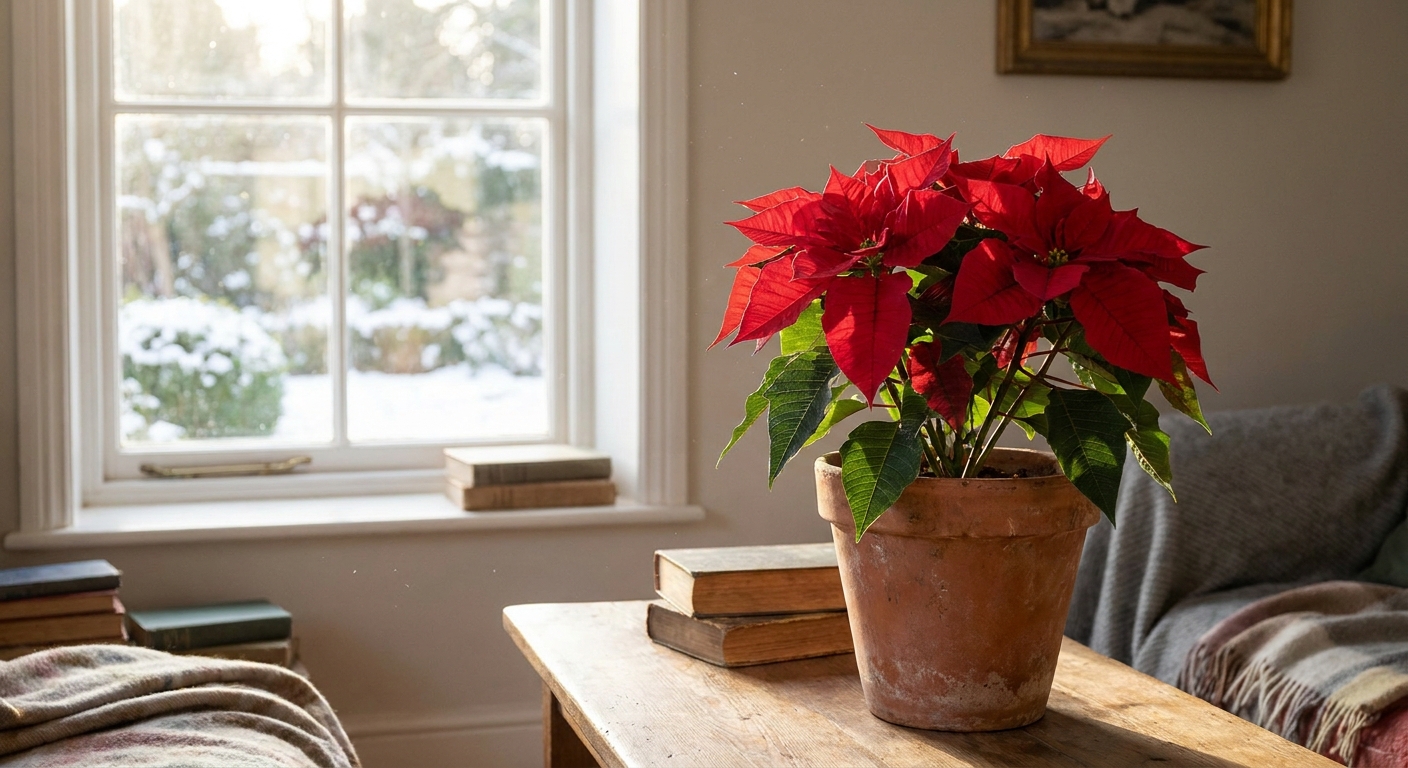
Where to place it: bright light, steady temps
Poinsettias stay full and colorful longest when they are comfortable, not “toughing it out” in a dark corner.
Light
Aim for bright, indirect light for most of the day. A spot near an east or south window is usually perfect, especially with a sheer curtain if the sun is intense. Low light will not immediately kill it, but it does encourage leaf drop and a lankier look over time.
Temperature and airflow
- Ideal range: about 65 to 75°F (18 to 24°C) during the day. A little cooler at night is fine.
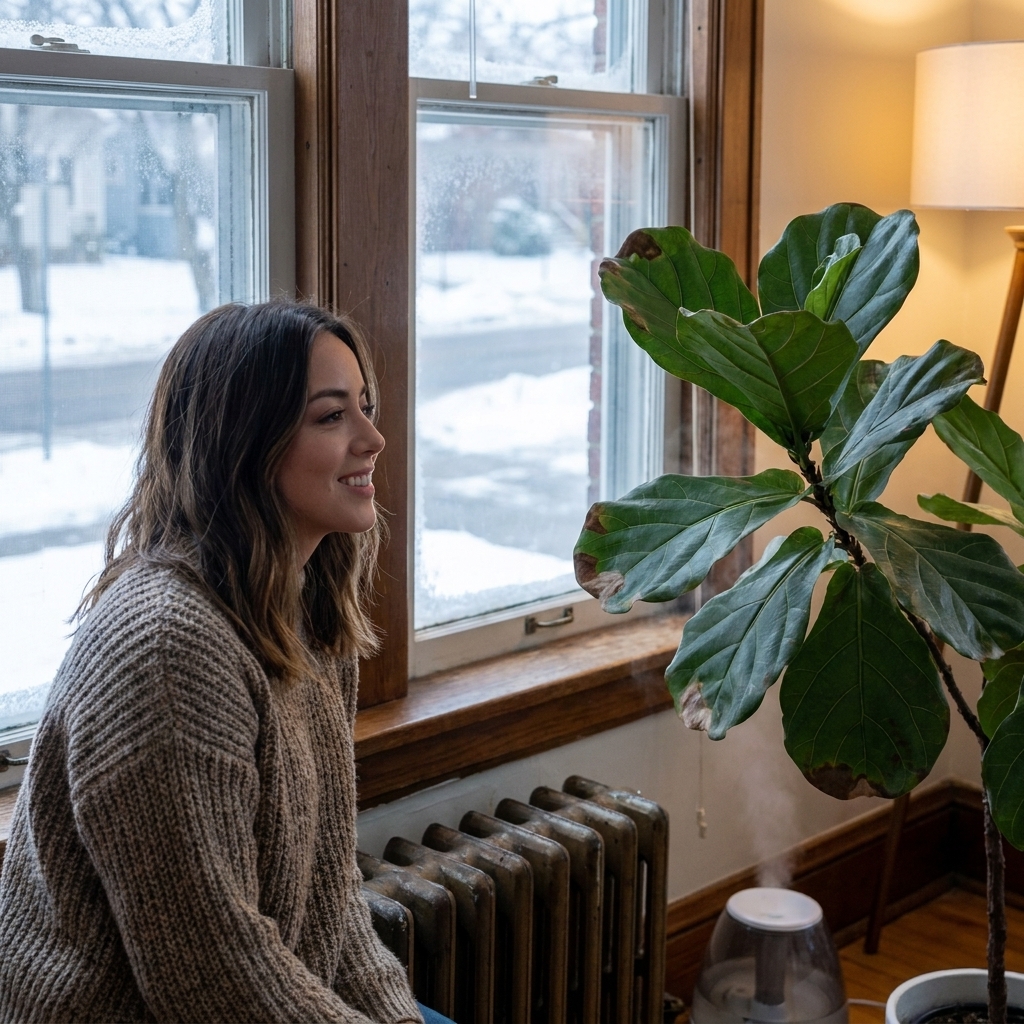
- Avoid: cold drafts from doors and windows, and hot dry blasts from heat vents, baseboard heaters, fireplaces, and radiators.
- Don’t park it right against the glass. Windows can get much colder than the room at night.
My rule of thumb: if you can feel a draft or heat on your hand in that spot, the poinsettia can feel it too.
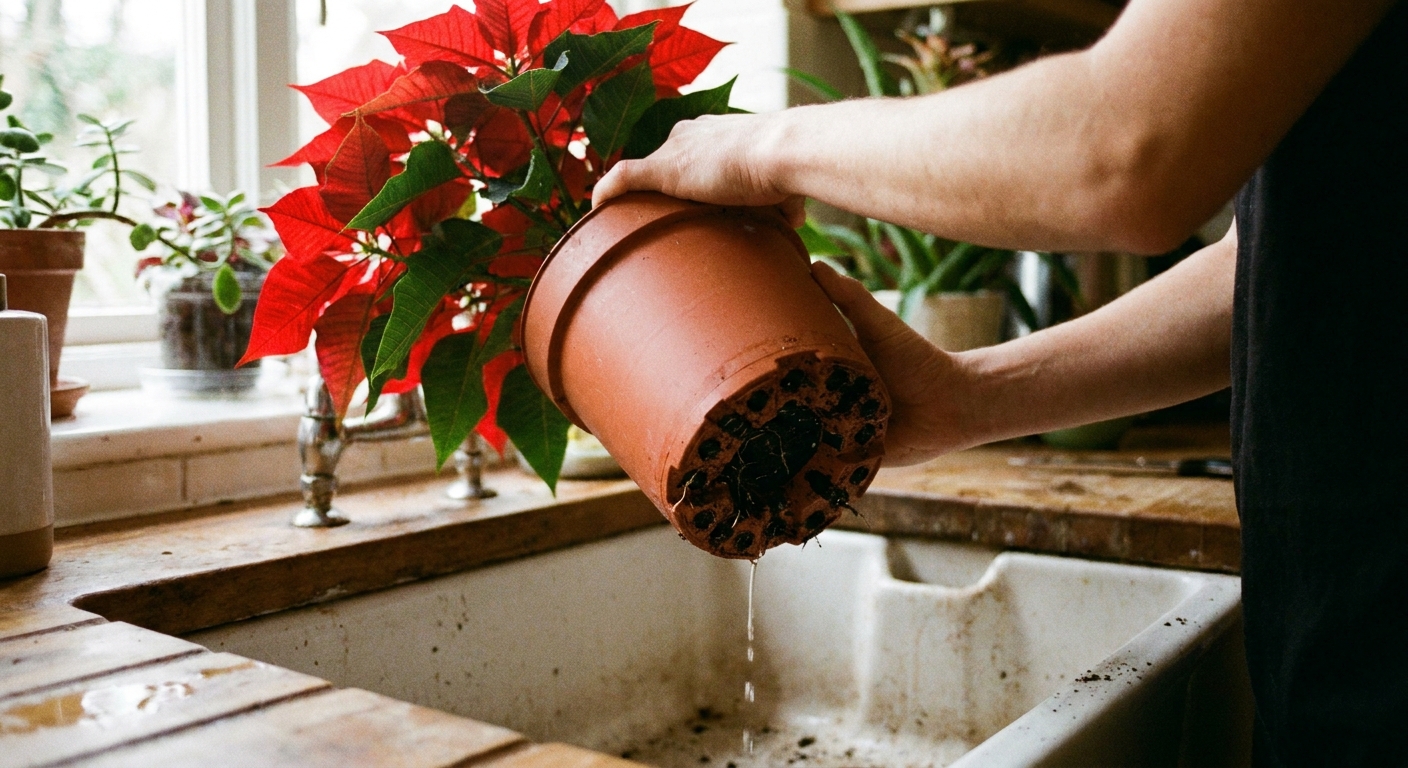
When to water (and how not to overdo it)
This is where most poinsettias get “loved to death.” I killed my first three succulents in college with too much water, and poinsettias are a similar lesson: they want a rhythm, not constant attention.
The simplest watering method
- Check the soil with your finger. When the top 1 inch feels dry, it is time.
- Water thoroughly. Take it to the sink and water until you see water draining out.
- Let it drain completely. Do not leave it sitting in a puddle.
- Return it to its spot. Consistency helps reduce leaf drop.
Common watering mistakes to avoid
- Small sips every day. Frequent light watering tends to wet only part of the root zone and creates uneven moisture. It is better to water well, then let the mix dry slightly.
- Watering on a schedule. Holiday homes vary wildly: heaters, guests, cooking, and lights all change drying speed.
- Cold water straight from the tap. Cool is fine, icy is not. Room-temp water is gentlest.
How often is “normal”? In many homes, a poinsettia needs water about every 5 to 10 days. In a very warm, bright room it may be sooner. In a cool, dim room it may be much longer.
Humidity (a small upgrade)
Winter indoor air is often very dry, and moderate humidity helps poinsettias stay perky. If your home is dry, a small humidifier nearby (not blasting directly at the plant) can make a difference. I skip misting because it is inconsistent and can leave bracts damp and chilly.
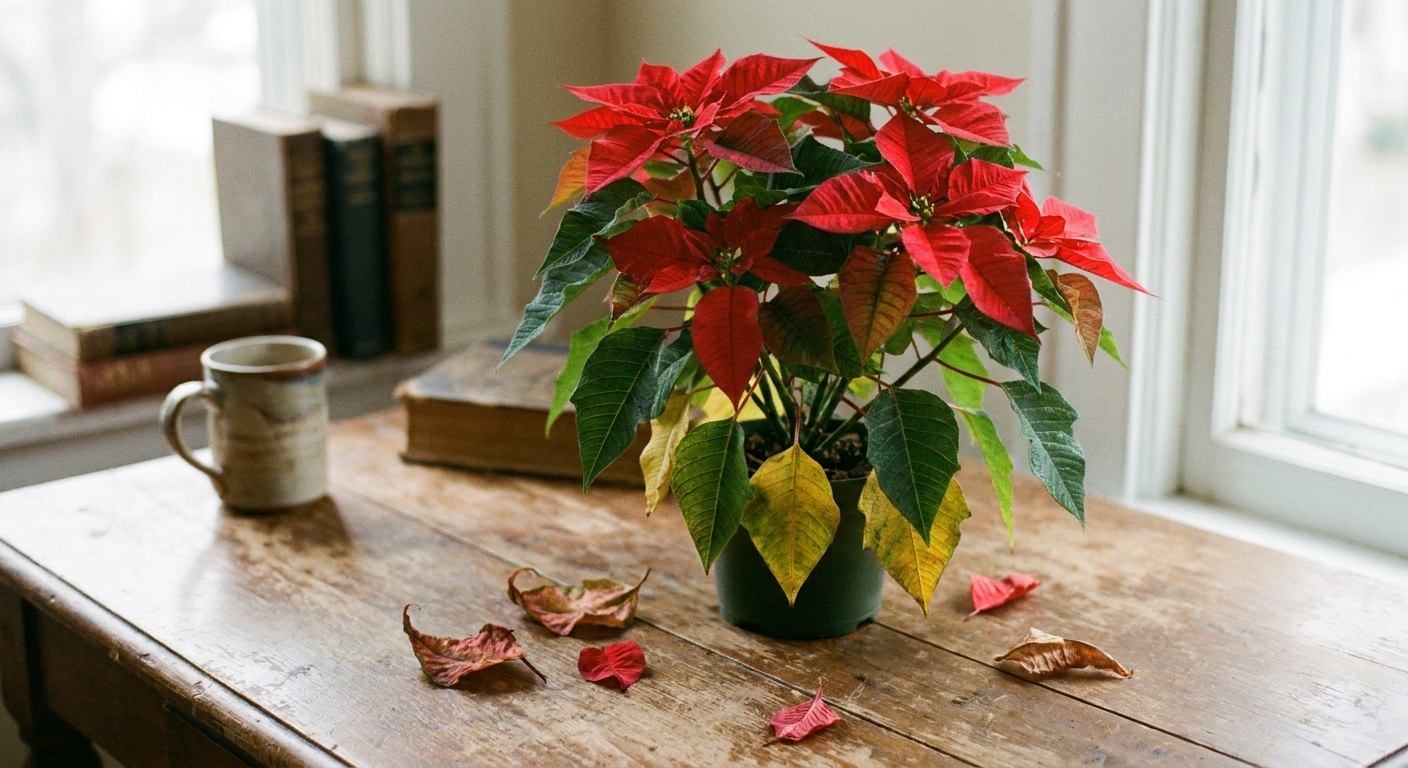
Why leaves drop or curl
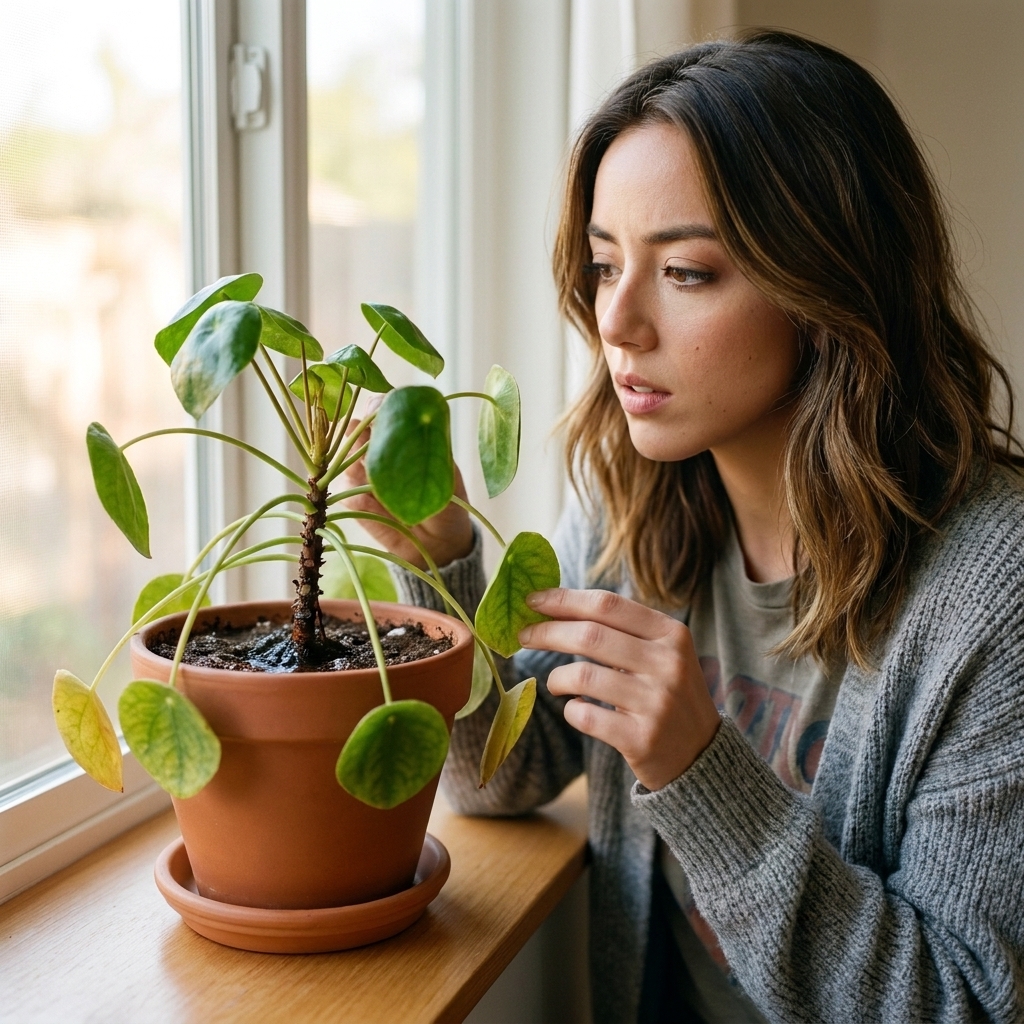
Poinsettias communicate fast, but some changes are also normal acclimation after purchase. Leaf drop in the first week can happen even when you are doing everything right, especially if it went from a greenhouse to a car to a heated home.
Leaves dropping (especially the lower leaves)
- Sudden temperature change: Bringing it home in the cold, placing it near a drafty door, or moving it from room to room can trigger drop.
- Too wet: Foil trapping water, pot with no drainage, or watering again before the top inch dries.
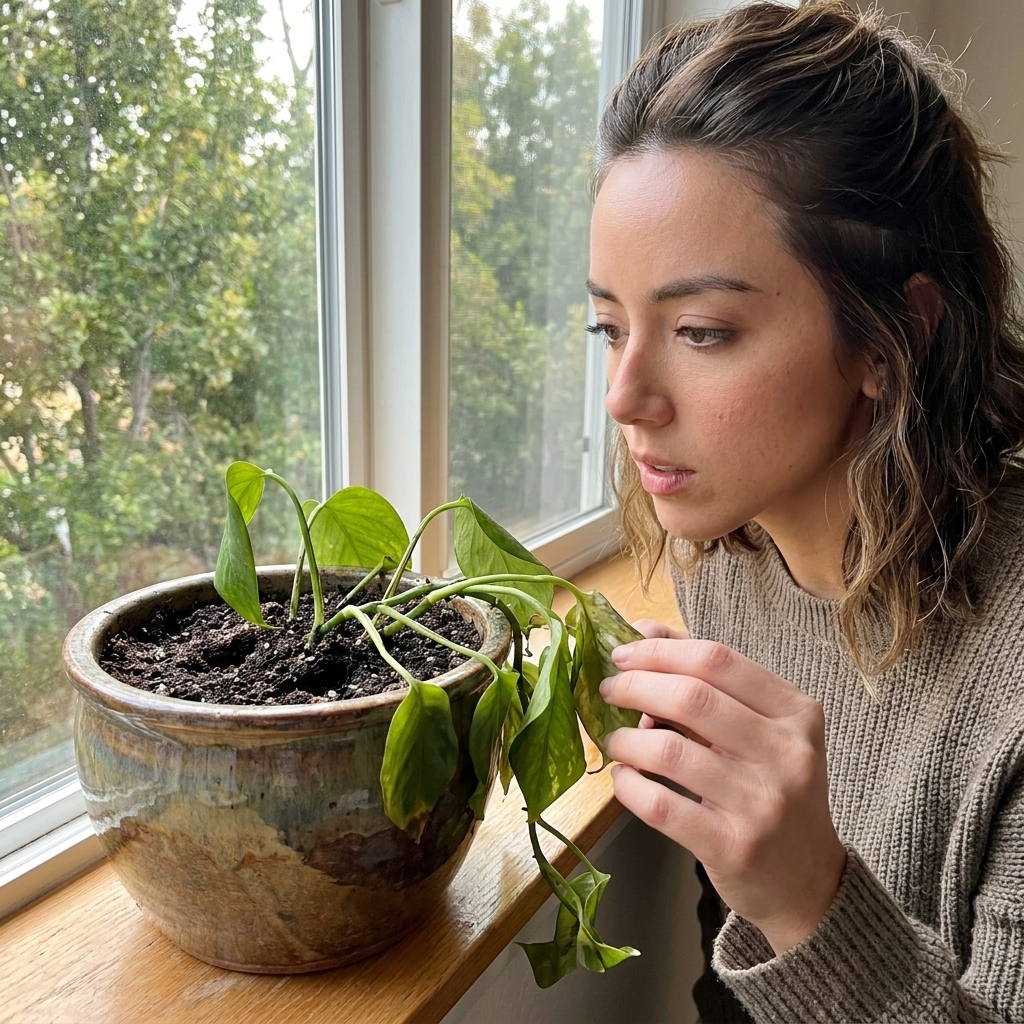
- Too dry: A full dry-out can cause a dramatic wilt and leaf drop even after you water.
- Low light: The plant sheds leaves it cannot support in dim conditions.
What to do: stabilize it. Give bright indirect light, keep it away from drafts and vents, and reset watering so it dries slightly between soakings. If the pot feels heavy and wet, stop watering and improve drainage immediately.
Leaves curling
- Hot, dry air: The classic culprit. Heat vents and fireplaces dry leaves quickly.
- Underwatering: Curling with limp, thin-feeling leaves often means it is too dry.
- Cold exposure: Curling with blotchy or mushy spots can point to chill injury.
What to do: move it to a calmer microclimate. If you suspect heat, pull it at least a few feet from the vent and consider a small humidifier nearby. If you suspect dryness, water deeply once and let it drain.
Drooping even though the soil is wet
This can happen when roots are stressed from staying wet too long. Make sure the pot drains, remove any decorative wrap, and let the top inch dry before watering again. If it smells sour or swampy, you may be dealing with early root rot.
Keep it full through the holidays
If your poinsettia is in the “survive until January” phase, these small habits make a noticeable difference.
- Leave it in one good spot. Constant moving equals constant stress.
- Rotate the pot weekly. A quarter turn keeps growth even toward the window.
- Keep it away from fruit bowls. Ripening fruit releases ethylene gas, which can speed aging in some plants. It is an easy thing to avoid if you have the space.
- Skip plant food for now. Fertilizer is not needed while it is in full bract, and overfeeding can backfire in winter. If you keep it long-term, you can start light feeding later.
- Be gentle with the bracts. The red parts can bruise and tear, especially when the plant is dry.
Is it safe around pets and kids?
This myth will not die: poinsettias are not the highly toxic menace people warn about. That said, the milky sap can irritate skin, and nibbling can cause drooling or an upset stomach in pets (and kids). I treat it like any houseplant: keep it out of reach of curious mouths, and wash hands after pruning or if sap gets on you.
Keep it after the holidays?
Yes, if you enjoy it and you have a bright window. The reality check is that poinsettias are usually grown like short-term showpieces, so they can look scruffy by late winter even with great care. If yours drops some leaves after the season, that does not mean you failed.
Repotting: I usually do not repot while it is in full color. If you are keeping it long-term, repot in spring into a slightly larger pot with fresh, well-draining mix.
The quick rebloom version: getting it red again next year requires long nights for weeks in early fall. A common target is 14 to 16 hours of uninterrupted darkness each night for about 8 to 10 weeks (often starting in late September or early October), plus bright light during the day. Exact timing can vary by cultivar, so think of it as a consistency project more than a perfect calendar date.
If that sounds like more pressure than joy, compost it guilt-free and treat yourself to a fresh one next season. There is no black thumb here, only a plant with very specific holiday timing.