A practical, reassuring guide to diagnosing winter leaf drop: drafts, low light, dry air, and watering shifts, plus exact fixes and recovery timelines.
Moving day is stressful enough without snapping a fiddle leaf fig or arriving with a box of chilled, soggy pothos. The good news is that most houseplants handle relocation beautifully when you do two things: keep them stable and keep them temperature-safe.
Below is the exact plan I use when I move plants across town or across the country, written for real life apartments, real life time constraints, and real life plants that refuse to “just be careful.”
Quick moving-day rules (print these in your brain)
- Stability beats perfection. Your goal is zero tipping and minimal leaf rubbing.
- Temperature beats aesthetics. Plants ride in the climate-controlled cabin, not the moving truck.
- Slightly dry is safer than wet. Drier soil is lighter, less messy, and lowers rot risk during a dark, bumpy trip.
- Unpack plants first. Not after the couch, not after the kitchen boxes. First.
Supplies checklist
You do not need fancy gear, but you do need the right kind of padding and the right kind of tie.
- Cardboard boxes with intact bottoms (a few sizes)
- Paper grocery bags or packing paper (for pot bracing)
- Old towels or small blankets (cushioning and draft blocking)
- Painter’s tape (gentler than packing tape)
- Stretch wrap or a large trash bag (to contain loose soil on big pots)
- Plant ties, soft twine, or Velcro garden tape (avoid wire directly on stems)
- Bamboo stakes or a moss pole (to stabilize top-heavy plants)
- Pruners or scissors (for a quick, clean removal of a doomed leaf)
- Disposable gloves (especially if you have cactus, euphorbia, or plants that ooze sap)
- Shallow trays or plastic bins (great for corralling multiple small pots)
- A thermometer (optional but helpful for winter or summer extremes)
48 to 24 hours before: prep
1) Pause watering (usually)
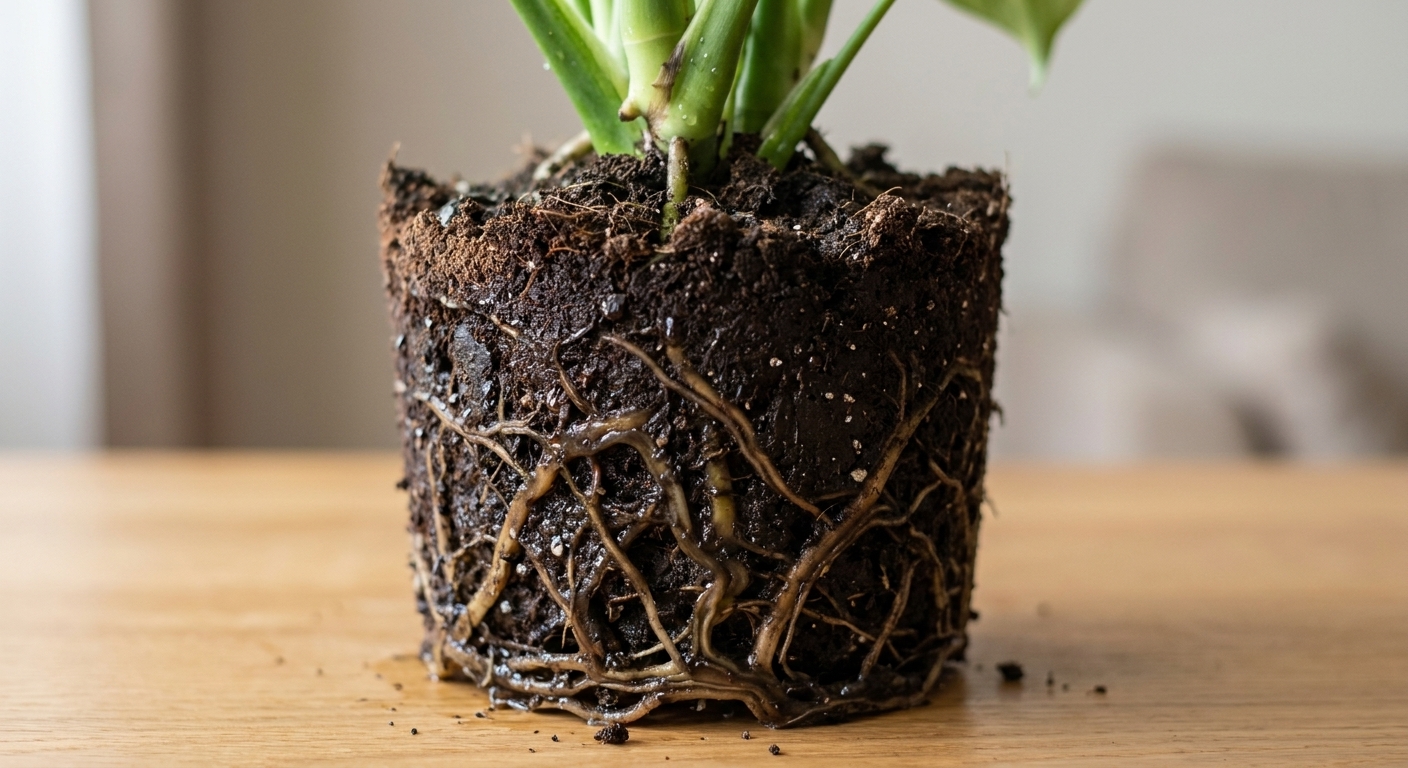
If you can, avoid watering for 1 to 3 days before moving. Slightly dry potting mix grips the root ball better and is much less likely to slosh, spill, or compact.
- Adjust the timing for small pots, very fast-draining mixes, hot weather, and thirstier plants like calatheas and marantas. If they are the type to faint dramatically, do not try to “toughen them up” for the move.
- Do water if a plant is clearly wilted and the soil is bone dry. Give a small drink, then allow it to drain fully.
- Avoid watering right before loading. Wet soil is heavier, messier, and when combined with low light and cooler temps, it raises rot risk.
2) Skip repotting and fertilizing
Moving is already a stressor. Repotting adds root disturbance, and fertilizer can push tender growth at the worst possible time.
- Typically, wait 2 to 4 weeks after arrival to repot, unless the pot is broken, the plant is falling out, or it is so rootbound it dries out constantly.
- Avoid fertilizing until you see stable new growth in the new spot.
3) Do a fast health check
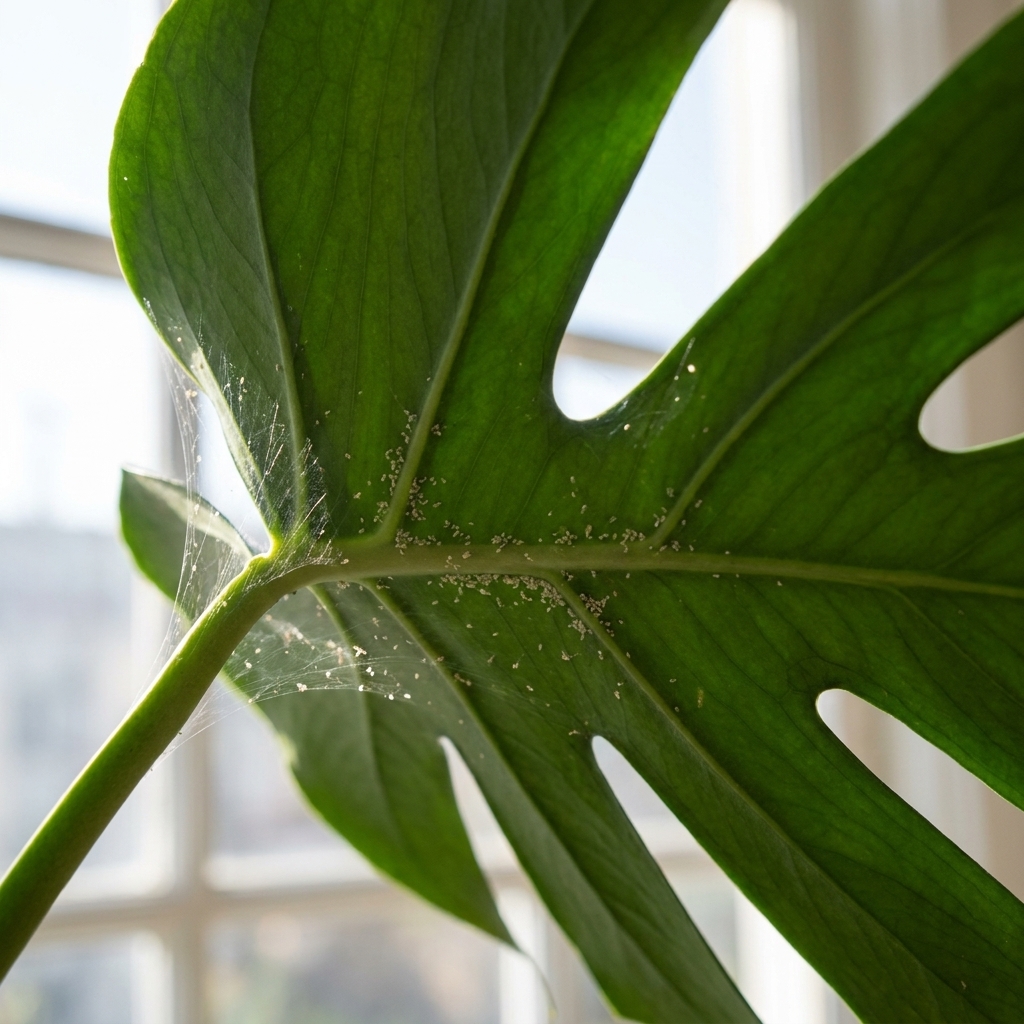
Look for pests (especially spider mites and mealybugs) and isolate anything suspicious in its own box or bin. A move is the easiest time for pests to hitchhike to every plant you own.
If you find pests and you have time, do a quick pre-move cleanup: wipe leaves, rinse foliage in the shower if the plant tolerates it, and treat with insecticidal soap according to label directions.
How to pack pots so nothing tips
Step 1: Choose the right container
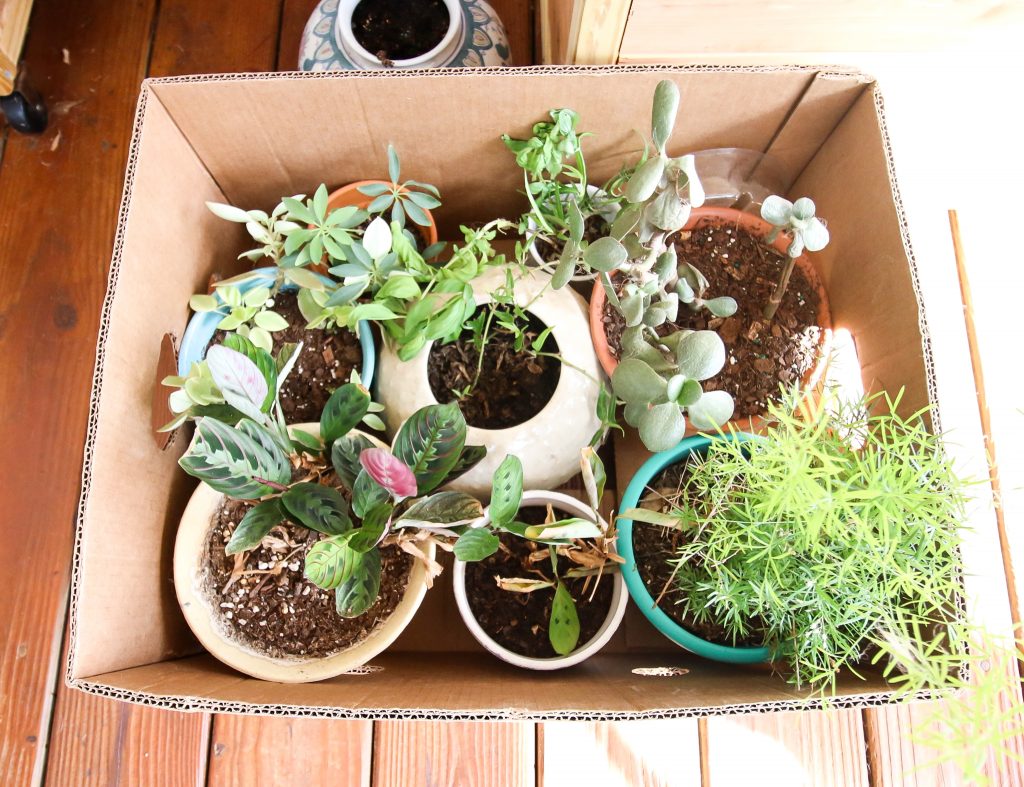
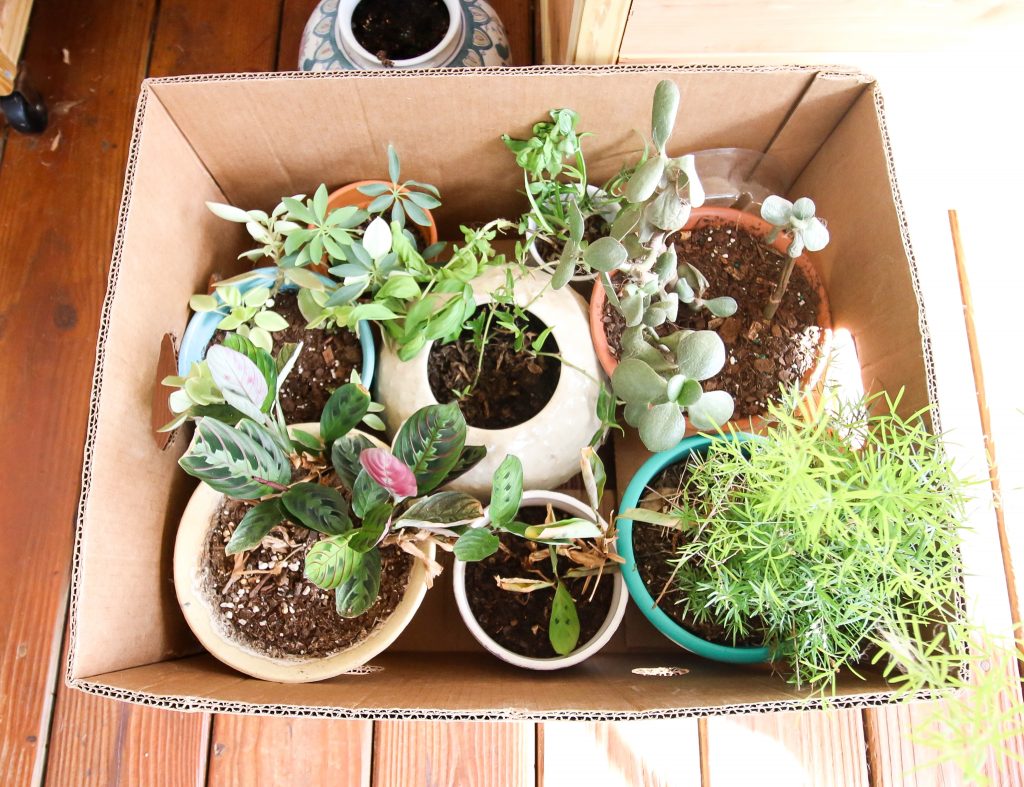
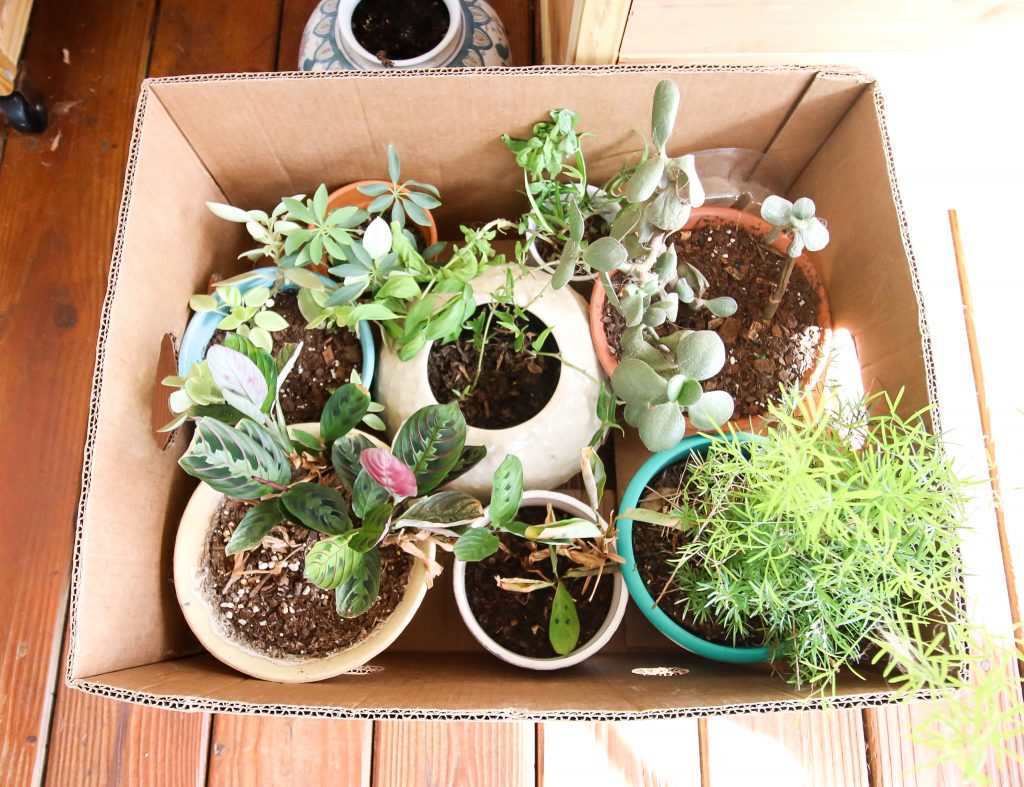
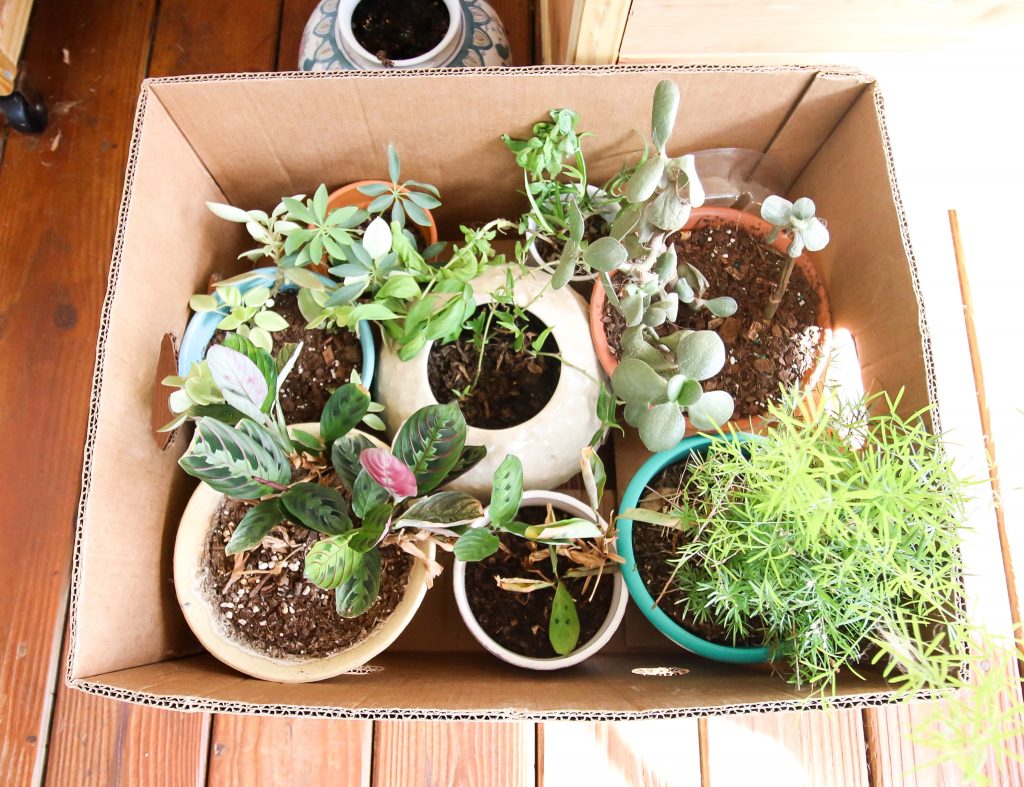
Boxes are your best friend because they keep pots upright and stop them from sliding. For many plants, a box that comes up about one third to one half of the pot height is ideal.
- Small pots: group in a shallow box or plastic bin.
- Medium pots: one to three per box depending on size.
- Large heavy pots: usually ride solo, on the floor of the car, braced with towels.
Step 2: Lock the pot in place
Set the pot in the box, then stuff rolled packing paper, paper bags, or towels tightly around the pot so it cannot shift. Think “snug like a muffin in a tin.”
Step 3: Contain loose soil
If the top of the soil is crumbly or you have a plant that loves to throw mix everywhere (looking at you, snake plant), cover the surface with:
- packing paper tucked just inside the rim, or
- a cut piece of cardboard with a slit to fit around the stem(s), or
- stretch wrap around the pot rim (not around the plant).
Step 4: Protect the pot
Terracotta and ceramic chip easily. Wrap the pot with a towel or bubble wrap, then place it back into the braced box. If you are using bubble wrap, keep it on the pot, not the foliage.
How to secure stems and leaves
Most breakage happens from whiplash movement and leaf rubbing. Your job is to gently reduce both.
For tall cane plants (dracaena, yucca)
- Bundle the canes loosely with soft ties.
- Add a stake if the plant already leans.
- Pad any tie point with a bit of paper towel if the cane is tender.
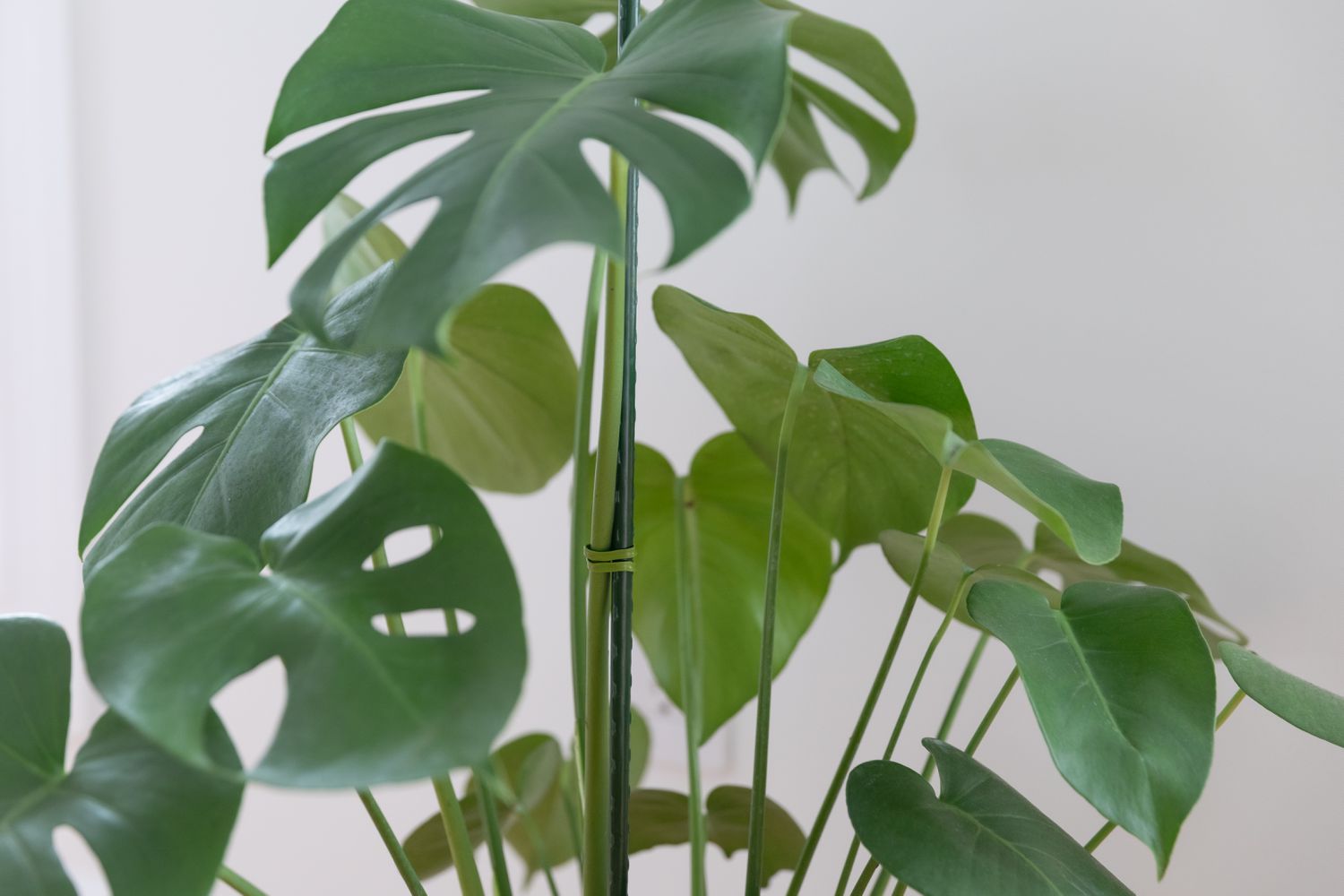
For wide leafy plants (monstera, philodendron)
- Gather leaves upward like a loose bouquet.
- Use a soft tie around the outer leaves, not the petioles alone.
- Do not cinch tight. You want “contained,” not “corseted.”
For staked climbers (moss pole)
- Check the pole is firmly seated in the pot.
- Add a second tie point lower down if the plant is top-heavy.
- If the pole is wobbly, remove and transport separately only if you can do it without tearing aerial roots.
For cacti and spiky succulents
- Use folded cardboard “collars” around the plant to prevent bumps.
- Wear gloves and keep them isolated so they do not poke neighboring leaves.
Car setup and temperature
Skip the moving truck (almost always)
Moving trucks get very hot, very cold, and very dark, and everything shifts. A few hours in a freezing truck can cause cold damage that shows up days later as black, water-soaked patches.
Best place: inside your car in the passenger area with heat or AC.
Best spots in a car
- Footwells: great for tall plants laid at a gentle angle and braced with towels.
- Back seat: best for boxed plants. Use the seat belt to keep a box from sliding.
- Trunk: only if it is connected to the cabin (like a hatchback) and stays temperature-controlled.
Packing note: Pack boxes snugly enough that they cannot slide, but not so tight that leaves are pressed against windows, doors, or hard plastic trim. A towel buffer is your paint job and leaf saver.
Temperature targets
Most common houseplants are happiest between 60 to 80°F (about 16 to 27°C). Many tropicals prefer staying above 55 to 60°F if you can manage it, even for short trips. Some tougher plants (like snake plant and ZZ) tolerate cooler spells better, but I still do not gamble with cold car time if I can avoid it.
Winter moves
- Warm the car first.
- Wrap boxes with towels like little blankets, leaving the top open for airflow once inside the warm cabin.
- Minimize time on the sidewalk. Stage plants by the door only when the car is ready.
- Never place plants directly against a cold window. Use a towel buffer.
Summer moves
- Cool the car before loading.
- Keep plants out of direct sun through car windows, especially on the rear deck.
- Do not leave plants parked in a closed car, even “just for 10 minutes.”
Long drives (2 hours to days)
Keep them upright, shaded, ventilated
For longer drives, your biggest risks are heat buildup, chill, dehydration, and mechanical damage from constant vibration.
- Stabilize boxes so they cannot shift when you brake.
- Avoid blasting vents directly onto foliage. Aim airflow at the cabin, not the leaves.
- Do not seal plants in plastic for hours. Trapped moisture plus warmth can encourage leaf rot.
- Darkness for a day is usually fine. What plants hate is being boxed up for multiple days, especially in weird temps.
Stopping for breaks
- Park in shade when possible.
- If you must leave the car, take the most temperature-sensitive plants with you or keep the engine and climate control running only if it is safe and legal to do so.
- Do a quick “tilt check” each stop: are pots still upright and braced?
If the move takes multiple days
Overnight, bring plants into the hotel or indoors if you can. A single cold night in a car can undo a year of good care. If indoor is not possible, at least insulate boxes with towels and keep them away from windows, but know this is a last resort.
If you are truly crossing state lines, it is also worth a quick check of agricultural rules for your destination. Restrictions are more common for outdoor plants and soil, but it is better to learn that before you are unpacking at midnight.
Unpack plants first
Once you arrive, give your plants two gifts: light and stillness.
1) Get them inside
Do not let boxed plants sit in a garage, on a porch, or in a hot driveway while you unload furniture. Temperature swings are sneaky and brutal.
2) Unbox and inspect
- Remove packing paper and any foliage ties.
- Check stems for creases or cracks.
- Brush off spilled soil and wipe dusty leaves with a damp cloth.
3) Hold off on watering until you confirm dryness
It is tempting to “treat” a stressed plant with water. Instead, test the soil with your finger or a moisture meter.
- If the top 1 to 2 inches are dry for most tropicals, water normally and let it drain fully.
- If it is still damp, wait. Moving stress plus wet soil is a classic root rot setup.
Acclimate (first 2 weeks)
Even if your new home is only a few miles away, the light angles, window coatings, drafts, and humidity can be totally different. Treat the first couple of weeks like a gentle transition.
Start with a landing zone
Pick one spot that is:
- bright but not harsh direct sun,
- away from heating vents and exterior doors,
- low traffic so leaves are not constantly bumped.
Let plants rest there for 3 to 7 days before you shuffle them into their final decor-perfect locations.
Expect a little drama
A few yellow leaves or a pause in growth is normal after a move. What you do not want is fast collapse.
- Normal: one to three older leaves yellowing, slight droop that improves after rest.
- Not normal: mushy stems, spreading black patches, strong sour smell from soil, sudden leaf drop across the whole plant.
Repot later (usually)
If you planned to upgrade pots, wait until the plant has clearly stabilized. A solid rule is about 2 to 4 weeks, longer if the plant is already fussy. The main exception is a plant that is so rootbound it is drying out constantly. In that case, a careful repot sooner can actually reduce stress.
Special cases
Plants that hate cold
Calatheas, marantas, alocasias, begonias, and many tropical aroids can show cold damage quickly. Prioritize them for the warmest, most protected seat location, and minimize time outside.
Very large floor plants
If a plant is too big to box, focus on three things: wrap the pot, bundle the foliage, and brace the base.
- Wrap the pot with a blanket to prevent chips.
- Use a soft tie to bring foliage inward.
- Wedge the pot between heavy items that will not shift, like a rolled rug and a firmly placed box.
Hanging plants
Remove hangers if possible and transport the pot like any other. If the hanger must stay on, coil it neatly and tape it to the pot so it does not swing and slap foliage.
Common mistakes
- Watering right before loading. Wet pots are heavier, tip more easily, and in dark cool conditions the extra moisture raises rot risk.
- Leaving plants in the truck “just this once.” Temperature swings are the silent killer.
- Wrapping foliage in plastic for hours. Trapped moisture leads to rot and bruising.
- Over-tight tying. Crimped petioles and snapped stems show up after you remove the ties.
- Unpacking last. Plants do not want to spend the night in a dark box.
FAQ
Should I prune before moving?
Only lightly. Remove leaves that are already damaged or hanging by a thread. Avoid major pruning right before a move because it adds another stress on top of relocation.
Can I move plants when it is below freezing?
Yes, but you need speed and insulation. Warm the car, stage plants inside until the last minute, wrap boxes with towels, and keep plants out of the cold air for as short a time as humanly possible.
What if a stem breaks in transit?
Make a clean cut below the break with sterilized scissors or pruners. Splinting can work for some thicker stems, but many houseplants do better with a clean cut than a crushed wound. Then place the plant in stable light and hold off on extra water.
When can I resume my normal routine?
Once plants are in their intended spots and you see stable posture and no new damage for about 7 to 14 days, you can generally go back to your usual watering cadence, adjusted for the new light and humidity.
A gentle reminder
If a plant arrives with a bruised leaf or two, it does not mean you failed. Moves are chaotic, and plants are living things, not decor. Keep them warm, keep them steady, and give them a quiet week to settle in. Most of them will forgive you quickly.