A calm, step-by-step snake plant repotting guide: choose a well-draining mix, size up the pot correctly, handle roots safely, and water the right way to prev...
I killed my first three succulents in college by loving them to death with water. Snake plants (once commonly labeled Sansevieria, and now often sold as Dracaena trifasciata) are in that same tough, drought-tolerant club, which is wonderful until we treat “tough” like it means “water on a schedule no matter what.”
If you want a snake plant that stays upright, firm, and deeply green, the secret is boring: water only when the potting mix has dried most of the way down. Not “every Sunday.” Not “once a week.” Soil dryness first, calendar second.
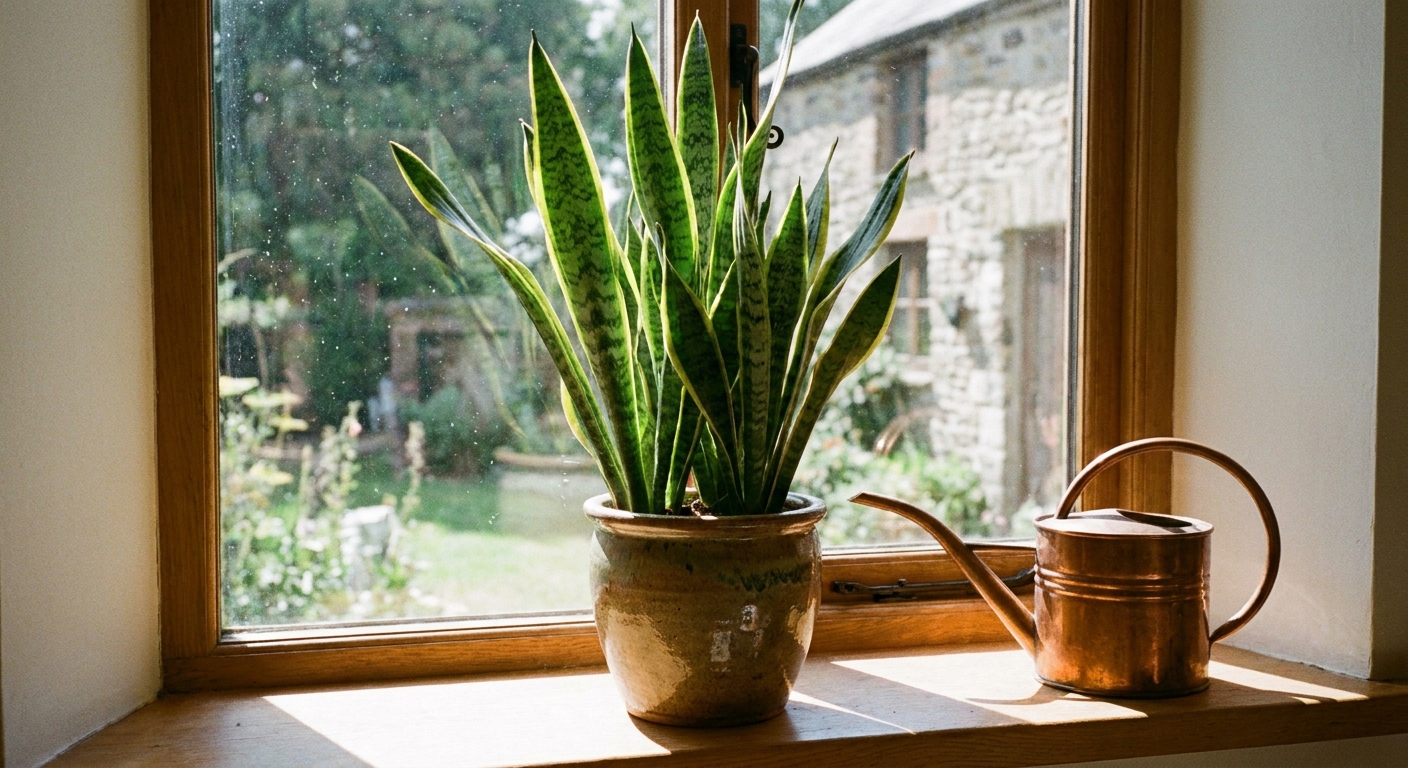
The short answer
In most homes, a snake plant usually needs water about:
- Every 2 to 4 weeks in spring and summer
- Every 4 to 8 weeks in fall and winter
That range is wide on purpose. A snake plant in brighter light, in a small terracotta pot, will dry out dramatically faster than one in a dim corner planted in a big plastic nursery pot. Same general “snake plant,” totally different timeline.
So here is the rule I actually use: water when the mix is dry through the top half to two-thirds of the pot, then water thoroughly and let it drain.
How to tell if it’s time
Snake plants store water in their leaves and rhizomes. That storage is why they tolerate neglect and why constant moisture can rot them quickly. The safest habit is to check deeper than the surface.
Do the depth test
- Step 1: Insert a finger or a chopstick into the potting mix.
- Step 2: Aim for about the top half to two-thirds of the soil depth.
- Step 3: Pull it out and check the feel.
- If it’s cool, damp, or soil clings: wait.
- If it’s dry and dusty: you can water.
Scale it to your pot. In a small 4 to 6 inch pot, this might mean you are basically checking near the bottom. In a taller 10 to 12 inch pot, check two spots (near the edge and closer to the center) because the bottom can stay wet long after the top looks “ready.”
Helpful backup checks
- Lift test: After a full watering, pick up the pot to learn its “heavy” weight. When it feels noticeably lighter, it is trending dry.
- Drainage reality check: If the surface looks dry but the pot still feels heavy, moisture is lingering deeper down. Keep waiting.
If you are torn between watering and waiting, wait. With snake plants, underwatering is easier to correct than overwatering.
Watering by light
Light is the biggest driver of how fast a snake plant uses water. More light usually means more growth and faster drying. Lower light means a slower metabolism and longer dry-down times.
Bright indirect light
- Typical interval: every 2 to 3 weeks in warm months, every 4 to 6 weeks in winter
- Where this happens: near an east or west window, or a few feet back from a bright south window
Medium light
- Typical interval: every 3 to 4 weeks in warm months, every 6 to 8 weeks in winter
- Where this happens: across the room from a window, or a bright room with filtered light
Low light
- Typical interval: every 4 to 6 weeks in warm months, every 8 weeks or longer in winter
- Where this happens: corners, hallways, offices, rooms with small or shaded windows
Snake plants survive low light, but they drink slowly there. If your plant lives far from a window, treat watering like a special occasion, not a routine chore.
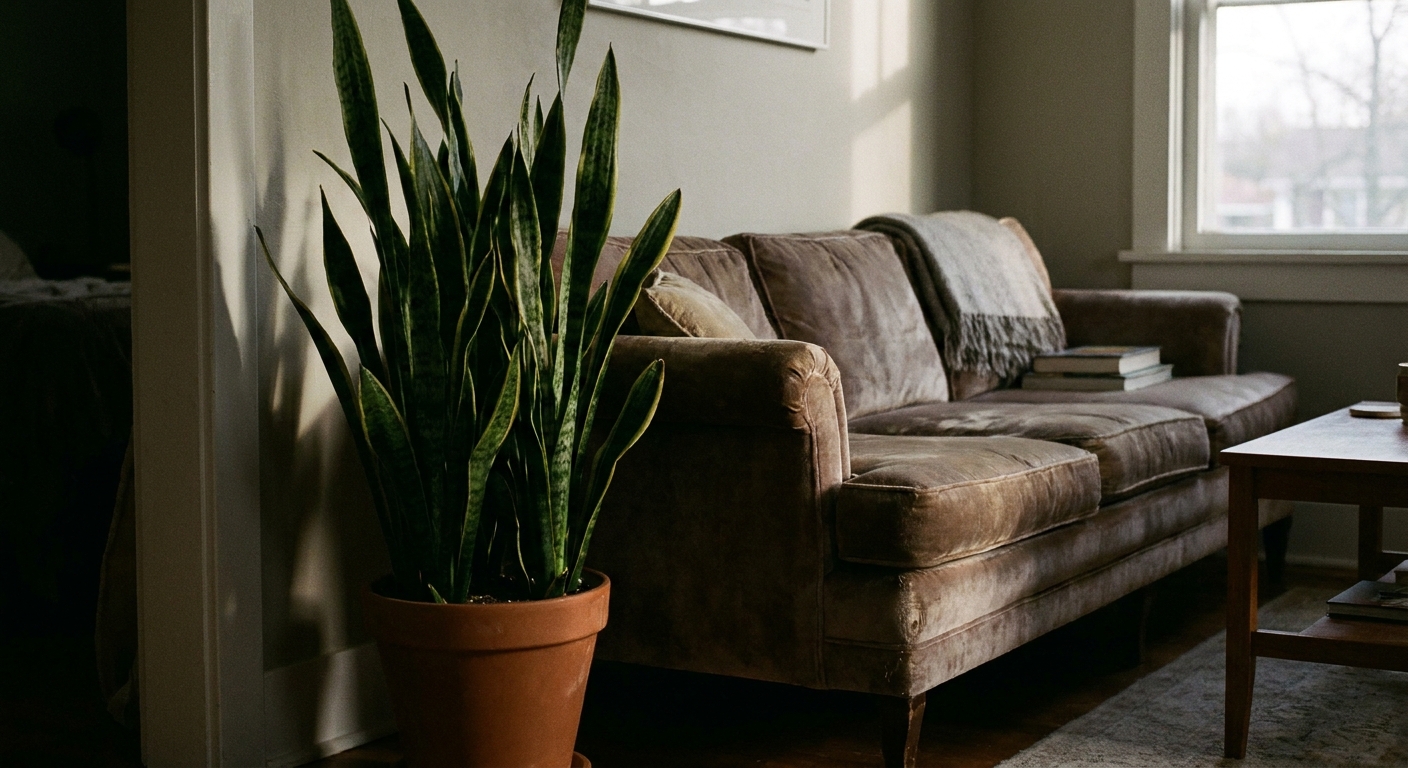
Watering by season
Even indoors, seasons matter because your home’s light levels, temperature, and humidity shift.
Spring and summer
- Faster drying from longer days and warmer rooms
- More growth means the plant uses water sooner
- Plan to check the soil about every 10 to 14 days, then water only if the mix is dry most of the way down
Fall and winter
- Slower growth, less light, cooler nights near windows
- Soil can stay wet longer, especially in larger pots
- Plan to check the soil about every 2 to 3 weeks, and water much less often
If your heat runs constantly in winter and the plant sits near a vent, it may dry quicker. If it sits by a cold window, it may dry slower. Let the soil tell you.
Pot and soil factors
This is one of those details that quietly explains why your friend waters monthly and you “do the same thing” but still get mushy leaves.
Terracotta (unglazed clay)
- Dries the fastest because clay breathes
- Great for anyone who tends to overwater
- You may water a bit more often, especially in bright light
Ceramic (glazed) and plastic
- Hold moisture longer
- Perfectly fine, but you must be stricter about your soil check
- Expect longer intervals, especially in winter
Potting mix matters more than people think
Many store-bought mixes are peat-heavy and stay wet longer indoors, especially in low light. A chunkier, fast-draining mix (often sold as cactus or succulent mix, sometimes improved with extra perlite or pumice) dries more evenly and makes watering mistakes less dramatic.
Self-watering pots
- Use caution. Snake plants generally prefer a soak, then a real dry-down.
- Some self-watering or semi-hydro setups can work if the medium is airy and you control the moisture, but a constantly full reservoir is a common path to rot.
- If you use a reservoir-style pot, err on the dry side and let the mix dry down well before refilling.
One non-negotiable: whatever the pot material, make sure there is a drainage hole. A snake plant in a pot with no drainage is basically a slow-motion root rot experiment.
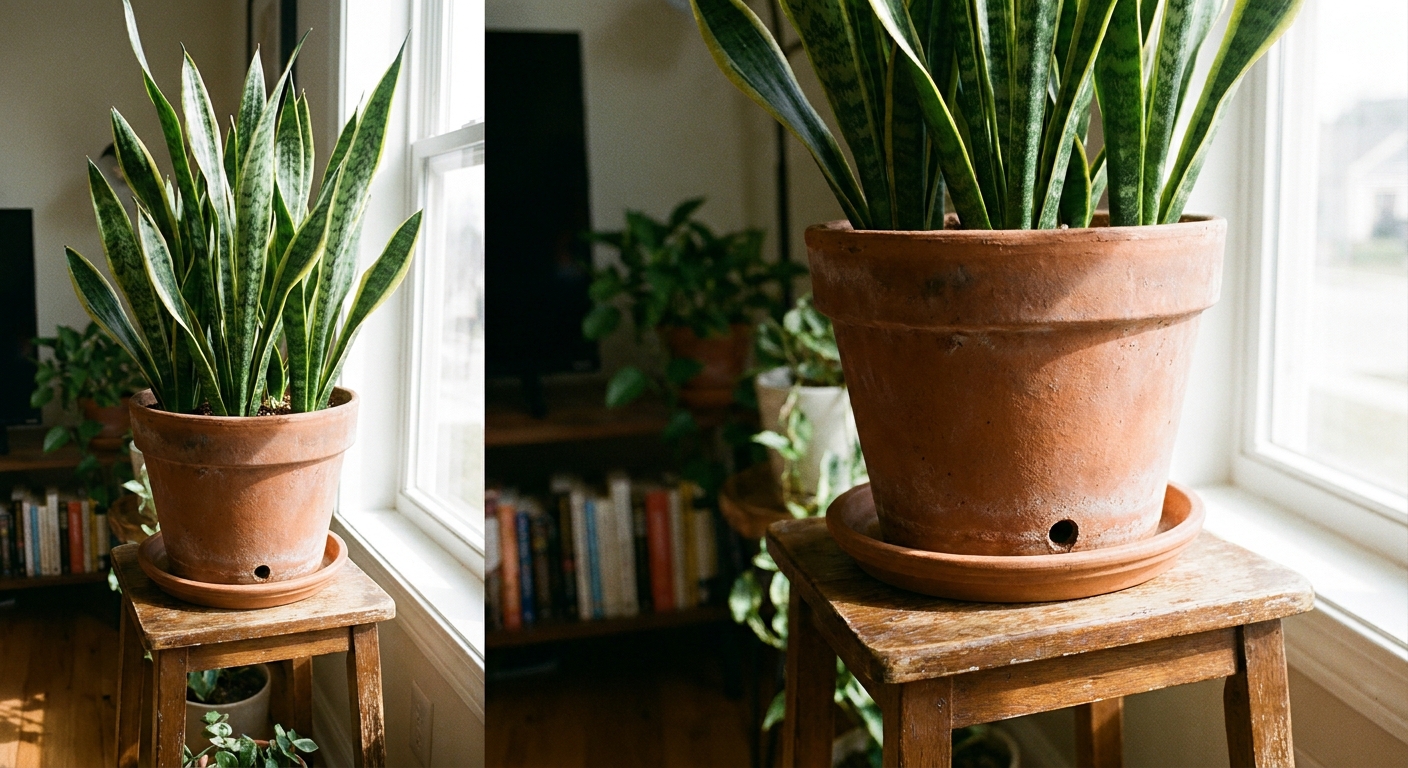
How to water correctly
When it is time to water, commit to a proper watering instead of a little sip. Sipping keeps the lower soil damp while the top looks dry, which can trick you into watering again.
My simple method
- Take the plant to a sink, tub, or tray.
- Water slowly until you see water run out of the drainage holes.
- Let it drain for 5 to 15 minutes.
- Empty the saucer.
- If your plant sits inside a decorative cachepot, pour out any trapped water before you put it back.
If the potting mix is so dry that water runs straight down the sides and out the bottom, the mix has become hydrophobic. In that case, water a little, wait 5 minutes, then water again. Or bottom-water for 20 to 30 minutes, then drain thoroughly.
One small detail that helps: use room-temperature water. Snake plants are not especially picky, but very cold water and mineral buildup are both easy things to avoid.
A routine that works
If you like having a routine, use a check-in schedule, not a watering schedule:
- Bright light: check every 10 to 14 days
- Medium light: check every 2 to 3 weeks
- Low light: check every 3 to 4 weeks
At each check-in, do the depth test. If it is dry most of the way down, water deeply. If not, walk away guilt-free.
Signs you’re off track
Too often
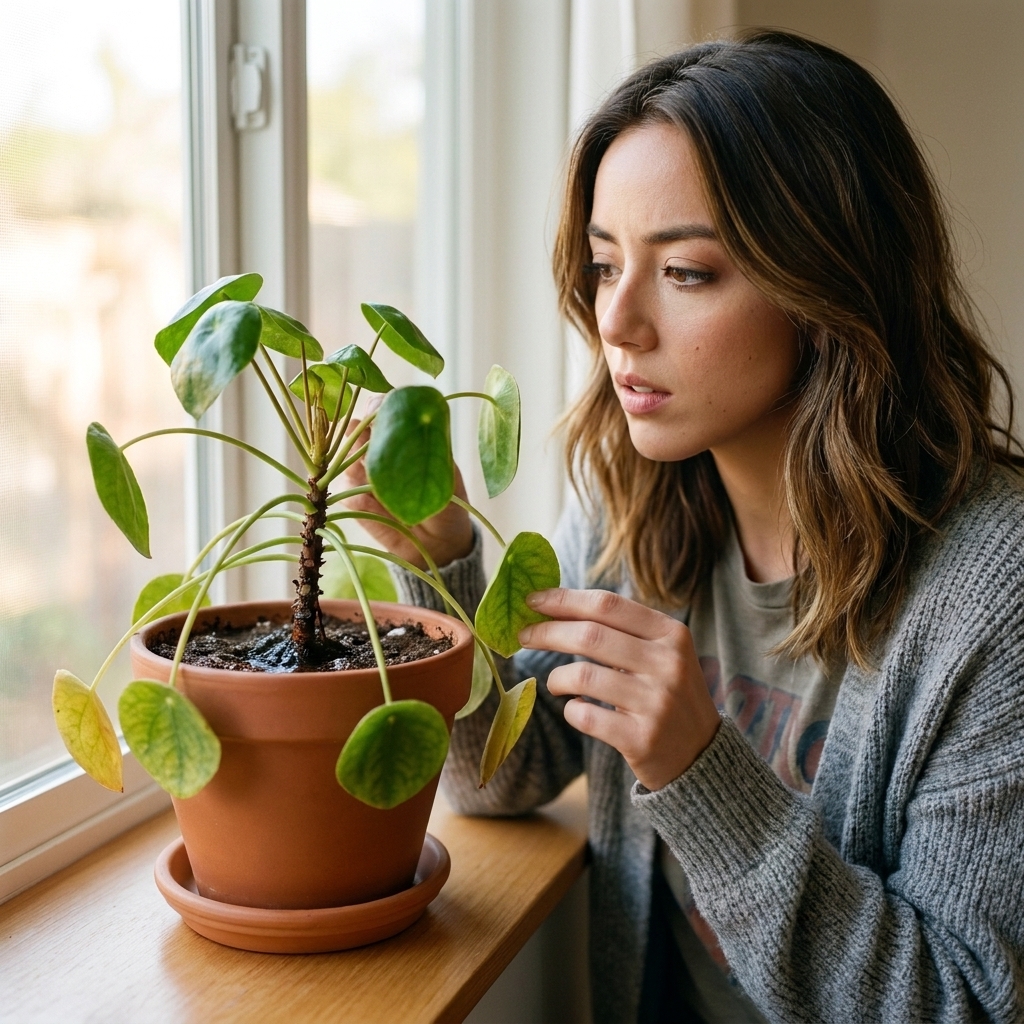
- Leaves feel soft, mushy, or watery at the base
- Leaves flop over suddenly even though the soil is damp
- Yellowing that starts near the base
- Soil smells sour or musty
- Fungus gnats hovering around consistently damp soil (not definitive, but a common clue)
Too rarely
- Leaves look wrinkled or slightly puckered
- Tips get crispy and brown (especially if the plant is in brighter light)
- Potting mix is bone-dry all the way down and pulling away from the pot sides
Most “mystery” snake plant problems indoors come back to one thing: the soil is staying wet too long for the light level.
If you overwatered
First, take a breath. Overwatering is not a moral failure. It is a common mismatch between plant biology and human routine.
Step-by-step rescue
- 1) Stop watering. Put the watering can away.
- 2) Check the base of the leaves. If any leaves are mushy at the bottom, they are not going to firm up again.
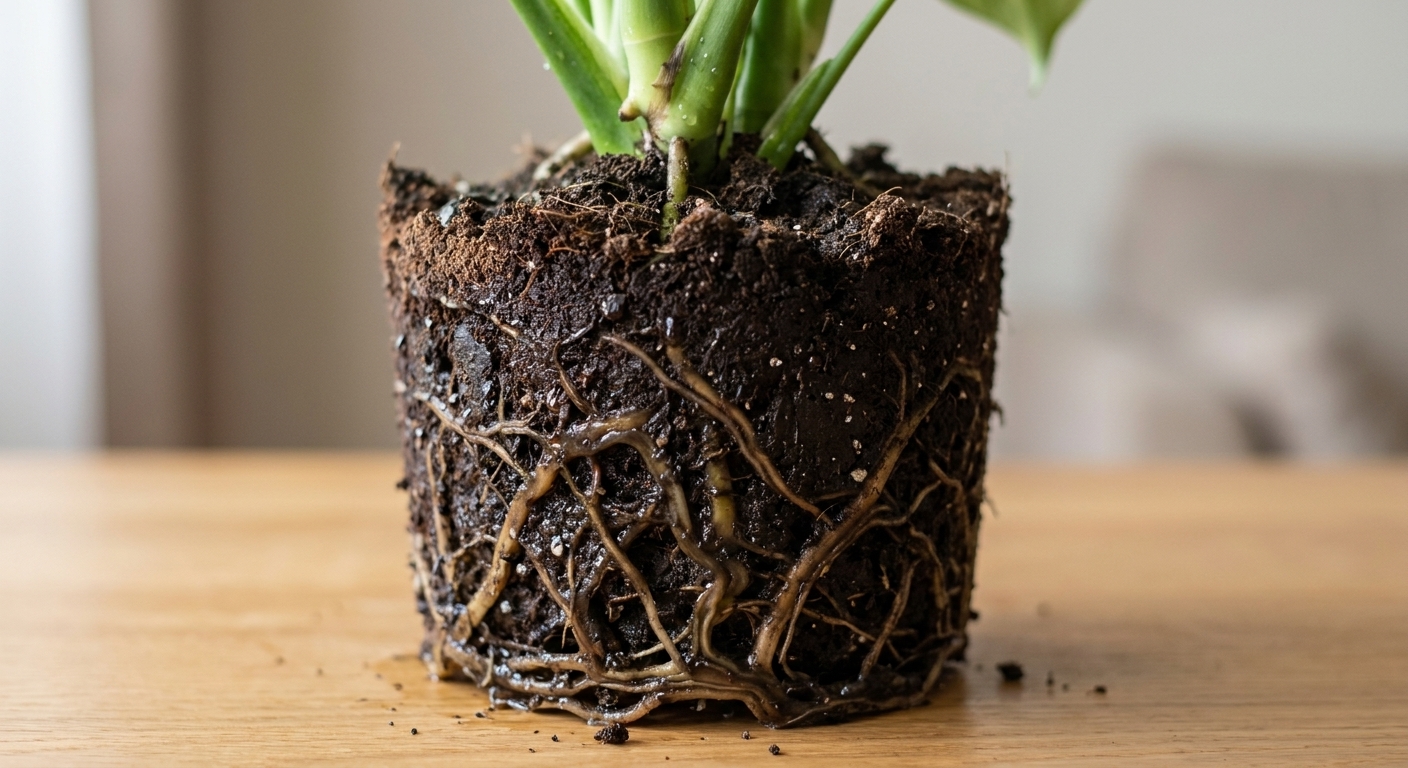
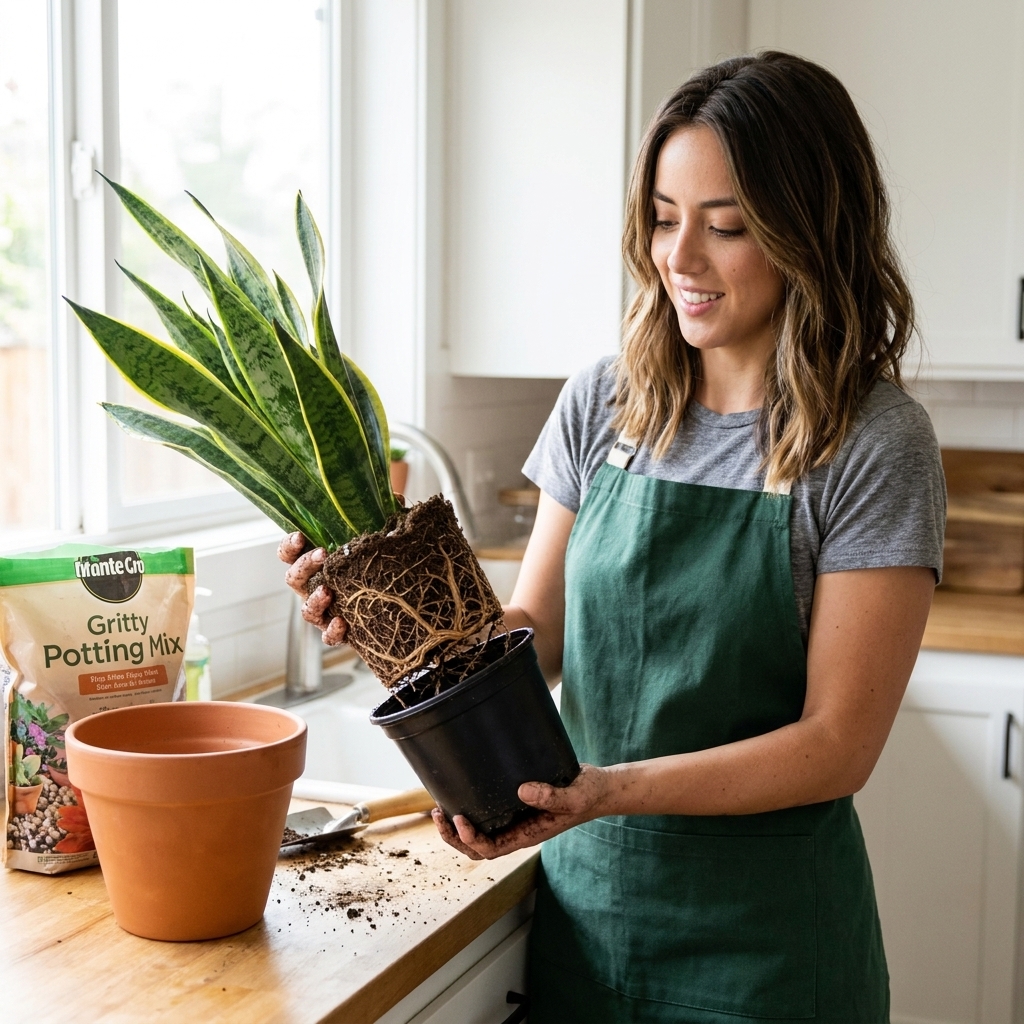
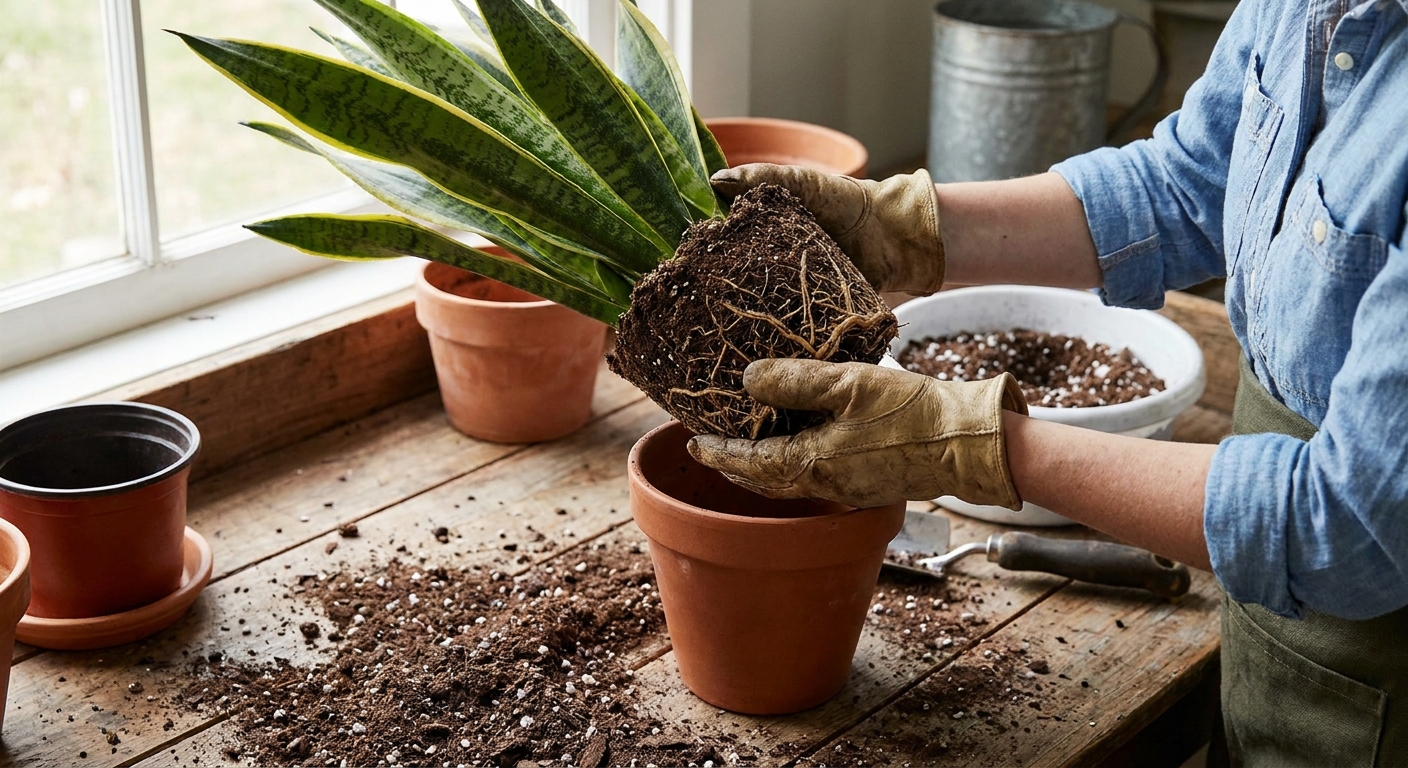
- 3) Slide the plant out of the pot. If the soil is wet and the roots look brown, black, slimy, or smell bad, you are dealing with rot.
- 4) Remove rotten roots. Use clean scissors to trim back to firm, pale roots and healthy rhizome tissue.
- 5) Repot into dry, fast-draining mix. Cactus or succulent mix is a good start. If your mix feels dense, cut it with extra perlite or pumice.
- 6) Use a pot with drainage. If you were in a cachepot with no holes, switch now.
- 7) Wait before watering again. After repotting, I often wait at least 5 to 10 days, sometimes longer if I removed a lot of roots or the mix is staying cool and damp. The goal is to let any root cuts callus and avoid re-soaking a stressed root system.
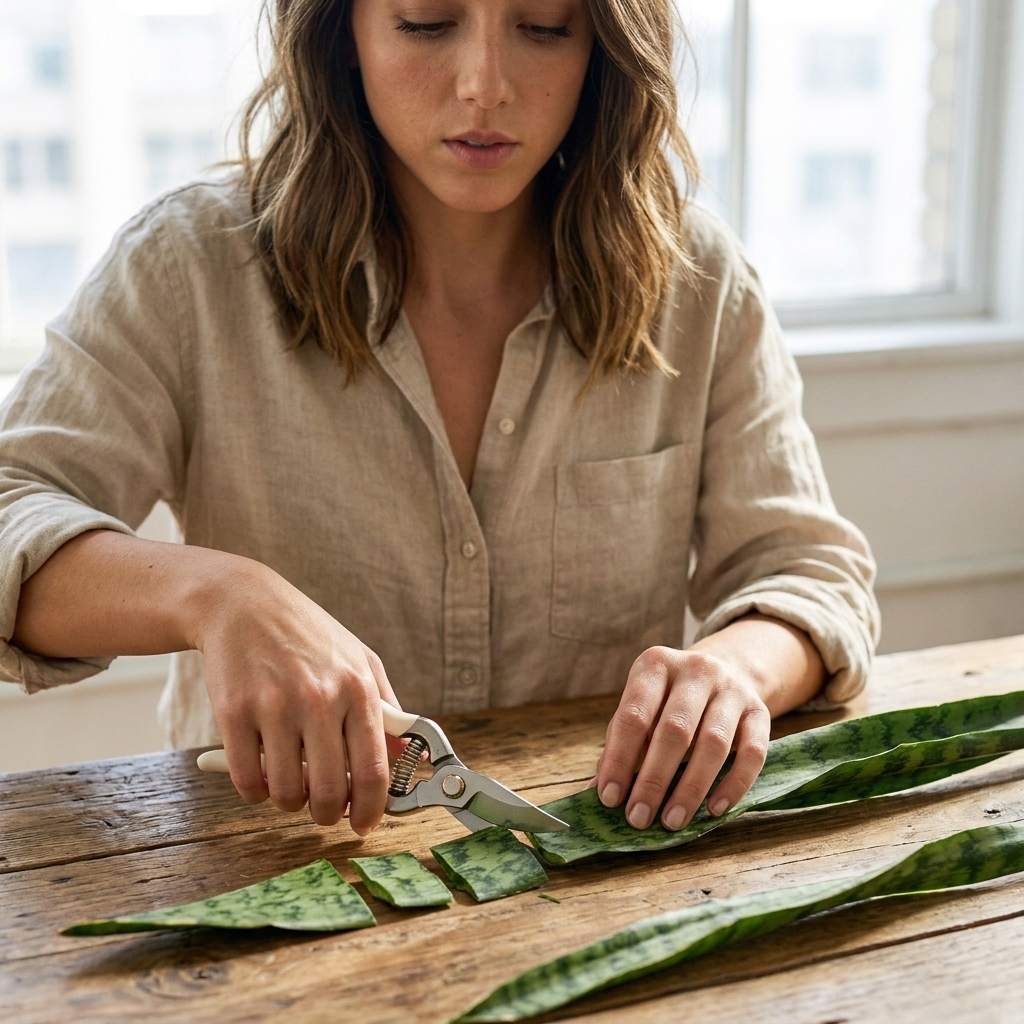
If the base of the plant is severely mushy, you can still save it by propagating healthy leaf sections or dividing any firm rhizomes. Snake plants are stubborn in the best way.
FAQ
Can I water my snake plant once a week?
In most homes, weekly watering is too frequent and eventually leads to root rot, especially in medium to low light. If you are watering weekly, make sure the mix is drying most of the way down first and consider whether your potting mix or pot type is holding too much moisture.
Should I mist a snake plant?
No need. Misting does not meaningfully raise humidity for the plant, and it can leave water sitting in tight leaf bases. Snake plants are happiest with normal indoor humidity and good airflow.
Do snake plants like to dry out completely?
They like to dry out most of the way between waterings. In practice, that often means the top half to two-thirds is dry, and in winter it may be close to fully dry. Letting the entire pot turn to dust for long periods can stress the plant, but constant moisture is the bigger danger.
What if I forgot when I last watered?
Perfect. Check soil depth and pot weight, then decide based on what you see and feel. Your snake plant does not care about the date on the calendar.