A calm, step-by-step snake plant repotting guide: choose a well-draining mix, size up the pot correctly, handle roots safely, and water the right way to prev...
If you have ever looked at your snake plant and thought, “You are doing great. You deserve duplicates,” you are in the right place. Snake plants are famously tough, but propagation can still go sideways indoors if you accidentally trap moisture where it should not be.
You will also see the name shift depending on the label: many snake plants long sold as Sansevieria are now often listed under Dracaena (for example, Sansevieria trifasciata is commonly sold as Dracaena trifasciata). Either way, the care and propagation basics are the same.
In this guide, I will walk you through two highly effective methods:
- Division: the fastest, most foolproof way to get an identical plant.
- Leaf cuttings: satisfying and budget-friendly, but slower and easier to rot if conditions are too wet.
We will focus on the practical stuff that actually matters at home: clean cuts, drying time, airy substrates, and how to tell if something is rooting or silently melting.
Quick safety note: snake plants are mildly toxic if chewed. If you have curious cats or dogs, keep fresh cuttings out of reach.
Before you start
Division vs leaf cuttings
- Choose division if your plant has multiple clusters (pups), looks crowded, or you want a bigger new plant right away.
- Choose leaf cuttings if you only have one plant with no pups yet, or you want to make several smaller starts.
Variegation warning
This surprises a lot of people. If your snake plant has yellow margins or striping (like ‘Laurentii’), leaf cuttings often revert to solid green growth. Division is the method that reliably keeps the exact look of the parent.
Best time of year
Snake plants can propagate year-round indoors, but you will usually see faster rooting in spring through early fall when light levels are higher and the plant is naturally in growth mode.
Tools and materials
- Clean, sharp scissors, pruning snips, or a knife
- Rubbing alcohol (for wiping blades)
- Small pots with drainage
- Well-draining mix (more on this below)
- Optional: rooting hormone (nice, not necessary)
- Optional: bamboo skewer or chopstick (for checking moisture)
If there is one “extra” I will always recommend, it is drainage holes. Snake plant propagation fails most often in containers that stay wet too long.
Method 1: Division
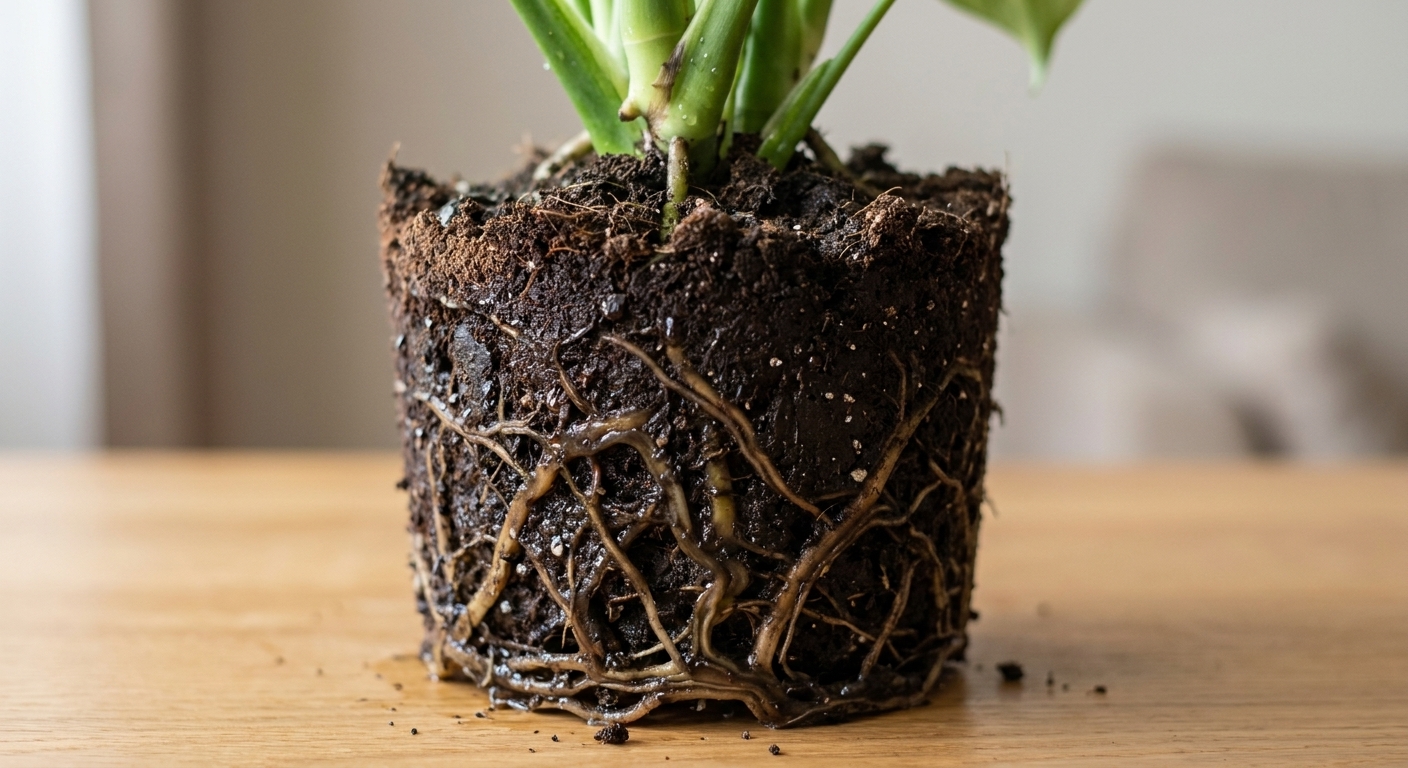
Division is my go-to when a snake plant is bursting out of its pot or leaning because the root ball has become a brick. It is also the best choice for keeping variegation.
Step-by-step: division
Hold off on watering for a few days first. Slightly drier soil makes the root ball easier to handle and reduces rot risk after you separate sections.
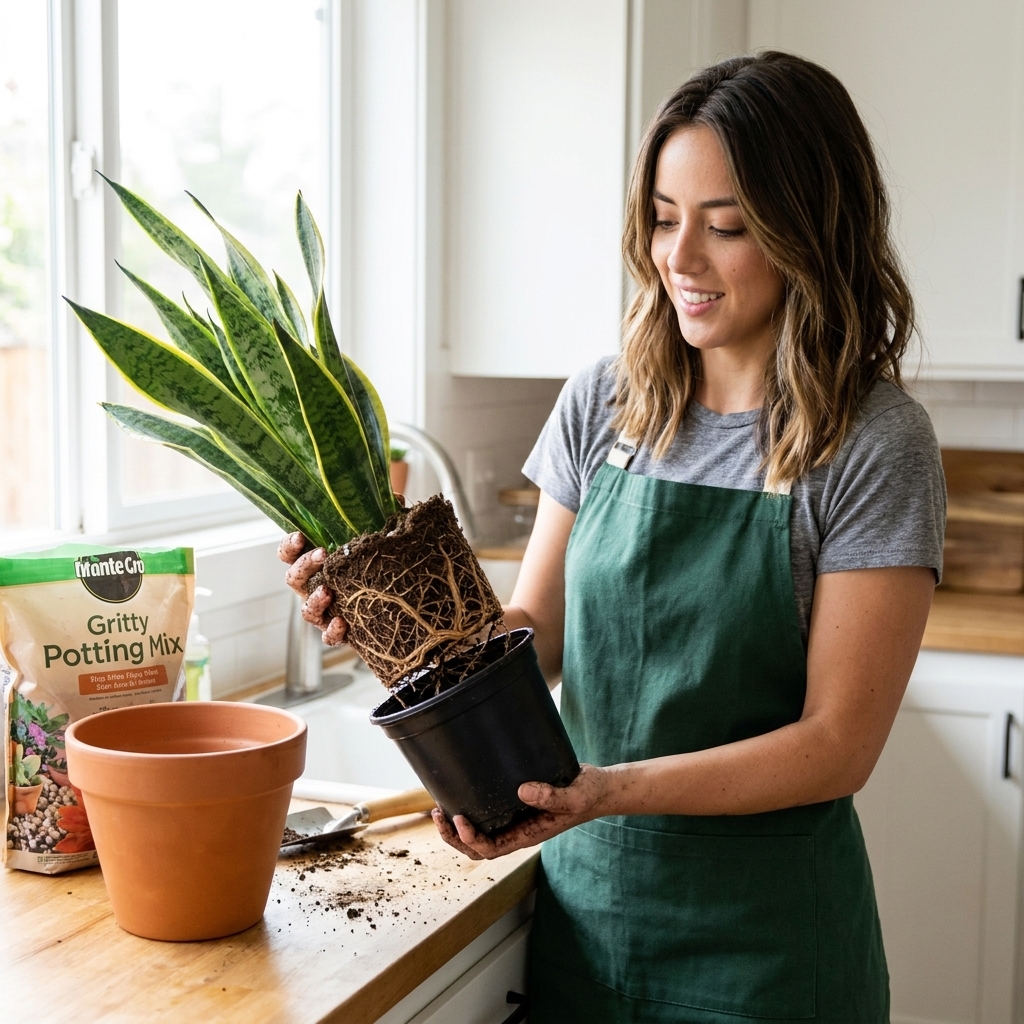
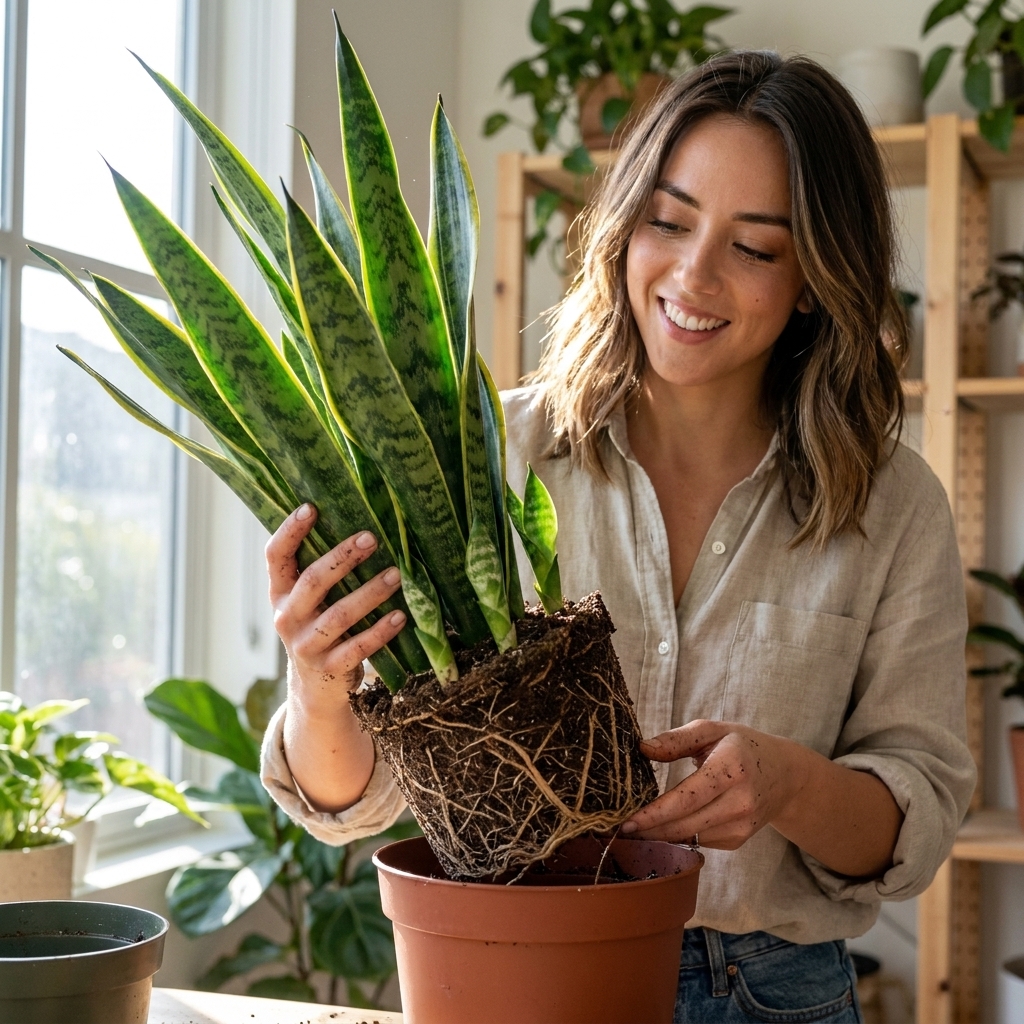
Remove the plant from the pot. Tip the pot sideways, support the leaves with your hand, and gently slide it out.
Find the natural “sections.” Look for distinct clusters of leaves (pups) attached to the main plant via thick underground rhizomes. Snake plants spread horizontally, so you are basically separating neighborhoods.
Separate with your hands first. If the root ball loosens easily, you can often pull sections apart gently. If it is stubborn, use a clean knife to cut through rhizomes.
Let fresh cuts dry. If you had to cut rhizomes or thick roots, set the divisions aside so cut surfaces can callus. In a warm, dry home this can be a few hours. In cooler or more humid conditions, overnight to 24 hours is often safer. This is a quiet little rot-prevention miracle.
Pot each division in a gritty mix. Use a pot only slightly larger than the root mass. Oversized pots hold too much moisture.
Wait before watering. After division, I like to wait 3 to 7 days before watering so any minor root damage can seal. Then water thoroughly and let it drain fully.
Best soil mix
You can use a cactus or succulent mix as a base, but I love improving it for indoor conditions:
- 2 parts cactus/succulent mix
- 1 part perlite or pumice
- Optional: a small handful of orchid bark for extra chunkiness
Your goal is a mix that dries in a reasonable time, not a sponge.
When it is established
Most divisions settle in within 2 to 4 weeks. You might not see new leaves immediately, but if the plant stays firm and upright, you are winning.
Method 2: Leaf cuttings
Leaf cuttings are fun, but they demand one skill: patience while the cutting does almost nothing for weeks. What you are waiting for is callus formation, then roots, then eventually a new pup emerging from the base.
One more small reality check: some types, like cylindrical snake plant (Dracaena angolensis, often still sold as Sansevieria cylindrica), can be slower. Same rules, longer timeline.
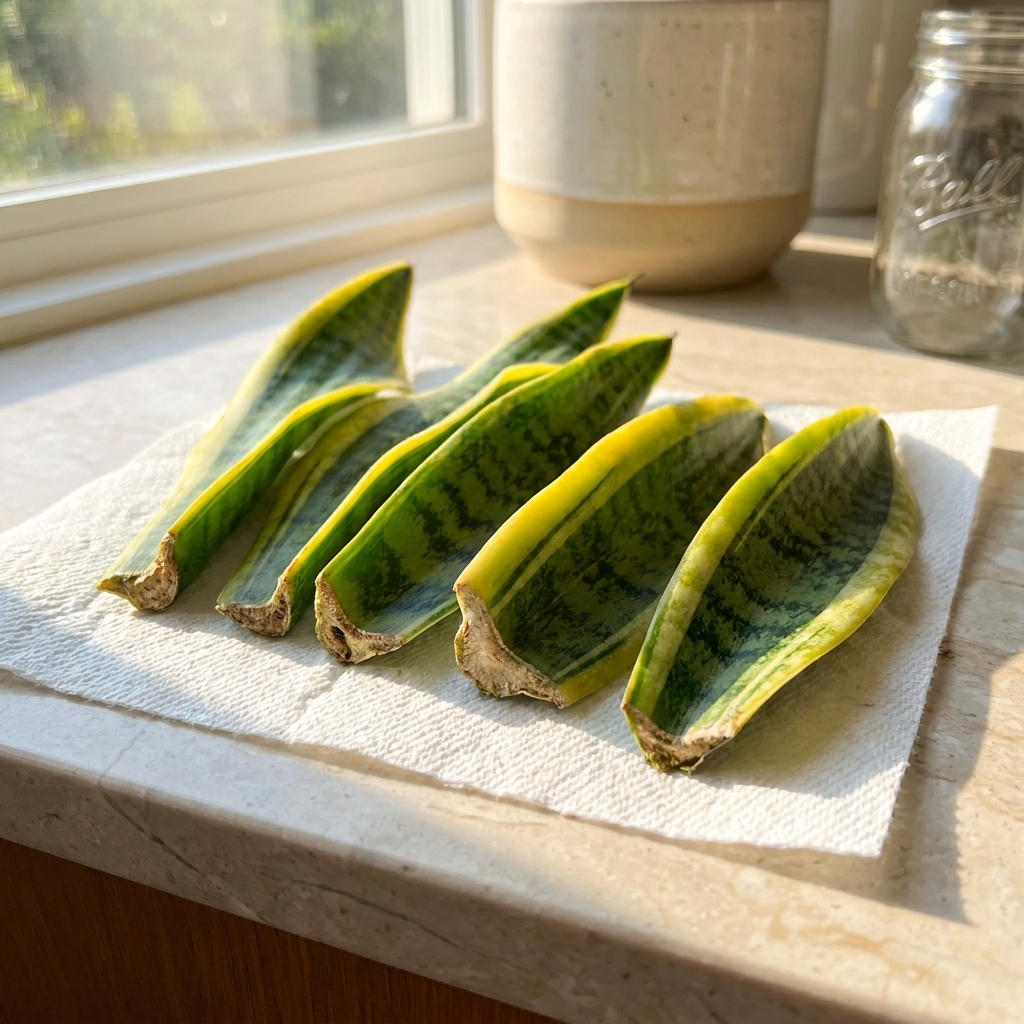
Step-by-step: leaf cuttings
Choose a healthy leaf. Pick a firm, mature leaf with no mushy areas. If a leaf is already struggling, it is more likely to rot during propagation.
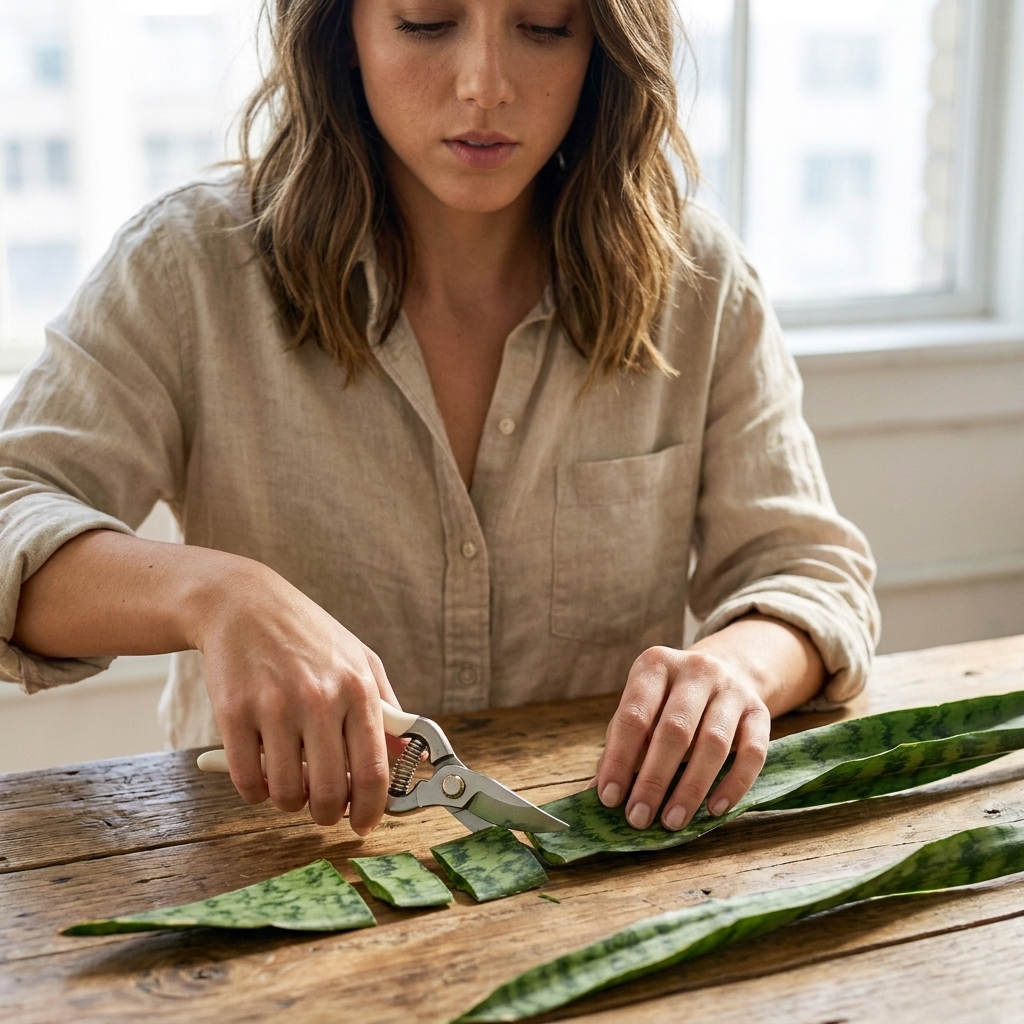
Cut the leaf into sections. Make clean cuts to create segments about 3 to 5 inches long. This is a practical range, not a law. Thicker leaves and warmer rooms are more forgiving, while cooler rooms tend to reward slightly longer pieces.
Mark the bottom end. This is the step that saves a lot of heartbreak. Snake plant leaf segments have an “up” and “down.” If you plant a segment upside down, it is very unlikely to root. I like to cut a tiny triangle notch into the bottom end, or simply keep the pieces aligned on the table as I cut.
Let cut ends callus. Set segments somewhere dry with good airflow for 2 to 5 days. Thicker leaves, lower light, or a cool and humid home can push that closer to a week. You want the cut end dry to the touch, not tacky.
Plant in a gritty medium. Insert the bottom end about 1 inch deep. Keep the cutting stable, so it does not wiggle and break new roots.
Water lightly, then wait. For the first watering, moisten the medium and let excess drain. After that, water only when the pot is almost fully dry.
Best mediums (pick one)
- Perlite (very rot-resistant): fast drainage, great for nervous waterers.
- Cactus/succulent mix + extra perlite: practical if you want to pot up without changing mediums later.
- LECA: works, but only if you are already comfortable with semi-hydro routines.
I do not recommend plain potting soil for leaf cuttings indoors. It holds moisture too long, especially in low light apartments.
Light and temperature
- Light: bright, indirect light is ideal. Avoid harsh, direct sun on fresh cuttings.
- Temperature: warm rooms root faster. Aim for 65 to 80°F.
Skip the humidity dome. Snake plant leaf segments do not need high humidity, and extra humidity often equals extra rot.
How to tell it is rooting
If you do not want to dig around and ruin the vibe, try this:
- Gentle tug test: after several weeks, give the cutting a very light pull. If you feel resistance, roots are likely forming.
- Pup watch: the most satisfying sign is a tiny new pup emerging near the base.
Water propagation
You can root snake plant leaf cuttings in water, but it is not my favorite method for beginners. The cutting can sit in water for a long time, then struggle when moved to soil because water roots and soil roots are not quite the same.
If you really want to do water propagation, here is how to keep it safer:
- Use a clean glass and refresh water weekly.
- Only submerge the bottom 1/2 inch of the cutting.
- Once roots are roughly 1 to 2 inches long (or you see multiple roots branching), move to a gritty mix and keep it slightly more moist than usual for the first 2 weeks, then taper off.

How long it takes
Snake plants move at their own pace. Here are realistic indoor timelines:
- Division: looks settled in 2 to 4 weeks, new growth often within 1 to 3 months.
- Leaf cuttings: roots can take 4 to 10+ weeks; pups often take 2 to 6 months, sometimes longer.
If you are doing everything “right” and nothing is happening fast, you are not alone. This is a slow-plant hobby.
Rot prevention checklist
If you take nothing else from this article, take this list. Almost every failed snake plant propagation can be traced back to one of these.
- Use clean tools. Wipe blades with rubbing alcohol.
- Let cut ends dry. Callusing is not optional if you want fewer mushy cuttings.
- Choose a fast-draining medium. Perlite, pumice, cactus mix with extra aeration.
- Do not oversize the pot. Extra soil equals extra moisture storage.
- Water less than you think. Slightly dry is safer than slightly wet.
- Give bright indirect light. Low light slows rooting and keeps soil wet longer.
- Keep cuttings stable. Wiggling breaks tiny new roots.
Troubleshooting
Mushy base on a cutting
That is rot. Do this:
- Remove it from the medium immediately.
- Cut off all soft tissue until you hit firm, healthy leaf.
- Let it callus again for several days.
- Restart in drier, grittier medium and water less often.
If the entire segment is soft, compost it and start with a fresh piece. I know it stings. I have been there.
Wrinkling
A little wrinkling can be normal while the cutting is using stored water. If it is shriveling fast:
- Move to brighter indirect light (not hot sun).
- Check that the medium is not bone-dry for weeks on end.
- Make sure the cutting was not callused for an extremely long time in a very dry environment.
No roots after two months
This is often light and temperature, not failure. Try:
- Brighter light.
- A warmer spot.
- Less frequent watering (if the medium is staying damp).
New growth looks different
If you propagated a variegated snake plant from leaf cuttings, reversion to green is common. If you want the same patterning, propagate by division.
Aftercare
Once your leaf cutting has roots and you see a pup forming, keep care gentle and consistent:
- Do not rush to upsize the pot. Small pots dry faster and reduce rot risk.
- Water deeply, then let dry. Think “soak and dry,” not sips every few days.
- Hold off on fertilizer. Wait until you see active growth, then feed lightly in spring and summer.
When to transplant from perlite
If you rooted in straight perlite, move to a soil mix when you have steady resistance on the tug test and either several roots or a small pup that is a couple inches tall. Pot it snugly, then go easy on water for the first week.
Snake plants are slow, but they are steady. If you can avoid overwatering while roots establish, you are basically unstoppable.
FAQ
Can I propagate from a single leaf?
Yes. A single leaf can be cut into multiple segments and each segment can root, as long as you keep the orientation correct and let the cut ends callus.
Do I need rooting hormone?
No. It can help a little, but the bigger factors are drying time, airy medium, and careful watering.
Should I mist cuttings?
I would not. Misting adds moisture where you do not need it and increases rot risk. Focus on bright indirect light and a well-draining medium instead.
Why is division easier?
Because you are starting with an already-living root system and rhizomes. Leaf cuttings have to build everything from scratch.
A quick pep talk
If you are nervous about trying this, I get it. I killed my first succulents by loving them too enthusiastically with water, and snake plant propagation taught me to calm down and let plants do their slow, quiet work. Keep things clean, dry, and bright. Let time do the rest.