A practical, plant-parent friendly breakdown of bottom vs. top watering, plus the best method for common houseplants and the mistakes that cause root rot and...
I used to think cyclamen were "holiday bouquet plants" that were destined to fade no matter what you did. Then I worked at a little nursery in the Pacific Northwest where we kept benches of florist cyclamen blooming for what felt like forever, and the secret was almost comically simple: keep them cool, keep the crown dry, and do not panic when they flop in late spring.
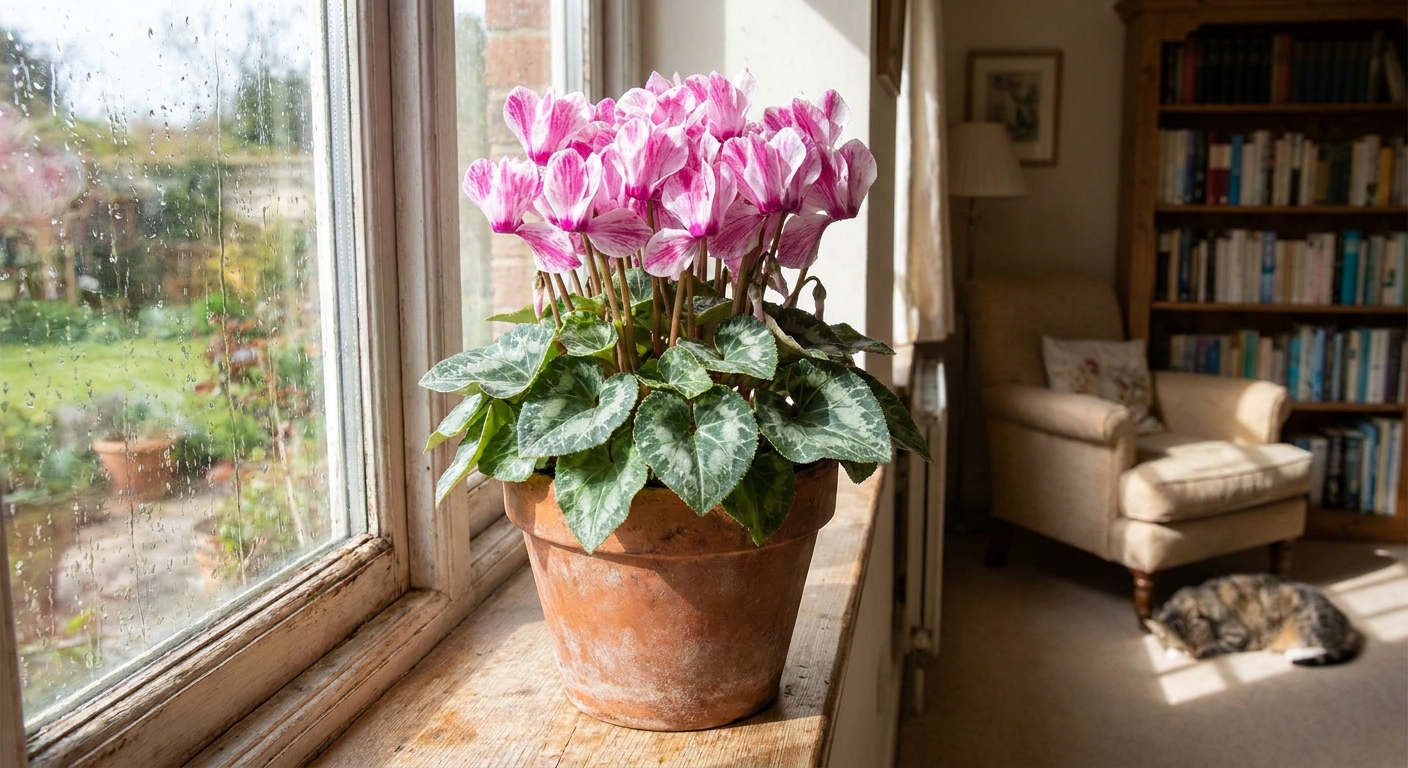
Florist cyclamen (Cyclamen persicum) can absolutely bloom indoors through winter if you match what they want in nature: bright light, cool air, and evenly moist soil that never turns swampy.
What makes florist cyclamen different
Florist cyclamen grow from a tuber, which is basically a storage organ that helps the plant push flowers and leaves through the cool season. That tuber has a crown at the top where leaves and flower stems emerge. If water sits on that crown, it is one of the quickest ways to invite rot.
They are also true cool season plants. When our homes heat up and daylight shifts in late spring, cyclamen often read it as a cue to shut down and rest.
Temperature: the biggest factor
If you do only one thing for your cyclamen, make it this: move it to a cooler spot. It is not the only factor, but it is the one that most consistently decides whether the plant cruises through winter or sulks.
Ideal indoor temperatures
- Best range: 50 to 65°F (10 to 18°C)
- Nights a bit cooler can help: 45 to 55°F (7 to 13°C) often keeps blooms going longer
- Try to avoid: sustained temps above about 70°F (21°C), especially near heat vents
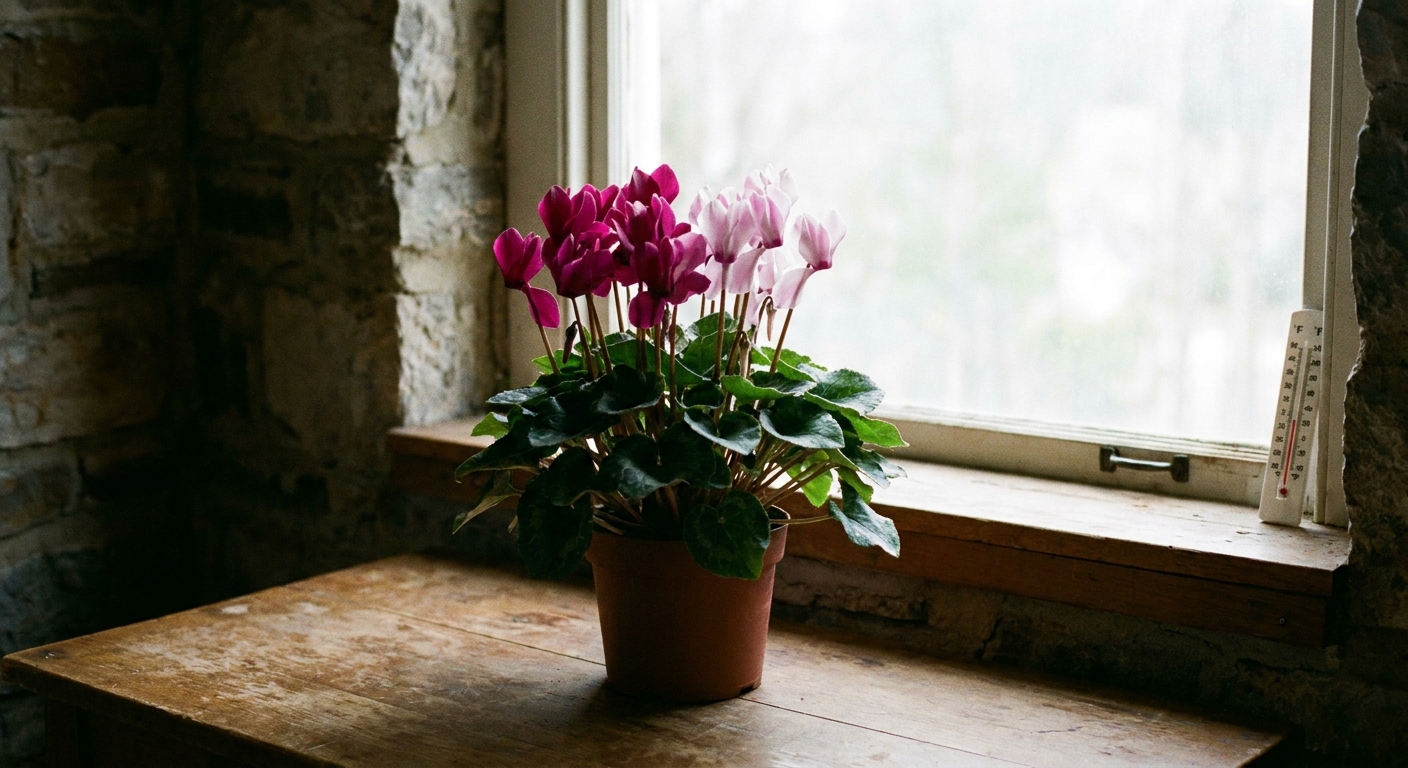
Warm air shortens bloom time and can trigger yellowing leaves. In many homes, the perfect cyclamen spot is a bright, cool windowsill, a chilly bedroom, an enclosed porch, or a draft-free entryway. You want cool, not freezing.
Keep it away from heat sources
- Radiators and baseboard heaters
- Forced air vents
- The top of a refrigerator
- Right next to a running lamp
One more small thing: do not let leaves press against icy window glass. That cold can spot or collapse foliage fast.
Light: bright and gentle
Cyclamen bloom best with bright light. Indoors, that usually means close to a window, not across the room.
- Best: East window (morning sun) or a bright west window with mild afternoon light
- Also works: South windows if the plant is set back a bit or filtered by a sheer curtain
- North windows: can work if the window is truly bright and unobstructed, but in many homes winter north light is too dim. If buds stall, move it closer to light or consider a small grow light.
If the leaves look stretched or the plant stops producing buds, it usually needs more light. If the leaves look faded or scorched, pull it back from harsh midday sun.
One easy habit that helps: rotate the pot a quarter turn every week or two so it grows evenly instead of leaning into the glass.
Pot and soil basics
Before we even talk watering, I want to put two unglamorous things on your checklist.
- Drainage is non-negotiable: use a pot with a drainage hole. If your cyclamen sits inside a decorative cachepot, empty any collected water so the roots are not soaking.
- Use a light, airy mix: cyclamen do best in a well-draining mix that does not stay heavy and waterlogged. If your potting soil feels like a sponge days after watering, it is probably too dense for a tuber that wants oxygen around it.
Watering: protect the crown
This is where most indoor cyclamen heartbreak happens. Cyclamen want evenly moist soil while they are actively growing and blooming, but they hate water sitting on the tuber crown.
How to bottom water (my go-to method)
- Check first: Stick a finger into the soil. If the top inch feels dry, it is time.
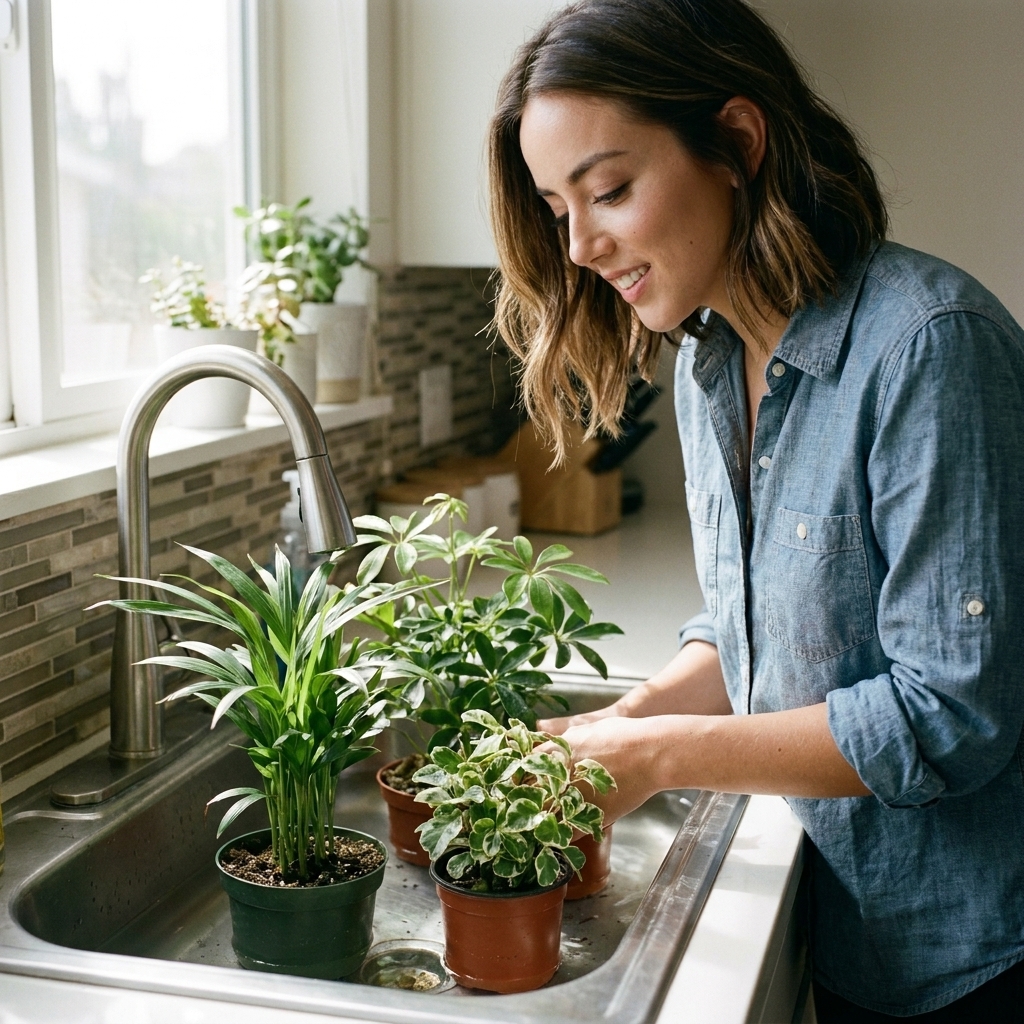
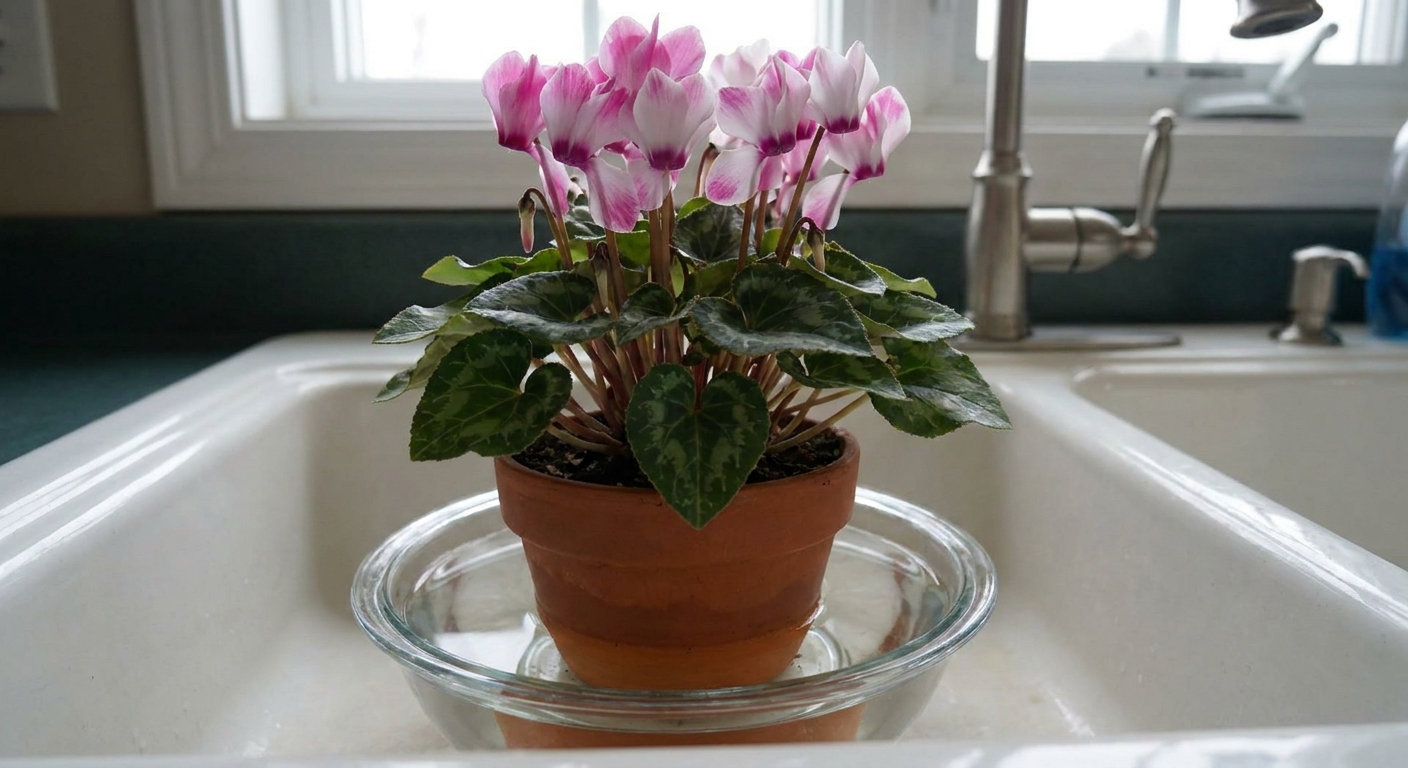
- Use a bowl or sink: Set the pot in 1 to 2 inches of room temperature water.
- Wait: Let it wick water up for 10 to 20 minutes. Small pots drink fast. Bigger pots take longer.
- Lift and drain: Take the pot out and let it drain thoroughly. Never let it sit in a full saucer for hours.
The goal is moist soil, not a saturated pot that stays heavy for days.
If you prefer top watering
Top watering can work, especially if the plant is packed with leaves and you cannot easily bottom water. The trick is control. Aim water at the soil surface around the edge of the pot, not into the center where the stems emerge. If water splashes into the crown, blot it dry with a paper towel.
How often should you water?
There is no perfect calendar, but during peak winter growth many indoor cyclamen need water about once a week, sometimes a bit more in very bright windows. In a cool room, they dry more slowly. Let the soil dryness, pot weight, and leaf firmness guide you.
Signs you are off track
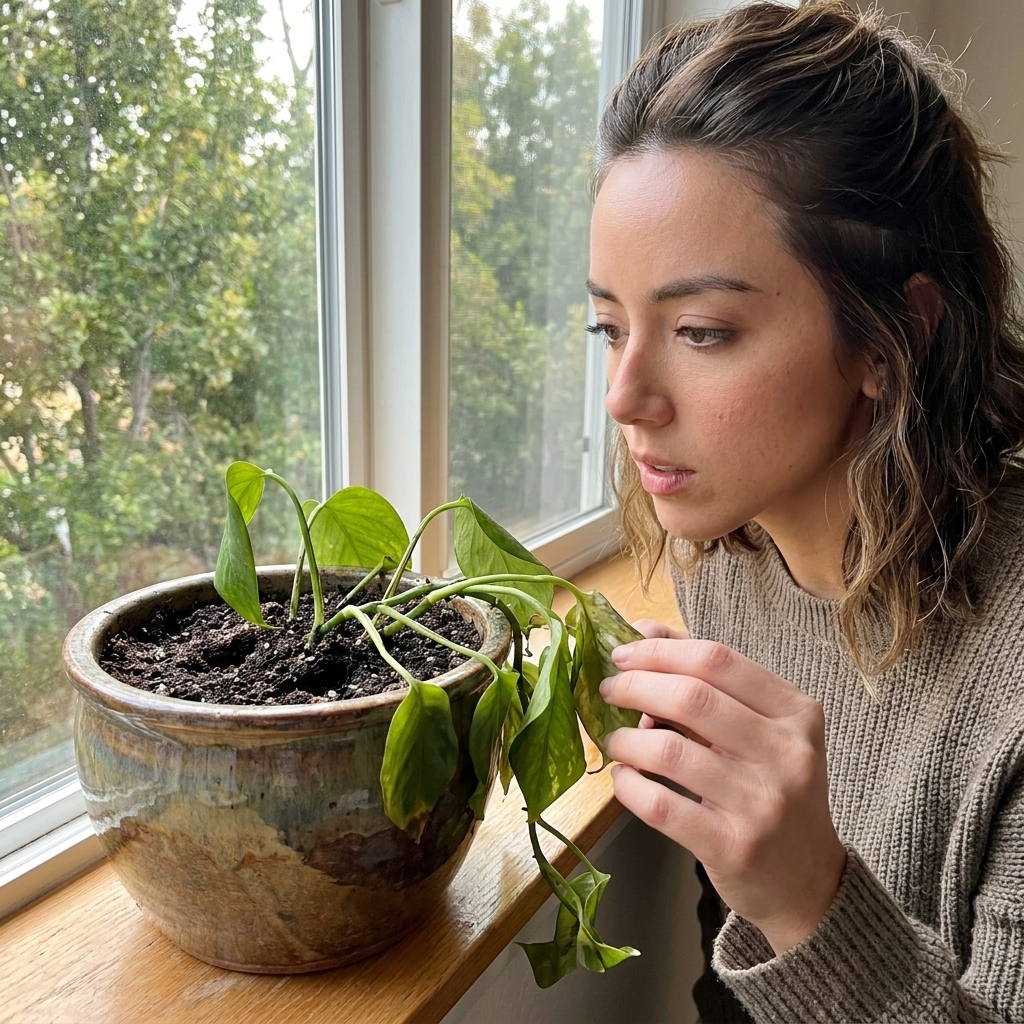
- Wilting with dry soil: thirsty, bottom water and let it fully rehydrate
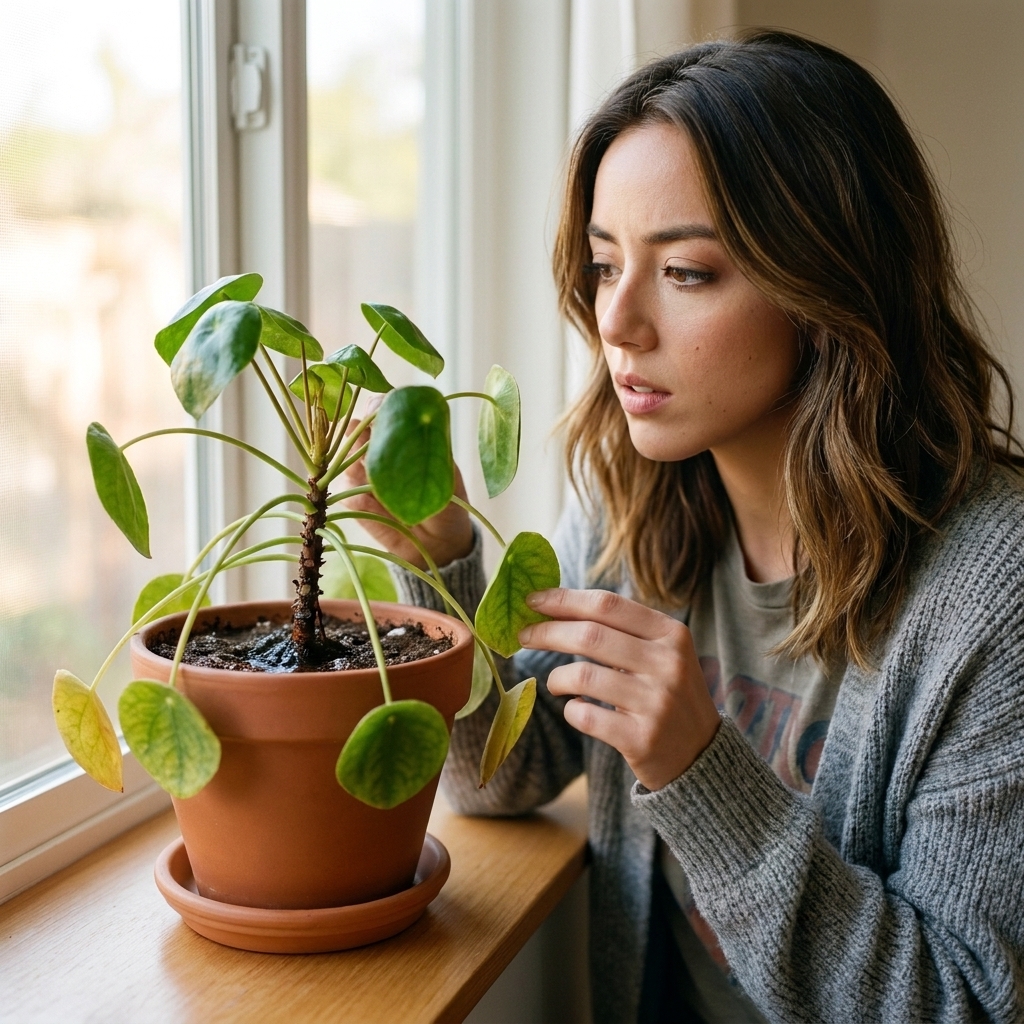
- Wilting with wet soil: possible root or crown trouble, move it cooler and brighter, improve airflow, and pause watering
- Yellow leaves plus soggy soil: classic overwatering pattern
Humidity and airflow
Cyclamen do not need tropical humidity, and misting can encourage leaf spot and keeps moisture near the crown. I prefer:
- Normal indoor humidity (around 30 to 50 percent) is fine
- Gentle airflow is helpful, but avoid blasting fans and heater drafts
- If your air is extremely dry, use a humidifier across the room rather than misting the plant
Feeding
If your cyclamen is blooming and pushing new leaves, you can fertilize lightly to support it.
- Type: a balanced liquid houseplant fertilizer
- Strength: half strength
- Frequency: about every 2 to 4 weeks during active growth
Do not fertilize a stressed plant, and do not fertilize during dormancy.
Deadheading
Deadheading keeps the plant tidy and encourages more blooms, but cyclamen stems are a little different than most houseplants.
How to remove spent flowers and yellow leaves
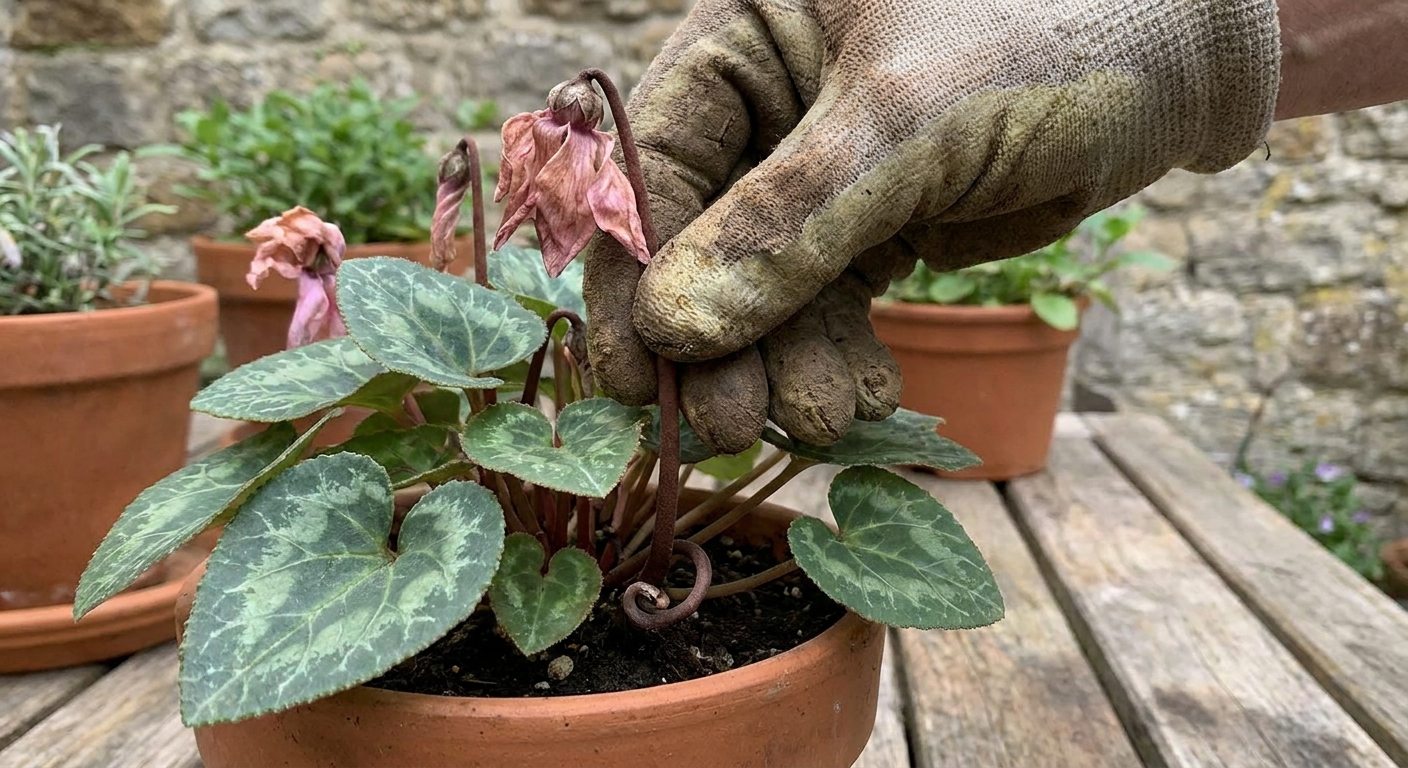
- Hold the tuber steady with one hand.
- Grab the entire stem down at the base.
- Twist and pull in one smooth motion so the whole stem comes away cleanly.
Twisting is often better than snipping because it removes the whole stem instead of leaving a stub that can decay near the crown. That said, if a stem will not come cleanly, do not wrestle it. You can also use clean snips to cut low, then keep an eye on the area so stubs do not stay wet.
Spring yellowing and flop
This is the part that makes people feel like they failed, so I want to be very clear: yellowing leaves and a gradual collapse in late spring is normal for many florist cyclamen.
As days get longer and indoor temperatures rise, the plant shifts energy back into the tuber. Leaves yellow, stems soften, and the plant looks like it is quitting. It is not dying. It is preparing for a rest period.
A small nuance from experience: not every plant follows a perfect script. Some cyclamen go fully dormant. Others just slow down, especially in cooler homes or if they live in a bright spot that stays mild.
Dormancy or trouble?
- Likely normal dormancy: It happened gradually in late spring after months of growth, and the tuber feels firm.
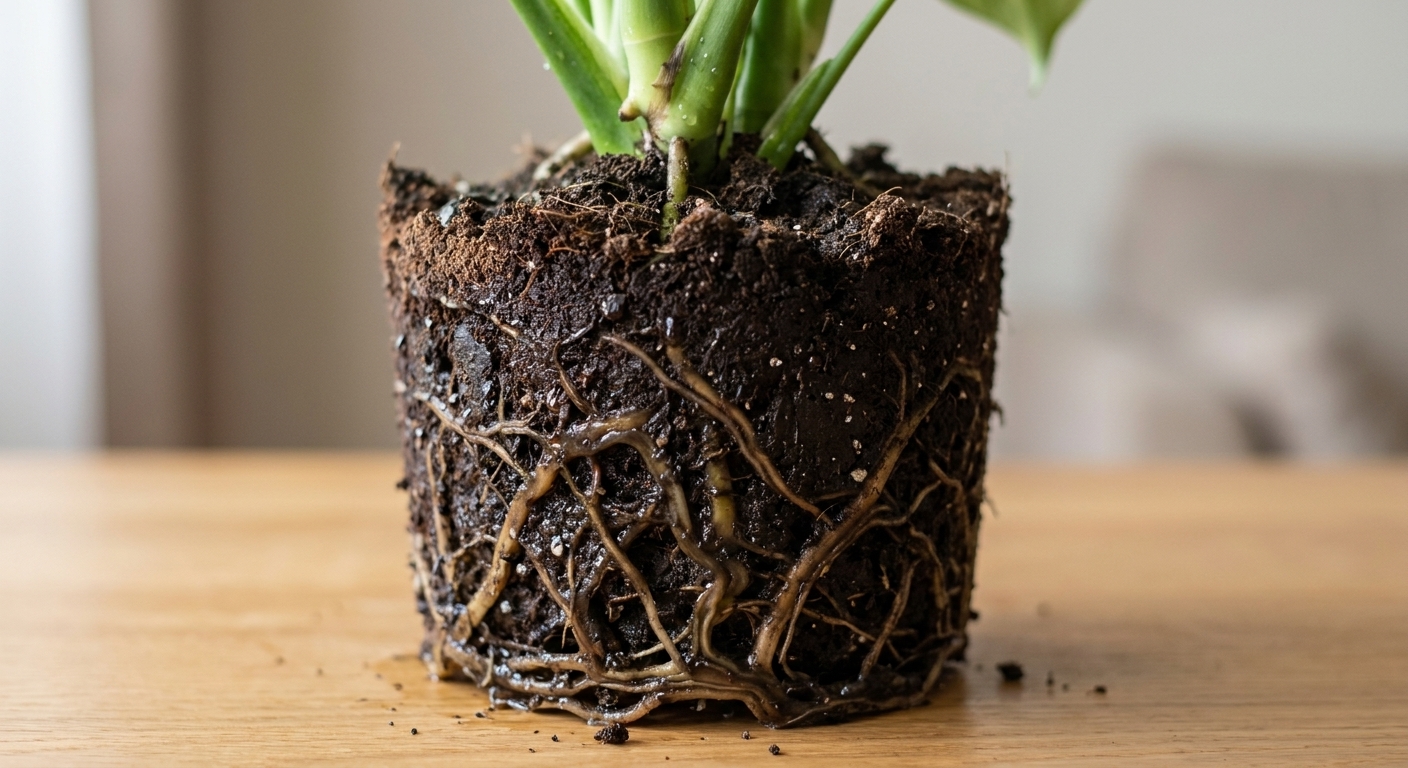
- Possible rot: The crown is mushy, there is a sour smell, or the tuber feels soft. This often follows consistently wet soil.
Summer rest
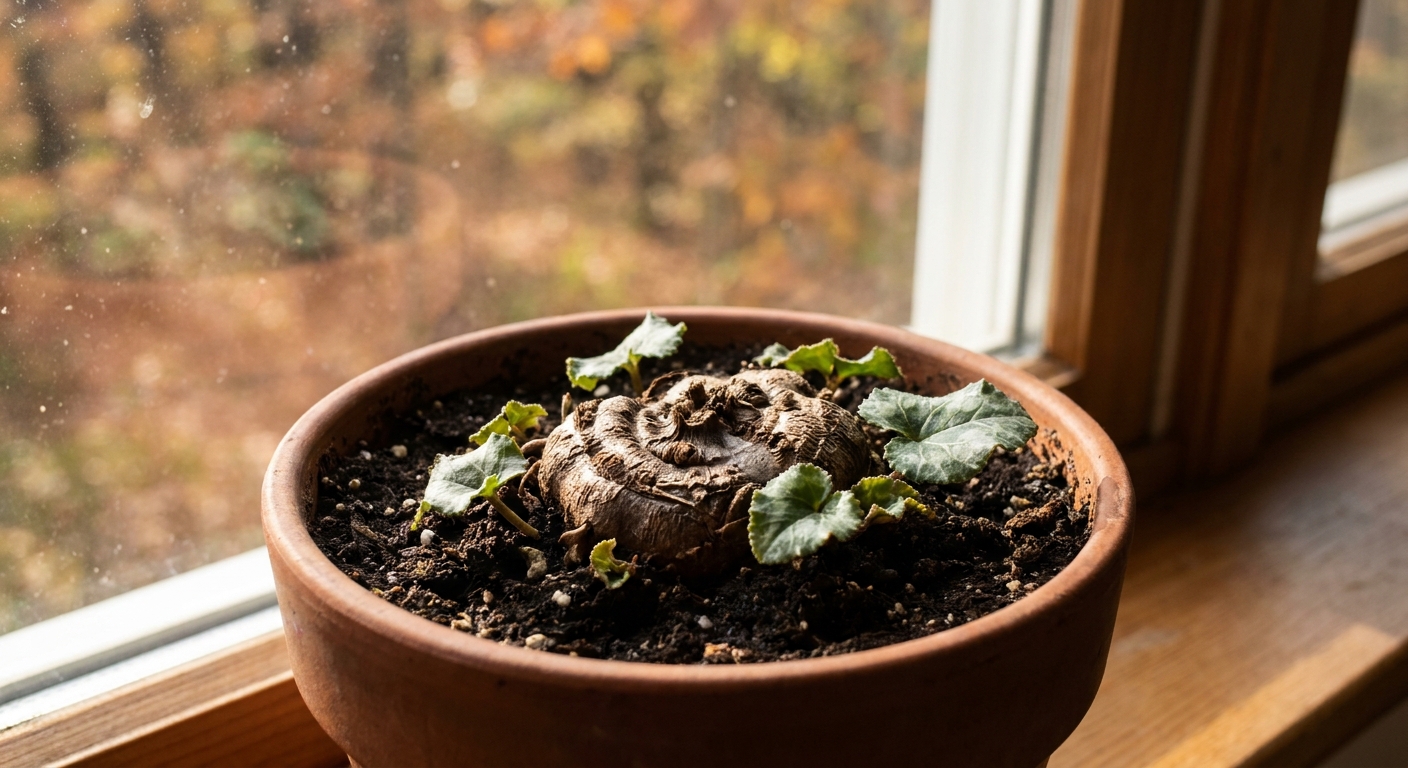
Once your cyclamen clearly enters dormancy, your job changes from "keep it blooming" to "keep the tuber safe." If your plant never goes fully dormant, follow its lead. Water less than in winter, keep it cool if you can, and do not push fertilizer unless you see active growth.
Letting it rest
- Stop fertilizing as leaves begin to yellow.
- Reduce watering gradually. Water less often and in smaller amounts.
- Let the foliage die back naturally. Remove fully yellow leaves by twisting them out.
- After most leaves are gone: keep the pot mostly dry. I give just a small sip of water every few weeks, only enough to keep the tuber from shriveling.
- Store in a cool spot: a shaded corner, a basement that stays mild, or a room that does not bake. Avoid hot windows and outdoor heat.
Think "dryish and cool," not bone dry in an oven hot room.
Should you unpot the tuber?
You do not have to. Many people simply leave the tuber in its pot and let it rest. If the potting mix is old, compacted, or you suspect past overwatering, repotting in late summer can help.
Restarting in fall
When nights cool down and you are ready to bring cyclamen back into your routine, you can wake it up.
How to bring it back
- Move it to bright light in a cool room (again, 50 to 65°F is the sweet spot).
- Refresh the soil if needed: repot into a well-draining mix. Make sure the tuber sits with the top slightly above the soil line or just at the surface, not buried deeply.
- Start watering lightly: bottom water small amounts at first, then increase as you see new leaves.
- Resume feeding only after you have active growth.
You will usually see new leaves first, then buds. Once it is awake, go back to the winter care routine: cool temperatures, bright light, and careful watering that keeps the crown dry.
Pests to watch for
When a cyclamen looks unhappy even though temperature, light, and watering seem right, I start looking for pests.
- Cyclamen mites: distorted, crinkled new leaves; stunted growth; buds that fail to open. They are tiny and hard to see, and damage often shows up at the crown.
- Aphids: sticky residue, clusters of soft-bodied insects on stems and buds, and misshapen flowers.
If you suspect pests, isolate the plant, rinse what you can, and treat with an appropriate product for houseplants. With cyclamen mites in particular, severely affected plants are sometimes not worth saving, because they hide deep in new growth.
Pet safety
If you share your home with pets, place cyclamen out of reach. Cyclamen are considered toxic to cats and dogs, with the tuber typically the most toxic part. If you think a pet has chewed the plant, call your veterinarian promptly.
Quick troubleshooting
My cyclamen is drooping. What do I do?
Check the soil. If it is dry, bottom water and let it fully drain. If it is wet, move it to brighter light and cooler temperatures and pause watering until the top inch dries. If drooping continues in wet mix, unpot and inspect the roots and tuber for rot, then trim away any mushy tissue and repot into fresh, well-draining mix.
Leaves are yellowing in winter
Most often this is heat stress or overwatering. Move it away from heat, give it brighter light, and let the soil dry slightly between waterings.
Flowers are short-lived
Too warm is the usual culprit. Cyclamen blooms last longest in cool rooms. Even moving it to a cooler bedroom at night can help.
The center looks mushy
That can indicate crown rot. Remove any rotting material you can, keep the plant cooler and brighter, and stop watering until the soil is only lightly moist. If the tuber is soft throughout, recovery may not be possible.
The gentle takeaway
Florist cyclamen thrive indoors when you treat them more like a cool weather patio plant than a typical tropical houseplant. If you give them cool temperatures, bright light, a pot that drains, and watering that keeps the crown dry, they will reward you with weeks and weeks of winter blooms.
And when they inevitably yellow and collapse in late spring, you did not fail. You just reached the part of the story where the tuber rests, so it can put on the show all over again next fall.