A calm, step-by-step root rot rescue: how to unpot, trim mushy roots, repot in fresh mix, and prevent future rot in any houseplant.
If your fiddle leaf fig (Ficus lyrata) is dropping leaves, I want you to hear this first: you are not failing. This plant is just a dramatic communicator. Leaf drop is its way of saying, “Something changed.” The good news is that the “something” is usually one of a handful of very fixable triggers.
To keep you from spiraling (been there), we are going to troubleshoot in the exact order I check at home and when I worked at a nursery: a recent move, a change in light, soil that has stayed wet, a draft from a vent, and finally a pot full of roots. We will also separate normal, slow shedding from the “uh-oh” kind of drop where a lot of leaves fall quickly.
First, is this normal leaf loss or a sudden drop?
Normal: one or two older bottom leaves over time
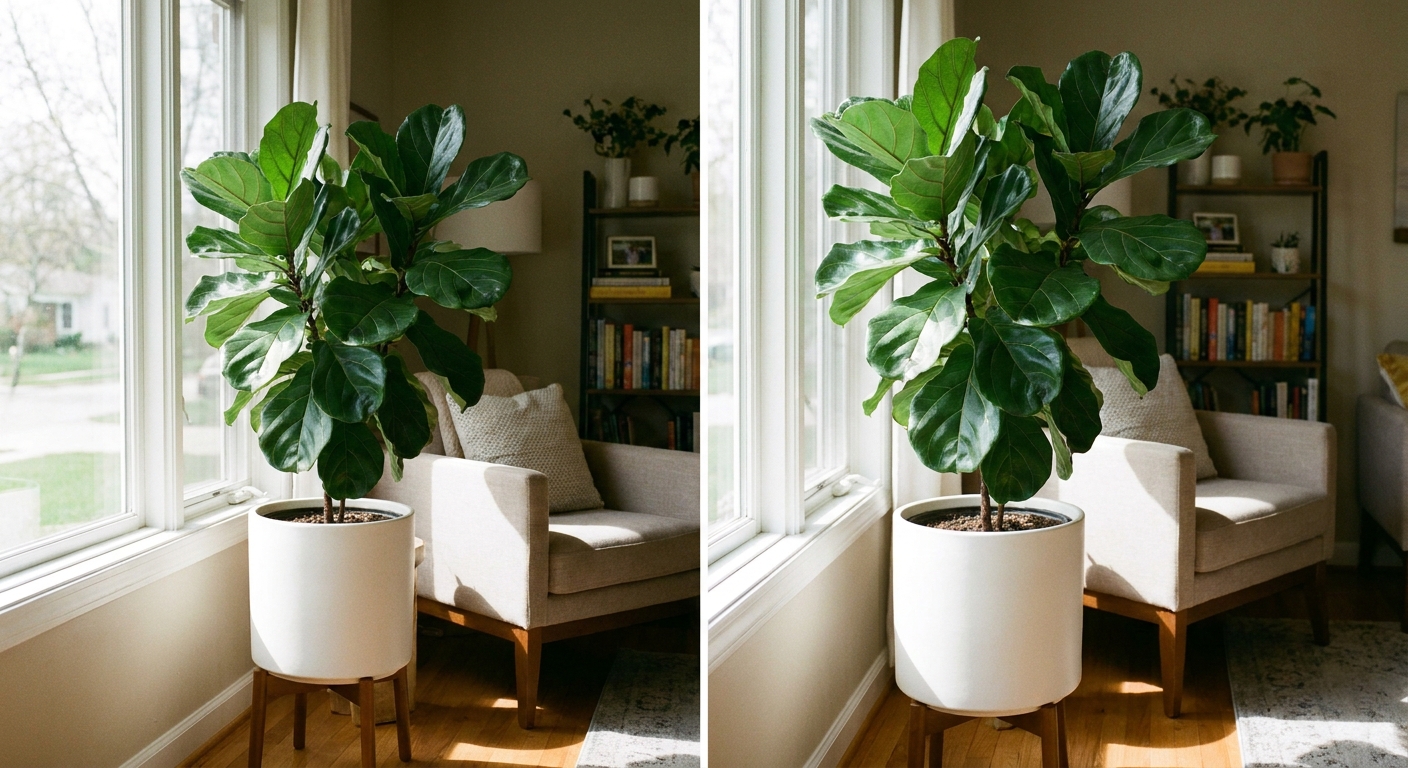
It is completely normal for a fiddle leaf fig to occasionally drop an older leaf or two from the bottom. These lower leaves are shaded first and often become the least productive over time, especially in lower light. If the rest of the canopy looks stable and you are only seeing an occasional bottom leaf yellow, then drop, this is usually routine aging.
- What it looks like: One leaf yellows slowly over 1 to 2 weeks, then falls. New growth may still appear at the top in the growing season.
- What to do: Keep care consistent. No big corrections needed.
Not normal: many leaves falling in days or a week
If you are seeing multiple leaves drop in a short window, especially if they are coming from multiple levels of the plant, that is your cue to troubleshoot right away. Sudden leaf drop is very often tied to abrupt change or root stress, but pests, cold exposure, or a serious watering swing can also be in the mix.
- What it looks like: Several leaves yellowing at once, leaves dropping while still partly green, or a burst of leaf fall after a change (new spot, season shift, missed watering followed by overwatering).
- What to do: Work through the checks below in order. Avoid stacking “fixes” all at once.
Check 1: Did you move it recently?
This is the most common cause I see. Fiddle leaf figs hate sudden environment changes. Even moving it across the same room can change light intensity, temperature swings, and airflow enough to trigger shedding.
Common move-related triggers:
- Bringing it home from the store or shipping delivery
- Moving it away from a window to “decorate”
- Rotating it dramatically after it has leaned
- Putting it outdoors for a weekend, then bringing it back in
What to do: Put it in its best long-term spot and leave it there. Aim for bright, steady light and stable temperatures. Keep watering consistent (more on that below) and do not fertilize a stressed plant.
What recovery looks like: After a move, leaf drop can sometimes continue for 1 to 3 weeks as the plant settles. If the drop slows and stops, you are on the right track. New growth often resumes in the active season (spring and summer), frequently 4 to 8 weeks after stability returns, but it can take longer in lower light or winter.
Check 2: Did the light change?
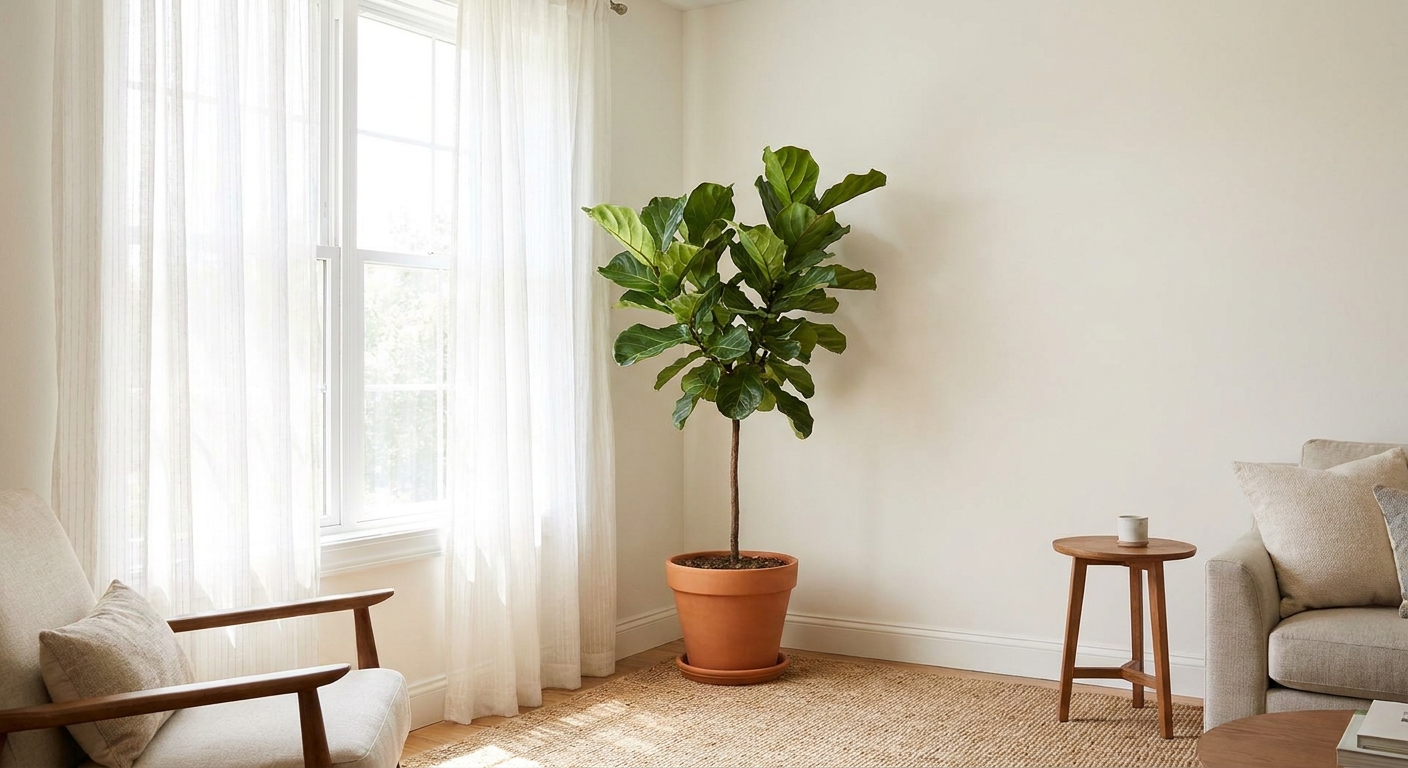
Light changes can be obvious (you moved it) or sneaky (the season shifted, a tree leafed out outside, you added heavier curtains). Fiddle leaf figs are more light-hungry than many people realize, and low light makes every other problem worse because the plant uses water slowly.
Signs it is not getting enough light
- Leaf drop with slower growth overall
- Longer gaps between leaves (leggy growth)
- Soil taking a long time to dry
- Leaves facing toward the window and the plant leaning
Signs it got too much direct sun too fast
- Bleached, pale patches or crispy brown areas after moving closer to harsh sun
- Leaves dropping after a sudden jump in brightness
What to do: Give it bright indirect light for most homes, or gentle morning sun if you have it. If you are increasing light, do it gradually over 1 to 2 weeks. If you use a grow light, keep it consistent daily rather than blasting the plant randomly.
Helpful connection: If you suspect low light, move on to the wet-soil check next. Low light and soggy soil love to travel together because the pot dries so slowly.
When to wait: If the only recent change was light, and the plant is otherwise healthy (no sour soil smell, no mushy stem, no pests), you can usually wait and watch for stabilization over the next couple of weeks.
Check 3: Has the soil stayed wet?
If you take nothing else from this article, take this: one of the most common reasons fiddle leaf figs drop leaves is that their roots are staying too wet and cannot get enough oxygen. Chronically wet soil is the fastest route to root stress and root rot, and root stress often shows up above the soil line as leaf drop.
Quick wet-soil test
- Stick your finger down 2 to 3 inches. If it feels wet or cool-muddy, it is still too soon to water.
- Lift the pot. A pot that feels heavy many days after watering often means the mix is holding water too long.
- Sniff near the soil. A sour, swampy smell is a red flag.
Clues leaf drop is tied to overwatering or low oxygen
- Yellowing leaves that drop easily
- Multiple leaves dropping soon after watering
- Brown spots that start darker and spread (not crispy edges)
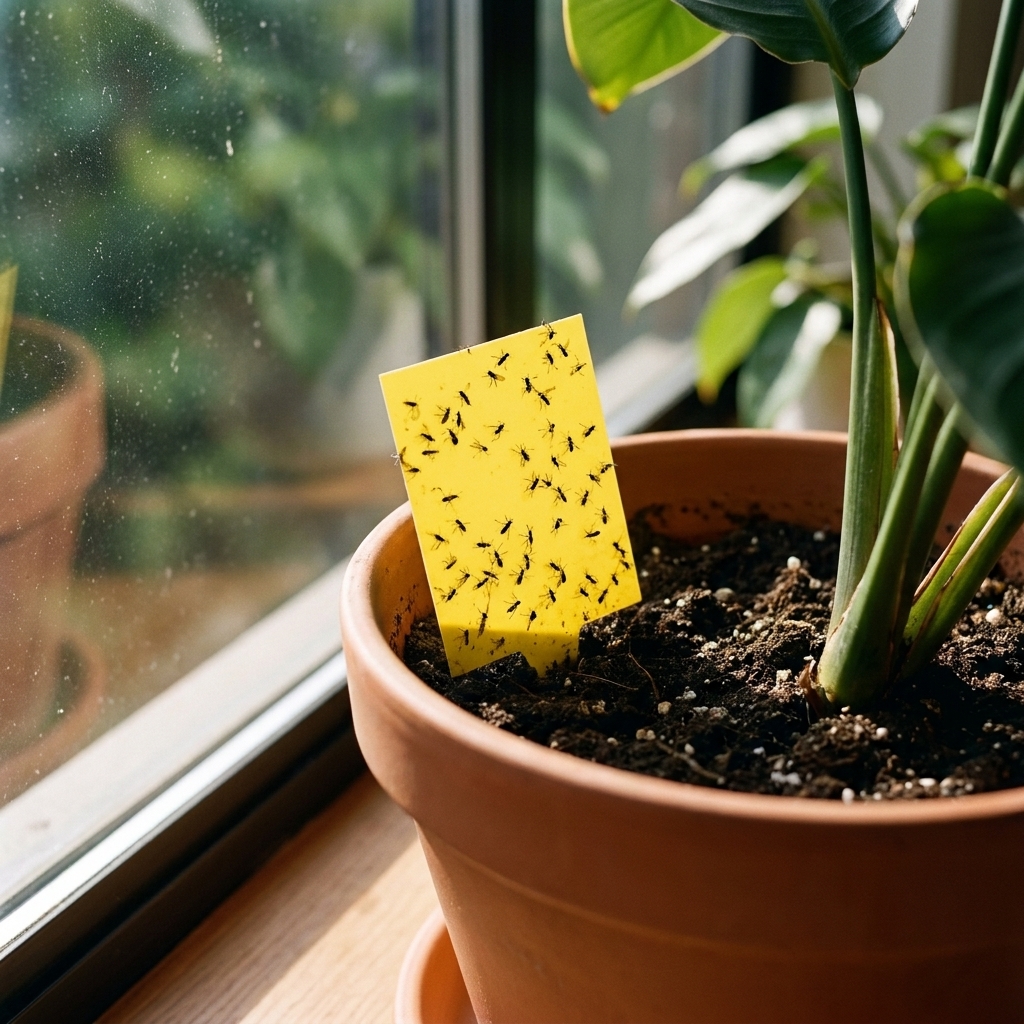
- Fungus gnats hovering around the pot
What to do right now:
- Pause watering until the top few inches dry out.
- Make sure the pot has a drainage hole and that it is not sitting in collected water.
- Increase light and gentle airflow in the room if possible (without adding a cold draft).
Watering technique (this matters more than people think)
When you do water, water thoroughly until it runs out of the drainage hole, then discard any excess. Avoid “small sips” every few days. That pattern often leaves the middle of the pot wet while the top looks dry, which is confusing to you and stressful to the roots.
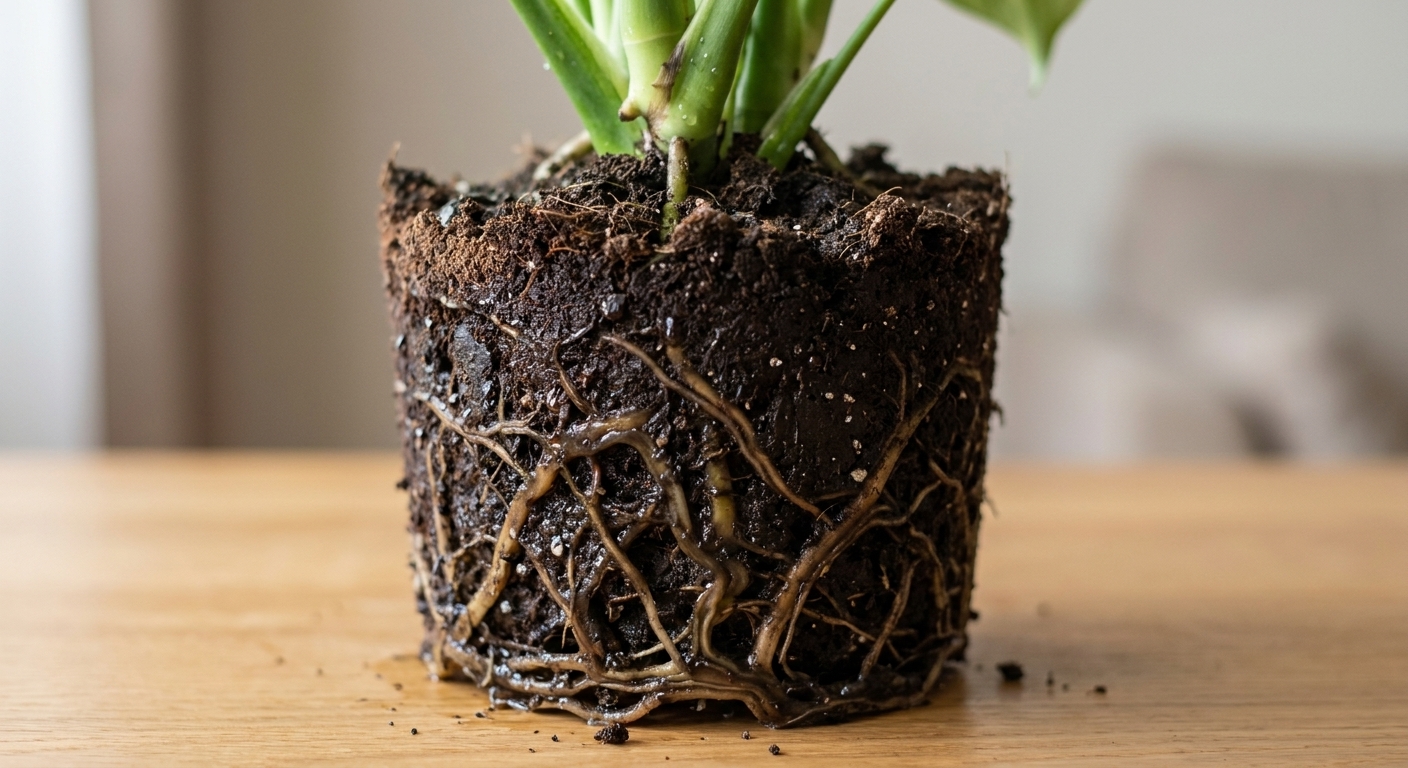
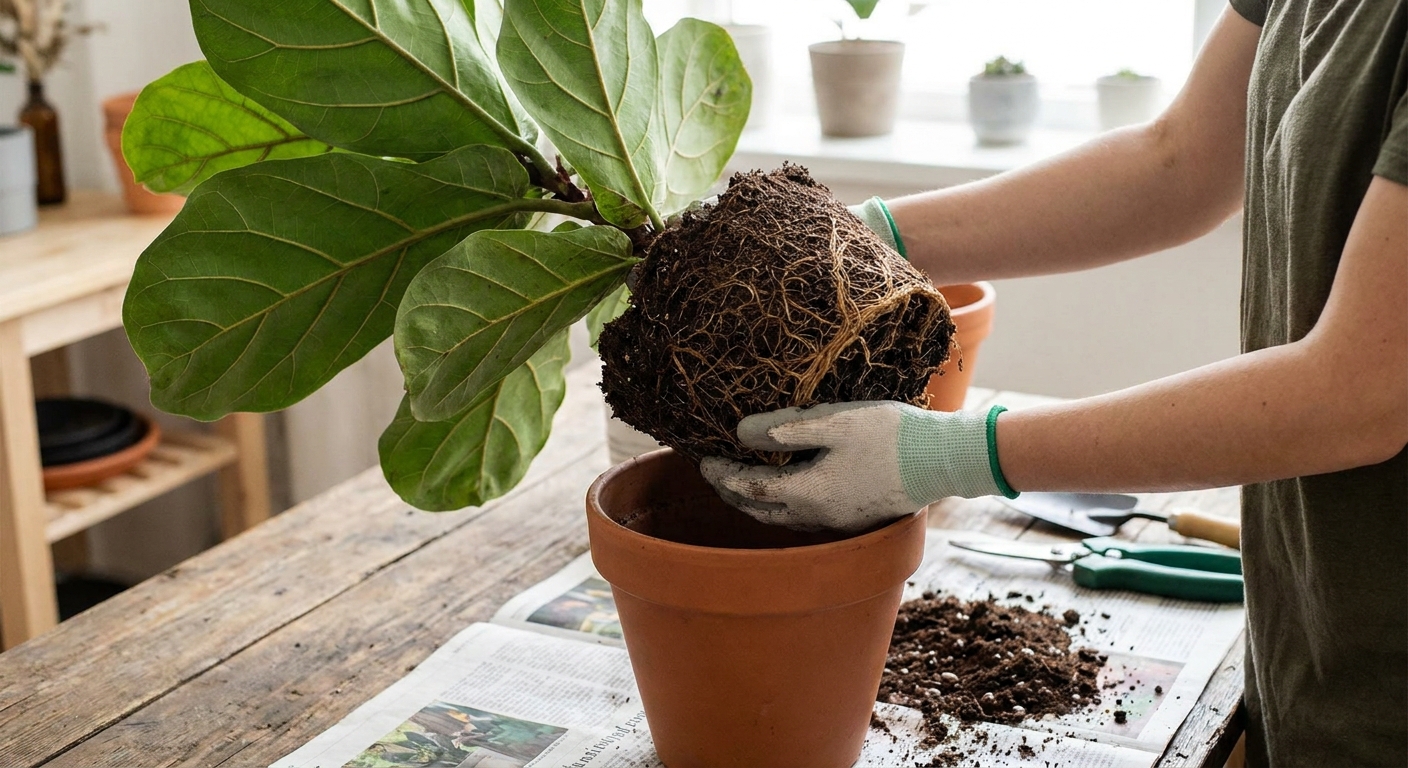
When the roots need a look: If the soil has stayed wet for more than a week or two, the plant is dropping lots of leaves, and the pot smells sour, it is time to check roots. Slide the plant out carefully. Healthy roots are firm and light-colored. Rotting roots are brown or black, slimy, and may smell bad.
If you find rot: Trim mushy roots with clean snips, repot into a chunkier, fast-draining mix, and only water again when the mix is partially dry. Then be patient. The plant may drop a few more leaves as it rebalances, but you are giving it a real path back.
Check 4: Is it actually too dry?
Underwatering is the other side of the leaf-drop coin, and it is easy to misread. A plant can be too dry, panic-drop leaves, and then get overwatered in response. That swing is rough on a fiddle leaf fig.
Signs of drought stress
- The pot feels very light and dries out extremely fast
- Soil is pulling away from the edges of the pot
- Leaves curl, feel thinner, or get crispy brown edges
- Leaves drop after the plant has been bone-dry for too long
What to do: Rehydrate fully. Water slowly and deeply until it drains from the bottom, let it finish dripping, then return it to its spot. If water runs straight through a very dry, compacted mix, you may need to water twice, about 10 minutes apart, to re-wet the soil evenly.
Check 5: Is there a draft from a vent or doorway?
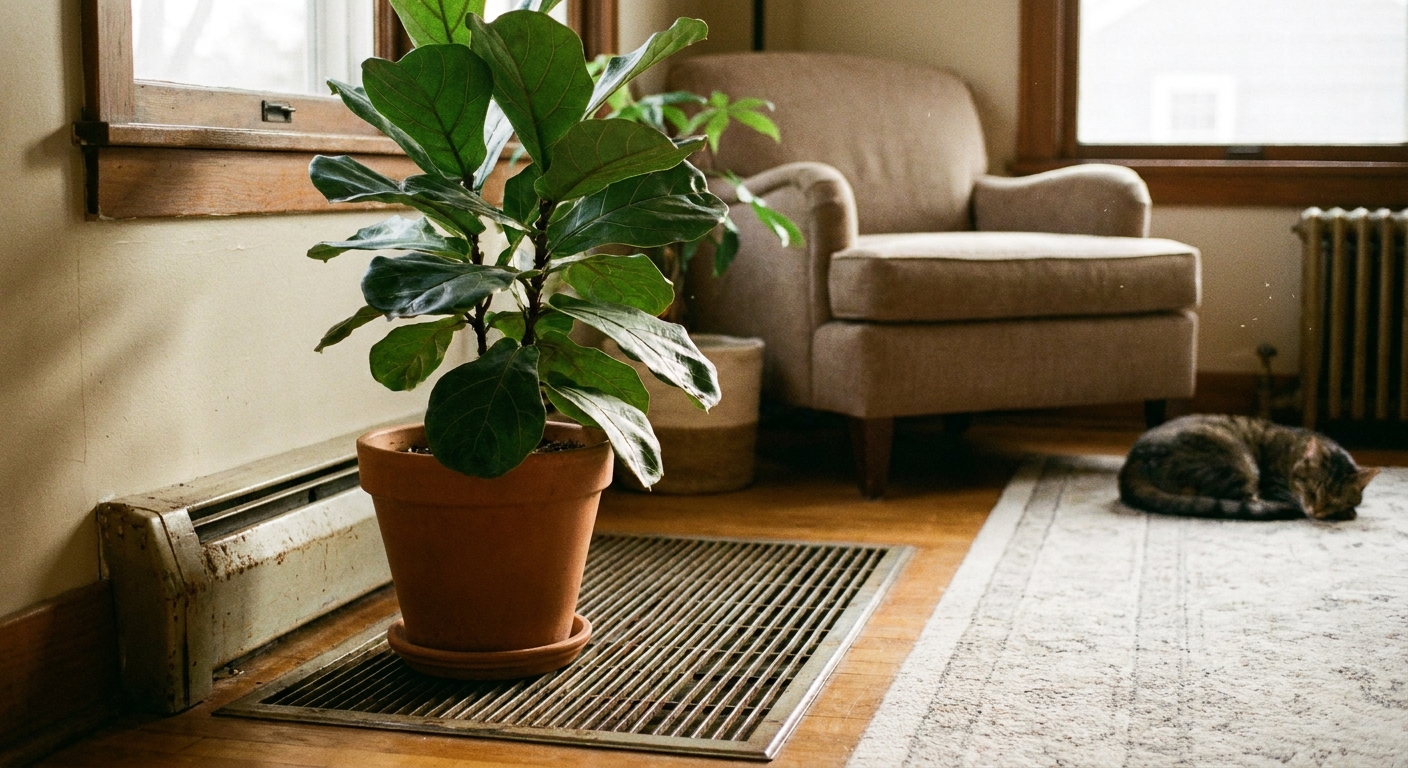
Fiddle leaf figs can handle normal household temperatures, but they do not appreciate repeated blasts of hot or cold air. A heating vent, AC register, frequently opened exterior door, or a cold window at night can all trigger leaf drop.
Draft clues
- Leaves dropping mostly on the side facing the vent or door
- Leaves that look fine, then drop after the furnace or AC cycles
- Crispy edges combined with fast soil drying if it is a hot, dry vent
What to do: Move the plant a few feet away from the airflow path, or redirect the vent. Even a small shift can make a huge difference. Aim for steady temps and avoid placing the plant where it is repeatedly chilled below typical indoor comfort levels.
What recovery looks like: Draft-related drop often slows within 7 to 14 days once the plant is out of the airflow. You will not fix dropped leaves, but you can prevent the next wave.
Check 6: Is the pot full of roots?
A root-bound fiddle leaf fig can drop leaves because water moves through the pot strangely. Sometimes it drains too fast and you get drought stress. Other times the roots circle so tightly that parts of the mix stay wet and stagnant while other areas dry out quickly.
Signs it may be root-bound
- Roots poking out of the drainage holes
- The plant dries out extremely fast, sometimes in 2 to 3 days
- Water runs straight through without soaking in
- The plant feels unstable or top heavy
How to confirm: Gently slide the plant out. If you see dense circling roots with very little soil visible, it is time.
What to do: Size up only 1 to 2 inches wider than the current pot. Going too big increases the risk of wet soil and root rot. Freshen the mix, loosen circling roots lightly, repot, and water once to settle. Then let the mix dry partially before watering again.
What recovery looks like: After repotting, mild sulking is normal, including a little leaf drop. Expect stabilization first, then new growth when conditions are bright and warm. I usually look for signs of progress in this order: leaf drop slows, leaves hold steady, then a new bud appears at the tip.
Check 7: Could it be pests?
If the basics (light, water, airflow) seem fine and the leaf drop keeps going, I start looking closely for pests. Fiddle leaf figs can get them, especially indoors with dry air.
What to look for
- Spider mites: fine webbing, dusty-looking leaves, tiny moving dots, stippling or speckling
- Scale: small brown bumps on stems and leaf veins, sticky residue
- Thrips: silvery scarring, black specks of frass, distorted new growth
What to do first: Isolate the plant if you can. Rinse leaves (especially undersides) with lukewarm water and wipe them down. Then treat with insecticidal soap or horticultural oil according to the label, repeating as directed. If you see a heavy infestation, be consistent for a few weeks. One treatment rarely solves it.
What to do while you troubleshoot (the don’ts matter)
When leaves are falling, the temptation is to fix everything at once. That is how well-meaning plant parents accidentally love it to death (I did this with my first succulents in college, and yes, I am still embarrassed).
- Do not fertilize a stressed fiddle leaf fig. Wait until you see stable growth again.
- Do not keep moving it from spot to spot. Pick the best location and commit.
- Do not water on a schedule. Water based on soil dryness and pot weight.
- Do not prune heavily while it is actively dropping leaves unless you are removing dead tissue or dealing with rot.
Week-by-week: what recovery usually looks like
Week 1
- You identify the likely trigger and stop adding new changes.
- Leaf drop may continue, especially if the trigger was a move or wet soil.
Weeks 2 to 3
- In many cases, leaf drop slows or stops.
- The plant holds its remaining leaves, even if it looks thinner.
Weeks 4 to 8
- In bright conditions and the right season, you may see new growth at the top bud.
- If the plant lost many leaves, it can take a while to look full again. Fiddle leaf figs recover by growing forward, not by replacing every missing leaf overnight.
A gentle reality check: A dropped leaf does not come back. Recovery means stopping the drop and eventually growing new leaves, not reversing the past week.
When to check the roots immediately
Waiting is sometimes the right move, but there are a few situations where I skip straight to a root inspection because the cost of delay is high.
- The soil has been wet for a long time and the plant is dropping leaves rapidly
- You smell a sour, rotting odor from the pot
- The trunk near the soil line feels soft or looks dark and water-soaked
- Gnats are constant and the soil never dries
If any of those are happening, checking roots is not overreacting. It is basic plant first aid.
Quick FAQ
Why is my fiddle leaf fig dropping green leaves?
Green leaves dropping often points to stress from change (move, draft, light shift), pests, or root stress. If the soil is staying wet, prioritize the wet-soil and root checks.
Should I remove yellow leaves?
If a leaf is mostly yellow and comes off with a gentle tug, you can remove it. If it is still firmly attached, let the plant reabsorb what it can. Pulling hard can damage the stem tissue.
Will it branch where the leaves fell off?
Sometimes, but not always. Fiddle leaf figs typically push new growth from the tip. You can encourage branching later with pruning once the plant is healthy and actively growing again.