A clear, practical guide to bright indirect light: how to spot it, measure it, and choose plants that will truly thrive indoors.
If your indoor plant looks “fine” but just will not put out new leaves, I get it. It can feel like you are doing everything right, watering on schedule, keeping it alive, and still nothing changes. The good news is that stunted growth is usually a gentle clue, not a mystery. Plants grow when their basics line up: light, water, oxygen at the roots, and enough nutrition to build new tissue.
This guide walks you through the seven most common reasons houseplants stop growing, plus exactly what to do next. You do not need fancy equipment. You just need a few quick checks and one or two small adjustments.
Before you troubleshoot: check the season
Most houseplants slow down in fall and winter when days are shorter, even if your home is warm. Some may pause almost completely. If your plant is not losing leaves, not yellowing, and not declining, it may simply be resting.
- Typical slow-growth months: late fall through winter (especially in low-light homes)
- Fast-growth months: spring and summer, when light levels rise
- What is normal: fewer or smaller new leaves, longer time between new growth points
Also, some plants grow in spurts, not continuously. Hoyas, ZZ plants, and snake plants can look “stuck” for weeks, then suddenly push a leaf or two. That can be normal, especially in moderate light.
Still, even in winter your plant should look stable. If it is clearly stalled for months during brighter seasons, or it seems weaker over time, work through the causes below.
1) Not enough light
Light is plant fuel. A plant can survive in low light for a long time, but “surviving” and “growing” are two different modes. If your plant is not getting enough light, it prioritizes maintenance over new leaves.
Signs it is a light problem
- No new leaves for weeks or months during spring and summer
- Long gaps between leaves, leggy stems, or stretching toward a window
- New leaves emerge smaller than older ones
- Soil stays wet for a long time because the plant is not using much water
Fix it
- Move it closer to a window: even 2 to 3 feet closer can make a huge difference.
- Rotate weekly: quarter turn each week keeps growth even.
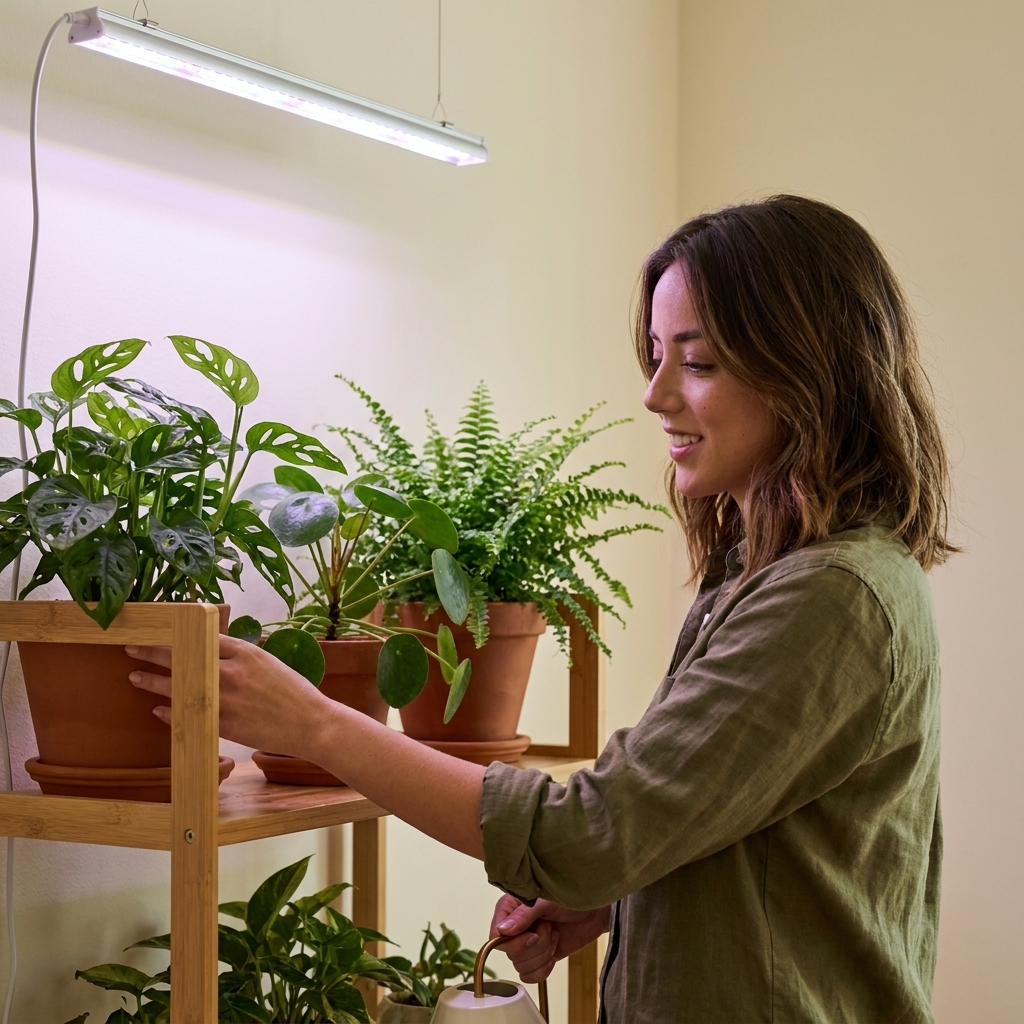
- Add a grow light: aim for 8 to 12 hours daily. Follow the manufacturer’s distance recommendations first, then adjust based on how your plant responds (raise the light if leaves bleach or curl).
Quick reality check: “Bright indirect light” is brighter than most of us think. If you can comfortably read a book there all day without turning on a lamp, that is closer to “bright.”
2) Watering issues
When growth stops, people often fertilize or repot, but the roots might be quietly struggling. Watering problems can slow growth fast because roots need both moisture and oxygen. Overwatering removes oxygen from the root zone. Underwatering forces the plant to conserve.
Signs of overwatering (or soil staying wet too long)
- Soil is still damp a week or more after watering
- Yellowing lower leaves, soft stems, or a “droopy but wet” look
- Fungus gnats hovering near the pot
Signs of underwatering
- Dry soil pulling away from the pot edges
- Crispy tips, curling, or a limp look that perks up after watering
- Very slow growth with smaller leaves
Fix it
- Use the finger test: feel 2 inches down. Water when the plant’s preferred zone is dry (for many tropicals, that is the top 1 to 2 inches; for succulents, it is closer to fully dry).
- Water thoroughly: soak until water runs out of the drainage holes, then empty the saucer.
- Adjust for light and season: brighter light equals more watering. Winter usually means less.
If you suspect rot: slide the plant out and check roots. Healthy roots are firm and not mushy or slimy (color varies by plant and potting mix). Mushy, dark, or smelly roots mean it is time for a root trim and fresh soil.
3) Root-bound
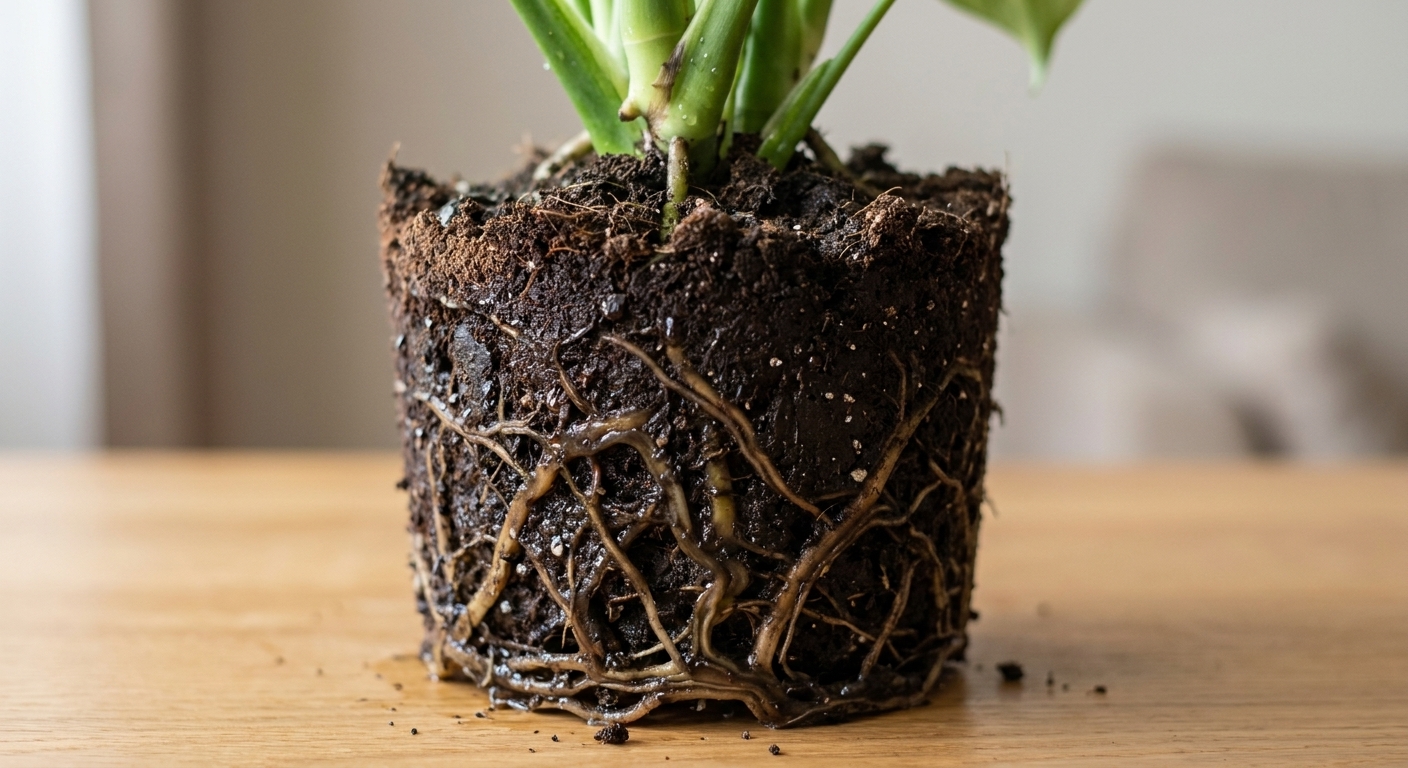
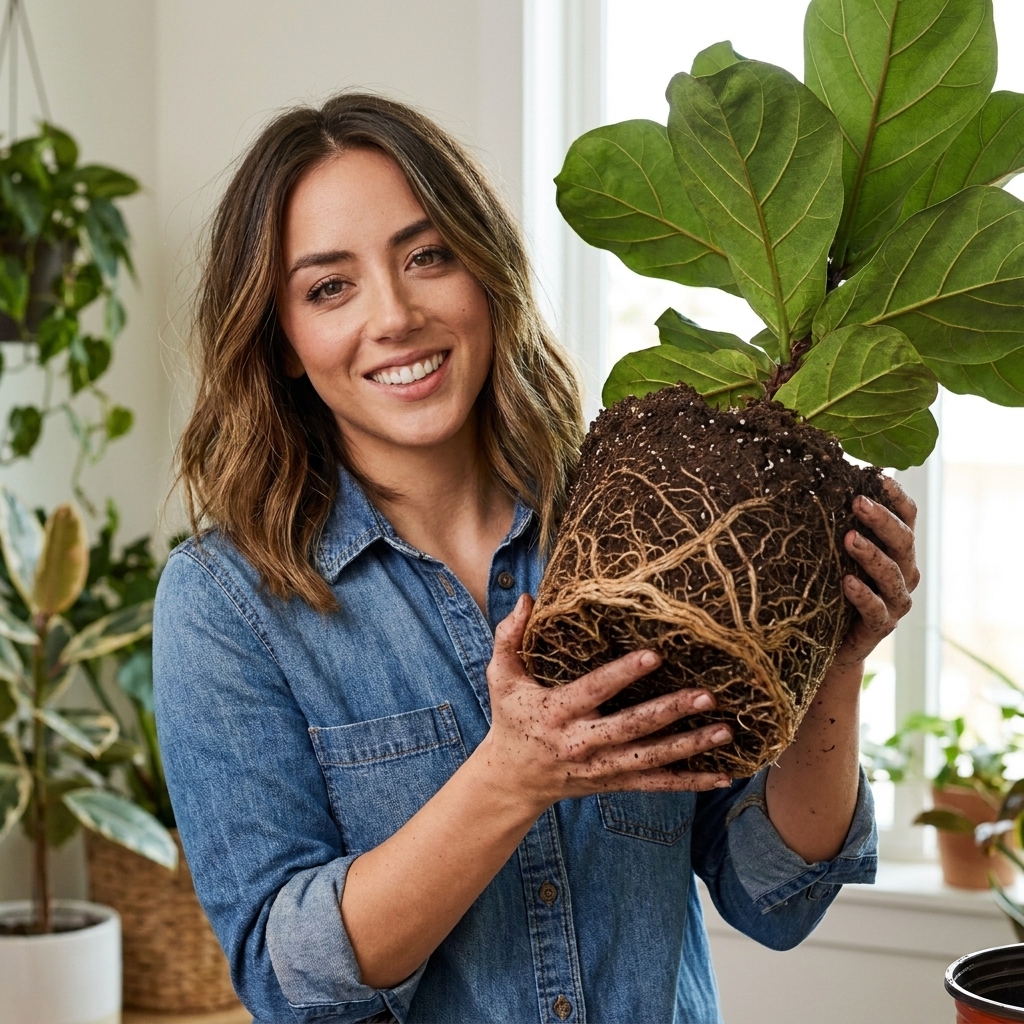
A crowded root system can stall top growth. Some plants tolerate snug pots, but once roots are circling densely, water can run through quickly or unevenly, and parts of the root ball may resist re-wetting. The plant also has less access to fresh mix and nutrients to expand.
Signs your plant is root-bound
- Roots poking out of drainage holes
- Plant dries out unusually fast (even though you water well)
- Growth slows down despite good light
- You slide it out and see a tight “root coil” around the pot shape
Fix it
- Repot one size up: typically 1 to 2 inches wider in diameter. Oversizing can backfire by keeping soil wet too long.
- Loosen circling roots: gently tease the outer roots. If severely bound, make a few vertical slices through the outer root mat with clean scissors.
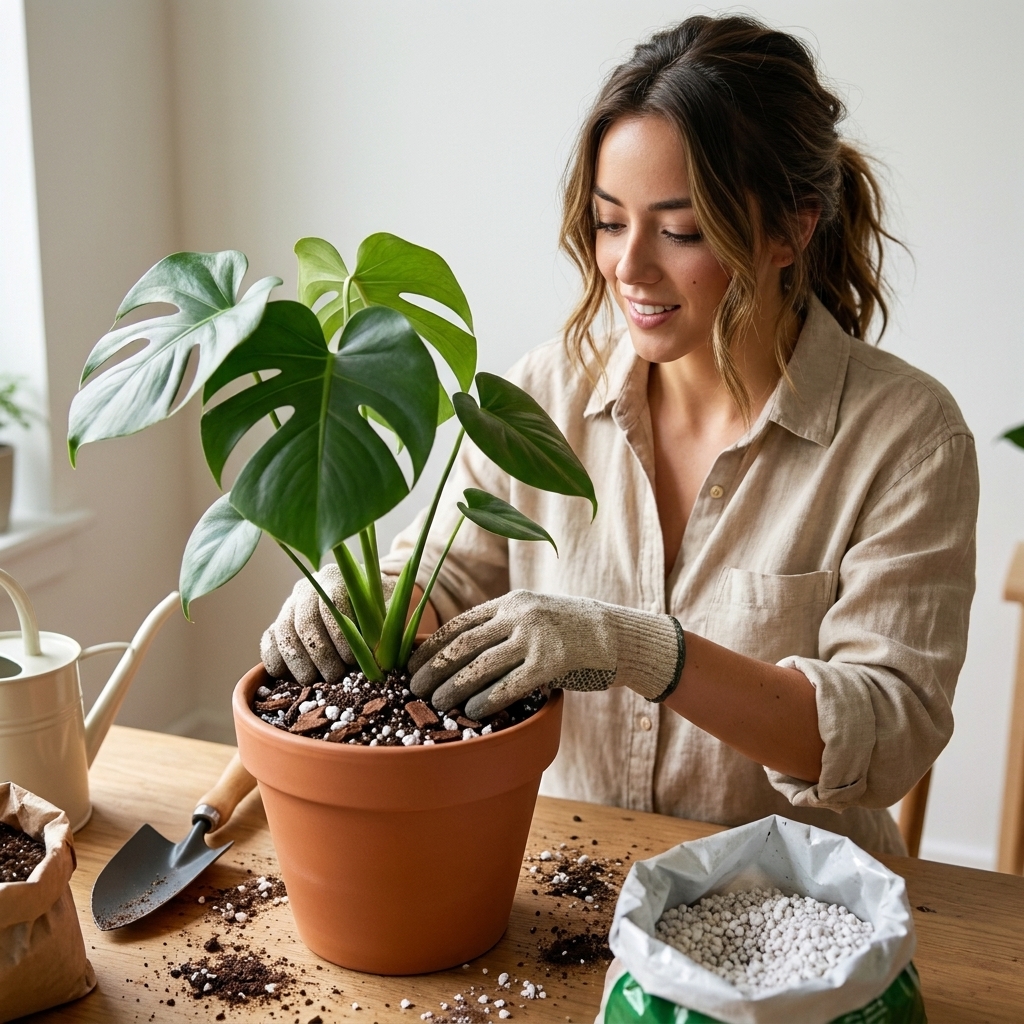
- Use fresh, airy mix: most indoor plants do better with added perlite, orchid bark, or pumice for oxygen at the roots.
4) Nutrient issues
Plants can only build new leaves if they have building blocks. In potting mix, nutrients eventually get used up or washed out. At the same time, fertilizing too often can cause salt buildup, which stresses roots and slows growth.
Signs you may need nutrients
- Very slow growth during spring and summer despite decent light
- Pale new leaves, smaller leaves, or overall “washed out” color
- It has been a year or more in the same pot without fresh soil
Fix it
- Start with a gentle, balanced fertilizer: a general houseplant fertilizer works well for most foliage plants.
- Feed in active season: spring through early fall. A safe rhythm is every 4 weeks at half strength.
- Flush the soil occasionally: every 2 to 3 months, run clean water through the pot using roughly 2 to 4 times the pot’s volume, letting it drain fully. This helps wash out excess salts.
Special note for flowering plants: if the plant looks healthy but will not bloom, it may need higher light and a bloom-support fertilizer, but light is still the first lever to pull.
5) Soil and drainage problems
Even if you water perfectly, soil structure matters. Many bagged “potting soils” are heavy and break down over time, compressing around roots. When that happens, the plant struggles to get oxygen, and growth slows or stops.
Signs the soil is the issue
- Water pools on top before soaking in
- Soil shrinks into a hard mass or becomes muddy
- The pot stays wet too long, especially in low light
Fix it
- Refresh the mix: repot with a chunkier blend suited to your plant type (aroids like Monstera and Pothos love airy mixes).
- Check drainage: use a pot with a drainage hole. If you love a cachepot, keep the plant in a nursery pot inside it.
- Skip rocks in the bottom: rocks do not improve drainage unless you change the potting mix itself. They reduce usable soil volume, and the root zone can stay wetter in practice.
6) Temperature and humidity
Growth is chemistry. Chemistry is sensitive to temperature. Many common houseplants are tropical and slow down when nights are chilly or when they get blasted by heating and air conditioning.
Common indoor growth blockers
- Cold windows at night: leaves may look fine, but growth stalls.
- Drafts from doors or vents: causes stress and inconsistent moisture.
- Very dry air: especially for Calatheas, ferns, and some Alocasias. Dry air can lead to crispy tips and stalled unfurling.
Fix it
- Keep most tropicals in a steady range: roughly 65 to 80°F is a comfortable zone for many.
- Move away from vents: even a few feet helps.
- Raise humidity strategically: a small humidifier near the plant is more effective than pebble trays. Grouping plants can also help a bit.
7) Pests and chronic stress
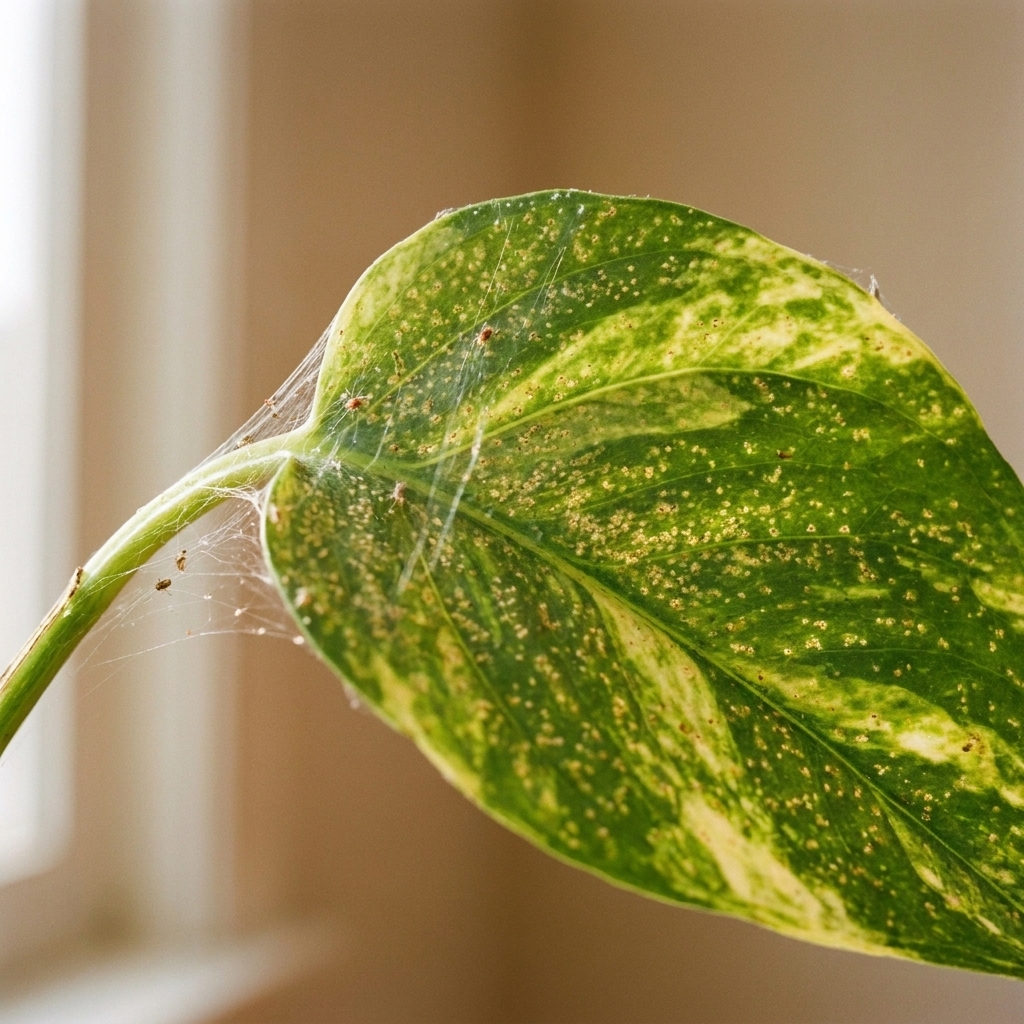
Pests do not always show up as dramatic damage right away. Sometimes the only clue is slow growth because sap-sucking insects are stealing energy, or the plant is constantly repairing tiny wounds.
Pests that commonly stall growth
- Spider mites: fine webbing, speckled leaves, dusty look
- Thrips: silvery streaks, distorted new growth, tiny dark specks
- Mealybugs: white cottony clusters in leaf joints
- Scale: small brown bumps along stems and leaf veins
Fix it
- Inspect in good light: check under leaves, at nodes, and where petioles meet stems.
- Isolate the plant: pests spread faster than you think.
- Rinse and wipe: a shower spray and a damp cloth can remove a lot of insects and eggs.
- Treat consistently: insecticidal soap or horticultural oil works well for many common pests. Repeat weekly for 3 to 4 weeks to catch hatch cycles.
One more thing: growth rate matters
Sometimes the “problem” is simply expectations. Mature plants often slow down compared to younger ones, and some species naturally produce fewer leaves per year. A healthy snake plant might only add a few leaves in a year indoors. A happy Hoya may spend a long time growing roots and vines before it seems to do much up top.
A few plants can also go semi-dormant beyond winter cues. Some tuberous or bulb-like houseplants may rest after stress or a seasonal shift, then return when conditions improve.
A 10-minute growth checkup
If you want the fastest path to a diagnosis, do this quick sequence:
- Check light: is it close enough to a window to cast a soft shadow during the day? If not, move it.
- Check moisture 2 inches down: if it is wet and has been for days, pull back on watering and reassess soil and pot.
- Look for roots: peek at drainage holes or slide the plant out to see if it is root-bound.
- Scan for pests: underside of leaves, stems, and new growth points.
- Decide one change: do not change five things at once. Make one adjustment, then watch for 2 to 3 weeks.
When will I see new growth?
This is the part where patience pays off. After you correct the main issue, most plants need time to rebuild momentum.
- Fast growers (Pothos, Tradescantia, many Philodendrons): often 1 to 3 weeks in bright conditions
- Moderate growers (Monstera, Rubber Plant, many Hoyas): 3 to 8 weeks
- Slow growers (ZZ Plant, Snake Plant): months, especially in lower light
If your plant was root-stressed, it may spend a few weeks focusing on roots before you see anything above the soil. That is still progress, even if it is invisible.
FAQ
My plant is alive but not growing. Should I repot?
Repot if it is root-bound, the soil is old and compacted, or the pot has poor drainage. If the roots have plenty of space and the soil drains well, light is usually the better first move.
Should I fertilize a plant that is not growing?
Only after you confirm it has enough light and the roots are healthy. Fertilizer cannot compensate for low light, and feeding a stressed plant can make things worse. If it is spring or summer and conditions are good, a half-strength balanced fertilizer is a safe start.
Why is my plant not growing after repotting?
A short pause is normal. Many plants “settle in” for 2 to 6 weeks while rebuilding fine feeder roots. Keep light steady, water carefully, and resist the urge to keep tinkering.
Can tap water stunt growth?
It can for some sensitive plants, especially Calatheas and certain Dracaenas, depending on your local water chemistry. Letting water sit out overnight may reduce chlorine in some areas, but it does not remove chloramine and it will not fix hard water. If you suspect water is a factor, check your municipal water report and consider filtered water, rainwater, reverse osmosis water, or an aquarium-style dechlorinator labeled for chloramine.
The kindest takeaway
A houseplant that is not growing is not “failing” you, and you are not failing it. It is communicating in the only way it can. In most homes, the biggest needle-movers are brighter light, better root oxygen (airy soil and correct watering), and a little nutrition during active months. Make one thoughtful change, give it time, and celebrate the first tiny leaf tip when it shows up. That is your plant saying, “Okay, I am ready.”