A calm, step-by-step root rot rescue: how to unpot, trim mushy roots, repot in fresh mix, and prevent future rot in any houseplant.
I killed my first three succulents in college by loving them to death with water. So when I brought home my first Phalaenopsis orchid (moth orchid), I tried to “be good” and water it every Saturday. That went about as well as you’d expect.
The trick with Phals is that they do not want calendar care. They want observation care. If you learn to read the roots and the potting mix, watering gets simple, repeatable, and way less stressful.
Why roots work as a water meter
Phalaenopsis orchids are epiphytes in nature. They cling to trees, get drenched by rain, then dry quickly as air moves around their roots. That rhythm is the goal at home: thoroughly wet, then fully drain, then allow plenty of air and partial drying.
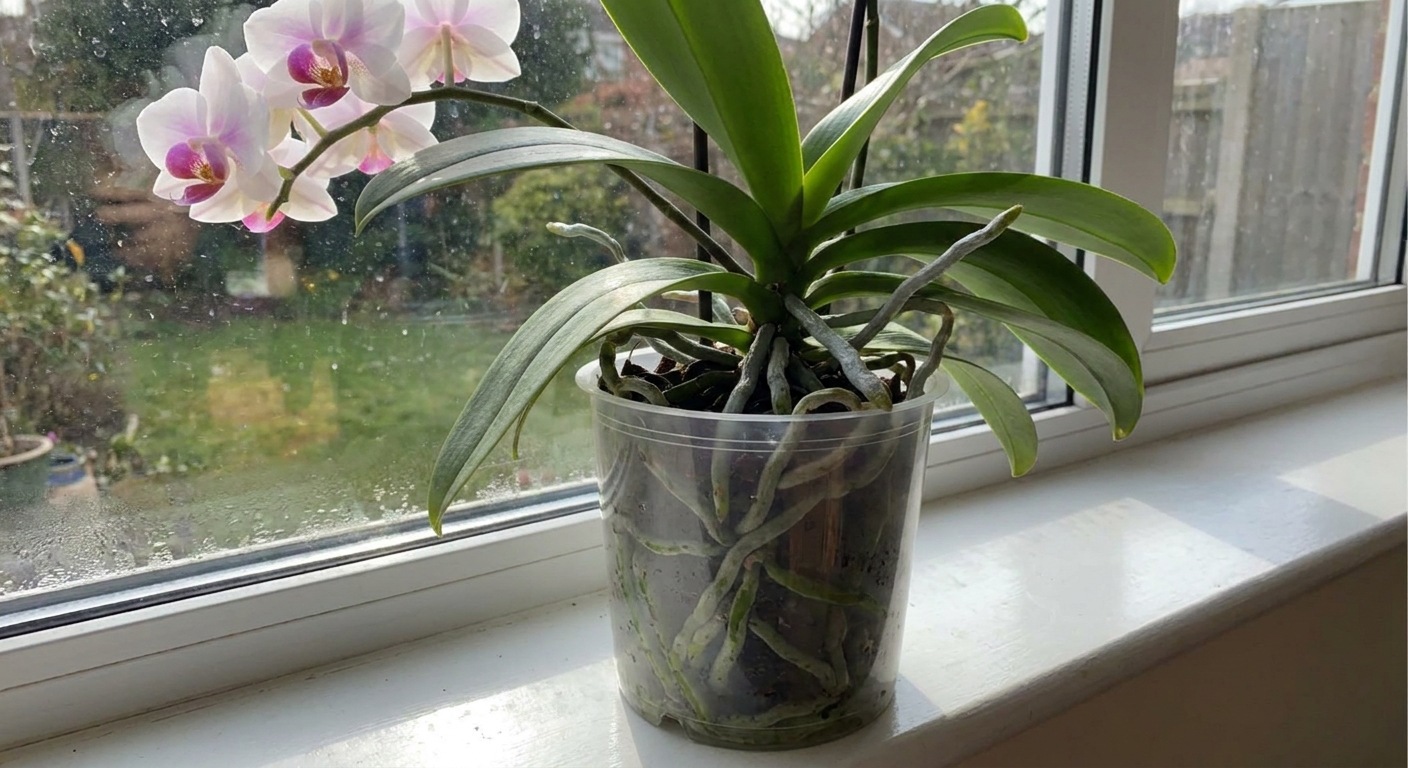
The roots help you track that rhythm because orchid roots change color as their outer layer (velamen) absorbs and releases water.
- Green roots usually mean the velamen is hydrated.
- Silvery gray roots usually mean the velamen is dry and ready for a drink.
- Yellowish, tan, or brown roots can be normal if they are older or stained by media, but texture matters more than color.
Quick caveat: color is a clue, not a verdict. Light levels, staining, and humidity inside the pot can keep roots looking greener or more olive than you’d expect. When in doubt, trust firmness and the mix too.
Silver vs green roots
Green roots: wait
If the roots you can see through the pot are mostly green and firm, hold off. Watering again now is how people accidentally slide into root rot, especially in cool rooms.
Quick check: if the pot feels noticeably heavy and the media still feels cool and damp, you are not late. You are on time.
Silvery roots: water soon
When the visible roots turn silvery gray, that is your orchid saying, “I’m ready for the next soak.” If you wait an extra day, it is usually fine. If you water a few days too early, that is where problems start.
My rule: water when the majority of visible roots are silvery and the potting mix is mostly dry for its type, not when it is still moist in the center.
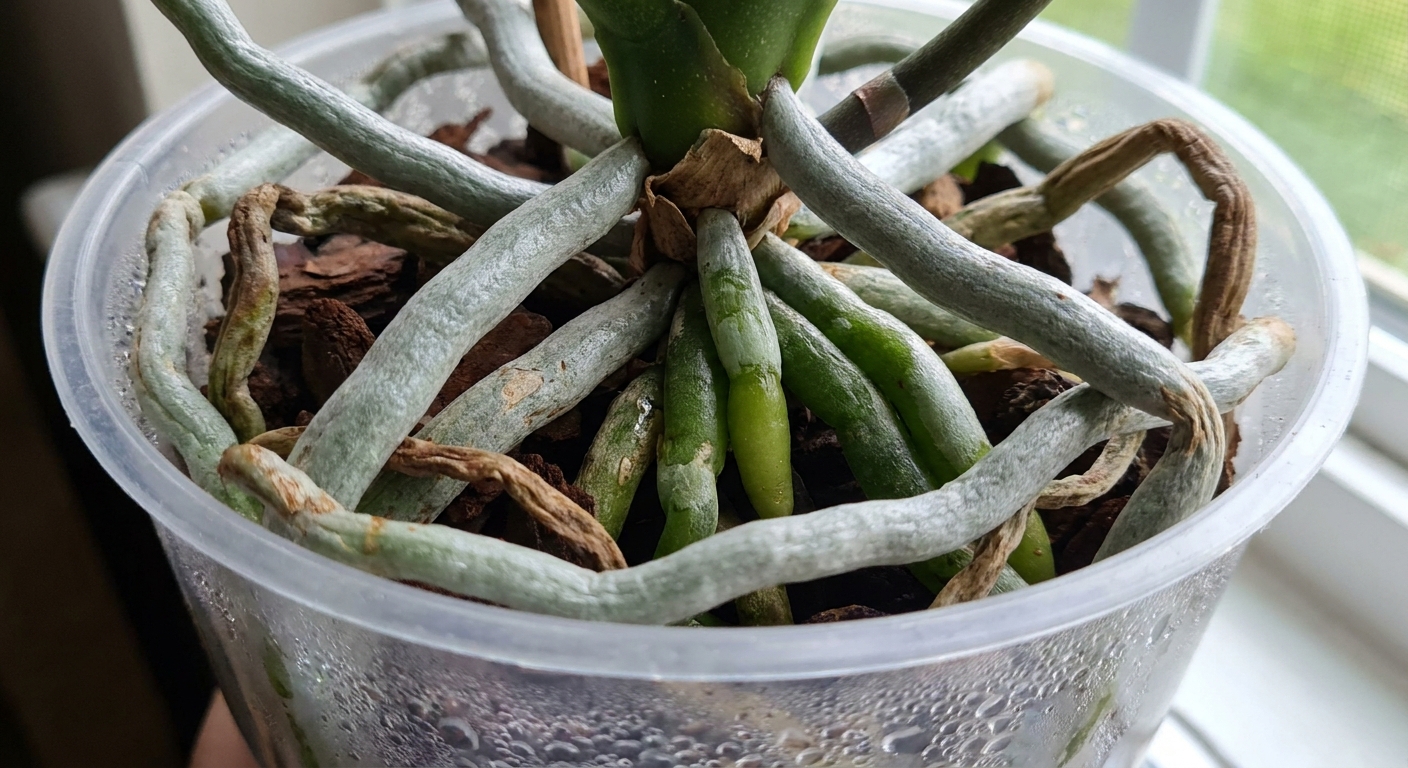
Check the potting mix too
Roots are the headline, but the potting mix is the fact check. A Phal can show silvery roots at the pot edge while the center is still damp, especially in dense media.
If your orchid is in bark
Bark is airy and dries faster, which many Phals love because it lowers the risk of staying soggy.
- What dry looks like: bark pieces feel crisp and lightweight, not spongy.
- What damp looks like: bark feels cool, slightly pliable, and heavier.
- Typical pattern: a bit more frequent watering, but lower risk if you drain well and have airflow.
If your orchid is in sphagnum moss
Sphagnum holds water for a long time. It can be great in very dry homes, but it demands patience.
- What dry looks like: moss feels springy and only slightly cool, not wet to the touch.
- What damp looks like: moss feels cold, heavy, and stays compressed.
- Typical pattern: longer intervals between waterings, higher risk of root rot if you water on a schedule.
Important: if moss is packed tightly, it can stay wet in the middle even when the top looks dry. That is a classic “why are my roots rotting?” scenario.
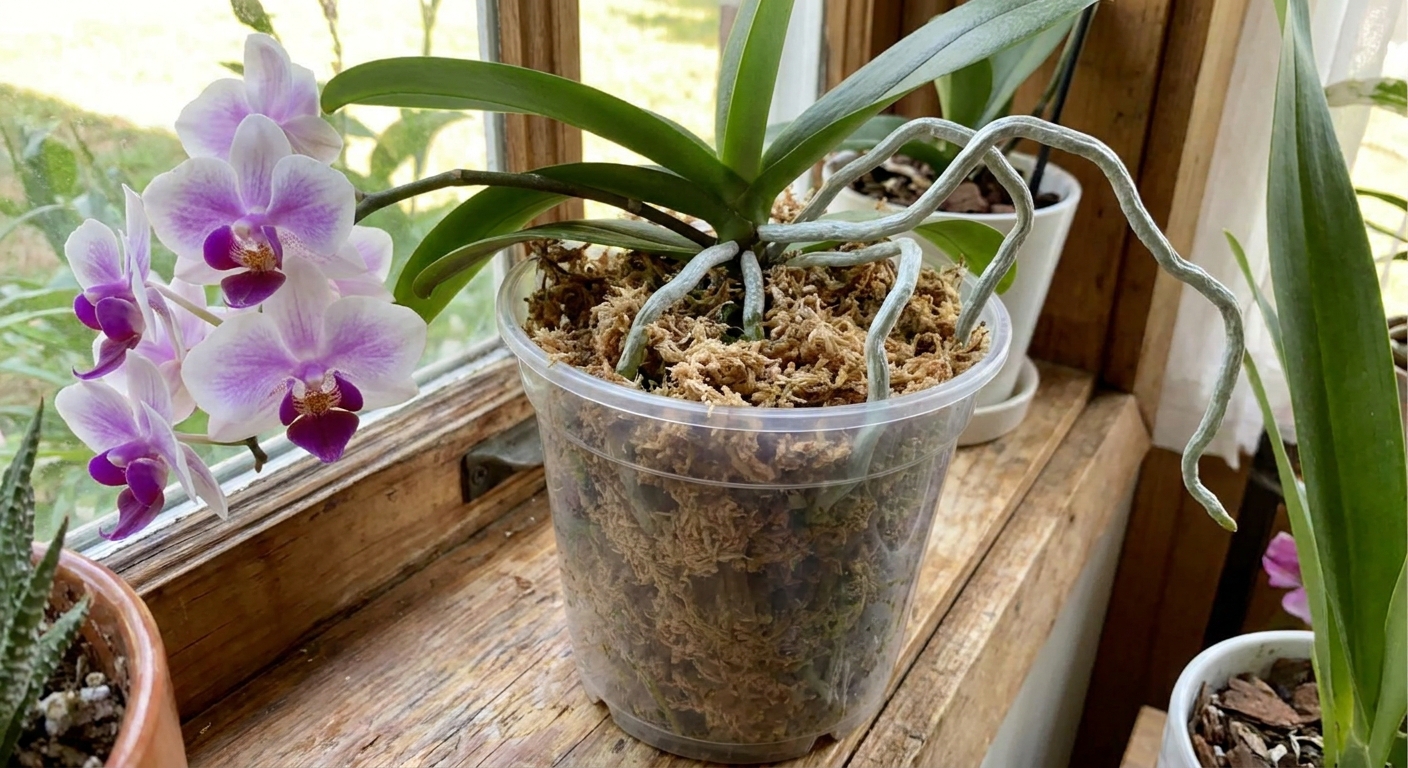
Soak and drain watering
Phals do best when their media is fully hydrated, then allowed to drain completely. A quick splash on top often leaves dry pockets in bark and encourages uneven root health.
Step-by-step
- Start with drainage. Only water orchids in a pot with drainage holes so excess water can escape.
- Remove the inner pot from any decorative cachepot so water cannot pool at the bottom.
- Use room-temperature or slightly lukewarm water. Very cold water is not ideal in winter because it can keep the root zone colder and wetter for longer.
- Soak for 10 to 15 minutes for most mixes. If you are in sphagnum that stays wet, shorten the soak. If you are in very chunky bark that dries fast, you may need a longer soak occasionally.
- Let it drain thoroughly. Drain for a full minute or two until it stops dripping steadily.
- Return it to its spot only after it is done dripping, so it is not sitting in a puddle.
My biggest “save an orchid” tip: if your orchid sits in a decorative pot, empty it every time. Standing water often leads to root rot.
Seasons and watering
Most watering advice fails because it ignores that your home is not the same environment year-round. Light, temperature, and humidity change the speed at which media dries and the orchid uses water.
Summer: faster drying
In brighter light and warmer temperatures, your orchid will usually dry faster and drink more.
- Check roots and media every few days.
- Expect to water more often, especially in bark and near sunny windows.
- Air movement from fans or open windows can shorten the interval.
Winter: slower drying
In winter, the same potting mix can stay damp for surprisingly long, particularly in low light or cool rooms.
- Expect longer gaps between waterings.
- If your windowsill is chilly at night, roots stay wetter longer and are more rot-prone.
- Do not “make up” for reduced light with extra water. That is a fast route to mushy roots.
What I do instead of counting days: I lift the pot. Light pot plus silvery roots equals water. Heavy pot plus green roots equals wait.
Water quality and fertilizer
If you feel like you are doing everything “right” but roots still look rough, water quality can be the missing piece.
Water quality basics
- Avoid softened water. Water that has been run through a salt-based softener can add sodium that orchids hate.
- Hard water is usable, but watch for buildup. White crust on bark, pot edges, or exposed roots is a sign minerals and salts are collecting.
- If your water is very hard, consider rainwater, RO, or distilled. If you use very pure water long-term, you will want to fertilize thoughtfully because it contains very few minerals.
Fertilizer without drama
I keep fertilizer simple: feed lightly during active growth, and flush occasionally so salts do not build up.
- Go weak, not intense. Many growers do “weakly, weekly,” meaning a diluted orchid fertilizer more often rather than a heavy dose.
- Flush with plain water sometimes. Every few waterings, run plain water through the pot to rinse out fertilizer salts, especially if you see crusty buildup.
Problem signs
Orchids are communicators. The key is to respond with the right next watering move, not panic water.
Brown, mushy roots
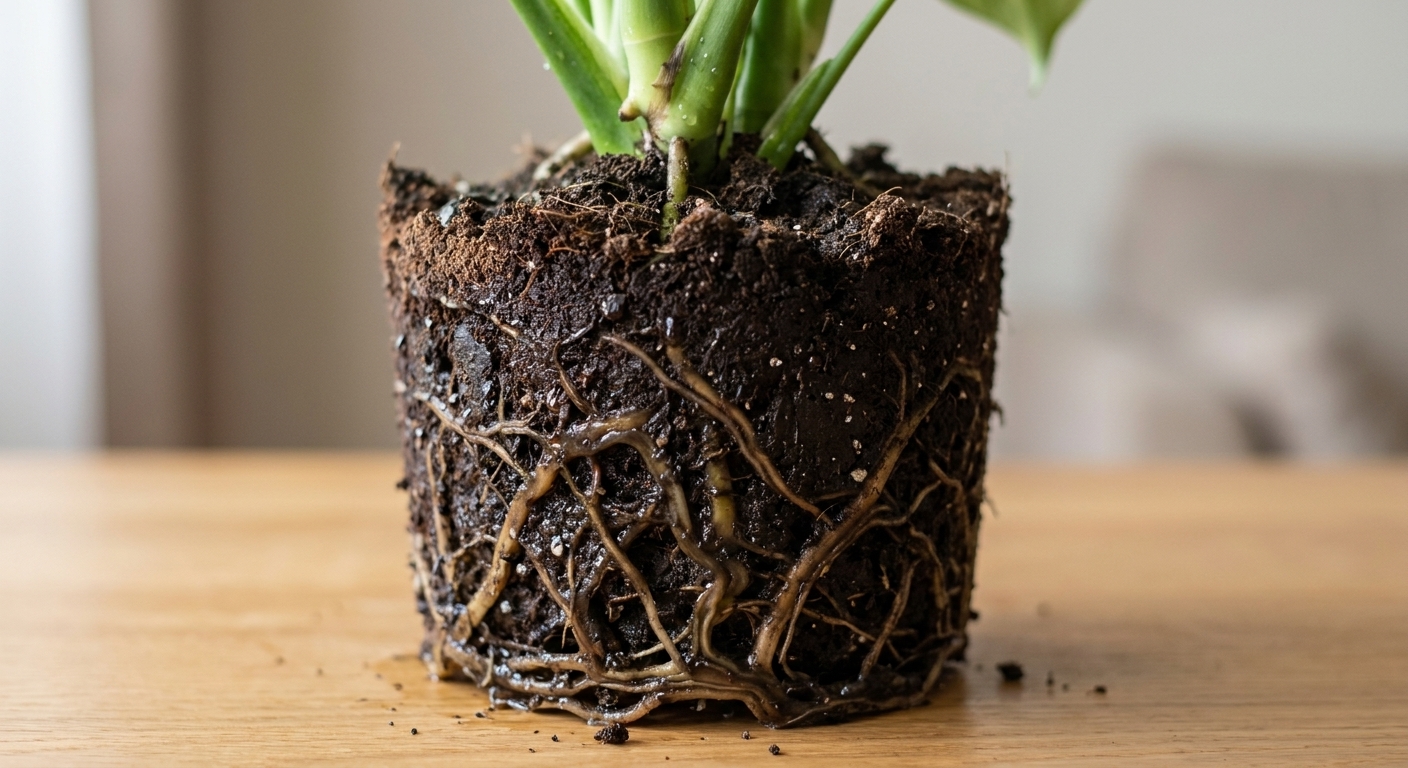
Mushy roots are rotting roots. Healthy orchid roots feel firm. Rotting roots feel soft, hollow, or slimy, and the outer layer may slip off when touched.
What it means: the orchid has been staying wet too long, too often, or with not enough airflow.
What to do next:
- Do not water again just because the leaves look sad.
- Let the pot dry more between waterings.
- Consider repotting into a fresher, airier mix (often bark or a bark blend) if the media is old, sour-smelling, or compacted.
- If rot is advanced, trim dead roots with sterilized snips and repot. If you had to cut a lot of roots, let the cuts dry for 2 to 3 days before the next soak. Otherwise, a light watering to settle the mix is fine, then return to a normal wet to dry cycle.
Limp, wrinkly leaves
Limp leaves can mean dehydration, but they can also mean root loss from overwatering. This is why roots matter more than leaves for watering decisions.
How to interpret it:
- Silvery roots + dry mix + limp leaves usually means the orchid is genuinely thirsty. Use a full soak and drain.
- Brown or mushy roots + damp mix + limp leaves usually means the orchid cannot drink because roots are damaged. Watering more makes it worse. Focus on drying, airflow, and root recovery.
Yellowing bottom leaf
One older bottom leaf yellowing and dropping occasionally is often normal aging. Multiple leaves yellowing quickly, especially with a wet mix, is a red flag for root issues.
Small tweaks that help
- Use a clear pot if you can. Being able to see roots removes guesswork.
- Avoid water in the crown. If water sits where leaves meet, it can cause crown rot. If it happens, blot gently with a paper towel.
- Give it airflow. Even a small fan in the room helps media dry evenly.
- Replace old media. As bark breaks down, it holds more water and less air. Moss compacts. Both raise rot risk over time.
- Match media to your home. Dry home? Moss or a moss blend can help. Humid home or low light? Bark is usually safer.
Root-reading cheat sheet
- Mostly green, firm roots: wait.
- Mostly silvery, firm roots: water with a soak and drain.
- Mix is still cool and damp in the center: wait even if the top looks dry.
- Brown and mushy roots: stop frequent watering, increase drying and airflow, consider repotting.
- Limp leaves: check roots before deciding. Thirst and root rot can look identical from above.
FAQ
Should I mist my Phalaenopsis instead of watering?
Misting does not replace watering. It can raise humidity slightly for a short time, but it rarely hydrates the root zone. If you mist, do it for humidity, not as a drink, and keep water out of the crown.
Can I water with ice cubes?
I do not recommend it. Orchids prefer thorough hydration with room-temperature water and full drainage. Ice cubes melt slowly, chill the root zone, and often wet one spot rather than soaking the whole mix evenly.
How do I know if my bark is too dry between waterings?
If roots are silvery for days, the pot feels very light, and you see shriveled roots or wrinkly leaves, you are likely waiting too long. A full soak usually perks the roots back up within hours, while leaves take longer to recover.
What if my orchid has aerial roots outside the pot?
Aerial roots are normal. You can lightly wet them during watering, but focus on the roots in the pot. Aerial roots often stay silvery because they are exposed to air, even when the pot is adequately moist.