A plant-parent friendly breakdown of rooting cuttings in water vs. soil, including success rates, best plants for each method, and step-by-step instructions.
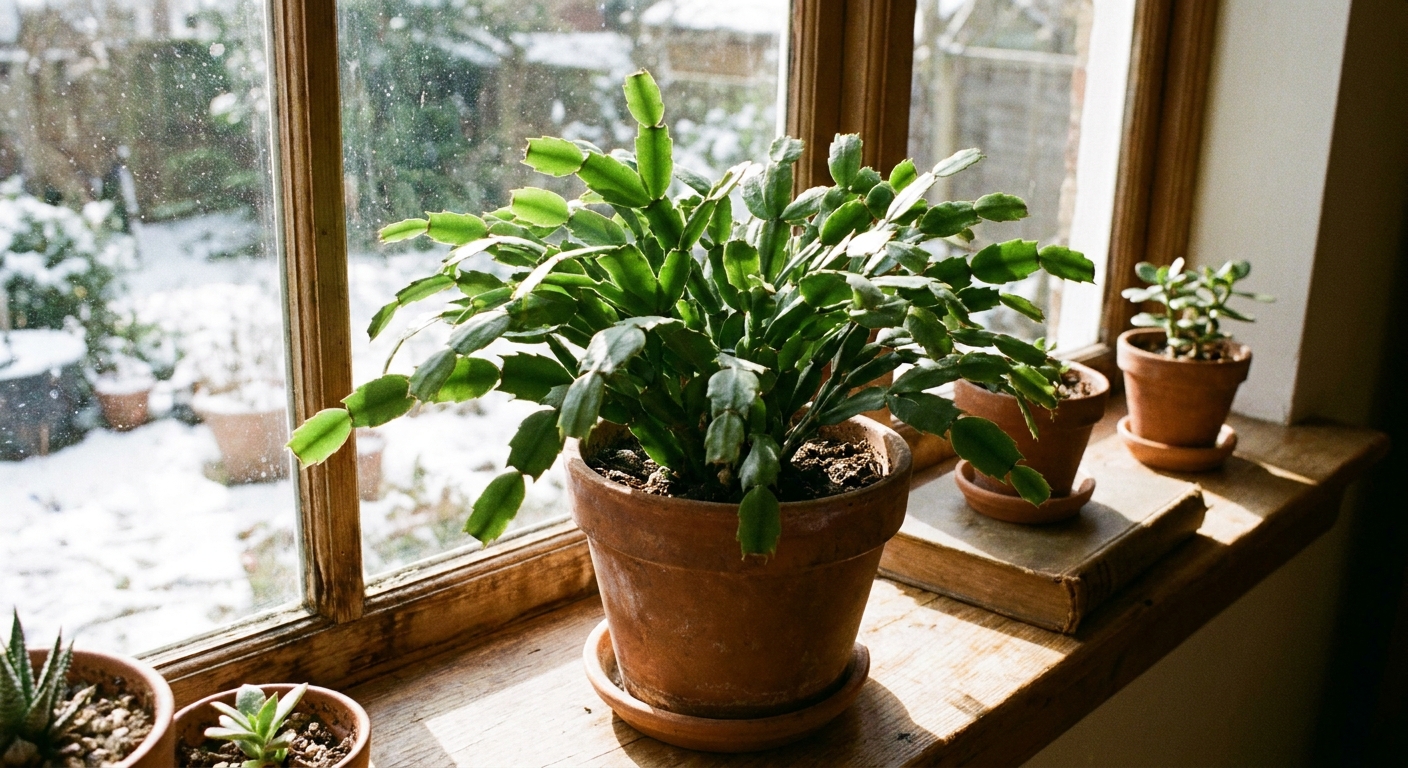
I killed my first three succulents in college by loving them to death with water, so I have a soft spot for plants that show stress quickly when they stay too wet. Christmas cactus (Schlumbergera) is one of them, especially when you are trying to root a fresh cutting. The good news is that rooting Christmas cactus segments in soil is genuinely easy once you understand one key rule: a fresh break plus wet soil is a recipe for rot.
This guide walks you through the exact soil method I use at home, including what kind of segment to take, how long to let it callus, what “barely moist” really means, and how to tell when roots have formed without yanking the cutting out of the pot.
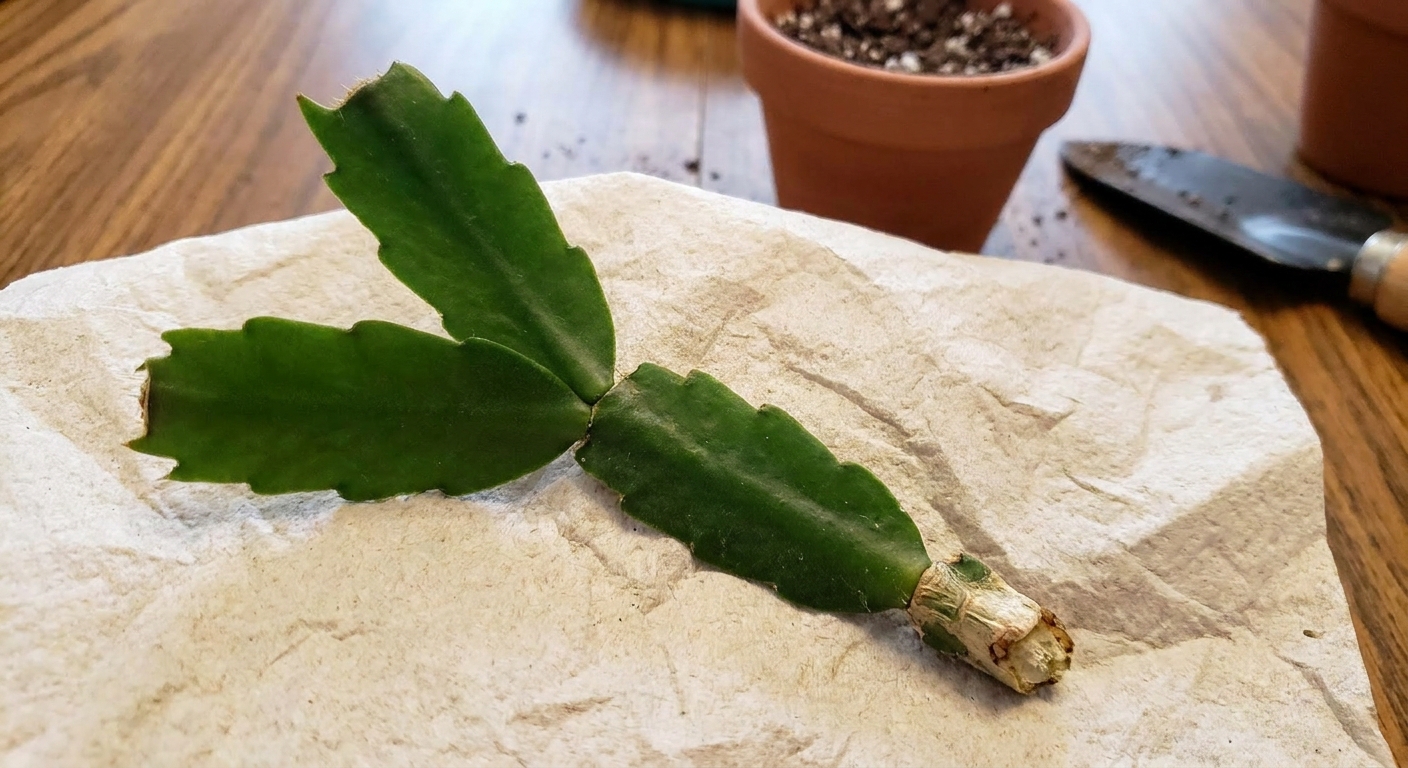
What to cut: pick a Y-shaped section
For the highest success rate, take a Y-shaped section from the end of a stem, ideally with two to five segments total. Those “segments” are the flat little paddles.
- Best cutting: A Y-shaped tip with 2 to 5 segments (the forked shape is a bonus, not a requirement, but it tends to root and branch nicely).
- Avoid: Very old, woody sections from deep inside the plant, or limp, damaged growth.
- Timing: You can propagate most of the year, but I find cuttings root fastest when the plant is in active growth (often spring through early fall indoors).
How to remove it: Hold the stem just below where you want the cutting. Gently twist the segment off with your fingers. If it resists, use clean snips. A clean break is ideal.
Quick sanity check: Plant the end that was attached to the main plant. Do not flip the cutting upside down.
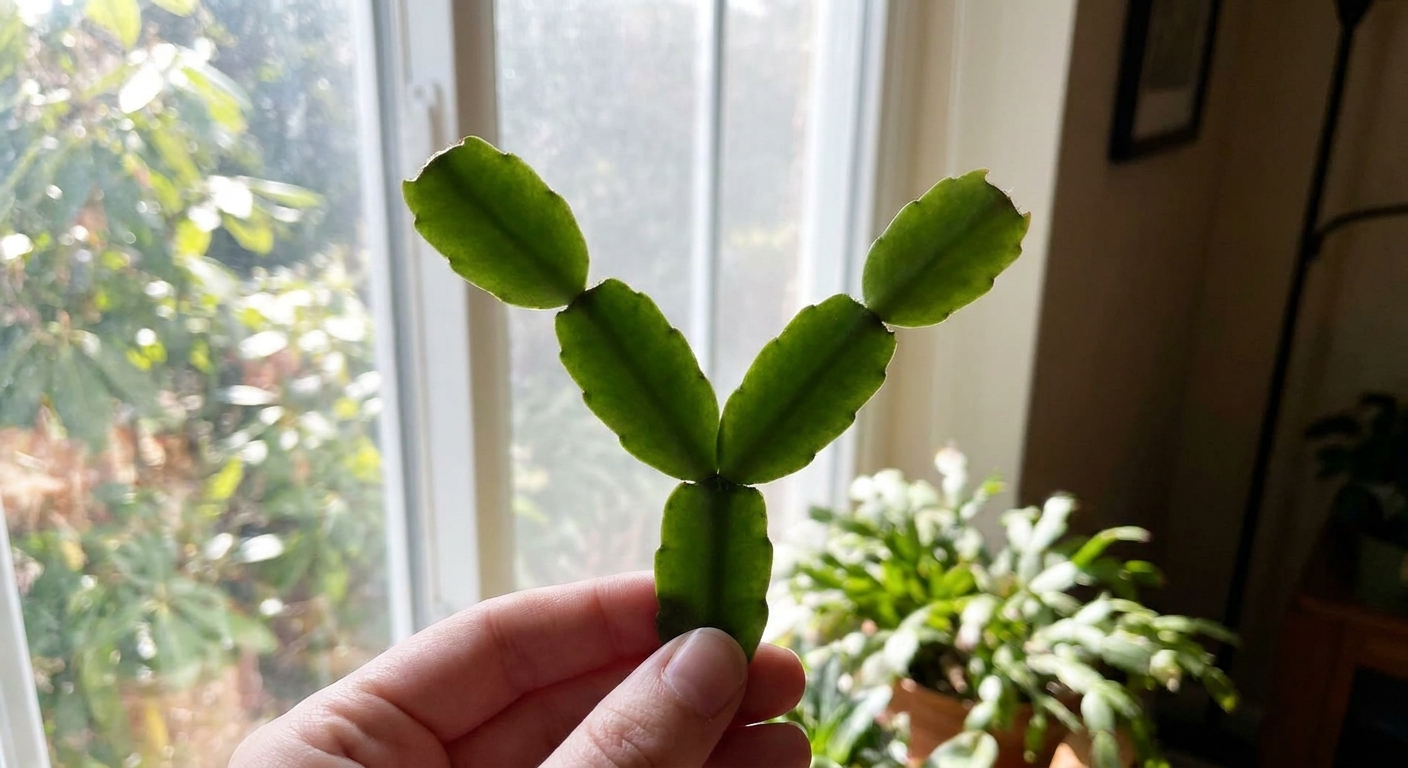
Do not skip this: let the end callus
After you take the cutting, set it somewhere dry and out of harsh sun so the broken end can callus (dry and seal).
- How long: Usually 24 to 72 hours.
- What you are looking for: The end looks slightly dull, dry, and sealed, not shiny-wet.
- If your home is humid: Lean toward 48 to 72 hours.
This step is strongly recommended for soil propagation. A callused end is far less likely to let fungi and bacteria rush in the moment it touches moisture.
Small but helpful hygiene note: If you use snips, wipe the blades with isopropyl alcohol and let them dry before cutting. Starting clean lowers the odds of rot.
The right soil mix (fast-draining, lightly damp)
Christmas cactus is not a desert cactus, but it still hates sitting in water. For rooting, you want a mix that holds a touch of moisture while staying airy.
A simple, reliable mix
- 2 parts potting mix (or coco coir based mix)
- 1 part perlite or pumice
- Optional: a small handful of orchid bark for extra air pockets
Moisture level matters: Dampen the mix first, then squeeze a handful. It should feel cool and lightly moist, but no water should drip out. If it is dripping, it is too wet for a fresh cutting.
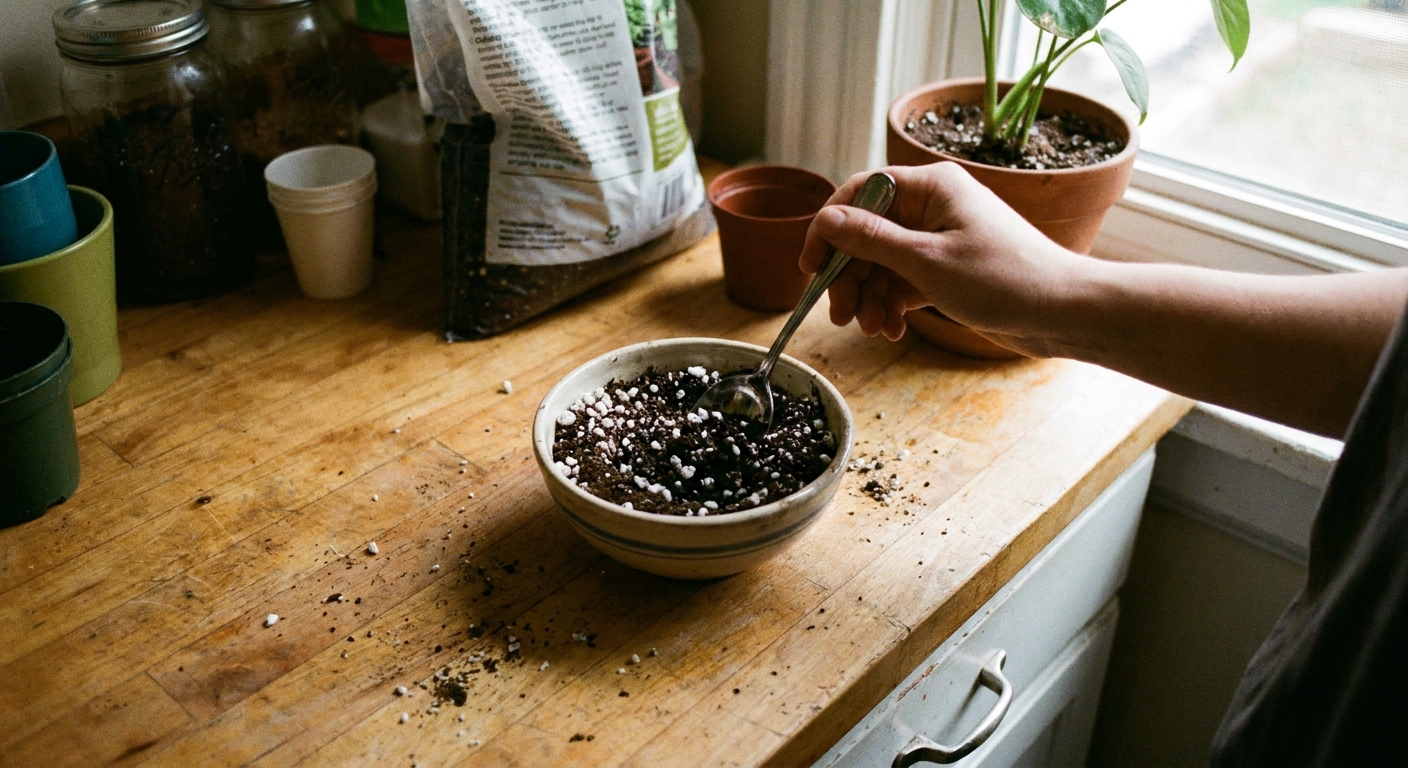
Potting the cutting: shallow, steady, and not too wet
Use a small pot with drainage holes. For one cutting, a 2 to 4 inch pot is perfect. Oversized pots stay wet too long, which slows rooting and raises rot risk.
Step-by-step
- Fill the pot with your barely moist, fast-draining mix.
- Make a small hole with a pencil or chopstick.
- Insert the cutting with the callused end down, burying only the very bottom segment or just enough to keep it stable (about 1/4 to 1/2 inch). Keep at least one segment above the soil line.
- Firm the soil lightly around it so it stands upright.
- Do not drench it. If your mix was pre-moistened correctly, you usually do not need to water right away.
If the cutting feels wobbly, you can use a small pebble on the soil surface or a bent paperclip as a tiny “stake” to keep it from rocking. Movement can break tiny new roots as they form.
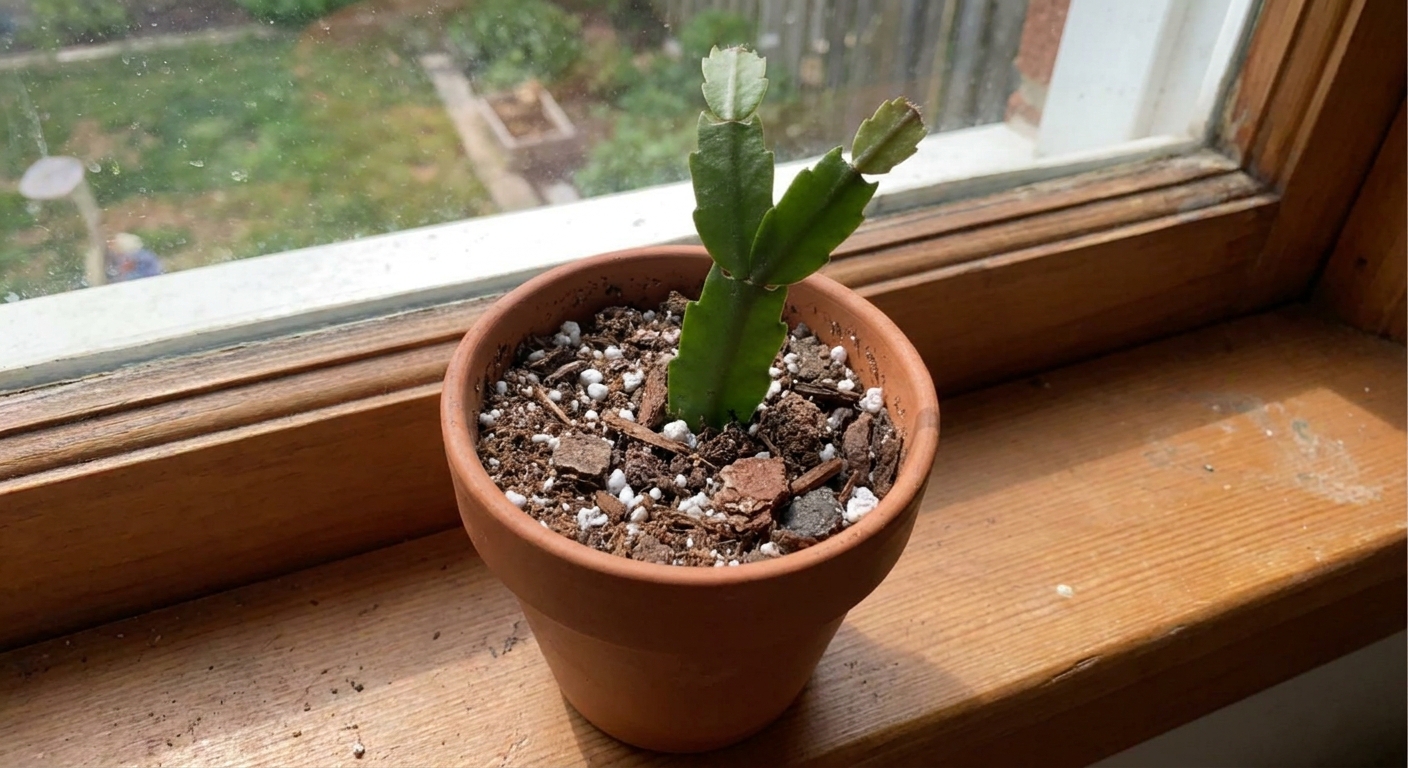
Light and temperature: bright indirect, comfortably warm
Set the pot in bright indirect light. Think: close to an east window, or a few feet back from a brighter south or west window with a sheer curtain.
- Best temperature range: about 65 to 75°F (18 to 24°C).
- Avoid: hot direct sun on the cutting, cold drafts, or placing it right over a heater vent.
Humidity: Normal household humidity is fine. If your home is very dry, a loose plastic tent can help, but only if you also keep the soil on the drier side. Stagnant humidity plus wet mix is where rot takes off.
Watering while it roots: less than you think
Rooting cuttings do not drink much because they do not have roots yet, so they are mostly relying on stored moisture. Your job is to keep the mix slightly on the dry side, not soggy, while also not letting it sit bone-dry for long stretches.
A simple watering routine
- After planting, wait until the top 1 inch of mix feels dry.
- Then water lightly around the edge of the pot, not directly on the stem.
- Let excess drain fully. Never leave the pot sitting in water.
If you are unsure, err dry. Christmas cactus cuttings can tolerate a short dry spell much better than they can survive wet soil.
How long rooting takes (and what’s normal)
Most Christmas cactus cuttings form roots in 2 to 8 weeks. Sometimes it is quicker in warm, bright conditions. Sometimes it takes longer, especially in winter or in cooler homes.
- Weeks 1 to 2: The cutting may look unchanged. That is normal.
- Weeks 3 to 8: Roots usually develop, and the cutting starts to feel more anchored.
- After rooting: You may see new growth at the tip, often within another few weeks.
Be patient. The biggest mistake I see is people checking too aggressively, then damaging the tiny new roots right when they appear.
How to tell if it has roots (without pulling it up)
You have a few gentle ways to “test” rooting progress.
Try the tug test
Hold the cutting near the soil line and give the lightest upward tug. If you feel resistance, it is rooting. If it slides easily, give it more time.
Watch for stability
A rooted cutting becomes noticeably steadier. If it stops wobbling and stays upright without support, that is a good sign.
Look for new growth
Fresh segments forming at the tip usually mean roots are established. Not always, but it is a strong clue.
Why wet soil makes cuttings rot
A freshly broken Christmas cactus segment is basically an open wound. In wet soil, that wound stays soft and oxygen-poor. This creates a perfect environment for rot organisms to multiply, and the cutting cannot defend itself well because it has no roots yet.
Callusing helps by sealing the break. Fast-draining mix helps by keeping air around the base. Light watering helps by avoiding that constantly wet zone that rot loves.
Classic rot signs: the base turns translucent, mushy, dark, or foul-smelling, and the cutting collapses.
Troubleshooting common problems
The cutting is shriveling
- Most likely: It is too dry for too long, or the cutting is in hot sun.
- Fix: Move to bright indirect light and water lightly once the mix is mostly dry. Do not soak it.
The base looks mushy or black
- Most likely: Too much moisture, no callus time, or a dense mix.
- Fix: Cut away the mushy part back to firm tissue, let it callus again for 2 to 3 days, then replant in a drier, airier mix.
No roots after 6 to 8 weeks
- Most likely: Too cold, too dark, or too wet.
- Fix: Increase brightness (still indirect), keep temps warmer, and let the mix dry a bit more between waterings.
Fungus gnats show up
- Most likely: The soil is staying consistently moist.
- Fix: Let the top couple inches dry more between waterings, and consider bottom watering only after rooting is established.
After it roots: when to pot up and how to care for it
Once the cutting is rooted and you see new growth, treat it like a small plant in training.
- When to pot up: When you see steady new growth or roots peeking from drainage holes, usually 2 to 4 months after rooting.
- Soil going forward: Keep it fast-draining, but slightly more moisture-retentive than a desert cactus mix.
- Watering: Water thoroughly, then let the top inch or two dry before watering again.
If your goal is a fuller plant, you can eventually plant multiple rooted cuttings into one pot. That is how people get those lush, cascading baskets.
FAQ
How many segments do I need to root a Christmas cactus in soil?
Two segments can work, but I get the best results with two to five segments. Shorter pieces dry out faster and are easier to knock loose.
Can I root Christmas cactus segments directly in potting soil?
You can, but plain potting soil is often too dense and stays wet too long. If that is all you have, lighten it with perlite or pumice before you start.
Should I use rooting hormone?
It is optional. Christmas cactus usually roots without it. If you use it, apply a tiny amount to the callused end and keep the soil on the drier side.
Can I root it in the same pot as the parent plant?
Yes, as long as you can keep the area around the cutting from being overwatered. If the parent is on a different watering schedule, a separate small pot is safer.
What if my cutting broke off by accident?
You can still propagate it. Let the broken end callus for 1 to 3 days, then plant it in a barely moist, airy mix just like a planned cutting.