A practical, reassuring guide to diagnosing winter leaf drop: drafts, low light, dry air, and watering shifts, plus exact fixes and recovery timelines.
I killed my first three succulents in college by loving them to death with water, so I get the frustration of doing “everything right” and still getting nothing. A Christmas cactus (really a holiday cactus, Schlumbergera) that stays green all fall is not being stubborn. It is responding to your home.
These plants set buds when two things line up for long enough: nights that are truly long and dark and evenings that are cooler. If your cactus is sitting on the windowsill and refusing to bud, the fix is usually not fertilizer or a new pot. It is a consistent stretch of darkness, cooler temps, and slightly drier soil.
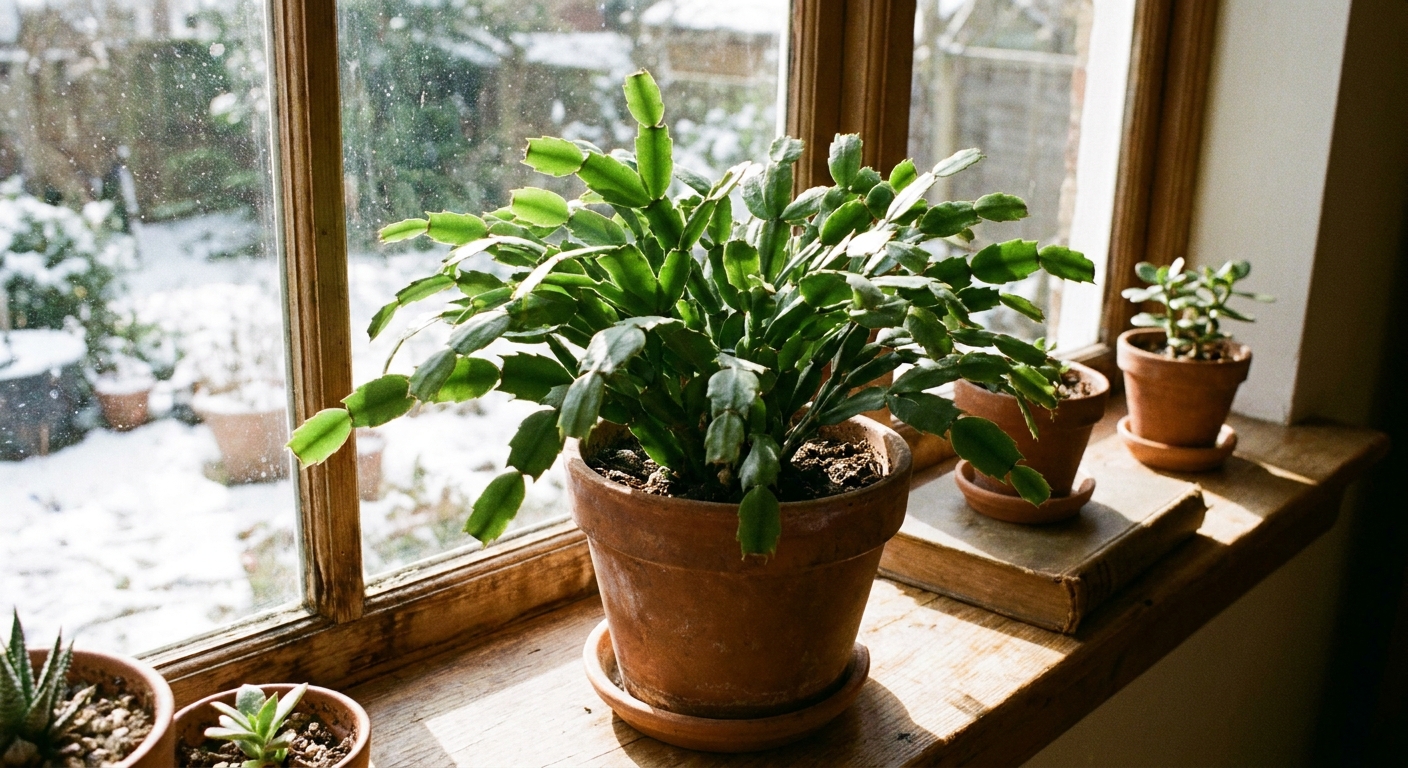
Why it stays green in fall
In most homes, one or more of these things prevents buds from forming.
1) Nights are not long or dark enough
Holiday cacti are triggered by photoperiod, meaning the length of uninterrupted darkness. In nature, they experience long nights in fall. Indoors, even a little light can “reset” the plant’s night.
- Lamps in the evening near the plant
- Kitchen lights if it is near a high-traffic area
- TV glow across the room
- Streetlights through the window
- Porch lights reflecting into the room
2) The room stays too warm at night
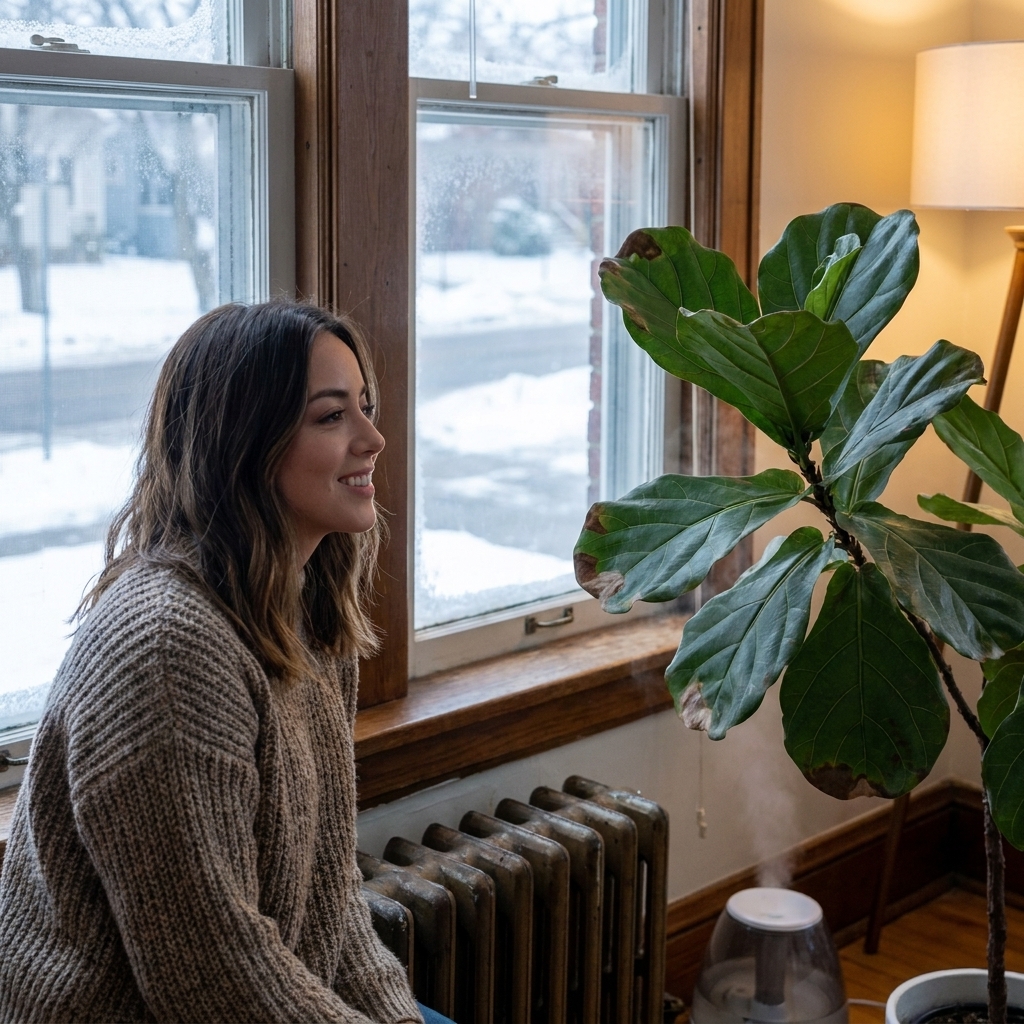
Warm evenings tell the plant it is still growing season. Buds form best when nights are cool for an extended stretch. Many windowsills stay warmer than you think if a heat vent is nearby or the plant sits above a radiator. Warm airflow is not an automatic dealbreaker, but it can prevent buds from forming or lead to bud drop.
3) Water never eases up
Holiday cacti are not desert cacti, but they still respond to a seasonal rhythm. Constantly moist soil encourages leafy growth instead of bud formation. The goal is not drought. The goal is slightly drier between waterings while you run the dark, cool routine.
4) It might not be a “Christmas” cactus
Most “Christmas cacti” sold in stores are actually Thanksgiving cacti (a type of Schlumbergera that often blooms earlier). Timing varies by cultivar and by your home’s conditions. So if yours is stubborn in November, it may simply be on a later schedule, or it may be getting too much evening light.
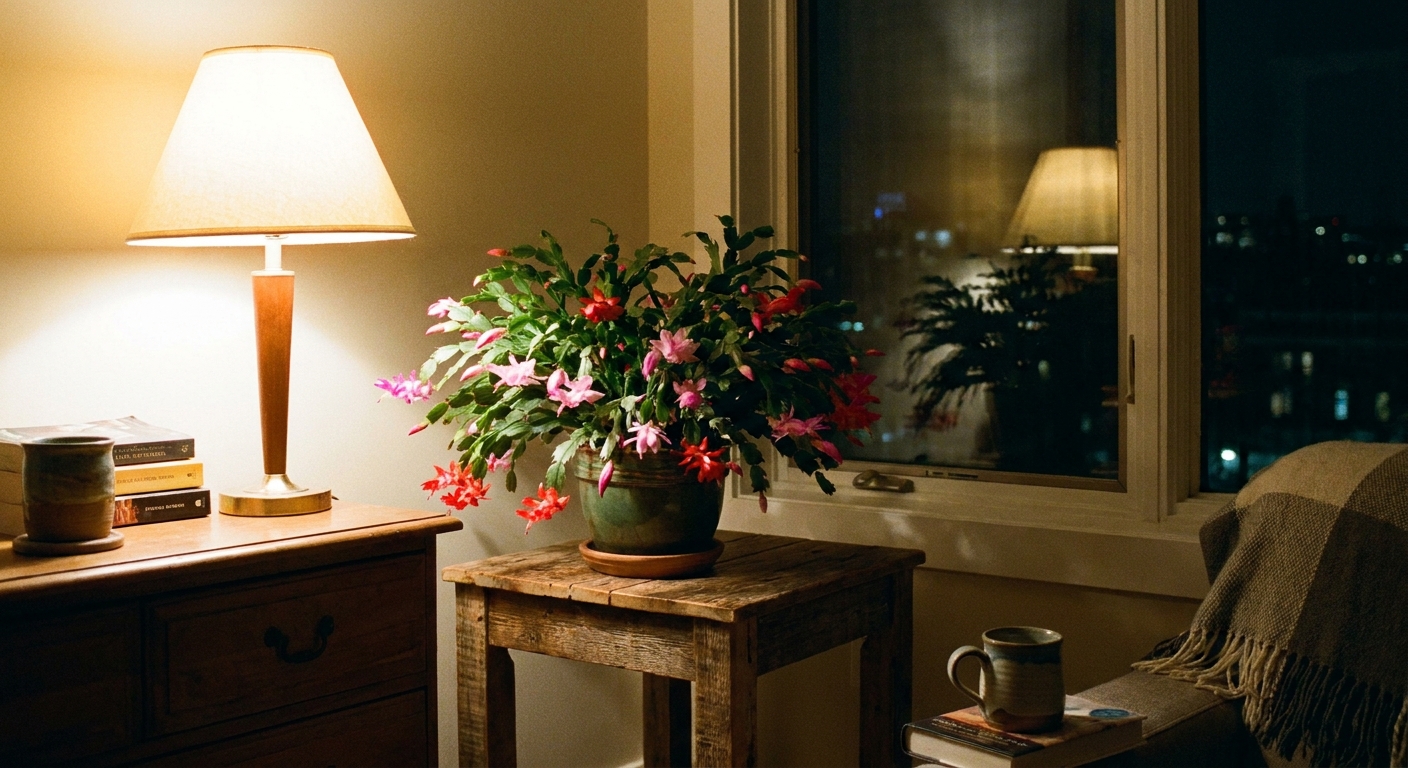
The 4 to 8 week routine
If your plant is already on a windowsill, you can do this without buying anything. What matters most is consistency. Pick a start date and commit to at least four weeks. Six is a common sweet spot. Some plants take closer to eight, especially in warmer homes.
Targets to aim for
- Darkness: about 12 to 14 plus hours of uninterrupted dark every night (some cultivars do best with the longer end)
- Night temperature: about 55 to 65°F (13 to 18°C) if you can manage it
- Cold limit: avoid cold snaps and drafts that dip much below about 50°F (10°C)
- Daytime light: bright, indirect light during the day; gentle morning sun can be fine, but avoid harsh hot midday sun that can scorch segments
- Water: water thoroughly, then let the mix dry a bit before watering again
Week 0: Set it up
- Choose the spot: A room that naturally cools down at night is ideal, like a spare bedroom, office, or enclosed porch that does not freeze.
- Block nighttime light leaks: If the windowsill gets streetlight, move it a couple feet back from the window at night or use a simple cover method (more below).
- Keep it out of hot air: Move it away from heating vents, radiators, fireplaces, and appliances that radiate warmth.
- Pause fertilizer: Skip feeding during the bud-setting period. You want signals for blooming, not new growth.
- Do a quick drainage check: Holiday cacti like an airy mix. If your pot stays wet forever, buds and roots suffer. Make sure the pot has a drain hole and the mix is not dense, compacted peat.
Weeks 1 to 8: Night schedule
Every evening: Give your cactus 12 to 14 plus hours of darkness. The simplest way is to place it in a room that stays dark at night. If that is not possible, cover it with an upside-down box or a breathable dark cloth that blocks light. Make sure the cover does not press on the stems and that air can still circulate.
Every morning: Uncover it and return it to bright, indirect light for the day.
All routine long: Keep nights cool and watering slightly reduced. You are aiming for “evenly moist, then lightly dry,” not soggy and not bone dry.
Watering during the routine
When you water, water fully until excess drains, then empty the saucer. Instead of focusing only on “1 to 2 inches,” use a combo of cues: the top layer feels dry, the pot feels lighter, and the plant still looks firm. In a small pot, 1 to 2 inches can be most of the container, so go by feel and weight. In many homes this ends up being every 7 to 14 days, depending on temperature and light.
What you should see
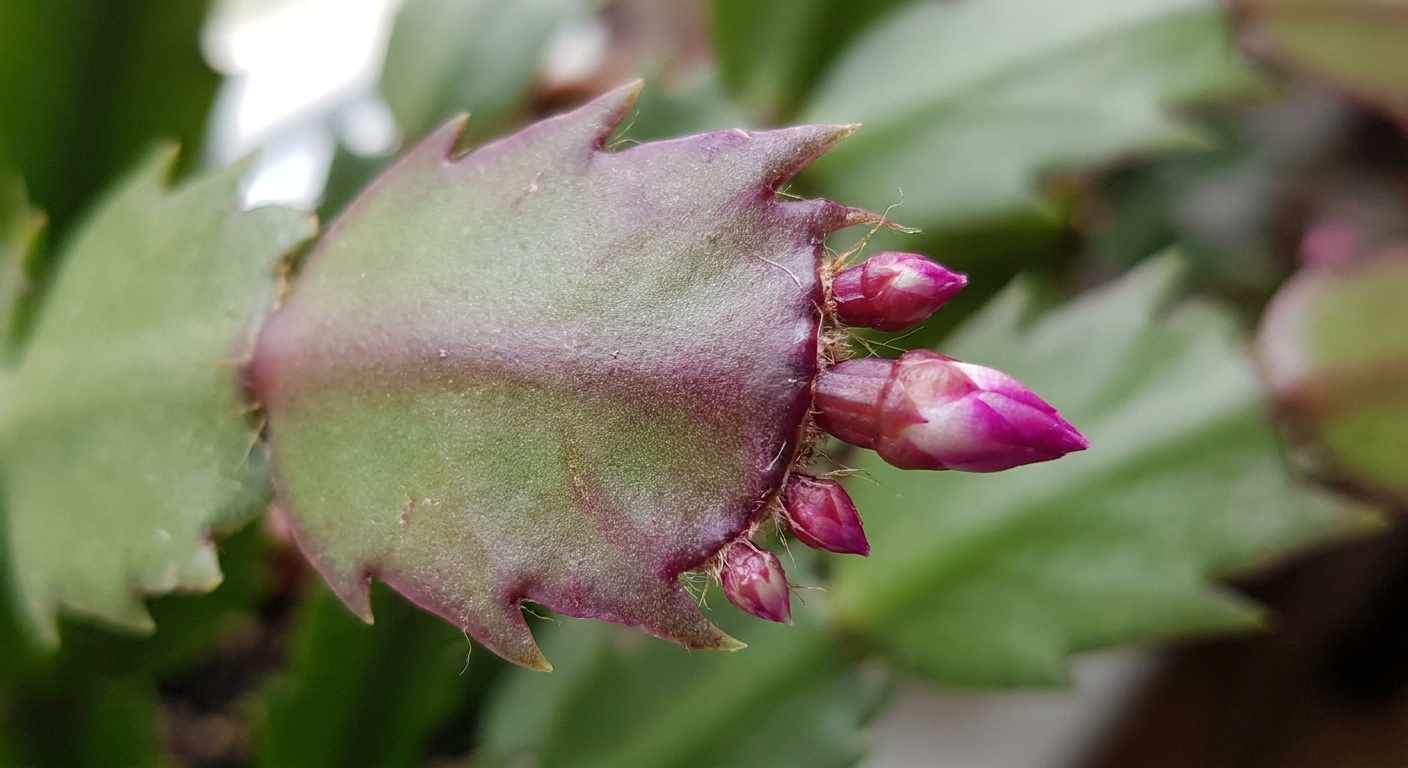
Many plants begin to show tiny buds at the tips of the segments after a few weeks of consistent nights. The buds look like small, pointed nubs that become more obvious over time.
Once buds appear
This is the part where many well-meaning plant parents accidentally cause bud drop. Once you see buds, keep life boring and steady.
Do this
- Keep nights reasonably dark: You can relax the strict cover routine once buds are clearly forming, but avoid bright evening light and keep nights predictable.
- Keep temperatures steady: Still on the cool side if possible, but stable matters most.
- Water more consistently: Do not let it swing from dry to drenched. Buds are sensitive to sudden changes.
- Rotate only slightly: Big turns can change which side is lit and stress developing buds.
Avoid this
- Moving it to a new room with different temps and airflow
- Putting it near a heater “so it is cozy”
- Repotting while buds are forming
- Heavy fertilizing to “help it bloom”
If buds form but drop
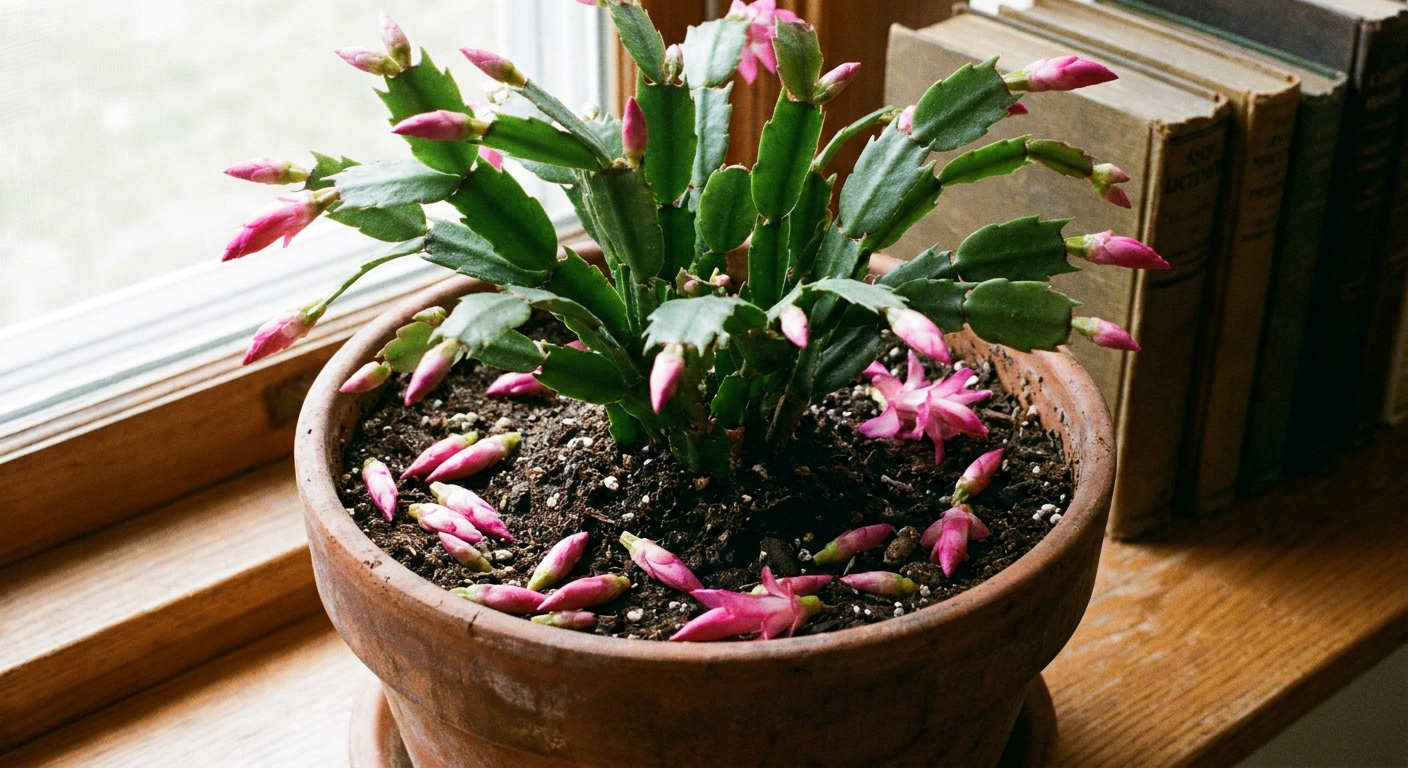
Buds dropping is a signal that the plant experienced a change it did not like. Here are the most common culprits and the quickest fixes.
Temperature swings
What it looks like: Buds yellow, shrivel, or fall soon after you notice them.
Fix: Keep it away from exterior doors, drafty windows, heaters, and fireplaces. Avoid both hot blasts and cold drafts. Aim for steady conditions, especially at night.
Soil swings: too dry, then too wet
What it looks like: Buds stall, then drop, often after you water heavily following a dry spell.
Fix: Water when the pot is getting light and the top layer feels dry, then water thoroughly. Consistency beats intensity.
Low humidity plus warm air
What it looks like: Buds look papery or dry, segments may look slightly wrinkled even if the soil is damp.
Fix: Move it away from forced-air heat and consider a pebble tray with water under the pot (pot sitting above the waterline) or group plants nearby. You do not need a rainforest. You just want to blunt the dryness.
Not enough light during the day
What it looks like: Buds are small and slow, growth looks dull, the plant seems “stuck.”
Fix: Increase daytime brightness without adding nighttime light. A brighter window in the daytime can help, as long as nights stay dark. Morning sun can be a gentle upgrade. Hot midday sun through glass is where scorching happens.
Frequent moving or rotating
What it looks like: Buds drop after you relocate the plant, decorate around it, or keep spinning it for even growth.
Fix: Once buds are present, treat the plant like it is in training for a performance. Same stage, same spotlight, same temperature.
Quick windowsill checks
If you want a fast reality check before you commit to a full routine, run through these:
- At night, can you comfortably read near the plant without turning on a light? If yes, it may be too bright for bud initiation. This is a rough rule of thumb, not a lab test.
- Is there a heat vent within a few feet? Warm airflow at night can interfere with buds or cause bud drop.
- Does the pot stay wet more than 10 days? Your mix may be too dense or the pot may not be draining well. During the routine, let it dry a bit more between waterings.
- Does it get bright daylight? Dark nights are essential, but the plant still needs daytime energy.
FAQ
How long does it take to set buds?
With consistent long nights and cooler temps, many plants show buds within 3 to 6 weeks. Some take longer, especially if your home runs warm or your plant is a different holiday cactus cultivar.
Can I leave it in a dark closet every night?
You can, as long as the closet is cool and you remember to bring it back to bright light each morning. The biggest risk is forgetting it for days, which can weaken the plant.
Should I stop watering completely to force blooms?
No. Holiday cacti are not desert cacti. They do not want bone-dry soil for long stretches. Reduce watering slightly, but keep the plant hydrated enough that segments stay firm.
Do I need to prune or repot to make it bloom?
Not for bud initiation. Pruning and repotting can be helpful at other times, but they are disruptive during the blooming cycle. Save major changes for after flowering.
My cactus is huge and healthy. Why no flowers?
A big, healthy plant can still stay green if nights are interrupted by light or if evenings are too warm. This is one of those cases where the plant can be thriving and still not get the blooming signal.
A gentle reminder
If your Christmas cactus is leafy but flowerless, you have not failed it. You have simply been giving it “summer.” Once you give it a steady stretch of real night and cooler evenings, the plant usually does the rest. And if it drops a few buds along the way, that is information, not a verdict. Small adjustments, steady conditions, and a little patience can turn that green windowsill plant into a holiday showstopper.