A beginner-friendly guide to NPK ratios (including label details), organic vs synthetic fertilizer, and a safe, simple feeding schedule for indoor plants.
The first time I tried to rebloom an amaryllis, I treated it like a regular houseplant and kept watering because it looked so alive. It rewarded me with… gorgeous leaves. Only leaves. If you are staring at a tall green fountain with zero flowers, you are not failing. These bulbs bloom less on luck and more on timing: you have to grow the bulb up in summer, then give it a real rest, then wake it up on purpose.
One quick accuracy note, because plant names are messy: most “amaryllis” sold for winter indoor bloom are actually Hippeastrum, not true Amaryllis belladonna. The care cycle below is aimed at those common holiday gift bulbs, and it works.
This is the indoor-friendly rhythm that works year after year: leaf growth and feeding (spring through summer), a dry, cool dormancy (usually 8 to 10 weeks), then restart water and warmth to trigger blooms.
What makes an amaryllis bloom
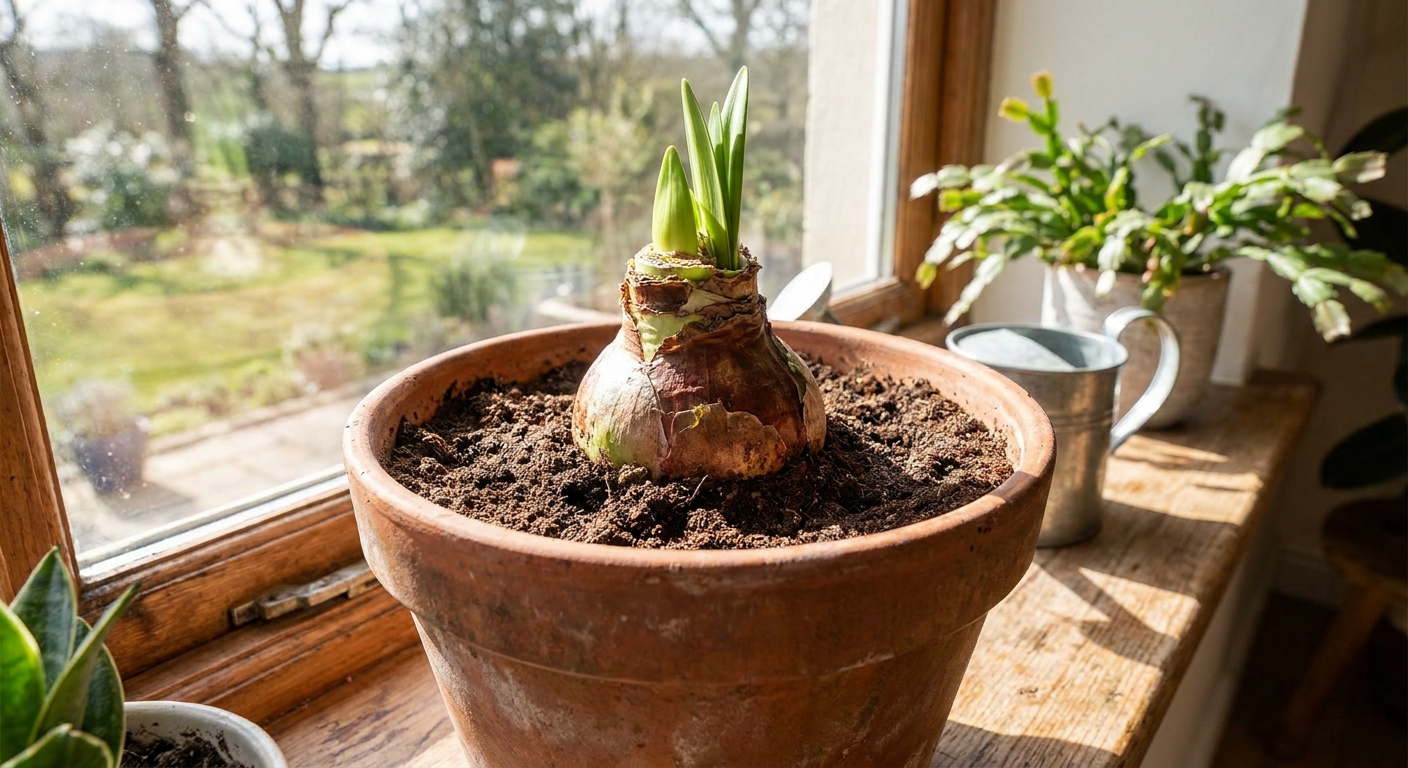
An amaryllis bulb flowers using energy stored in the bulb. After it blooms, it needs time to rebuild those reserves through photosynthesis, which happens in the leaves. If the bulb never gets big and strong enough, it will prioritize leaves over flowers.
So your job is to support two phases:
- Build the bulb: lots of light, regular water, and fertilizer while leaves are growing.
- Reset the bulb: a true dry rest in cooler conditions, long enough to encourage bud formation. (Some bulbs will rebloom without a formal rest, but indoors it is far less predictable.)
After flowering: stalk and leaves
Step 1: Cut the stalk, skip seed
Once the blooms fade, cut the flower stalk down to about 1 to 2 inches above the bulb. Use clean snips.
If you see the swelling seed pod behind the flowers, remove the spent blooms and pod so the plant does not waste energy making seed.
Leave the leaves completely intact. They are the bulb’s solar panels.
Step 2: Give it strong light indoors
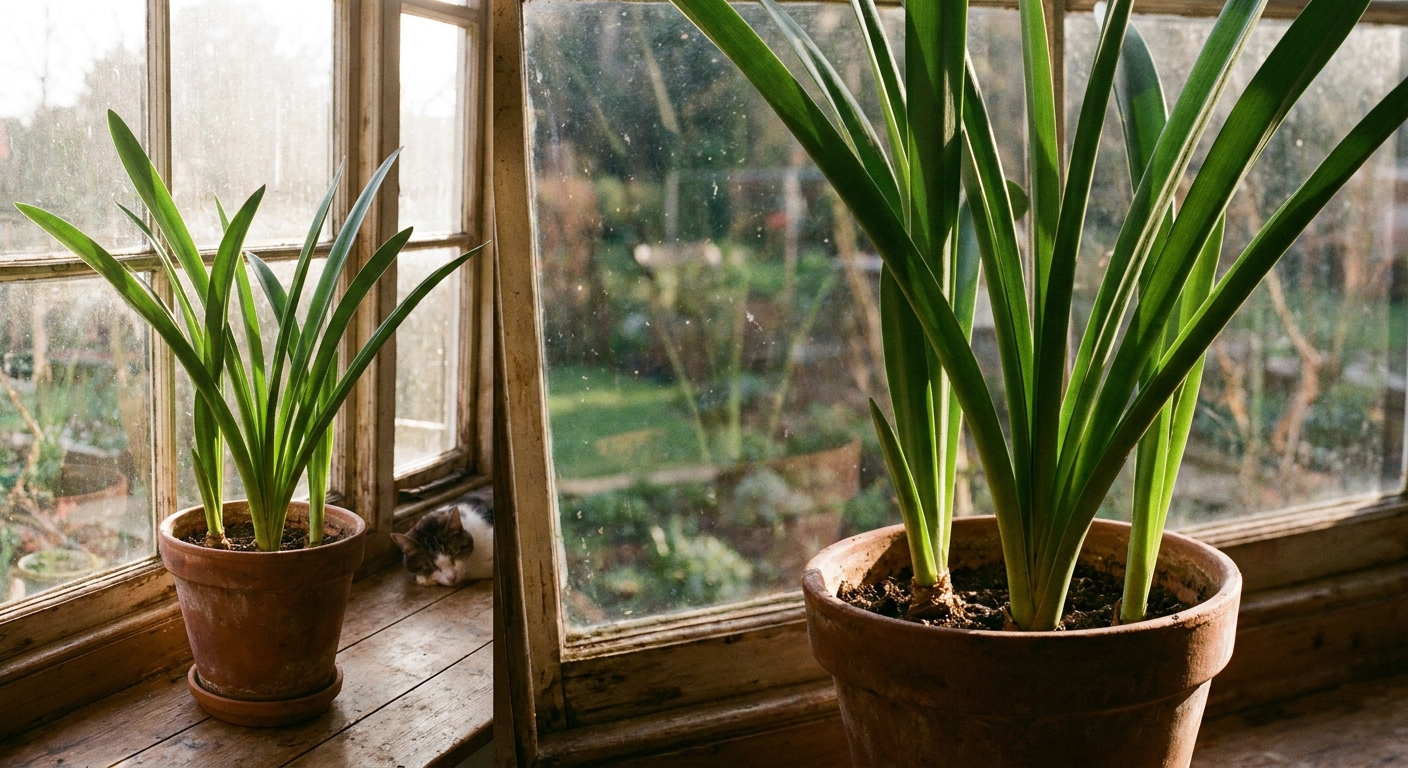
Place the pot in the brightest spot you have. A south or west window is ideal. Rotate the pot every week so the leaves do not lean hard in one direction.
If you have low winter light, do not stress. The real “bulb-building season” is spring and summer, and we can make up a lot of ground then.
Spring and summer: grow and feed
If you want winter flowers, summer care is where you earn them. Think of this period as training season for the bulb.
Watering during growth
- Water thoroughly when the top 1 to 2 inches of soil feel dry.
- Water the soil, not the neck of the bulb or the crown where leaves emerge.
- Empty the saucer. Bulbs hate sitting in water.
- Avoid tiny sips every day. Deep watering encourages stronger roots.
Fertilizing schedule that helps
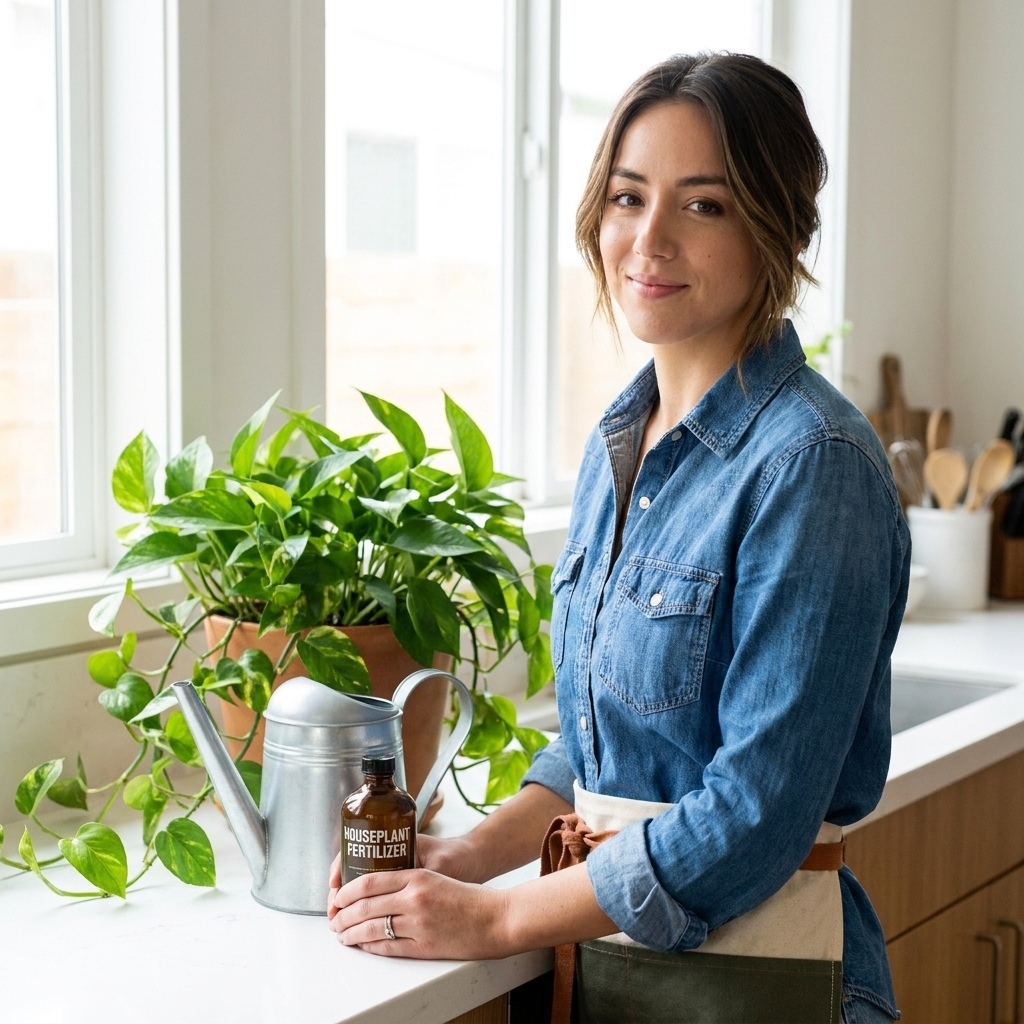
Feed while it has green leaves. A simple option is a balanced houseplant fertilizer (something like 10-10-10 or 20-20-20) at half strength.
- Frequency: every 2 to 4 weeks during active growth
- Pause: if the plant is stressed, newly repotted, or the soil is staying wet for many days
If you prefer slow-release fertilizer, apply once in spring, then rely on consistent watering and light.
Outdoor time in summer?
Yes, and many bulbs respond beautifully to it. If nights are reliably above 50°F, you can move your amaryllis outdoors to a bright, sheltered location.
- Start with shade or morning sun for a week to prevent leaf scorch.
- Work up to brighter light, ideally morning sun with afternoon protection.
- Bring it back inside before cold nights return.
If you live in an apartment without outdoor space, your brightest window plus steady feeding can still get you to bloom.
Temps and placement
During active growth, typical indoor temperatures are fine. Keep it away from heat vents and cold drafts, because wild swings can stress the bulb and dry the soil unevenly.
Start dormancy (8 to 10 weeks)
Dormancy is the part most indoor growers accidentally skip. Without a real rest, many bulbs keep making leaves and bloom poorly or not at all.
When to begin
A classic indoor timeline is to start dormancy in late summer to early fall so you can restart growth and aim for blooms in late fall through winter.
If your goal is holiday blooms, count backwards: many bulbs flower roughly 6 to 10 weeks after you “wake them up,” sometimes longer depending on cultivar and conditions.
Step-by-step dormancy routine
- Stop fertilizing about a month before you plan to rest it.
- Reduce watering gradually over 1 to 2 weeks.
- Once the leaves begin to yellow, stop watering completely.
- Let the foliage die back naturally, then trim it off near the top of the bulb.
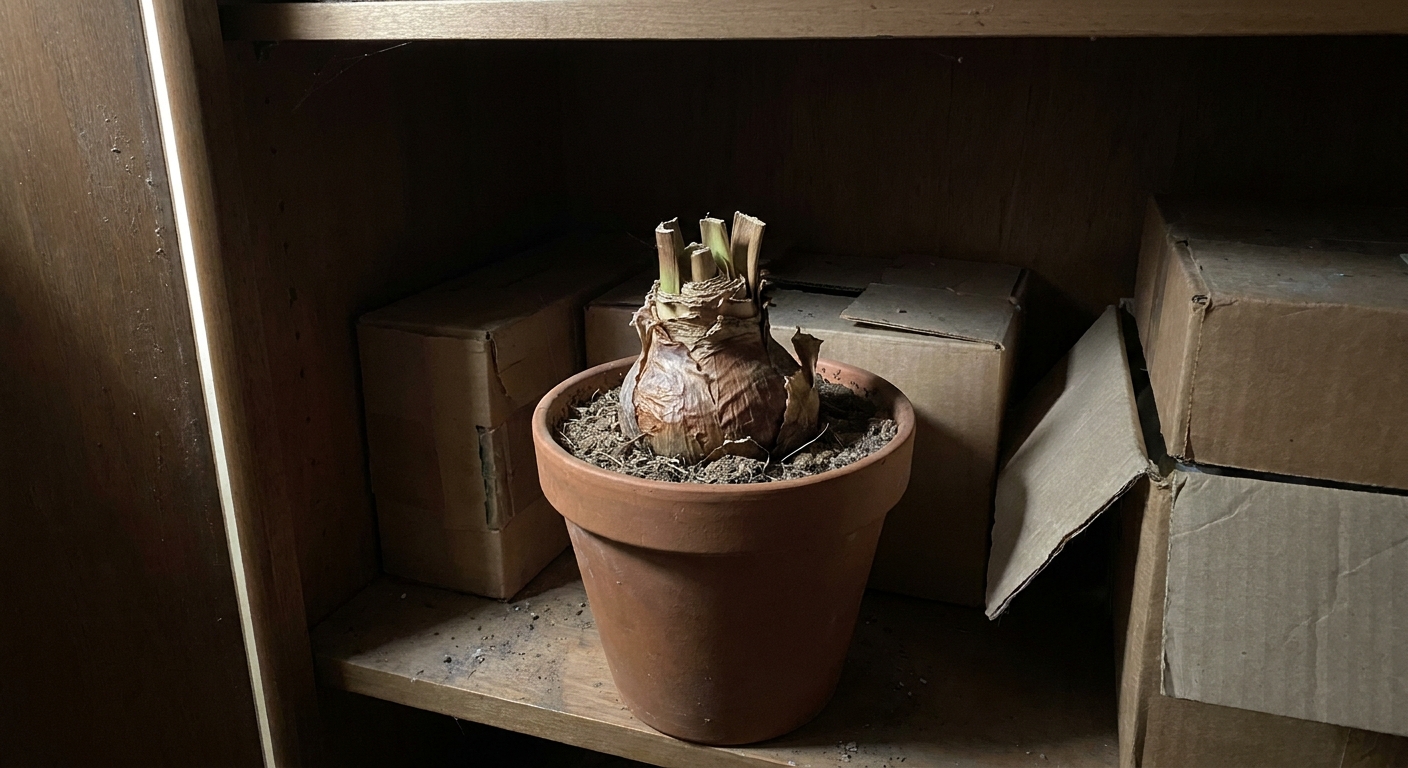
- Move the pot to a cool, dark, dry place for 8 to 10 weeks.
Temperature for dormancy
Aim for roughly 50 to 60°F, and try not to dip below 50°F. A basement, cool closet, or an unheated room often works. You are not trying to freeze it. You are trying to keep it cool and dry.
Important: Do not store the bulb in a spot that swings warm and humid, which can encourage rot.
Restart growth for winter blooms
After 8 to 10 weeks of rest, it is time to wake your bulb up. This is the moment that turns a saved bulb into a blooming houseplant again.
Step 1: Light and warmth
Move the pot to a bright, warm spot. If you see a green point or thick bud at the top of the bulb, that is a great sign.
Step 2: Refresh the soil surface
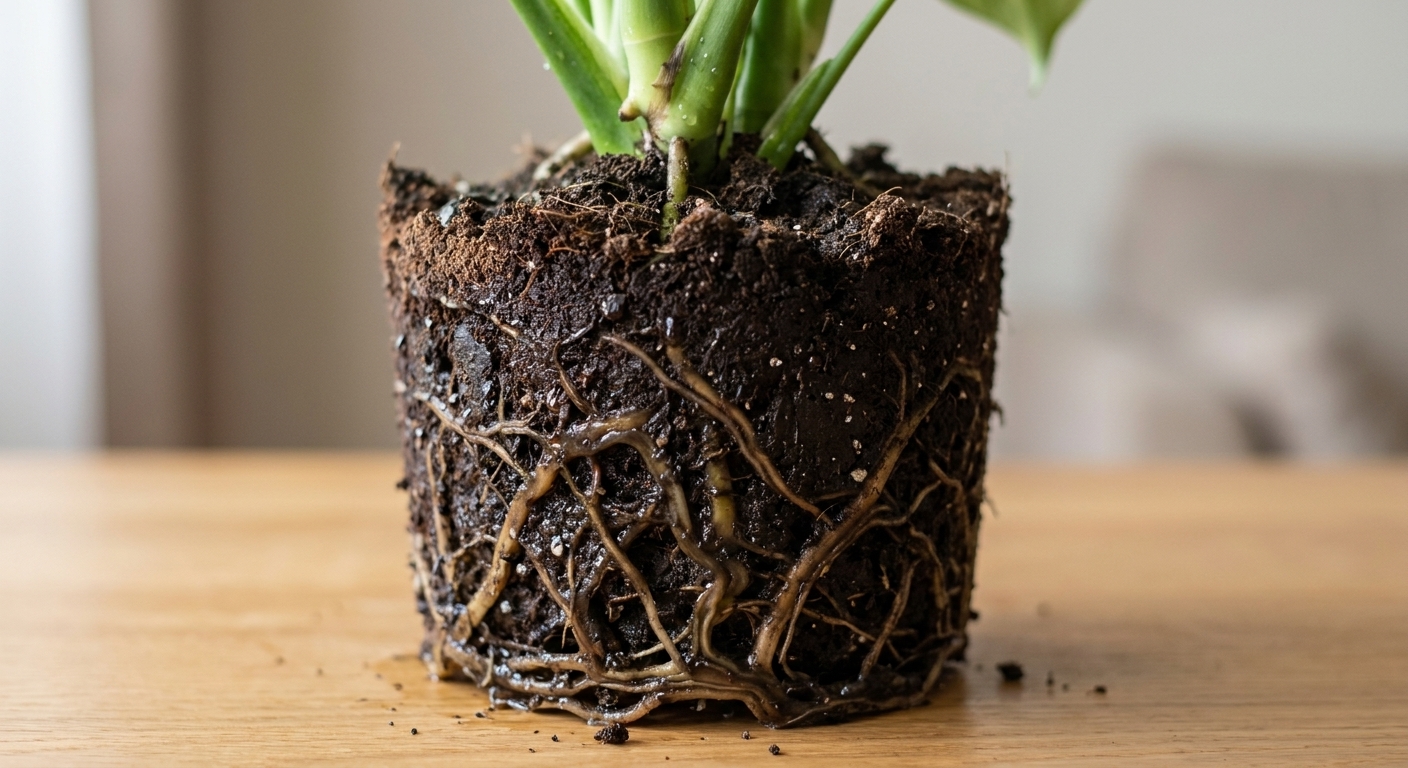
You do not always need to fully repot. Often, removing the top 1 to 2 inches of old soil and replacing with fresh potting mix is enough.
If the soil is compacted, drains slowly, or stays wet for many days, repot fully (more on pot sizing below).
Step 3: Water lightly, then increase
- Give a small drink at first, just enough to slightly moisten the root zone.
- Wait until you see active growth, then water more deeply when the top inch dries.
- Do not soak a dormant bulb in cold, wet soil. That is a fast path to rot.
Step 4: Feed after growth starts
Once you have a few inches of growth, start fertilizing again every 2 to 4 weeks at half strength.
If it makes only leaves
This is the most common complaint I hear, and it almost always comes down to one of these causes. The good news is that you can usually fix it within one growth cycle.
1) The bulb is too small (or got smaller)
Blooming takes a surprisingly large bulb. If your bulb was small to begin with, or it lost mass from weak light, underfeeding, or root rot, it may need another summer to size up.
What to do: prioritize brighter light, consistent watering, and regular feeding through spring and summer. Do not force dormancy too early if the bulb is still thin and struggling.
2) Not enough light during the build phase
Indoors, light is often the limiting factor. Leaves can look “fine” in medium light, but the bulb may not store enough energy to bloom.
What to do: move to your brightest window, rotate weekly, or add a grow light for 10 to 12 hours a day.
3) Rest was skipped or too short
If it never had a true dry rest in cool conditions, the bulb may stay in leaf mode.
What to do: commit to a proper dormancy period next cycle. Mark the calendar. Stop water completely and keep it cool and dry.
4) Pot size or planting depth is off
Amaryllis likes to be snug. In an oversized pot, soil stays wet longer, which increases rot risk and can delay blooming. Also, if the bulb is buried too deep, it can struggle and rot more easily.
What to do: repot into a tighter container and position the bulb correctly (details below).
Bulb size and pot fit
Use a snug pot
A good rule: pick a pot that leaves about 1 to 2 inches of space between the bulb and the pot wall.
- Too tight is fine, snug is ideal.
- Too big holds extra wet soil and increases rot risk.
Planting depth
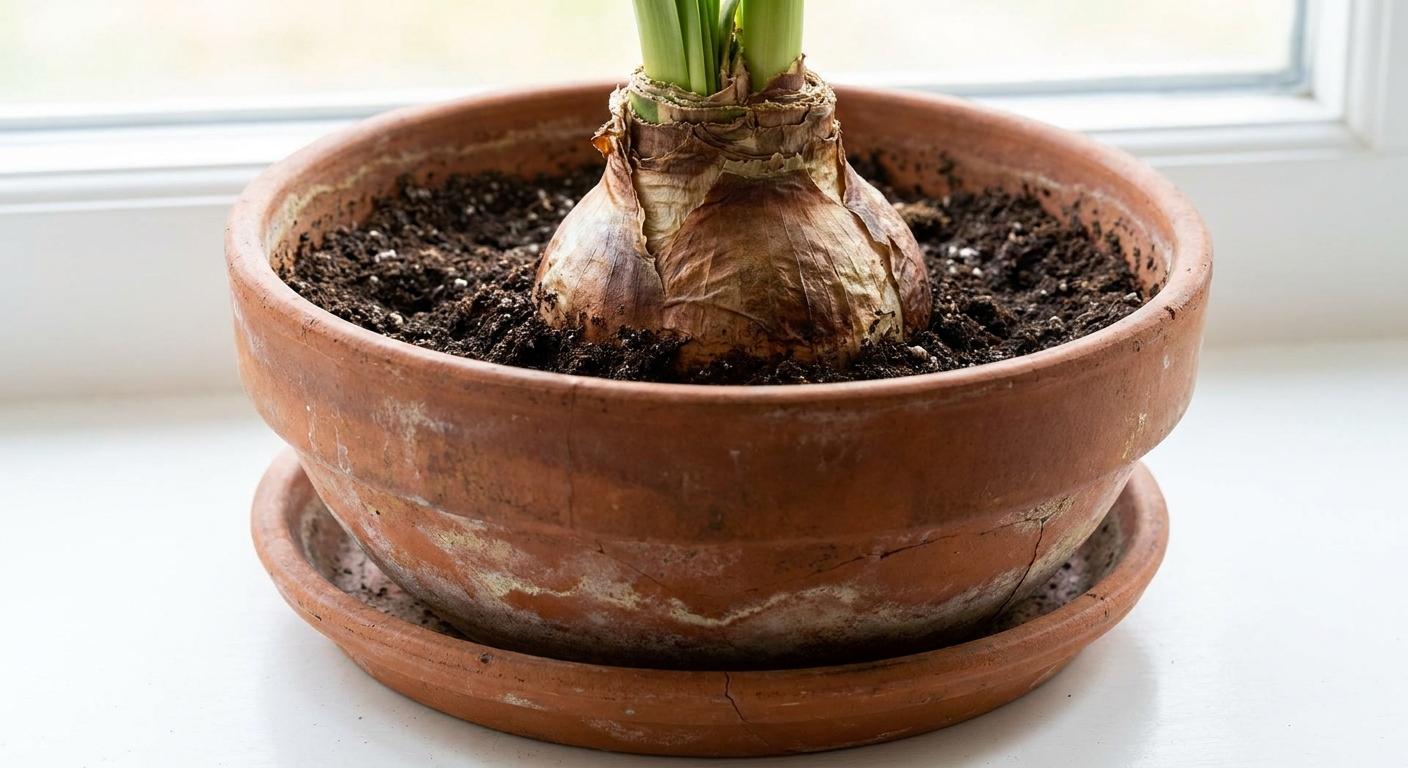
When potting up, keep roughly the top third to half of the bulb above the soil line. This helps prevent rot and mirrors how these bulbs naturally grow.
Drainage matters
Use a pot with a drainage hole and a free-draining potting mix. If your mix is very peat-heavy and stays wet, lighten it with perlite or pumice.
Troubleshooting
Bulb feels soft or smells bad
That is often rot from staying too wet.
- Unpot the bulb and inspect.
- Trim mushy roots and any soft, foul-smelling tissue with sterile snips.
- Let it air-dry for several hours.
- Repot into fresh, fast-draining mix and water sparingly until you see new growth.
If most of the bulb is soft, recovery may not be possible, and that is not your fault. Bulbs can decline quickly once rot sets in.
Flower stalk with no leaves
Yes, that can be normal. Sometimes you will see a thick flower bud emerge first. Support it with bright light and even moisture. After blooming, leaves typically follow.
The stalk is leaning
That is usually a light issue. Move it brighter and rotate the pot. You can stake the stalk if needed, but stronger light helps prevent flopping.
Pests to watch for
Indoors, keep an eye out for mealybugs, scale, and spider mites (especially on the undersides of leaves). If you spot them early, wiping leaves and stems with a cotton swab dipped in rubbing alcohol, then rinsing and isolating the plant, usually gets things back under control.
A simple yearly calendar
- Winter: enjoy blooms, then cut the spent flower stalk and remove any forming seed pod.
- Late winter to spring: keep leaves growing in bright light, water when the top soil dries.
- Spring through summer: feed every 2 to 4 weeks, give as much light as possible, consider an outdoor summer vacation.
- Late summer or early fall: taper water, stop fertilizer, begin dormancy.
- Fall: 8 to 10 weeks cool and dry (avoid below 50°F).
- Late fall to winter: bring back to light, start watering, watch for a bud, then blooms.
FAQ
Do I have to remove the bulb for dormancy?
No. You can keep it in the pot. The key is dry soil and cool temps. Some people prefer storing bare bulbs, but indoors I find potted dormancy simpler and less damaging to roots.
Can it rebloom without dormancy?
Sometimes, yes. A few bulbs will eventually bloom again with continuous growth, but it is inconsistent indoors. A deliberate cool, dry rest is still the most reliable method for repeat flowering.
It has baby bulbs. Will that stop flowering?
It can slow flowering because the mother bulb shares energy with offsets. If flowering is your priority, let the bulb build strength for a season or two, then separate bulblets when repotting if the clump is crowded.
How many times can the same bulb rebloom?
With good light, drainage, and a consistent yearly cycle, many bulbs rebloom for years indoors.
Is amaryllis safe around pets?
No. Hippeastrum bulbs (and other parts) are toxic if ingested. Keep them away from curious pets and small kids.