A clear, practical guide to bright indirect light: how to spot it, measure it, and choose plants that will truly thrive indoors.
If you have ever stood in your living room holding a trailing vine and thought, “Okay, are you a philodendron or a pothos,” you are not alone. These two plants get mixed up constantly, even by experienced plant parents, because they share the same easygoing vibe and a similar drapey silhouette.
The good news is that once you know a few tiny details, you can ID them in under a minute. And while they like similar care, a handful of differences (especially light tolerance, watering rhythm, and growth habits) can be the difference between “thriving” and “mysteriously sad.”
Quick ID: Philodendron or pothos?
If you only remember one thing, remember this: pothos leaves tend to feel thicker and a bit waxy, while heartleaf philodendron leaves tend to feel thinner and softer. But let’s make it foolproof.
The 30-second checklist
- New leaf sheath (highest-signal clue): Heartleaf philodendron often unfurls new leaves from a thin papery sheath (a cataphyll). Pothos does not do this in the same way.
- Aerial roots at the nodes: Pothos tends to show more obvious, knobbier aerial roots along the vine. Heartleaf philodendron can make aerial roots too, but they are often slimmer and less dramatic indoors.
- Leaf texture: Pothos is thicker and more “leathery.” Heartleaf philodendron is thinner, softer, and more flexible.
- Leaf shape: Heartleaf philodendron usually has a deeper heart notch at the base. Pothos often reads more like a pointy teardrop with a subtler notch.
- Petioles (leaf stalks): Pothos petioles often look faintly grooved or winged, but this can vary by cultivar and growing conditions. Philodendron petioles tend to look rounder, and the new-leaf sheath cue is more reliable.
- Stem thickness with age: Pothos stems can thicken and get a little corky over time. Philodendron vines often stay more slender and flexible.
Leaf differences you can see
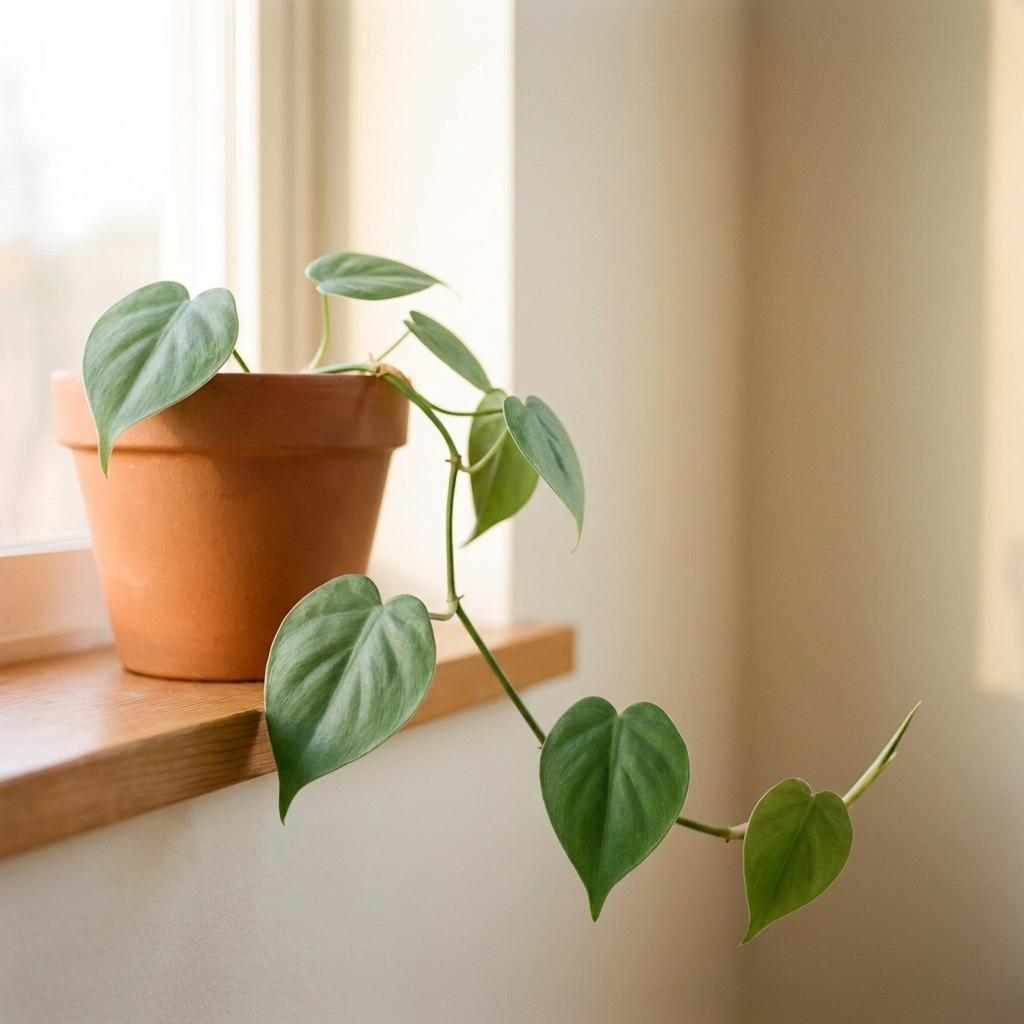
Heartleaf philodendron (Philodendron hederaceum)
Typical look: Solid green, velvety-matte leaves with a classic heart shape. Some cultivars (like ‘Brasil’) have a lime stripe, but the leaf still tends to feel thinner and softer than pothos.
- Leaves: Usually smaller and more uniform on indoor vines, especially in medium light.
- New growth: Often unfurls from a thin sheath. Fresh leaves can look a little lighter at first.
- Overall feel: A bit more graceful and “viney,” especially when allowed to trail.
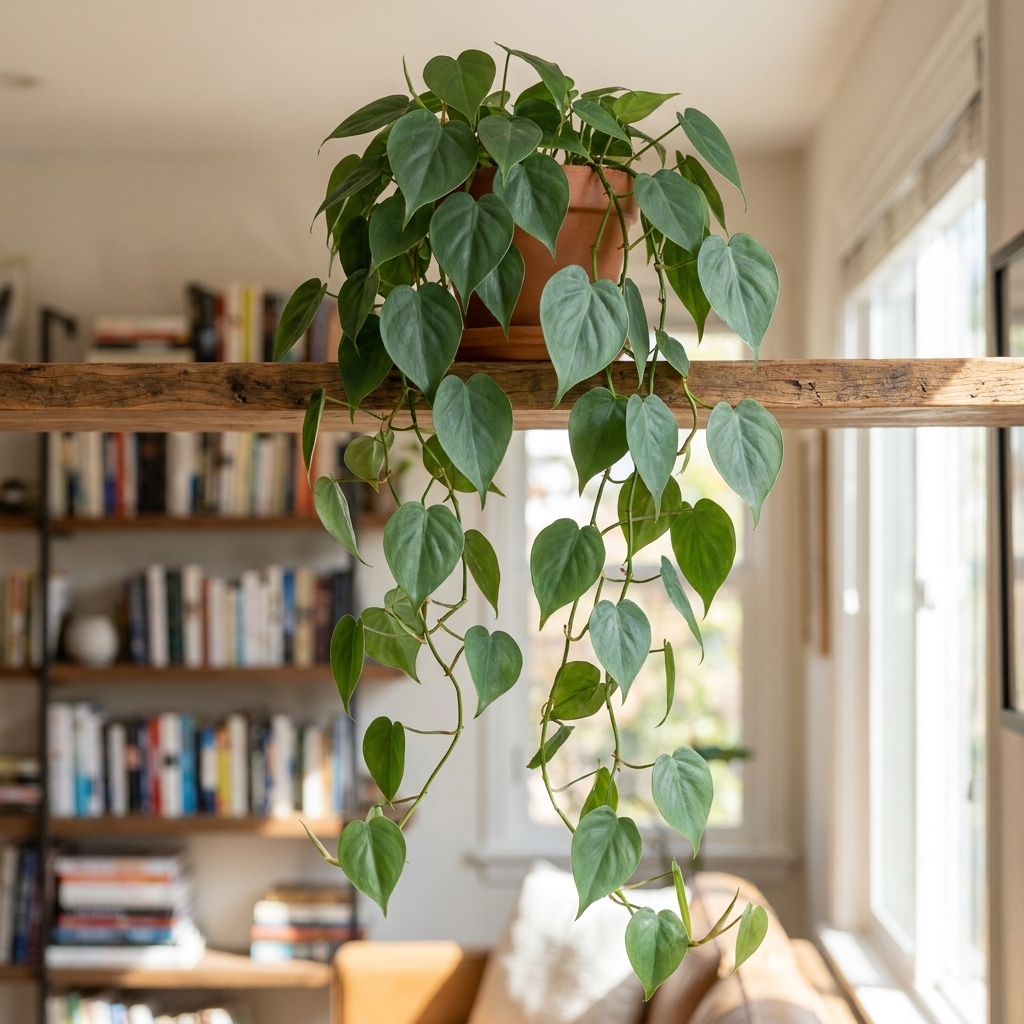
Pothos (Epipremnum aureum)
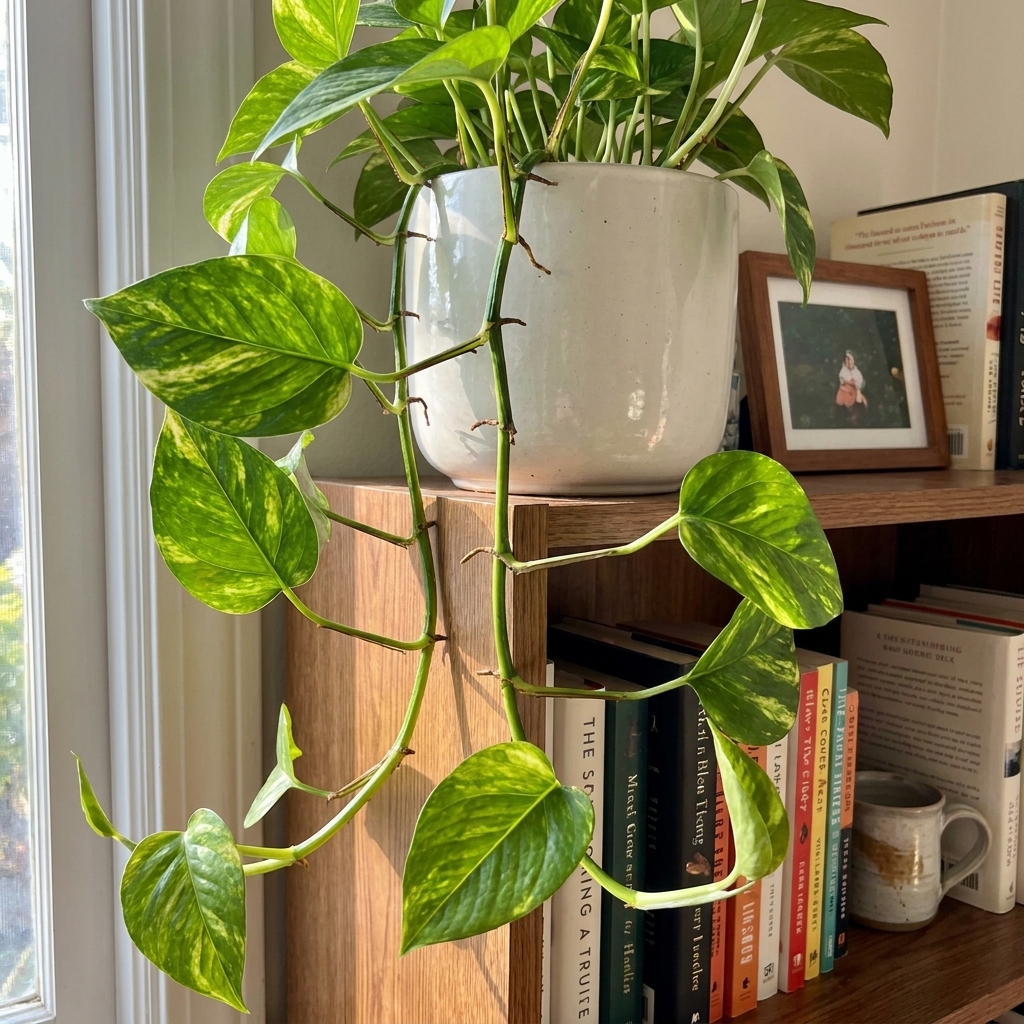
Typical look: Thicker, glossier leaves. Many common pothos are variegated (golden, marble queen, neon, etc.), but even green pothos usually has that sturdy, waxy feel.
- Leaves: Often larger and thicker on the same length of vine, especially in brighter light.
- Nodes: Prominent aerial roots and a slightly chunkier, more substantial vine.
- Overall feel: Tough, adaptable, and often fast-growing in the same spot.
The biggest care differences
Here is the gentle truth: you can keep both alive with basically the same beginner care. But if you want your plant to look full, grow steadily, and avoid common issues like leggy vines or root rot, these differences are worth paying attention to.
Light
Pothos often tolerates lower light a bit better. In typical homes, it tends to stay presentable in “not ideal” light longer than a heartleaf philodendron.
Heartleaf philodendron tends to prefer medium, indirect light for best shape. It can handle low-to-medium light, but it often gets leggy sooner and leaf size may shrink.
One important reality check: in genuinely low light, both will slow down, stretch, and thin out. “Surviving” and “looking good” are two different jobs.
- Best spot for both: Bright, indirect light near a window with a sheer curtain, or a few feet back from a bright window.
- If you have variegated pothos: Give it more light than a solid green philodendron, or the variegation can fade.
Watering
This is where my “loved it to death” college self would have benefitted from a simple rule.
Starting point for pothos: Let a larger portion of the pot dry between waterings. In many homes, that means the top few inches, and sometimes closer to the top half in bigger pots.
Starting point for heartleaf philodendron: Water when the top 1 to 2 inches are dry, keeping moisture a little more even without letting it stay soggy.
Both rules are meant to be a starting place. Pot size, soil mix, season, temperature, and light change everything. In very bright light, pothos may want more frequent watering. In low light, philodendron may need to dry more.
- Pothos warning sign: Yellowing lower leaves plus consistently wet soil usually points to overwatering.
- Philodendron warning sign: Limp, curling leaves with dry soil can be underwatering, but limp leaves with wet soil can be early root issues. Always check the soil before you “fix” it.
Soil and pots
Both need airy soil and drainage holes. If your pot does not have a drainage hole, treat it like a decorative cover pot and keep the plant in a nursery pot inside.
- Great pothos mix: High-quality potting mix + extra perlite or pumice for airflow.
- Great philodendron mix: Potting mix + perlite + a little orchid bark for chunkiness (helps prevent root rot).
Humidity
Heartleaf philodendrons usually appreciate humidity a little more than pothos, but both are fine in average household humidity. Think of humidity as a “nice bonus” for leaf size and cosmetic perfection, not a fix for low light or soggy soil.
- If leaf edges crisp: It is often inconsistent watering or too much direct sun first, not humidity. Check those before buying a humidifier.
Feeding
Both respond well to gentle feeding during active growth (spring through early fall).
- Simple routine: A balanced liquid fertilizer at half strength every 4 to 6 weeks.
- Pause in winter: If growth slows and light is low, ease off. Over-fertilizing in low light can stress roots.
Pruning and fullness
If you want a bushier plant, pruning matters more than almost anything else.
- Pothos: Prune above a node to encourage branching. It usually rebounds quickly.
- Heartleaf philodendron: Also prunes well, but can look leggy in lower light. Pinching growing tips can help it fill out.
Propagation
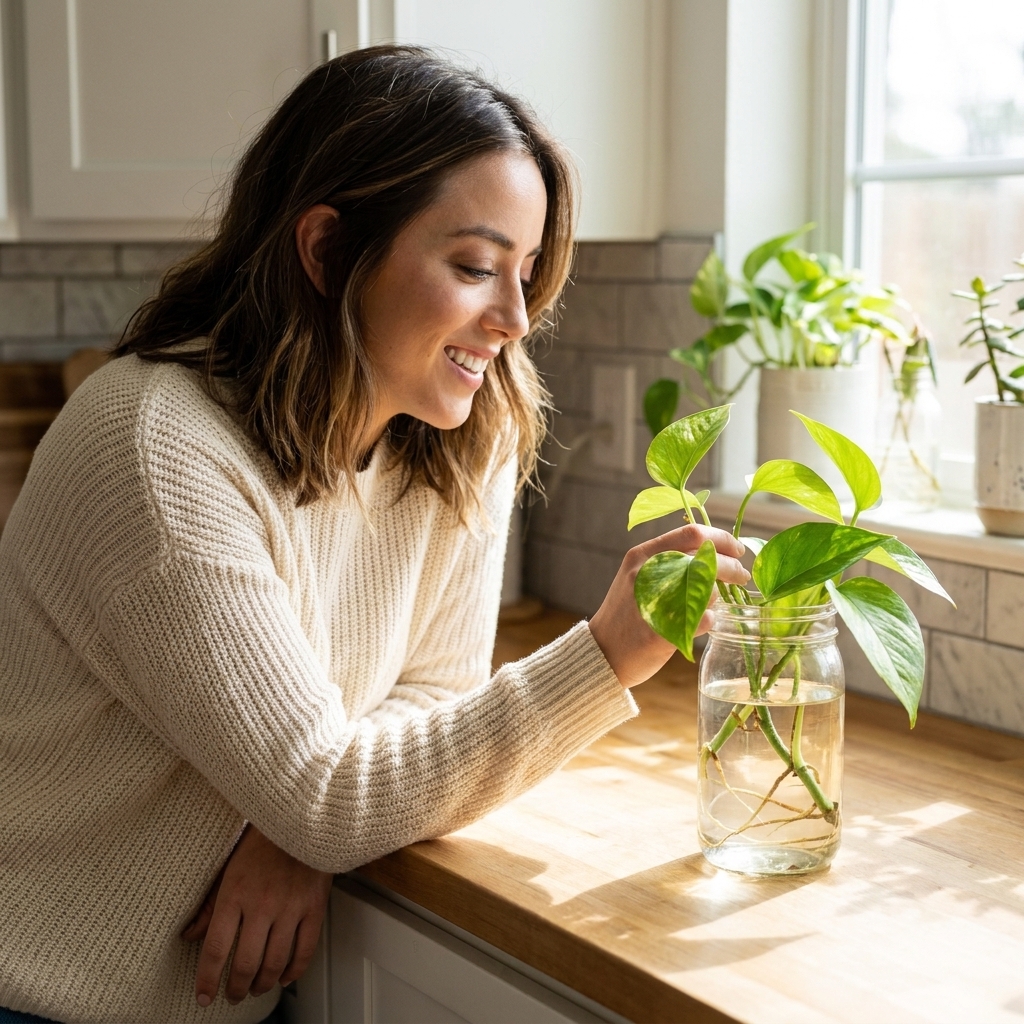
Both pothos and heartleaf philodendron propagate from node cuttings. The “node” is the little bump where roots form. No node, no roots. (A leaf on a stem segment without a node will not become a new plant.)
Water propagation
Cut a section with at least 1 node and ideally 1 to 3 leaves.
Remove any leaves that would sit underwater.
Place the node in clean water in bright, indirect light.
Change water weekly, or top off as needed.
Pot up when roots are a few inches long and branching.
Pothos often roots faster and with less fuss. Heartleaf philodendron also roots well, just sometimes a little slower.
Troubleshooting
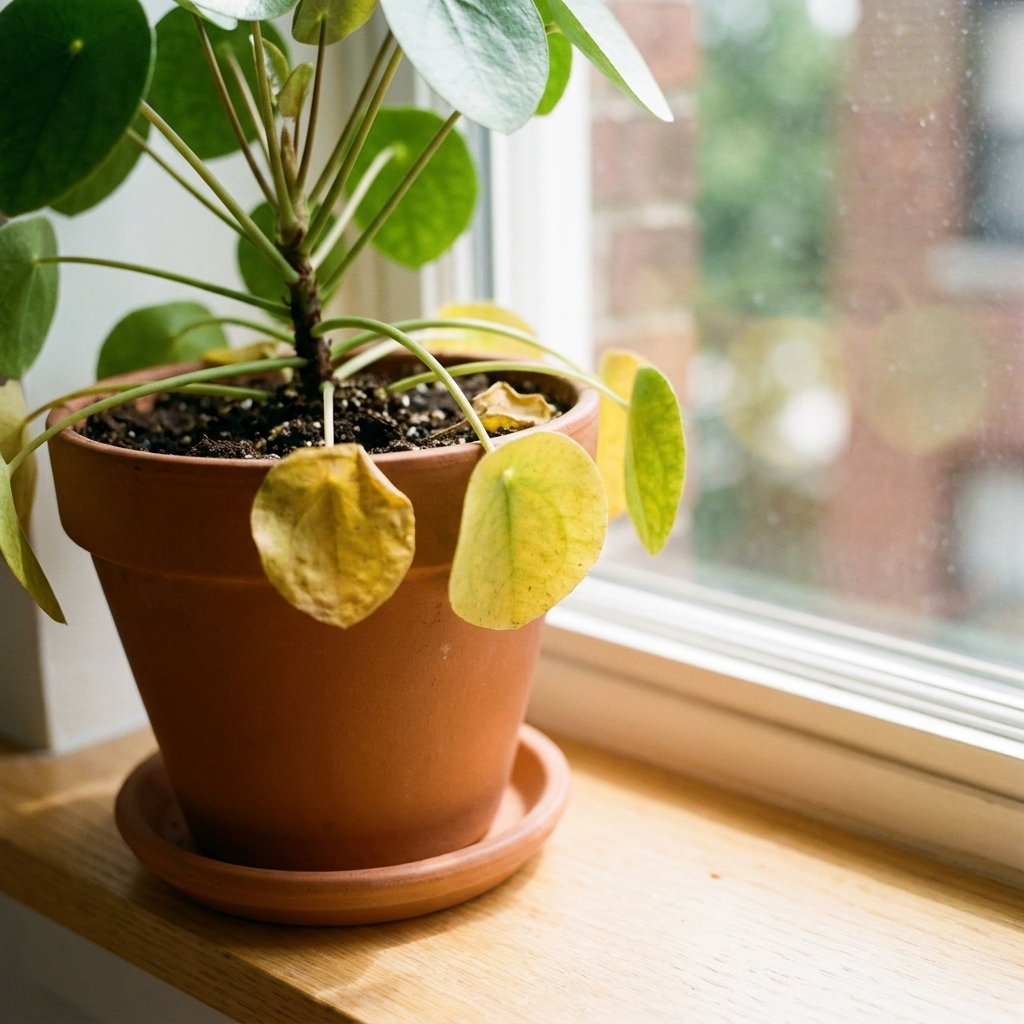
Yellow leaves
- Most common cause for both: Overwatering, especially in low light.
- Check: Is the soil staying wet for more than 7 to 10 days? Does the pot have drainage? Does it feel heavy and cool?
- Fix: Let it dry more between waterings and consider a chunkier soil mix.
- Also check: If watering seems right, inspect for pests like spider mites and mealybugs, especially if you see stippling, sticky residue, or distorted new growth.
Leggy vines with small leaves
- More common in: Heartleaf philodendron (but both can do it).
- Cause: Not enough light.
- Fix: Move closer to a bright window, add a grow light, and prune back to encourage fuller growth.
Brown, crispy edges
- Common causes: Inconsistent watering, too much direct sun, or fertilizer buildup.
- Fix: Adjust watering routine, protect from harsh sun, and flush the pot with water every couple of months if you fertilize regularly.
Root rot worries
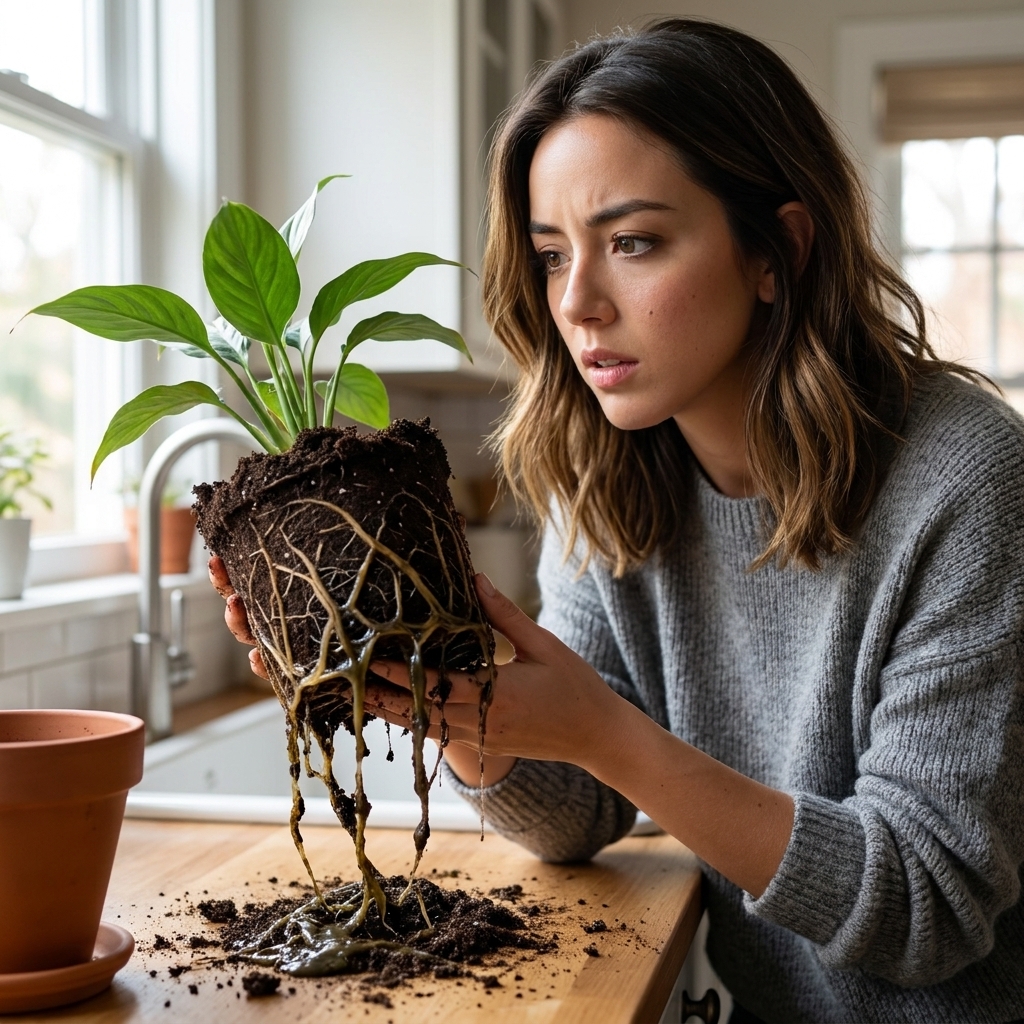
If your plant smells funky, the stems feel mushy near the soil line, or leaves are yellowing fast, take it seriously.
- Immediate steps: Unpot, inspect roots, trim mushy roots, and repot in fresh airy mix.
- Extra tip: Take a few healthy node cuttings as insurance. This is my favorite “save the plant parent’s sanity” move.
Lookalikes and mature growth
Common mix-ups
- Satin pothos: Often sold near pothos, but “satin pothos” is usually Scindapsus pictus, not a true pothos (Epipremnum).
- Philodendron micans: A velvety trailing philodendron that can look heartleaf-adjacent, but the leaves are more bronze and plush.
What happens when they climb
Both plants can change dramatically with maturity. Given something to climb (a moss pole, plank, or rough support) and brighter light, pothos can develop much larger leaves and may even fenestrate. Heartleaf philodendron also upsizes when climbing, and some of the “tiny houseplant” ID cues can soften a bit on mature growth. When in doubt, fall back on the new-leaf sheath for philodendron and the thicker, more substantial pothos vine with prominent aerial roots.
Which one should you choose?
If you are deciding between the two (or trying to decide what to recommend to a friend), here is the simplest way I think about it:
- Choose pothos if: you have lower light, you want a tougher plant that tolerates missed waterings, or you love variegation options.
- Choose heartleaf philodendron if: you want softer, classic heart-shaped leaves, you can give medium indirect light, and you like a slightly more elegant trailing look.
And if you already own one and accidentally bought the other, congratulations. You now have the easiest “plant buddy pair” on the planet.
FAQ
Are pothos and heartleaf philodendron the same plant?
No. Pothos is Epipremnum aureum. Heartleaf philodendron is Philodendron hederaceum. They are different genera and have slightly different growth habits and preferences, even though they are often sold near each other and look similar as young indoor plants.
Is one more toxic to pets?
Both are considered toxic if chewed because they contain calcium oxalate crystals. If you have curious pets, keep vines out of reach and talk with your veterinarian if ingestion happens.
Why does my “pothos” have plain green heart leaves?
It might be a heartleaf philodendron, or it could be a green form of pothos. Use the texture test (waxy-thick vs. thin-soft), check for a philodendron-style new-leaf sheath, and look at the node and aerial root clues to confirm.
Can they share the same pot?
It is possible, but I rarely recommend it long-term. They may want slightly different watering rhythms, and one can outgrow the other. If you love the look, keep them in separate pots placed together so you can water each one correctly.