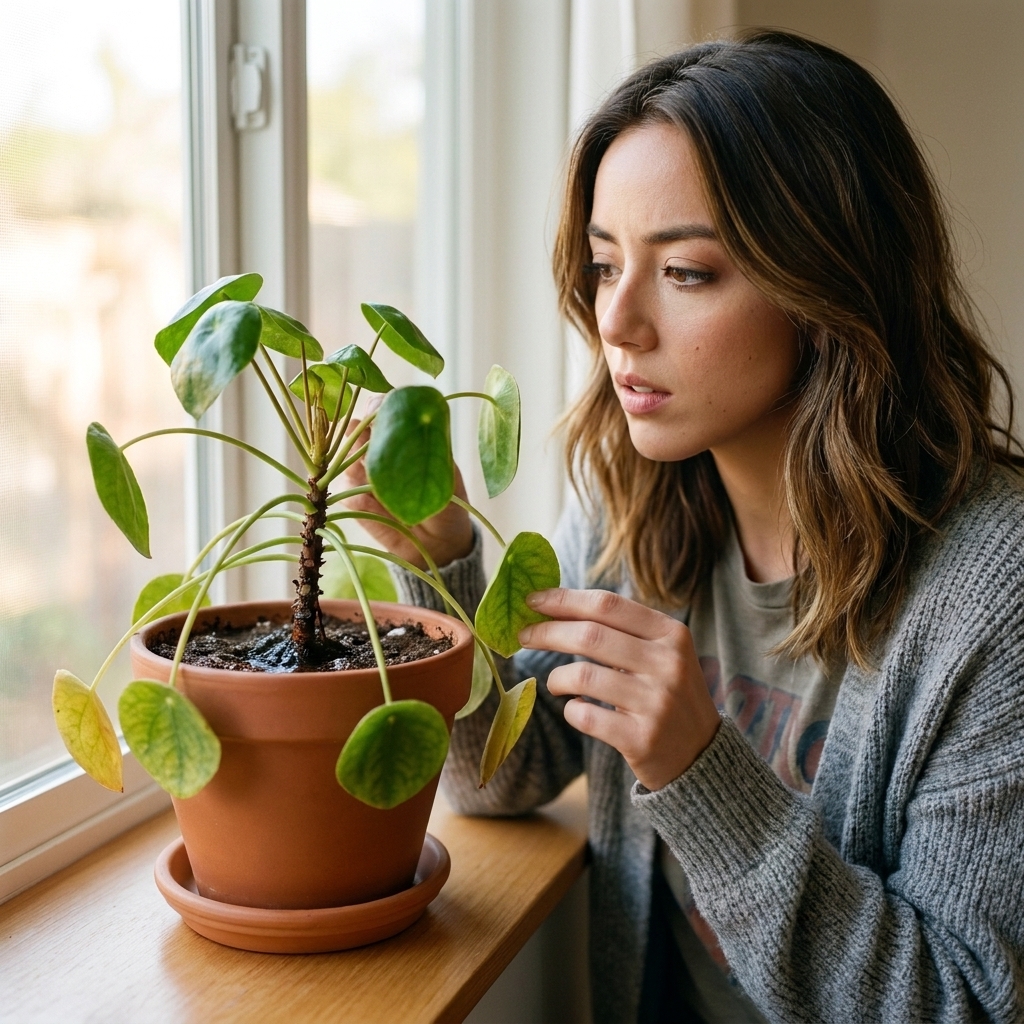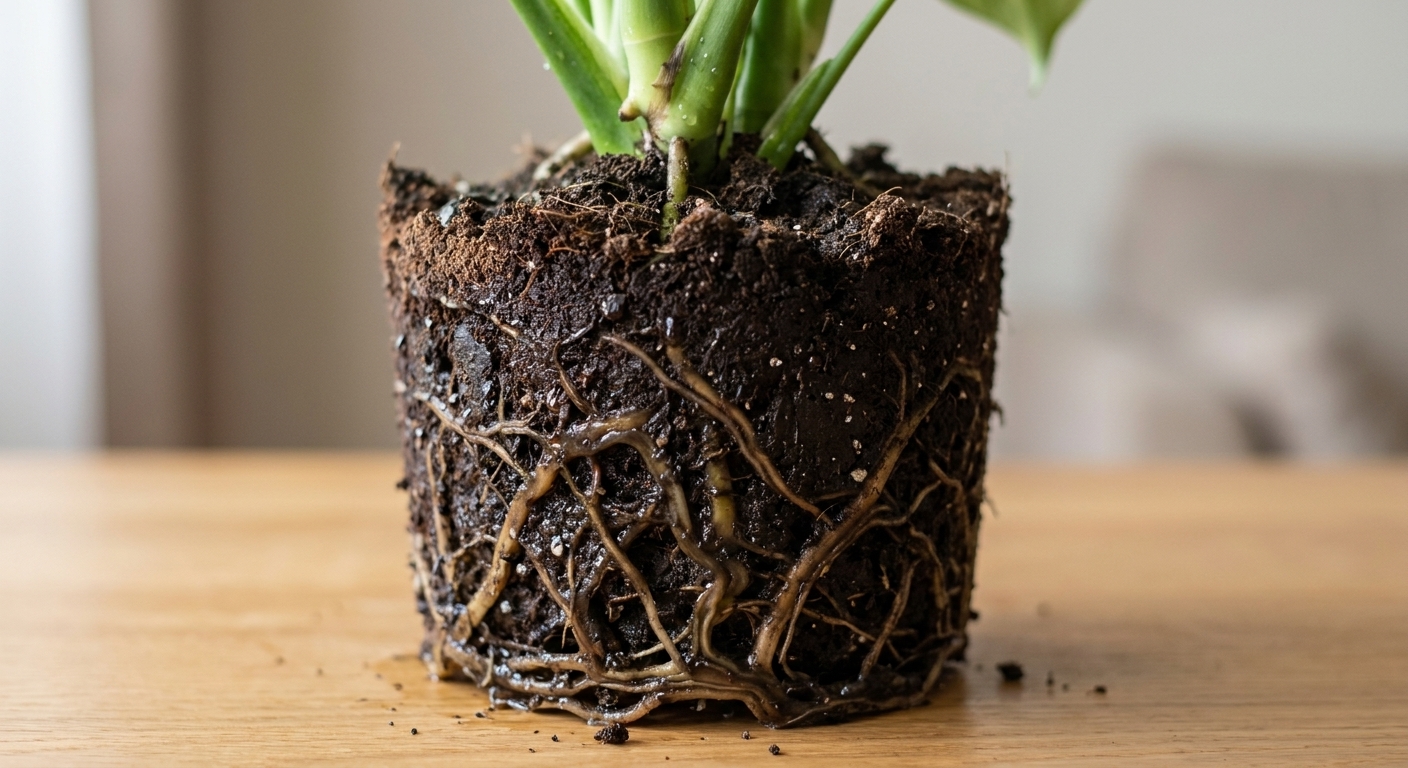
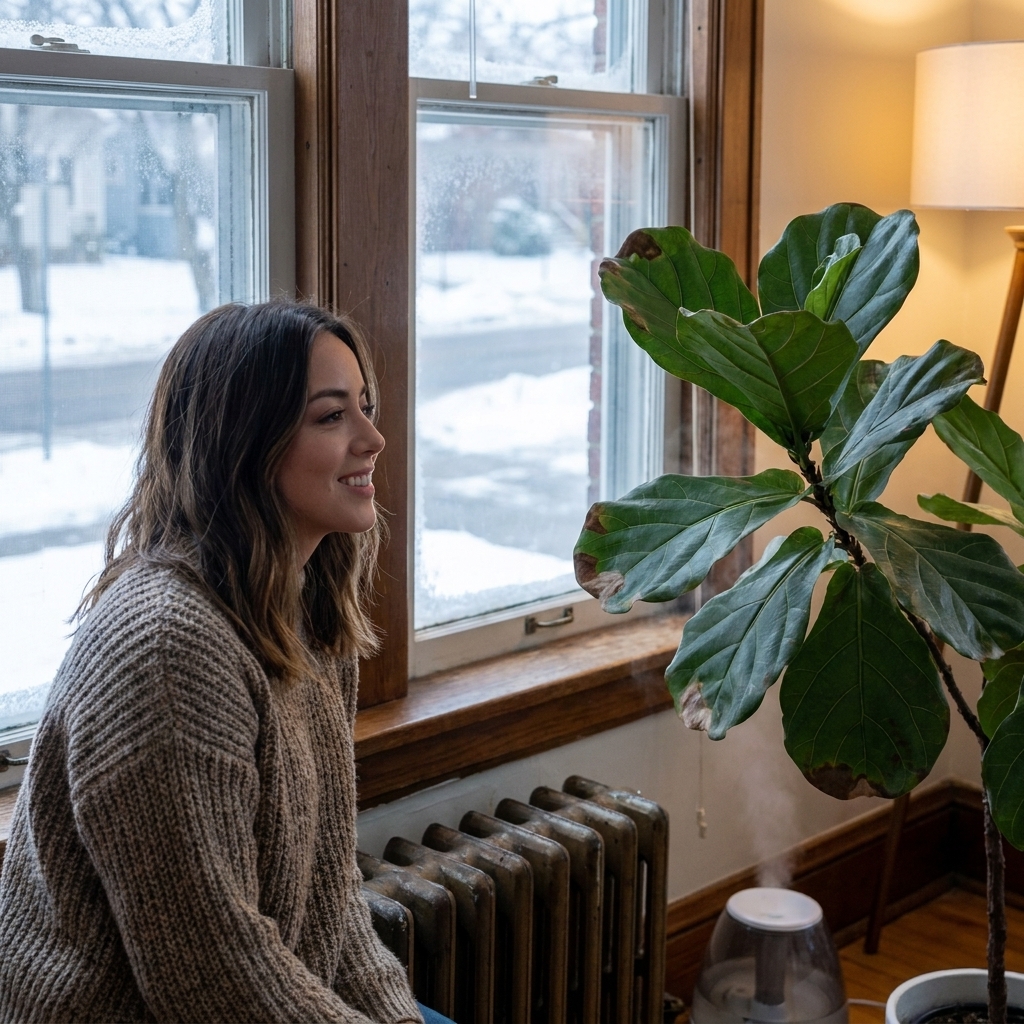
A practical, reassuring guide to diagnosing winter leaf drop: drafts, low light, dry air, and watering shifts, plus exact fixes and recovery timelines.
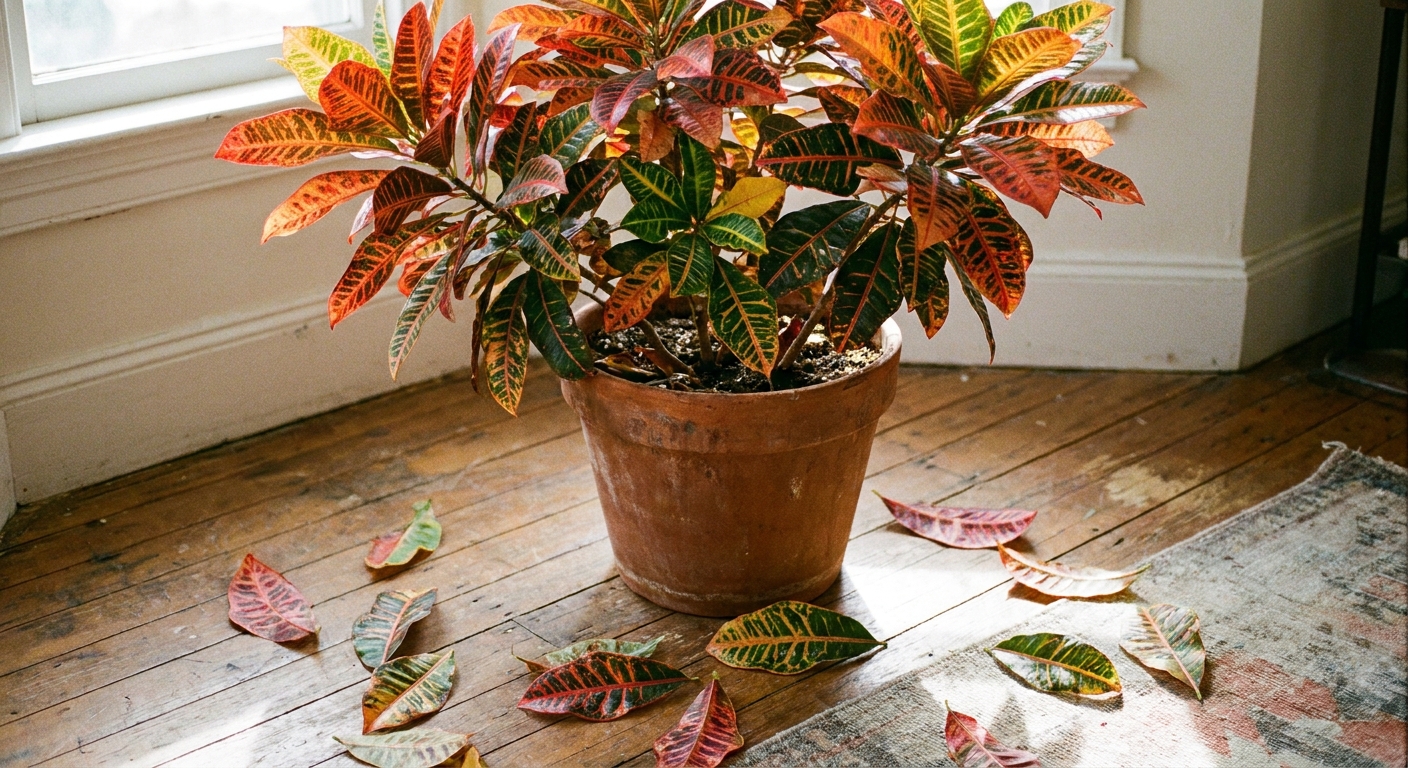
The first time I brought a croton home, I thought I had scored the most colorful, low-effort “instant jungle” plant on the shelf. Two weeks later, it looked like it had thrown a tantrum overnight and carpeted my floor with leaves. If that’s you right now, take a breath. Crotons (Codiaeum variegatum) are famous for leaf drop indoors, especially after a move. It is rarely one single mistake. It is usually a stack of small changes that add up fast.
This guide will walk you through the big four triggers, what to check today, and a calm, step-by-step recovery plan that helps your croton stop shedding and start holding onto that red-and-yellow color.
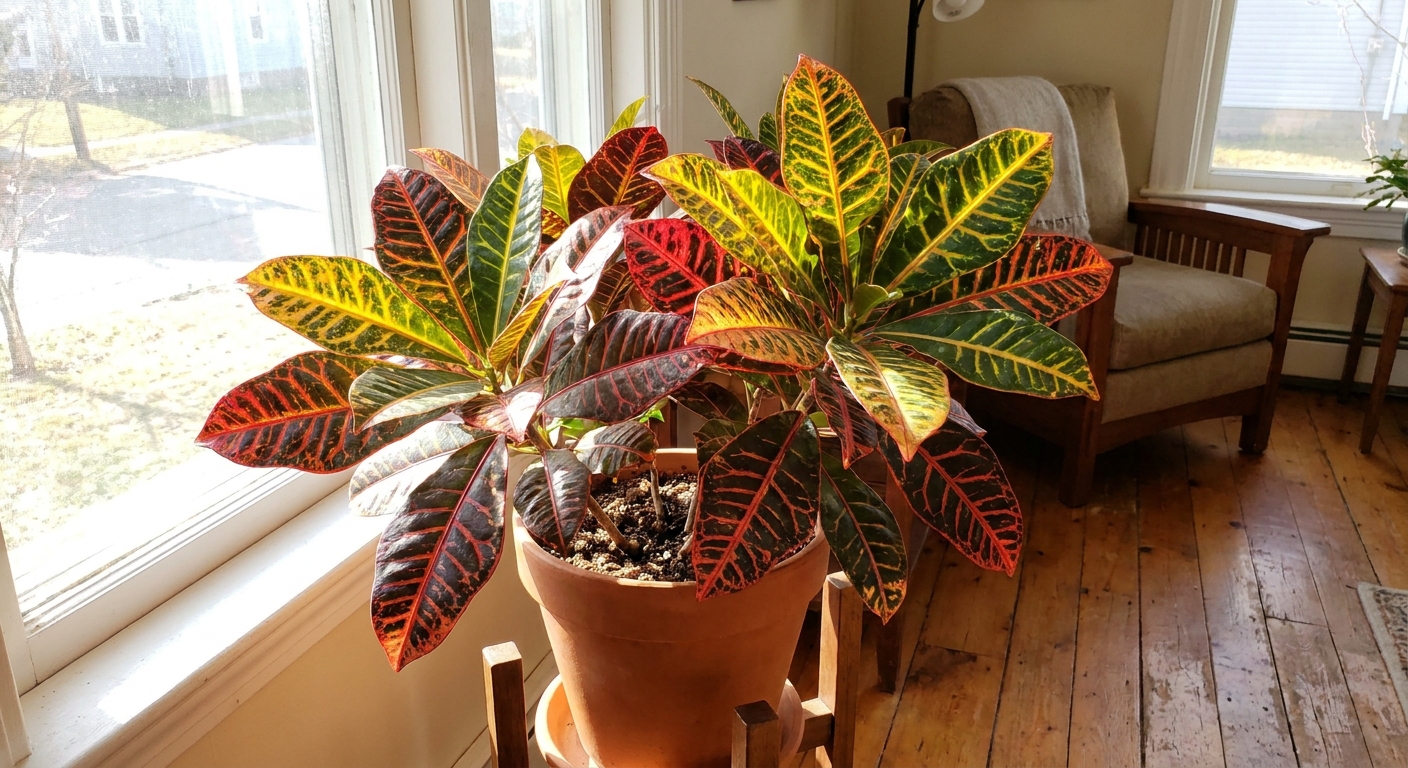
Why crotons drop leaves indoors
In a greenhouse or garden center, crotons often live in warm, humid, very bright conditions with stable care. Your home is usually cooler, dimmer, drier, and full of airflow changes. Crotons often respond to that shift with leaf drop, which is a common stress response during adjustment.
Leaf drop is most common when one or more of these happen at the same time:
- A sudden light drop after leaving the greenhouse
- Cold drafts or temperature swings
- Uneven watering that alternates between too dry and too wet
- Dry winter air that increases moisture loss through leaves
The good news: once conditions stabilize, crotons can regrow. Your job is to remove the stressors and then be boringly consistent.
Cause 1: Light change
Low light is one of the most common reasons newly purchased crotons drop leaves indoors. What looks “bright” to our eyes can still be dramatically darker than a greenhouse bench under high-output lighting.
Signs light is the main culprit
- Leaf drop starts within days to two weeks of bringing it home
- The plant leans toward the window
- New growth is smaller and greener, with less red or yellow
- The soil stays wet longer because the plant is using less water
Light that keeps color strong
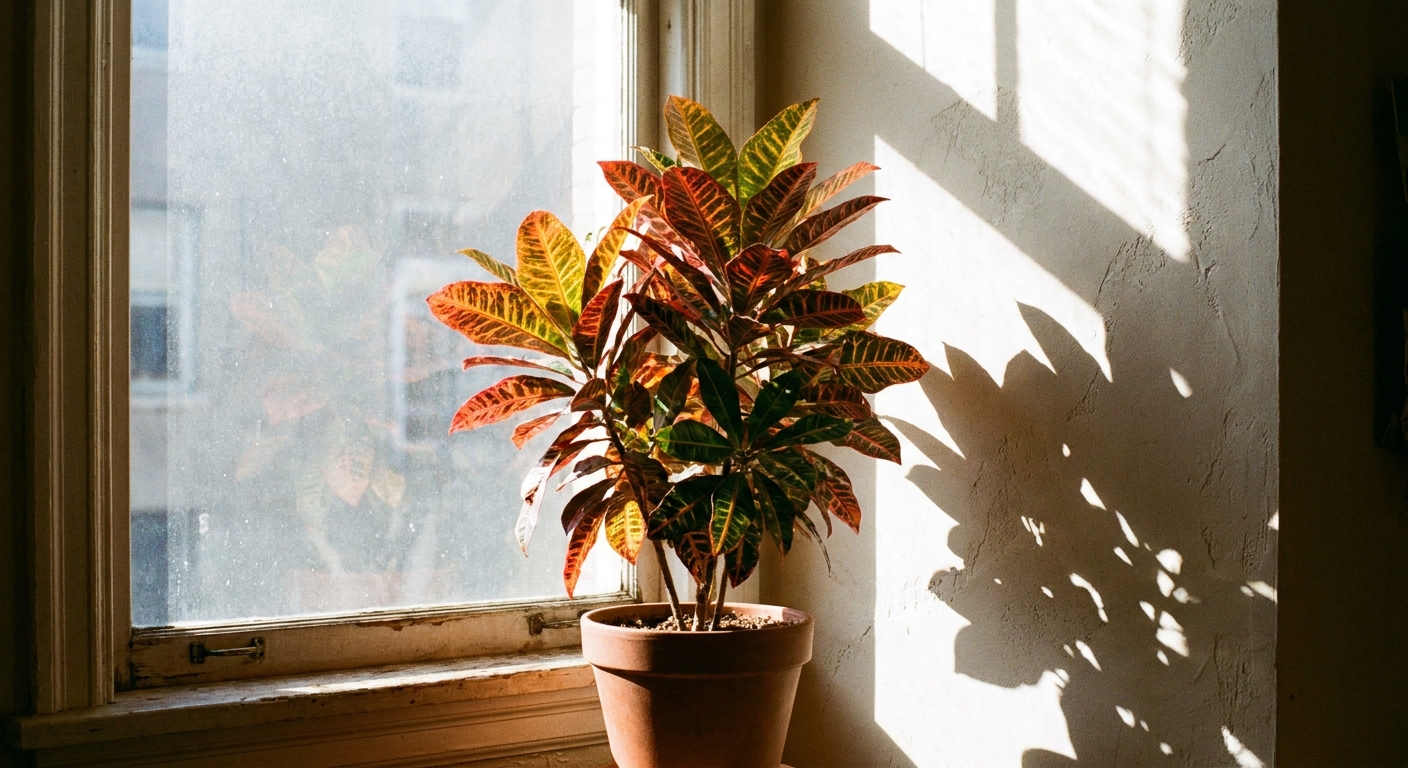
For strong variegation indoors, crotons do best with very bright light: several hours of sun, or bright all-day light near a window.
- Best window: South or west exposure is usually ideal indoors.
- Gentler option: East window can work if it is close to the glass.
- North window: typically too dim for long-term color and leaf retention unless supplemented.
If you use a grow light, aim for a setup where the plant receives bright, consistent light daily. Consistency matters more than chasing the “perfect” number.
How to acclimate to stronger sun
If your croton was grown in softer greenhouse light, move it into stronger sun gradually over 7 to 14 days to avoid sunburn. A simple way to do it:
- Days 1 to 3: 1 to 2 hours of gentle morning sun (or the brightest indirect light you have)
- Every 3 to 4 days: add another hour or two of sun
- Stop increasing if you see pale, bleached patches that later crisp (sunburn)
Cause 2: Drafts and temperature swings
Crotons are tropical shrubs. Indoors, they can handle normal home temperatures, but they do not love sudden chills. A croton that is otherwise fine can drop leaves quickly if it sits in the path of a draft.
Good temperature targets
If you like numbers, aim for roughly 65 to 80°F (18 to 27°C). Try to avoid letting it drop below about 60°F (15°C), and focus most on preventing sudden swings.
Common draft sources
- Doors that open frequently in winter
- Leaky window frames or cold glass at night
- Air conditioning vents in summer
- Forced-air heating vents in winter
What to do
Keep your croton in a stable, warm spot with bright light, but away from direct blasts of hot or cold air. If your plant is right against a chilly windowpane, pull it back a few inches at night, especially during cold snaps.
As a rule, crotons are happiest when they are not getting hit with moving air all day.
Cause 3: Uneven watering
Crotons want soil that is evenly moist, not soggy and not bone dry. After a move indoors, watering mistakes are easy because the plant’s water use changes with light and temperature.
The most common pattern looks like this:
- The croton arrives from bright, warm conditions and dries quickly.
- At home, light is lower, so the soil stays wet longer.
- You water on the old schedule anyway.
- Roots get stressed, leaves drop, and now the plant uses even less water.
How to water a croton indoors
- Check the soil with your finger.
- Water when the top 1 to 2 inches feel dry.
- Water thoroughly until excess drains out.
- Empty the saucer so the pot is not sitting in water.
If you tend to forget watering and the soil swings very dry, crotons can also drop leaves from drought stress. The fix is not more frequent tiny sips. The fix is thorough watering when needed and a potting mix that drains well but does not dry into a brick.
Watch for root stress
If leaf drop is heavy and the soil smells sour or stays wet for many days, check drainage. A pot without a drainage hole is a fast track to root rot with crotons.
Helpful pattern to notice: with stress, crotons often drop older, lower leaves first. If leaves are dropping while still green and the mix stays wet, or you see black spots plus mushy stems, think root trouble and act fast.
Cause 4: Dry air
Indoor heating can drop humidity dramatically. Crotons can tolerate average household humidity, but they usually do best with moderate to higher humidity. Very dry air makes them lose water through their leaves faster than their roots can replace it, especially if the root system is already adjusting after a move.
Clues dry air is involved
- Leaf edges crisp or curl
- Leaves drop faster during cold spells when heat runs constantly
- Spider mites show up (they love dry conditions)
Humidity fixes that actually help
- Use a humidifier near the plant for steady results.
- Group plants together to create a slightly more humid pocket.
- Move it away from heating vents that blast dry air.
Misting is fine if you enjoy it, but it is usually too temporary to change the plant’s day-to-day water balance. Consistent humidity beats occasional spritzing.
Quick triage: check this today
If your croton is actively dropping leaves, here is the order I like to troubleshoot in. It keeps you from “fixing” everything at once and accidentally adding more stress.
- Draft check: Is it in the path of a vent, door, or cold window? Relocate to a stable spot.
- Light check: Is it close enough to a bright window? Move it brighter gradually.
- Soil check: Is the top 1 to 2 inches dry or is it staying wet? Adjust watering accordingly.
- Drainage check: Does the pot have a hole? If not, repot as soon as possible.
- Pest check: Look under leaves and along stems for fine webbing, speckling, sticky residue, or bumps.
Recovery plan
Week 1: Stabilize
- Pick the right spot: bright light, stable temperature, away from vents and drafts.
- Stop moving it: crotons hate being shuffled around daily.
- Water only based on soil feel: top 1 to 2 inches dry, then water thoroughly.
- Skip fertilizer for now: stressed roots do not want extra salts.
Weeks 2 to 4: Support growth
- Increase light gradually if you are working toward a sunnier window.
- Add humidity if your home is dry, especially in winter.
- Remove fully dead leaves gently. If a leaf is still partly green, let it be until it drops naturally.
Month 2 and beyond: Keep it full
- Keep it bright: this is the long-term secret to strong color and better leaf retention.
- Stay consistent with watering: avoid extreme dry-downs and avoid constantly wet soil.
- Rotate the pot every week or two for even growth.
- Fertilize lightly during active growth seasons if the plant is stable and producing new leaves.
Expect a croton to look a little sparse after a shedding episode. With stable conditions, it typically fills back in from new growth at the tips. Sometimes crotons will also push new buds along older stems, especially with strong light and a little pruning, but results vary indoors.
When it is more than adjustment
Some leaf drop after a move can be normal, but these red flags mean you should investigate more closely.
Red flags
- Soft, blackening stems or a persistent sour smell from the soil
- Leaves dropping while still green plus constantly wet soil
- Lots of tiny yellow speckles and fine webbing under leaves (possible spider mites)
- Sticky residue, cottony clusters, or hard bumps on stems and leaf veins (possible mealybugs or scale)
If you suspect root rot, the priority is improving drainage and letting the mix dry appropriately between waterings. If pests are present, isolate the plant and treat consistently. Crotons can bounce back, but they need you to address the underlying cause, not just the symptom.
Repotting basics
I usually do not repot a brand-new croton immediately if it has a drainage hole and the mix is behaving. But if the pot has no drainage, the soil stays wet for ages, or roots are circling tightly, repotting sooner can stop the stress spiral.
- Pot size: go only 1 to 2 inches wider than the current pot.
- Mix: a well-draining indoor potting mix, lightly amended with perlite and a bit of orchid bark (or similar chunky material) for airflow.
- Aftercare: water in once, then let the top layer dry before watering again.
Safety note
Croton sap can irritate skin, and the plant is considered toxic if chewed by pets or kids. If you have a curious cat, dog, or toddler, place it out of reach and wash your hands after pruning.
Keep the reds and yellows bright
- Bright light daily, including some direct sun indoors if the plant tolerates it
- No cold drafts, especially near doors and winter windows
- Even moisture, watering when the top 1 to 2 inches are dry
- Better humidity in winter, ideally with a humidifier
- Patience, because crotons reward consistency more than quick fixes
FAQ
Will the dropped leaves grow back?
The exact leaves that dropped will not reattach, but the plant can regrow and become full again through new growth at the tips. If a stem is bare for a long stretch, it may stay more leggy. Sometimes you will get buds along older wood, but it is not guaranteed, so focus on stabilizing care to protect remaining foliage and encourage fresh growth.
Should I repot a croton right after buying it?
If the pot has good drainage and the plant is not sitting in soggy soil, I usually wait a few weeks so it can adjust first. If there is no drainage hole or the mix is staying wet for a long time, repot sooner rather than later, and only size up slightly.
Is it normal for a croton to drop leaves in winter?
It is common, especially if light is low and indoor air is dry. Increasing light, avoiding drafts, and stabilizing watering usually helps a lot.
How close should my croton be to the window?
Closer than most people think. For indoor color and leaf retention, place it very near the brightest window you have, then acclimate gradually if you are increasing direct sun quickly.