
A clear, practical guide to bright indirect light: how to spot it, measure it, and choose plants that will truly thrive indoors.
I have a soft spot for money trees because they look so confident, even when they are quietly begging for help. And if yours has that classic braided trunk, you are caring for a plant that is part houseplant, part living sculpture. The good news is Pachira aquatica is usually forgiving indoors once you nail two things: bright, indirect light and watering only after the potting mix partly dries.
This guide walks you through exactly what to do, plus how to spot trouble early, especially the two big red flags: yellow leaves and a soft trunk.
Meet your plant: Pachira (and why it is braided)
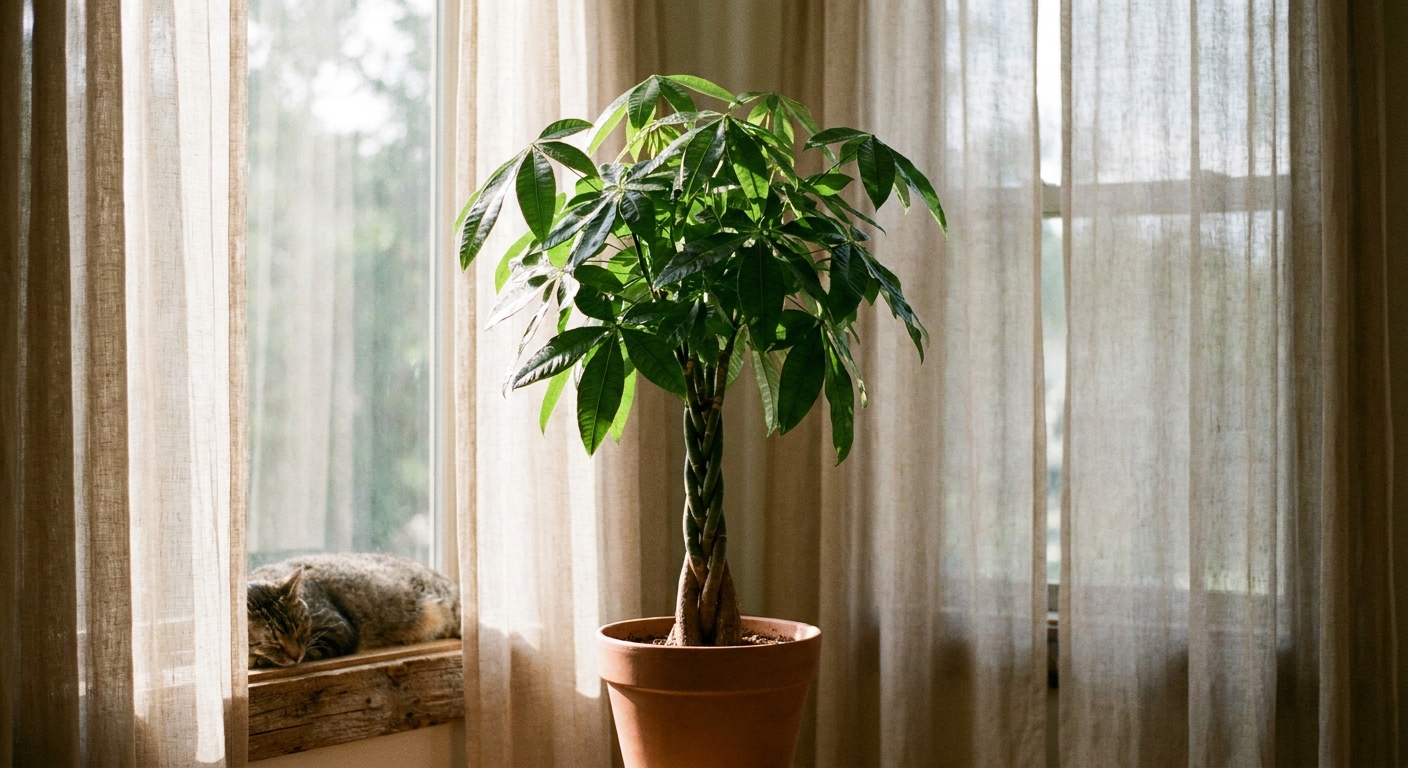
Money tree is most commonly sold as Pachira aquatica, but you may also see it labeled as Pachira glabra (and yes, mislabels happen). The care is similar for the Pachira you will find in garden centers and big box stores, so do not panic if your tag says something slightly different.
In the wild it can grow into a large tree, but indoors it stays manageable and adapts well to home conditions.
Most money trees sold as “braided” are actually several young plants potted together and trained while their stems are flexible. Over time, those stems thicken. That is why braided money trees need a quick check-in now and then to make sure the braid or any ties are not restricting the stems.
Light: bright and indirect
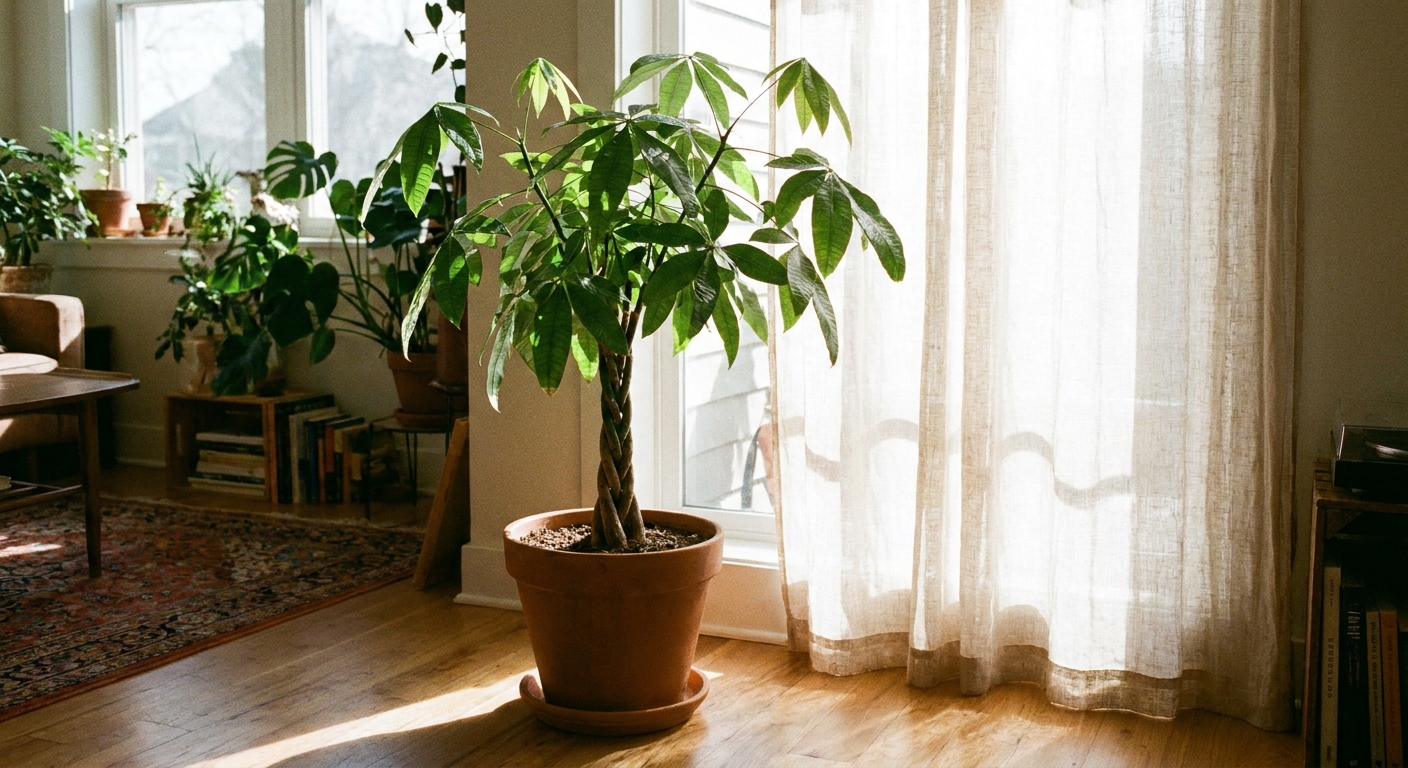
If I could pick one upgrade that makes money trees look instantly better, it is moving them into brighter indirect light. Think: near an east window, or a few feet back from a bright south or west window with a sheer curtain. Just remember that “bright” depends on season, latitude, and window direction. What counts as bright in July might be a cave in January.
What good light looks like
- Bright room where you can read comfortably during the day without turning on lamps.
- High light without hours of direct sun, especially harsh midday sun.
- Even exposure by rotating the pot a quarter turn every week or two.
Signs your light is off
- Too little light: slow growth, long bare stems, smaller leaves, leaf drop, soil staying wet for a long time.
- Too much direct sun: crispy patches, bleached areas, or browning on the side facing the window (south and west windows are the usual culprits).
Money trees can tolerate medium light, but in low light apartments they often slide into a cycle where the soil dries slowly, watering gets tricky, and yellow leaves start showing up.
Watering: let it dry a bit
This is the rule I want you to tattoo on your watering can: water only after the mix partly dries. For many homes and medium pots, that means letting the top 2 to 3 inches of soil dry out first, then watering thoroughly. For smaller pots, that is often too much dry-down.
How to check before watering
- Stick your finger into the potting mix.
- Small pots (about 4 to 6 inches wide): water when the top 1 inch is dry.
- Medium to large pots: water when the top 2 to 3 inches are dry, or when roughly the top 25 to 50 percent of the mix feels dry.
How to water the right way
- Water slowly until it runs out of the drainage holes.
- Empty the saucer or cachepot after 10 to 15 minutes so the roots are not sitting in water.
How often should you water?
There is no perfect schedule because light, pot size, season, and soil all matter. Many money trees land somewhere around every 7 to 14 days in spring and summer, and less often in winter. Your finger test will always be more accurate than the calendar.
What yellow leaves usually mean
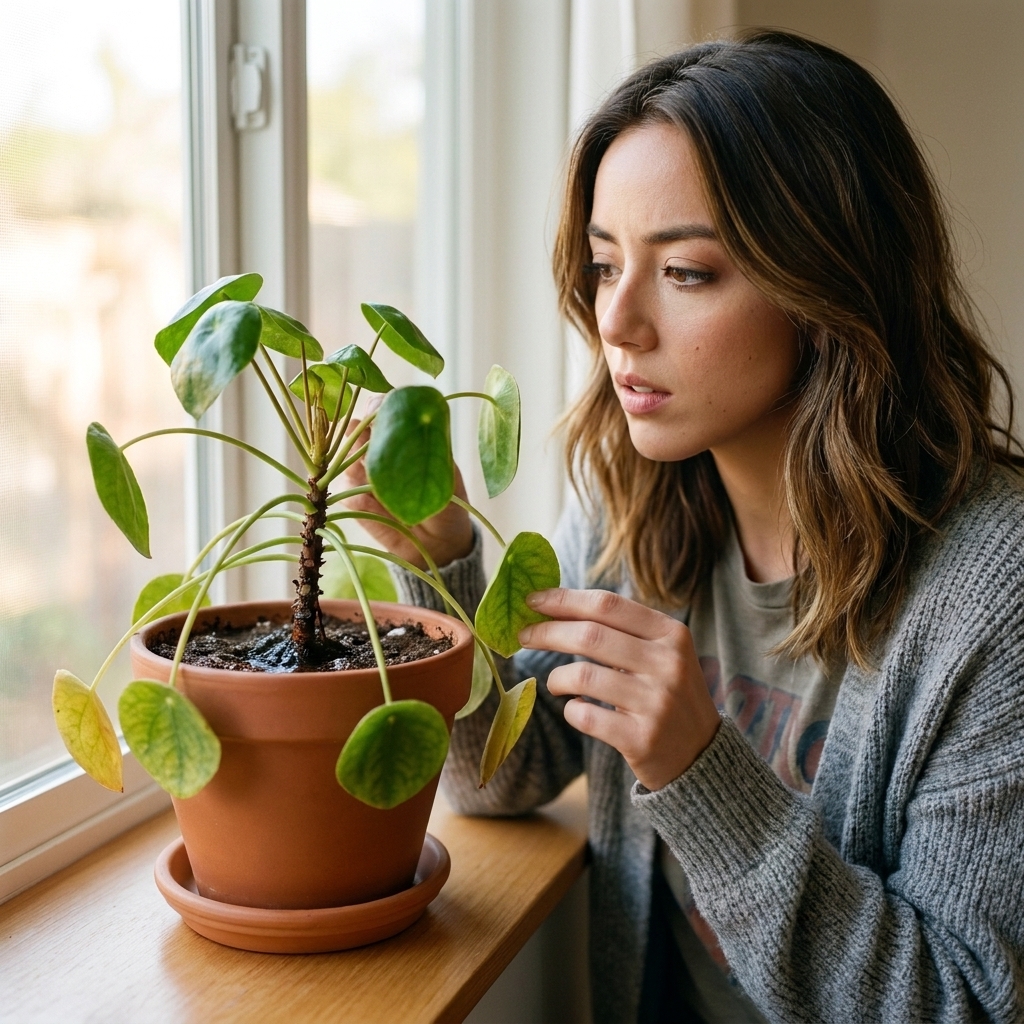
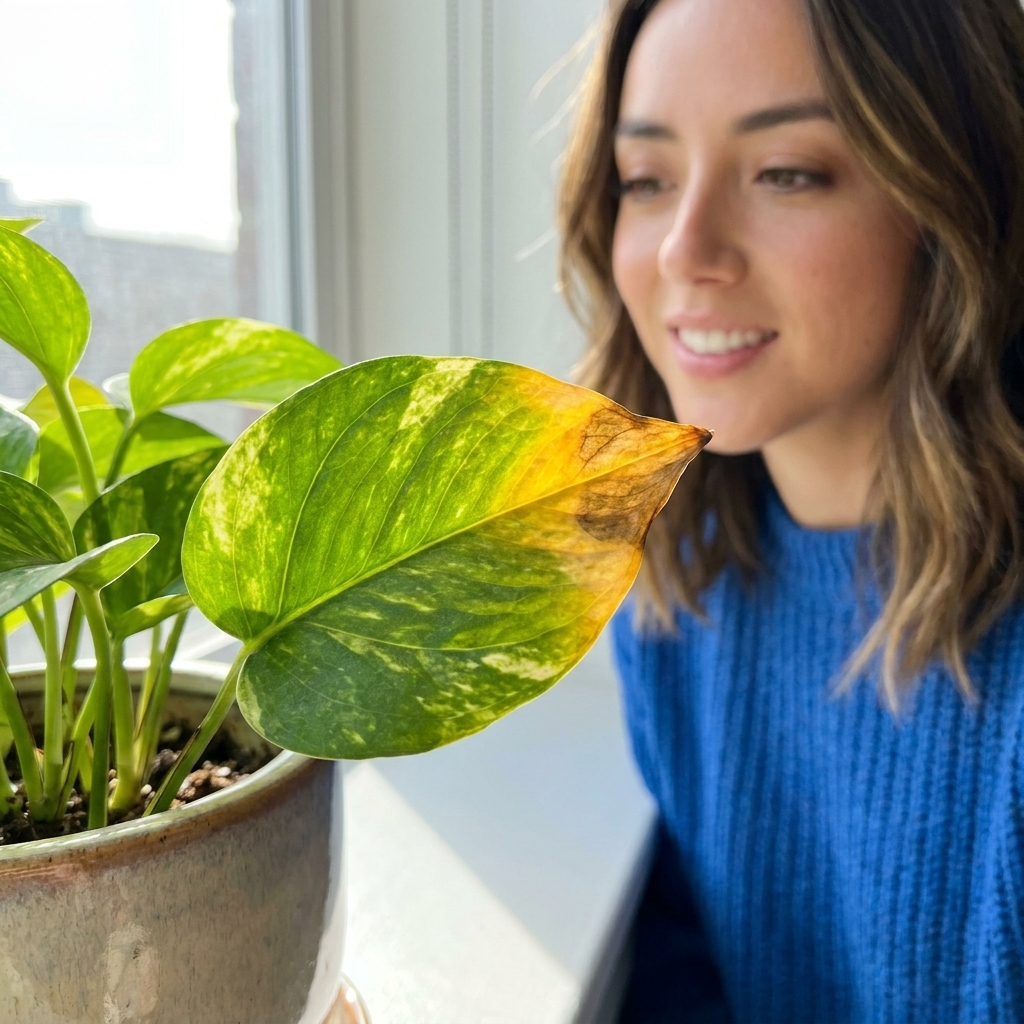
On indoor money trees, yellowing leaves are most often a watering issue.
- Yellow leaves + damp soil: overwatering, low light, or a potting mix that is staying wet too long.
- Yellow leaves + very dry soil: underwatering or inconsistent watering, especially if leaves also feel a bit papery.
One or two older lower leaves yellowing occasionally can be normal. A wave of yellow leaves, especially with leaf drop, is your cue to check the soil moisture and root health.
What a soft trunk can signal
A money tree trunk should feel firm, but Pachira stems can have a little natural give. If part of the trunk feels soft, squishy, or mushy, take it seriously. It often points to rot from staying too wet for too long, but it can also be mechanical damage or a failing single stem within the braid.
How to confirm:
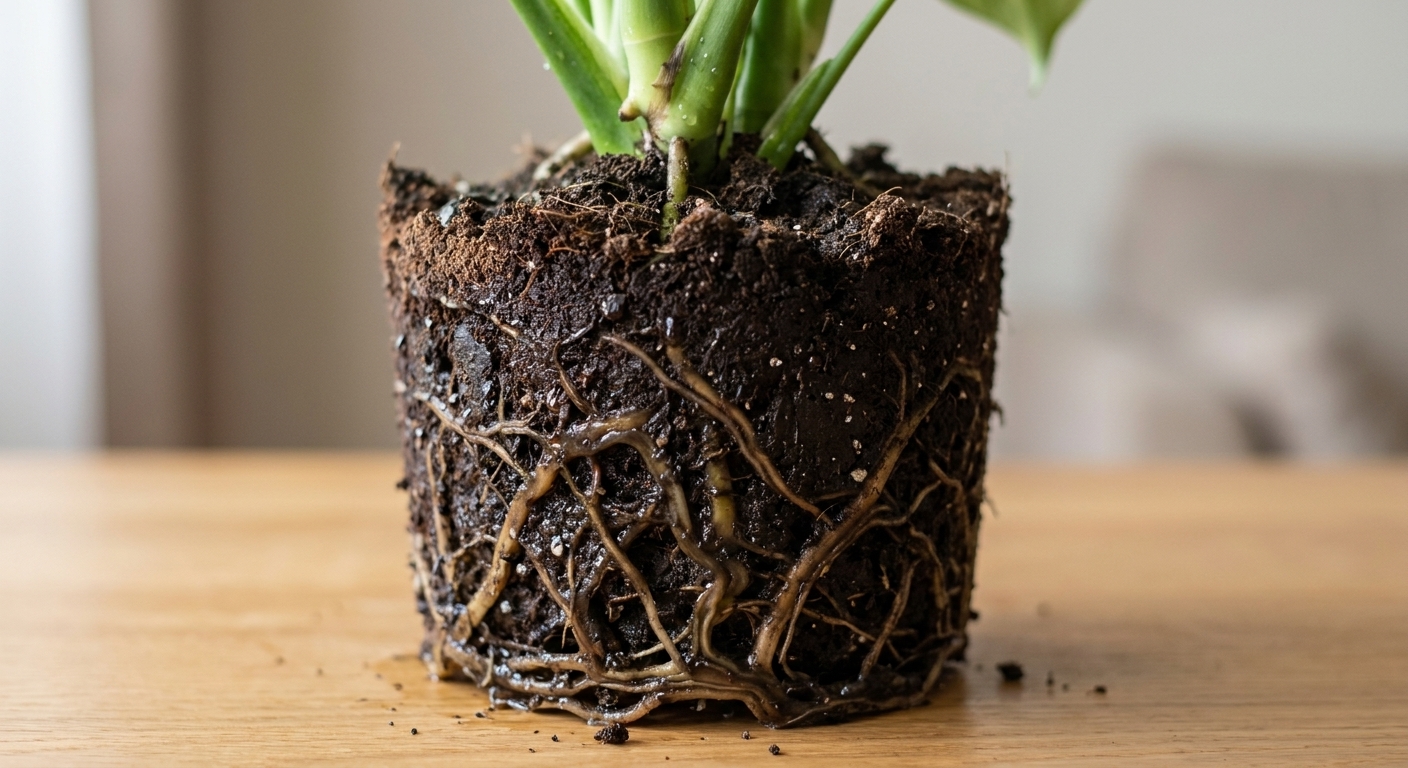
- Unpot and check roots. Healthy roots are light-colored and firm. Rotting roots are brown or black and mushy.
- Look for dark, collapsing tissue at the base of a stem.
- Trust your nose. A sour, swampy smell is not a great sign.
What to do next:
- Stop watering immediately.
- Slide the plant out of the pot and inspect the roots.
- Trim away any mushy roots with clean snips.
- Disinfect your snips between cuts (rubbing alcohol works) so you do not spread rot.
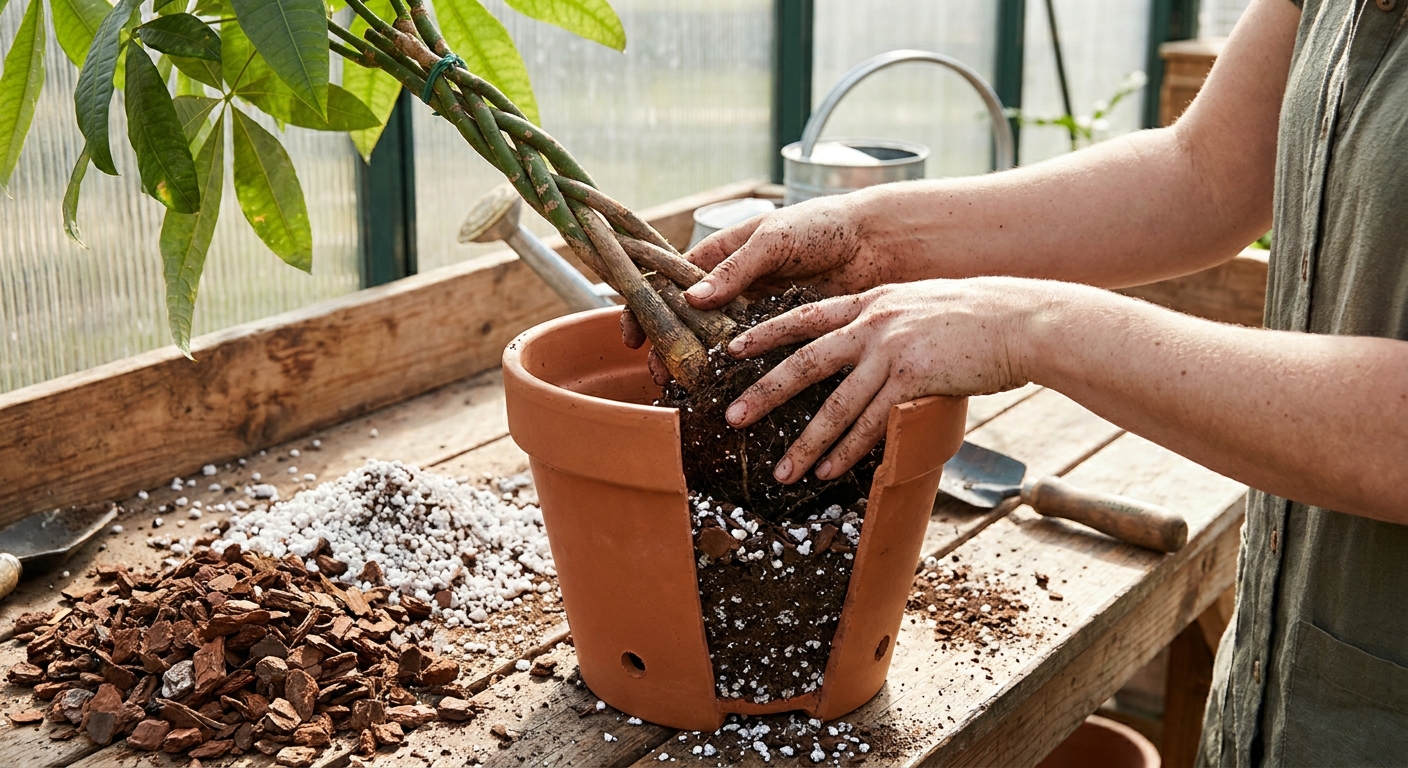
- Repot into fresh, airier mix (more on that below) in a pot with drainage.
- If you had to cut roots or remove rot, wait 1 to 3 days before watering again if the new mix is slightly moist. If the mix is bone dry and the plant has very few roots left, water lightly to settle the soil, then let it dry down.
If the softness is concentrated in one of the braided stems, you may be dealing with rot in a single plant within the braid. You can sometimes save the rest by removing the failing stem at the soil line and repotting the remaining healthy plants.
Soil and pot: airy and draining
Money trees like a mix that holds some moisture but drains well and breathes. Indoors, the biggest risk is a mix that stays wet and dense.
A simple indoor mix that works
- 2 parts quality indoor potting mix
- 1 part perlite or pumice
- 1 part orchid bark (or extra perlite if that is what you have)
And yes, drainage holes matter. If your money tree is in a decorative pot with no holes, treat that as a cover pot: keep the plant in a nursery pot inside it and dump excess water after watering.
Feeding: gentle and seasonal
Your money tree does not need heavy feeding, but it appreciates a steady, gentle boost during active growth.
When to fertilize
- Spring through early fall: feed lightly.
- Late fall and winter: skip feeding or reduce heavily, since growth usually slows indoors.
If you keep your plant under strong grow lights and it is pushing new leaves year-round, you can keep a lighter version of your growing-season routine going.
How to fertilize without stressing the plant
- Use a balanced houseplant fertilizer diluted to half strength.
- Feed about once a month during the growing season.
- Always fertilize on already-moist soil (never bone dry) to avoid root burn.
If your money tree is recovering from root rot or you just repotted, hold off on fertilizer for about 4 to 6 weeks.
Repotting: when and how big
Money trees tend to do best when they are not swimming in extra soil. So instead of upsizing “just because,” watch for signals.
Repot when you notice
- Roots circling the bottom or growing out of drainage holes.
- The plant dries out much faster than it used to (and light has not changed).
- The pot feels top-heavy and tips easily.
- Growth stalls in spring and summer even with good light and watering.
Pick the right pot size
Choose a pot that is 1 to 2 inches wider than the current pot. Too large a jump can keep the mix wet for too long, which is the exact opposite of what a money tree needs.
Best timing
Repotting is easiest on the plant in spring or early summer, when it can grow new roots quickly.
Braid check: loosen tight ties
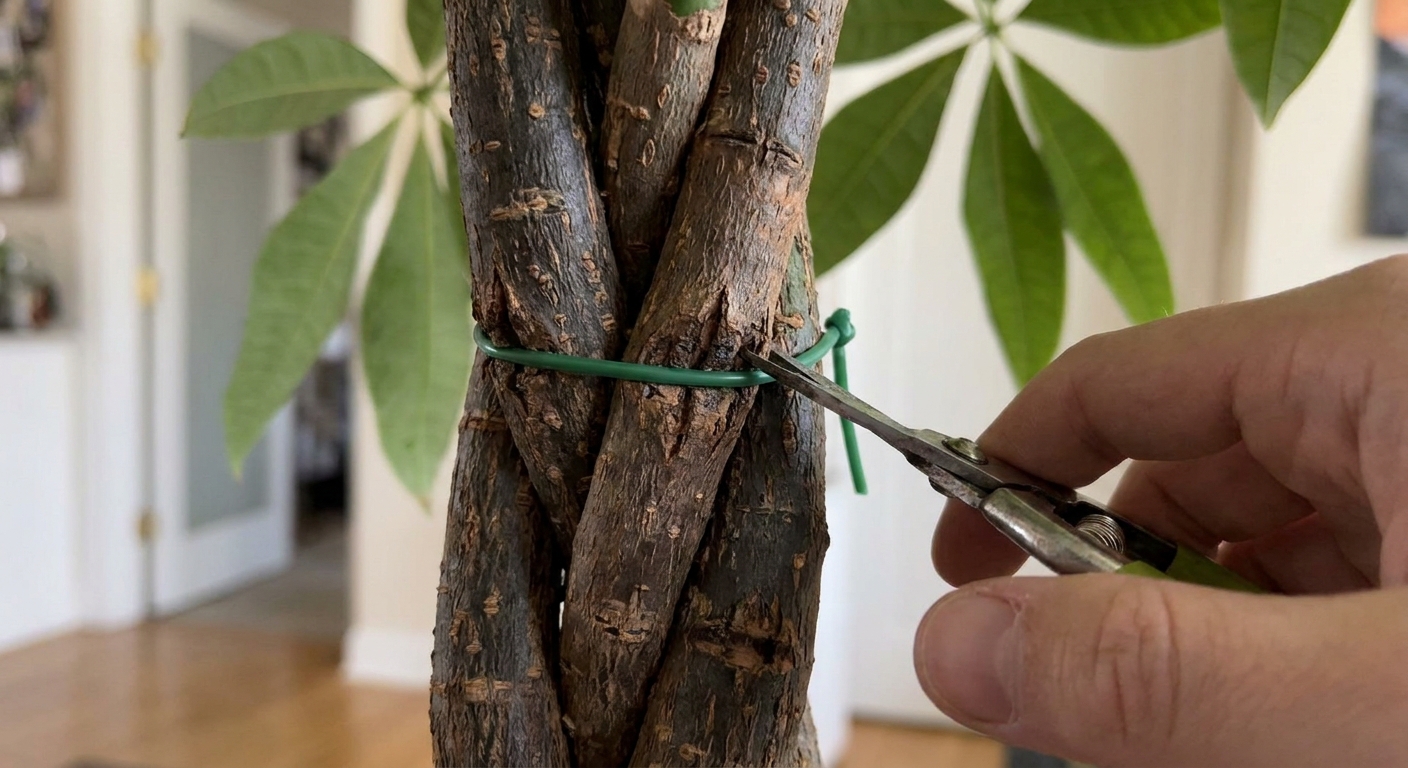
This is the braided money tree issue nobody warns you about: sometimes the braid is held with ties, tape, or wire that does not expand as the stems thicken. Over time, that tie can start to cut in, restricting water and nutrient flow and causing decline in one or more stems.
Inspect closely
Look along the braid, especially near the base and just above the soil line.
- Check for string, tape, plastic ties, wire, or tight bands.
- Look for indentations, swelling above the tie, or darkened tissue.
Remove ties safely
- Use small, sharp scissors or snips you have cleaned with soap and water (or rubbing alcohol).
- Cut the tie rather than trying to unwind it if it is embedded.
- Work slowly so you do not nick the living stem tissue.
If the stems are pressing together
If there is no tie, but the braid has become so tight it is pressing stems hard against each other, you can gently increase breathing room without fully unbraiding the plant.
- After watering (when stems are slightly more flexible), use your fingers to gently wiggle the stems to relieve pressure points.
- If needed, insert a soft plant spacer like a small piece of foam or folded felt between two rubbing stems near the tightest point.
- Avoid forcing a full unbraid on older, woody plants. It can crack stems.
If one stem is clearly being strangled and is declining, the kindest long-term fix can be to remove that failing stem and let the remaining plants thrive, rather than keeping the braid intact at all costs.
Placement: keep it steady
Money trees are happiest in normal indoor conditions, with a little protection from extremes and not too much shuffling from room to room.
- Temperature: Aim for typical room temps and keep it away from cold drafts and heat vents.
- Humidity: Average household humidity is usually fine, but very dry winter air can lead to brown tips. A small humidifier nearby helps.
- Drafts: Sudden leaf drop can happen if it is getting blasted by a door draft or sitting right against a chilly window.
- Acclimation: Some leaf drop after moving is normal. If conditions are stable and you see fresh new growth, you are fine.
Pruning and shaping
If your money tree is getting leggy, pruning is a gentle reset.
- In spring or early summer, trim back long stems just above a leaf node.
- Rotate the plant regularly so it grows evenly instead of leaning.
- Remove fully yellow leaves once they come away with a light tug.
And if you want to propagate: money trees can be propagated from stem cuttings, but it is slower indoors than common vines like pothos.
Pests and pets
Common pests
Indoors, the usual suspects are spider mites, mealybugs, and scale. They tend to show up when a plant is stressed or the air is dry.
- Spider mites: fine webbing and speckled, dusty-looking leaves.
- Mealybugs: little white cottony clusters in leaf joints.
- Scale: small tan or brown bumps that do not brush off easily.
First steps that work:
- Isolate the plant.
- Rinse foliage in the sink or shower and wipe leaves, especially undersides.
- Follow with insecticidal soap or horticultural oil, repeating weekly for a few rounds.
Pets and chewing
Pachira is often listed as non-toxic to cats and dogs, but plant-to-pet info can vary by source. If you have a determined chewer, it is still smart to keep the plant out of reach and verify toxicity with a trusted pet safety database or your vet.
Quick troubleshooting
Yellow leaves
- Most common cause: soil staying wet too long.
- Fix: increase light, let the mix partly dry, check pot drainage, consider a chunkier mix.
Soft trunk
- Most common cause: rot (but confirm by checking roots, tissue color, and odor).
- Fix: unpot, inspect roots, remove rot, repot into fresh airy soil, water less often.
Leaf drop
- Common causes: abrupt change in light, drafts, overwatering, underwatering, or normal acclimation after a move.
- Fix: stabilize conditions and check moisture before watering.
Brown tips
- Common causes: dry air, inconsistent watering, salt buildup from fertilizer.
- Fix: improve watering consistency, consider a gentle flush with water every couple months, use lighter fertilizer.
My no-guilt routine
If you want the simplest plan that covers 90 percent of indoor braided money tree success, here it is:
- Put it in bright indirect light, meaning high light without hours of direct sun.
- Check the soil weekly. Water only when the top portion of the mix is dry.
- Use a pot with drainage and a mix that breathes.
- Fertilize lightly monthly in spring and summer.
- Inspect the braid a few times a year and remove anything that is cutting in.
And if you are staring at a couple yellow leaves feeling that familiar plant-parent guilt, take a breath. Money trees recover beautifully when you adjust the basics. There is no black thumb here, just a plant that wants a slightly drier rhythm.