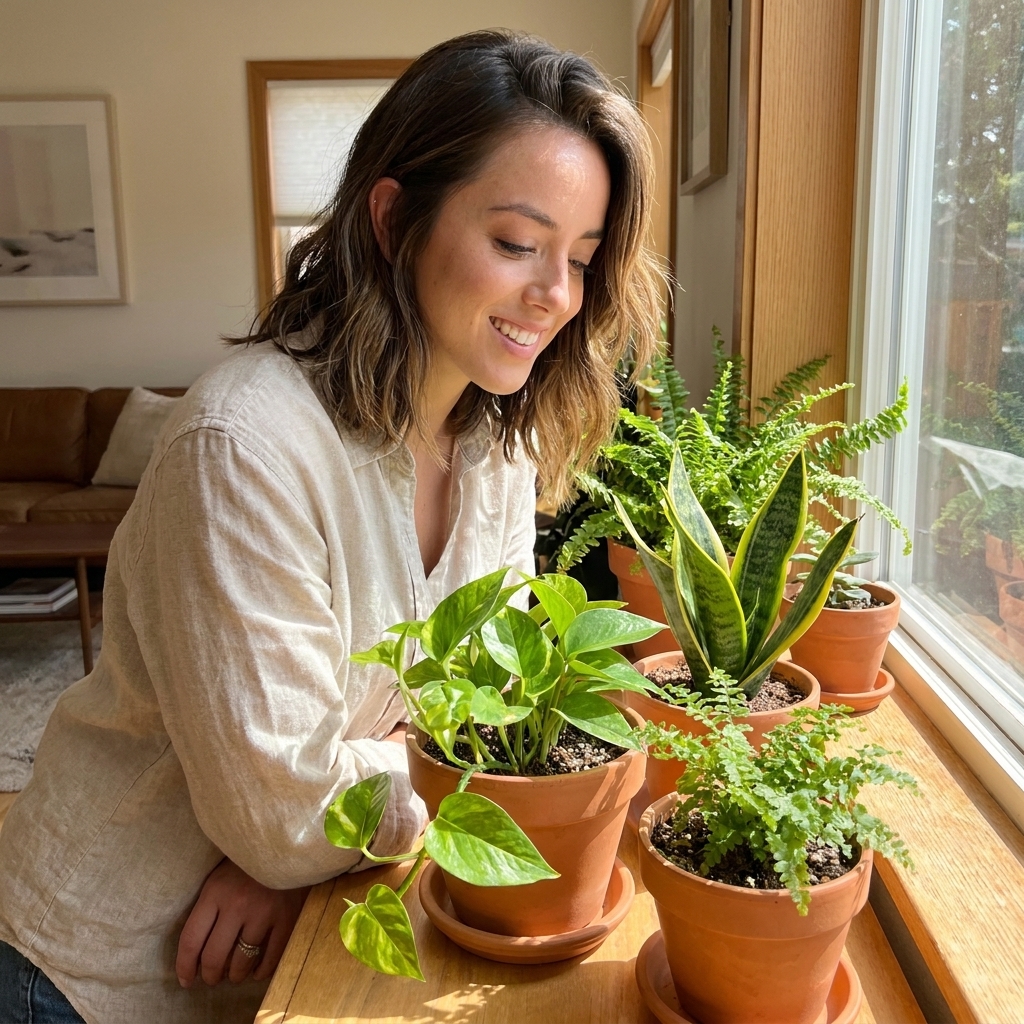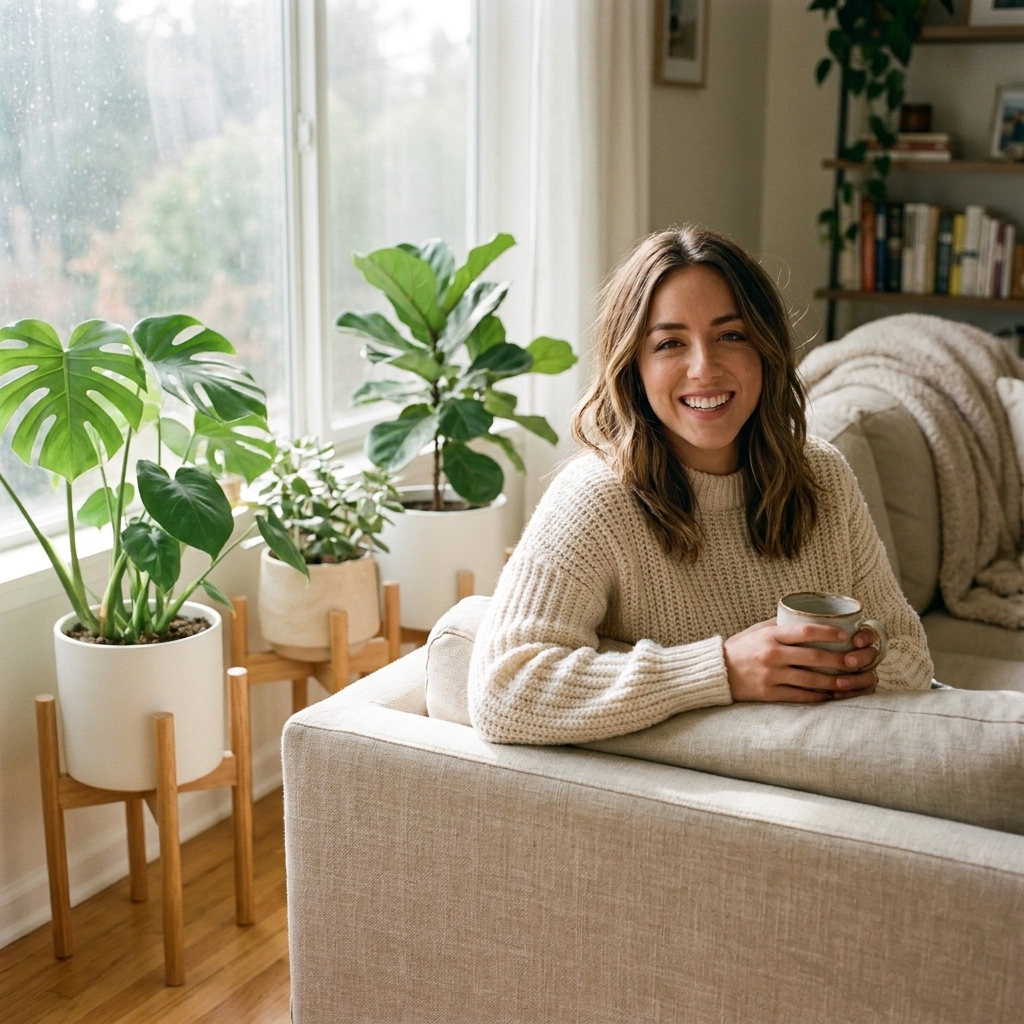
A clear, practical guide to bright indirect light: how to spot it, measure it, and choose plants that will truly thrive indoors.
If you want a houseplant that looks polished year-round, tolerates real-life indoor conditions, and will not send you into a panic if your cat takes a curious sniff, meet the Baby Rubber Plant, Peperomia obtusifolia. It has thick, glossy leaves, slow and steady growth, and a personality that reads “calm roommate.”
And if you are coming to this after accidentally loving a plant a little too much with the watering can, you are in good company. Peperomias are one of my favorite confidence builders because they do not need constant attention to thrive. They need the right setup, then they need you to mostly leave them alone.
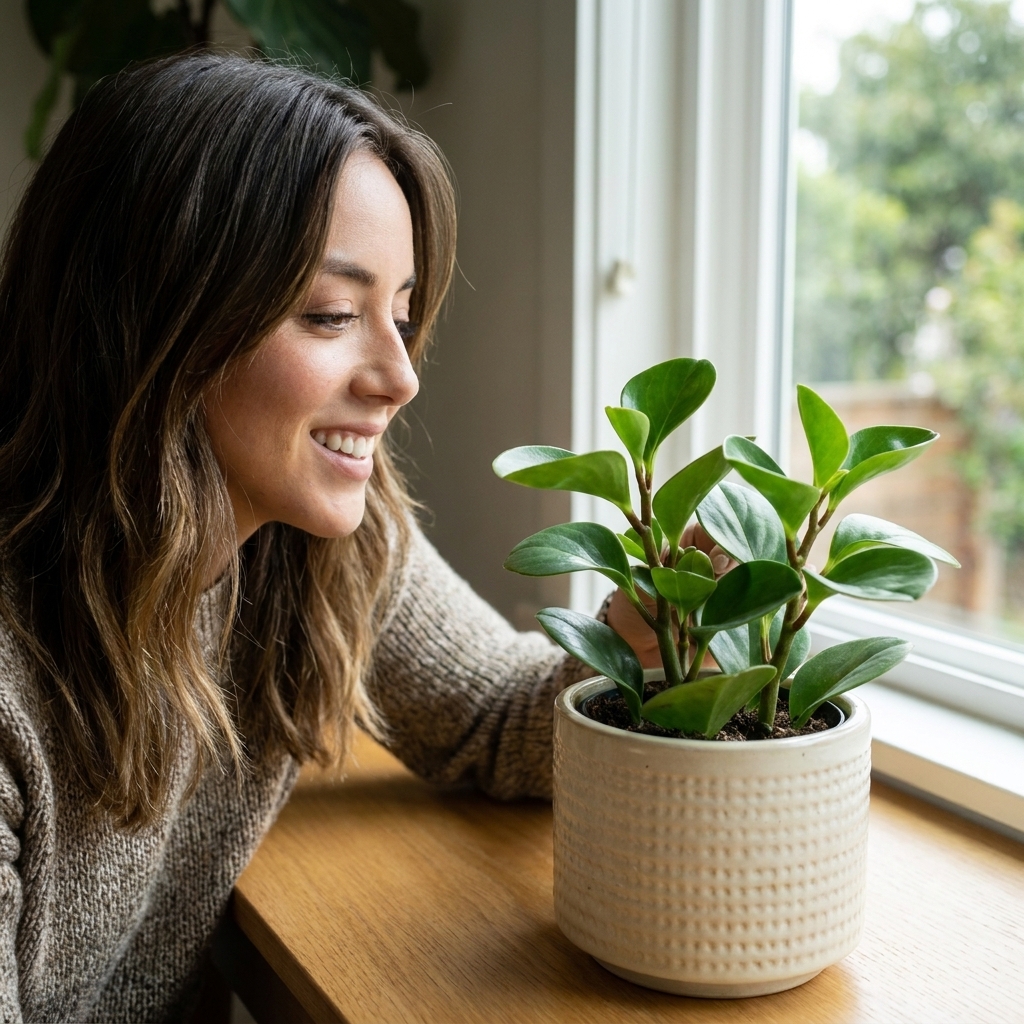
Quick facts
- Common name: Baby Rubber Plant
- Botanical name: Peperomia obtusifolia
- Plant type: Tropical evergreen perennial (grown as a houseplant)
- Growth rate: Slow to moderate
- Light: Bright indirect is best, tolerates medium light
- Water: Let most of the pot dry before watering again
- Best feature: Thick leaves that store water, forgiving nature
- Pet safety: Listed as non-toxic by the ASPCA for cats and dogs
Is it really pet-safe?
In most homes, yes. Peperomia obtusifolia is listed as non-toxic to cats and dogs by the ASPCA, which is why it is a go-to for plant people who share space with pets.
That said, “non-toxic” does not mean “edible.” If a pet chews a lot of leaf tissue, mild stomach upset can still happen simply from irritation or from eating plant material. Individual sensitivities vary, too. If your cat is a dedicated plant chewer, your best strategy is still smart placement and offering a safe alternative like pet grass.
Pet-safe placement that works
- Choose sturdy surfaces. A Baby Rubber Plant can become top-heavy in a small or lightweight pot as it fills out. Use a heavier pot and place it on a stable table, not a wobbly plant stand.
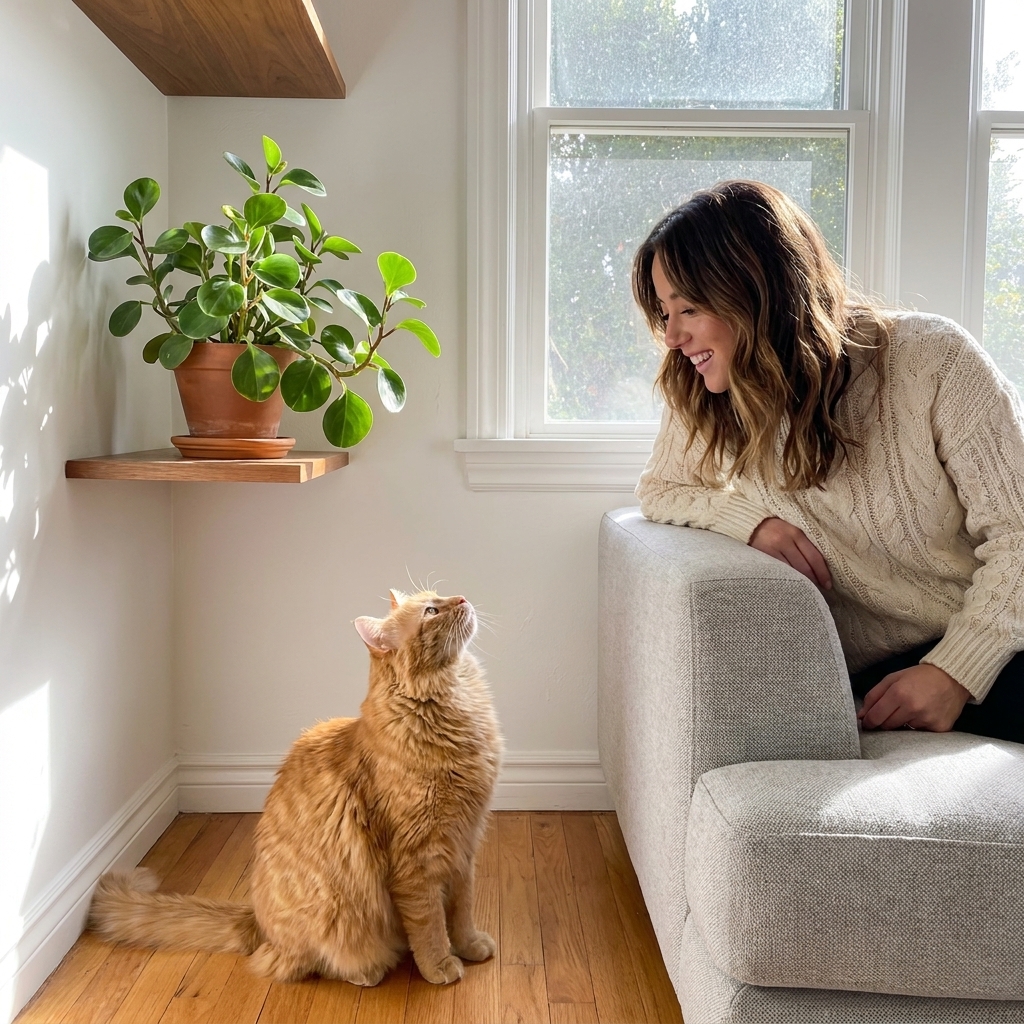
- Use height without teetering. A wall shelf anchored into studs is better than a narrow pedestal stand.
- Skip edge placement. Peperomia obtusifolia is upright, but if you place it right at the edge of a shelf, it becomes a tempting swat target.
- Create a “yes zone.” Put a scratching post or cat tree near a sunny window and keep plants on a separate ledge. Cats like routines and routes.
Light needs
Think of this plant as a bright shade lover. Bright, indirect light is the sweet spot for compact growth and glossy leaves.
Best window placement
- East-facing windows: Ideal for gentle morning sun.
- North-facing windows: Often workable, especially if the window is large and unobstructed.
- West or south windows: Great if you pull the plant back from the glass or filter the sun with a sheer curtain.
What too much or too little light looks like
- Too much direct sun: Faded, bleached, or crispy patches, especially on the top leaves.
- Too little light: Slower growth, longer gaps between leaves, stems leaning toward the window.
If you have a variegated cultivar (green leaves with cream edges), it will want a bit more light than an all-green plant to hold its pattern.
Soil and potting
The fastest way to upset a Baby Rubber Plant is to give it soil that stays wet for days. The goal is fast drainage with a little moisture retention.
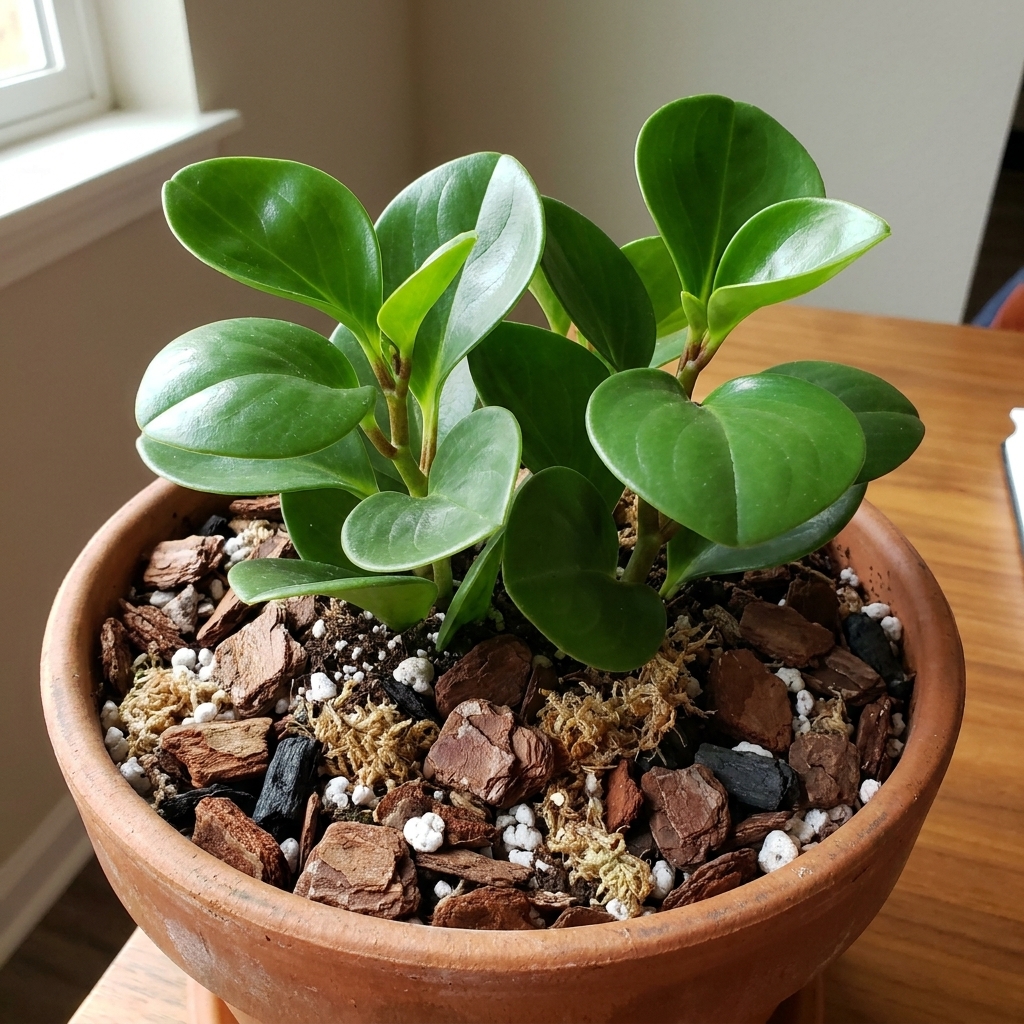
An easy soil mix
You can absolutely use a quality indoor potting mix, but I recommend lightening it:
- 2 parts indoor potting mix
- 1 part perlite or pumice
- Optional: a small handful of orchid bark for extra airflow
This keeps roots oxygenated and dramatically lowers your risk of root rot.
Pot choice
- Use a pot with a drainage hole. Decorative cachepots are fine as an outer layer, but the inner pot needs drainage.
- Terracotta helps. If you tend to overwater, terracotta is your friend because it breathes and dries faster.
- Do not oversize. A pot that is too large holds extra wet soil the roots cannot use.
Watering (no guilt)
This is the big one. Peperomia obtusifolia has thick leaves that store water, so it prefers a dry-down cycle. Water thoroughly, then let the pot dry out significantly before watering again.
How to know when to water
- Finger test: In small pots, let about 50 to 75% of the mix dry out. In larger pots, at least the top few inches should be dry before you even consider watering.
- Pot weight test: Lift the pot right after watering, then lift again later. You will feel the difference.
- Leaf feel check: Leaves should be firm. Slight softness or subtle wrinkling can mean it is getting thirsty.
How often is normal indoors?
In many homes, you will land around:
- Spring and summer: every 7 to 14 days
- Fall and winter: every 14 to 21 days (sometimes longer in low light)
Instead of watering on a calendar, let soil dryness, pot size, and light level decide.
The right way to water
- Water until it runs out the drainage hole.
- Let it drain completely, then return it to its spot.
- Never leave it sitting in a saucer of water.
Temperature and humidity
Baby Rubber Plants are wonderfully unfussy about household humidity.
- Temperature: happiest around 65 to 80°F
- Humidity: average home levels are fine
What they do not love is cold drafts. If a leaf suddenly drops after a cold snap, check for a chilly window ledge or a nearby exterior door.
Fertilizing
Peperomia obtusifolia is not a heavy feeder. Too much fertilizer can cause weak, leggy growth and salt buildup in the soil.
- When: spring through early fall
- How: a balanced liquid fertilizer at half strength every 4 to 6 weeks
- Skip feeding: in winter, or anytime the plant is stressed or not growing
Pruning and shaping
This plant naturally grows into a tidy mound, but you can shape it easily.
- Pinch tips to encourage branching and a fuller look.
- Remove yellowing leaves at the base with clean snips.
- Rotate the pot a quarter turn every week or two for even growth.
Wipe leaves occasionally with a damp cloth. Those glossy leaves collect dust, and a clean surface helps the plant photosynthesize efficiently.
Propagation
Peperomia obtusifolia is one of those plants that makes you feel like a plant wizard because it propagates reliably.
Stem cutting method
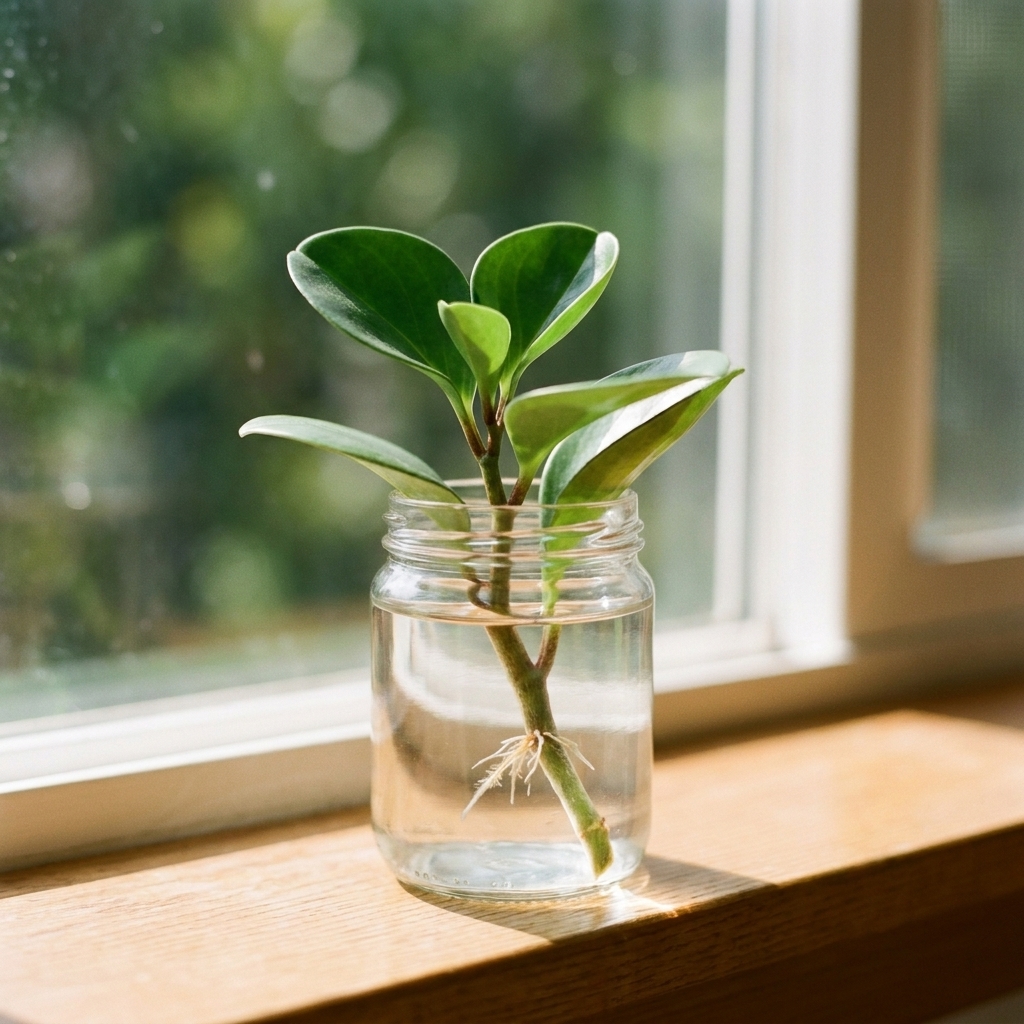
- Take a cutting with 2 to 4 leaves and at least one node.
- Remove the lowest leaf so you have a bare node to root.
- Root in water or soil. Water is great for visibility, soil is great for a smoother transition.
- Provide bright indirect light and keep the environment warm.
If you root in water, pot it up once you have several roots that are a couple inches long. Use the same airy soil mix described above.
Common problems
Overwatering vs underwatering
- Overwatering signs: yellowing leaves, soft stems, soil that stays damp for days, a sour smell from the pot
- Underwatering signs: wrinkled leaves, slight droop, very dry mix pulling away from the pot edges
Yellow leaves
Most common cause: overwatering or soil staying wet too long.
- Check that the pot drains freely.
- Confirm the mix is airy, not dense and muddy.
- Let it dry further between waterings.
Mushy stems or a sour smell
Likely cause: root rot starting.
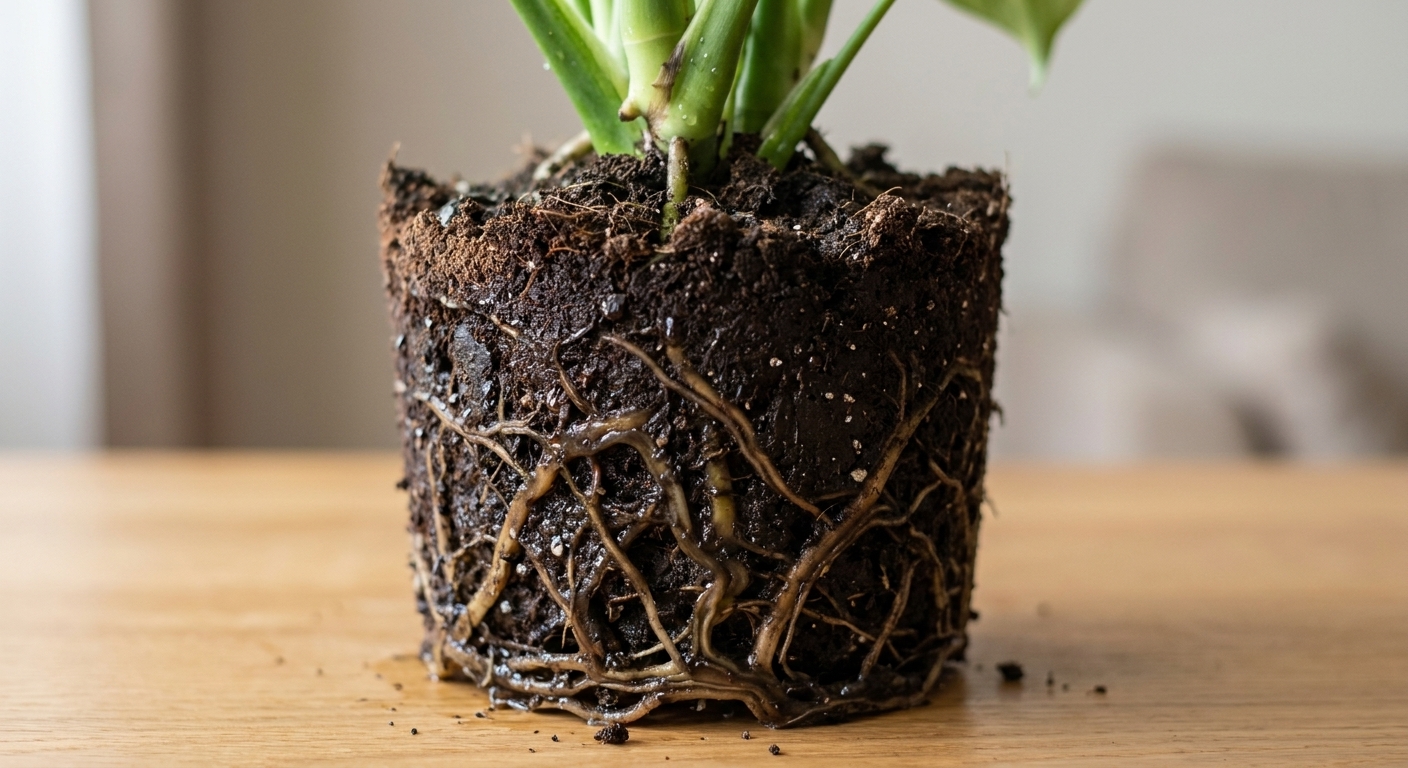
- Remove the plant from the pot and inspect roots.
- Trim any brown, slimy roots with sterile scissors.
- Repot into fresh, barely moist airy mix and a pot with drainage.
- If roots were damaged, wait 2 to 5 days before watering again, then water sparingly and keep it in bright indirect light with good airflow.
Wrinkled or droopy leaves
Usually: underwatering, or roots that cannot take up water due to prior overwatering damage.
- Check soil moisture first.
- If bone dry, water thoroughly and let it drain.
- If damp but leaves are drooping, inspect roots.
Leggy growth
Cause: not enough light.
- Move closer to a brighter window.
- Consider a grow light if your space is low-light most of the year.
Pests (mealybugs, spider mites)
Peperomias are not pest magnets, but pests happen.
- Isolate the plant.
- For mealybugs, wipe leaves and stems with a cotton pad dipped in 70% isopropyl alcohol. Spot-test first and keep the plant out of direct sun until the foliage is fully dry.
- For spider mites, rinse foliage in the shower and follow with insecticidal soap.
- Repeat weekly for a few rounds.
Repotting
Because it grows slowly, you will not be repotting constantly. Most Baby Rubber Plants are happy being repotted every 2 to 3 years, or when roots are circling the bottom and the plant dries out unusually fast.
- Choose a pot only 1 to 2 inches wider than the current one.
- Repot in spring if you can, when the plant is ready to grow.
- Water lightly after repotting, then let it settle.
Flowering
Yes, it can flower indoors. Peperomia obtusifolia sometimes sends up thin, pale spikes that look a bit like little rat-tails. They are not showy, but they are normal. If you do not love the look, you can snip them off without harming the plant.
Naming mix-ups
“Baby rubber plant” is a nickname, and plant labels are not always consistent. Most plants sold under this name are Peperomia obtusifolia or very close relatives and cultivars, so care is usually similar. When in doubt, follow the core rules: bright indirect light, airy soil, and a thorough soak only after a real dry-down.
Why it is a great starter plant
I do not believe in black thumbs. I believe in mismatched care. Peperomia obtusifolia is forgiving because it stores water, tolerates average indoor humidity, and does not demand a sunny greenhouse window to look good.
If you can give it three things, it will reward you for years:
- Bright-ish light
- Airy soil with drainage
- Water only after it dries down
FAQ
Is a Baby Rubber Plant the same as a Rubber Plant?
No. A Rubber Plant usually refers to Ficus elastica, which is a different species with different care needs. Peperomia obtusifolia stays smaller and is listed as non-toxic to cats and dogs by the ASPCA.
Can Peperomia obtusifolia handle low light?
It can tolerate low light, but it will grow more slowly and may become leggy. Medium to bright indirect light produces the best shape.
Should I mist my Baby Rubber Plant?
You do not need to. If you enjoy misting, it is not harmful in moderation, but it is not a substitute for proper watering habits and good airflow.
Why are leaves dropping?
Most often it is overwatering, sudden cold exposure, or a big change in light. Check soil moisture and make sure the plant is not in a drafty spot.