Use this monthly houseplant check-in to spot pests, disease, and watering issues early. A calm, step-by-step routine for healthier indoor plants all year.
If your houseplant looks a little tired even though you are watering correctly, there is a sneaky culprit I see constantly in apartments and cozy homes: dust. A thin film of dust can block light, interfere with normal gas exchange through stomata (the tiny pores on leaves), and make it easier for pests to settle in unnoticed.
The good news: cleaning leaves is one of the fastest ways to make a plant look better and function better. The trick is doing it safely, because some common household products can damage leaf tissue, strip protective waxes, or leave residue that attracts more dust.

Why clean leaves?
Leaves are basically solar panels. When dust builds up, your plant has to work harder to photosynthesize. Clean leaves can help with:
- Better light absorption, especially in low light homes
- Smoother transpiration and gas exchange at the leaf surface
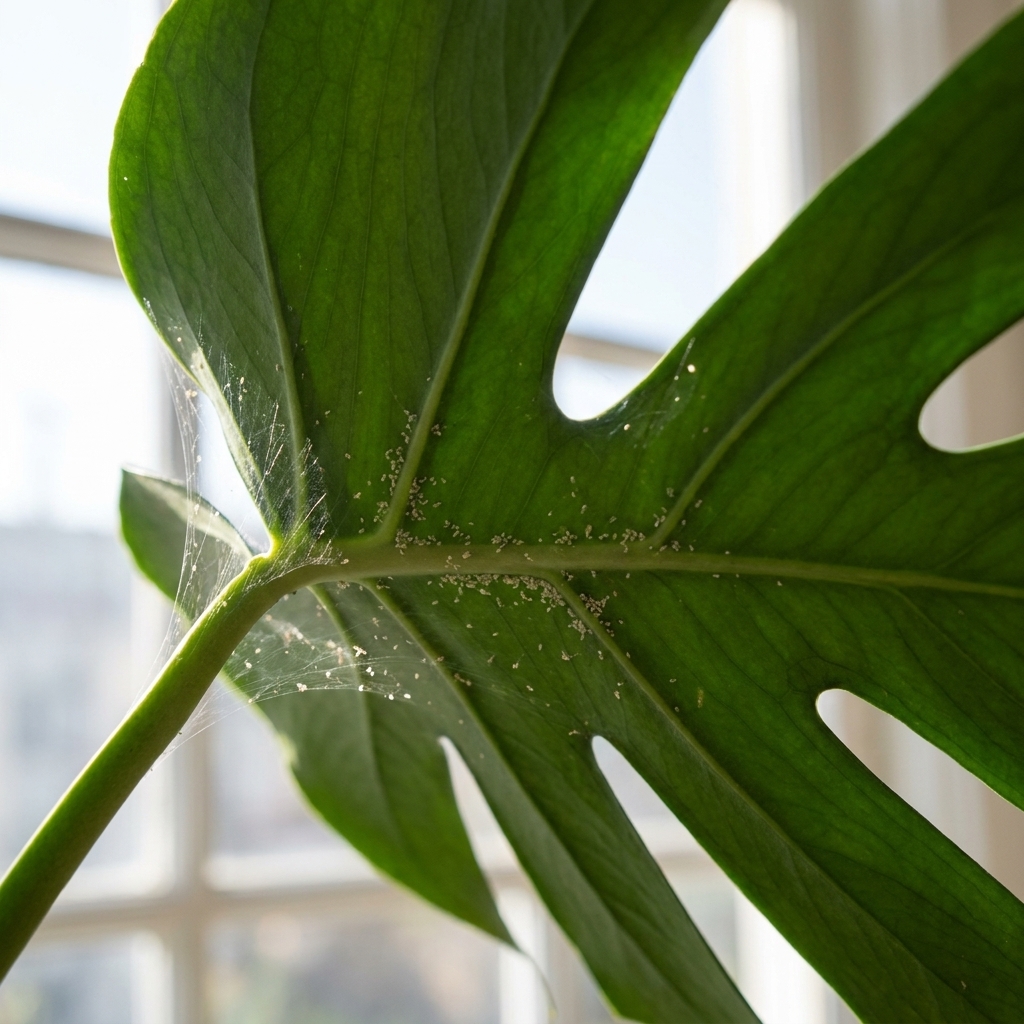
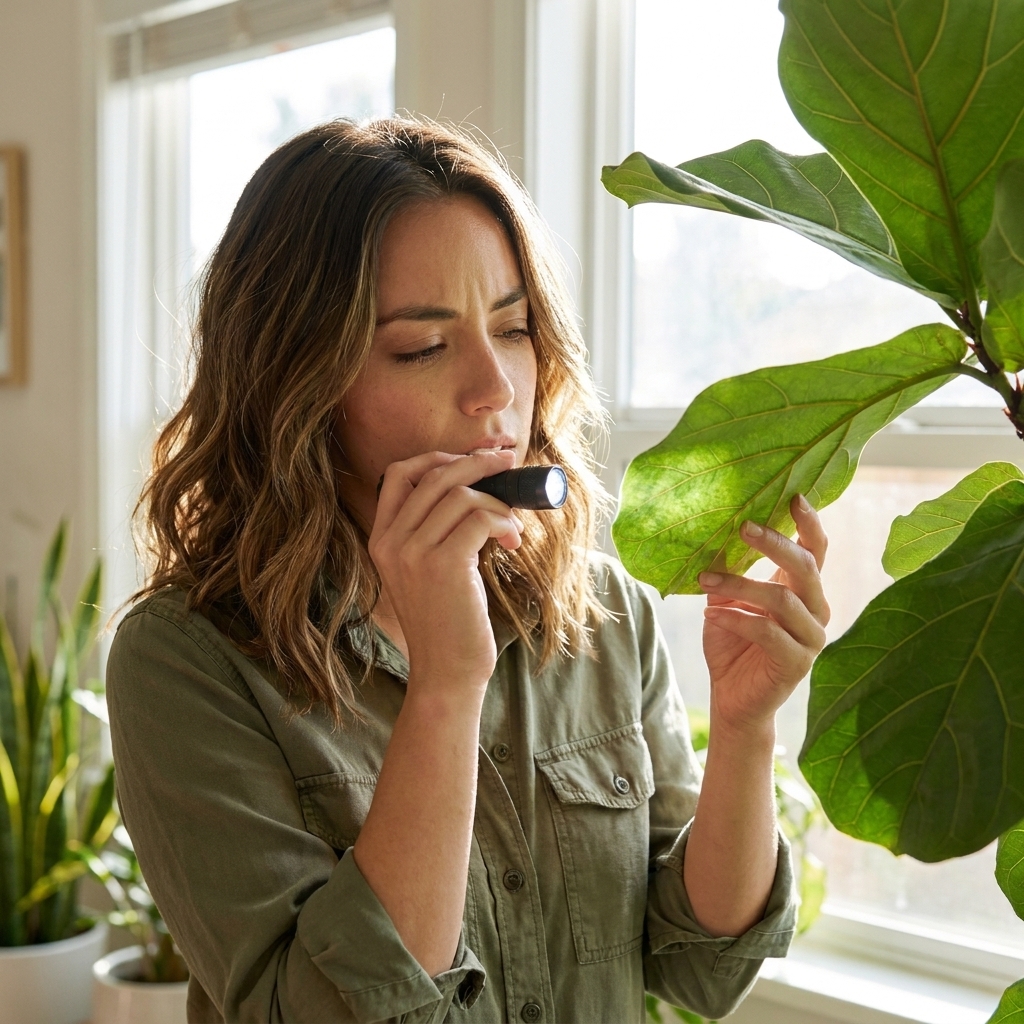
- Fewer pest surprises because you are inspecting the plant regularly (especially the undersides)
- Stronger overall growth, which often makes water use feel more stable over time
If you have ever cleaned a dusty pothos and thought, “Wait… it looks a shade greener,” you are not imagining it.
Before you start
This takes two minutes and prevents most cleaning mishaps.
- Clean in gentle light. Avoid strong direct sun right after cleaning, especially if you use any spray. Wet leaves plus hot sun can increase the chance of spotting.
- Support the leaf. Slide your hand under the leaf while wiping so you do not crease or tear it at the petiole.
- Test first. Try any spray on one older leaf and wait 24 hours for spotting or dull patches.
- Use lukewarm water. Cold water can stress sensitive tropicals, and hot water can stress leaf tissue.
- Skip cleaning stressed plants. If a plant is freshly repotted, wilted, sunburned, or actively battling pests, stick to plain water wiping only until it stabilizes.
Safest methods
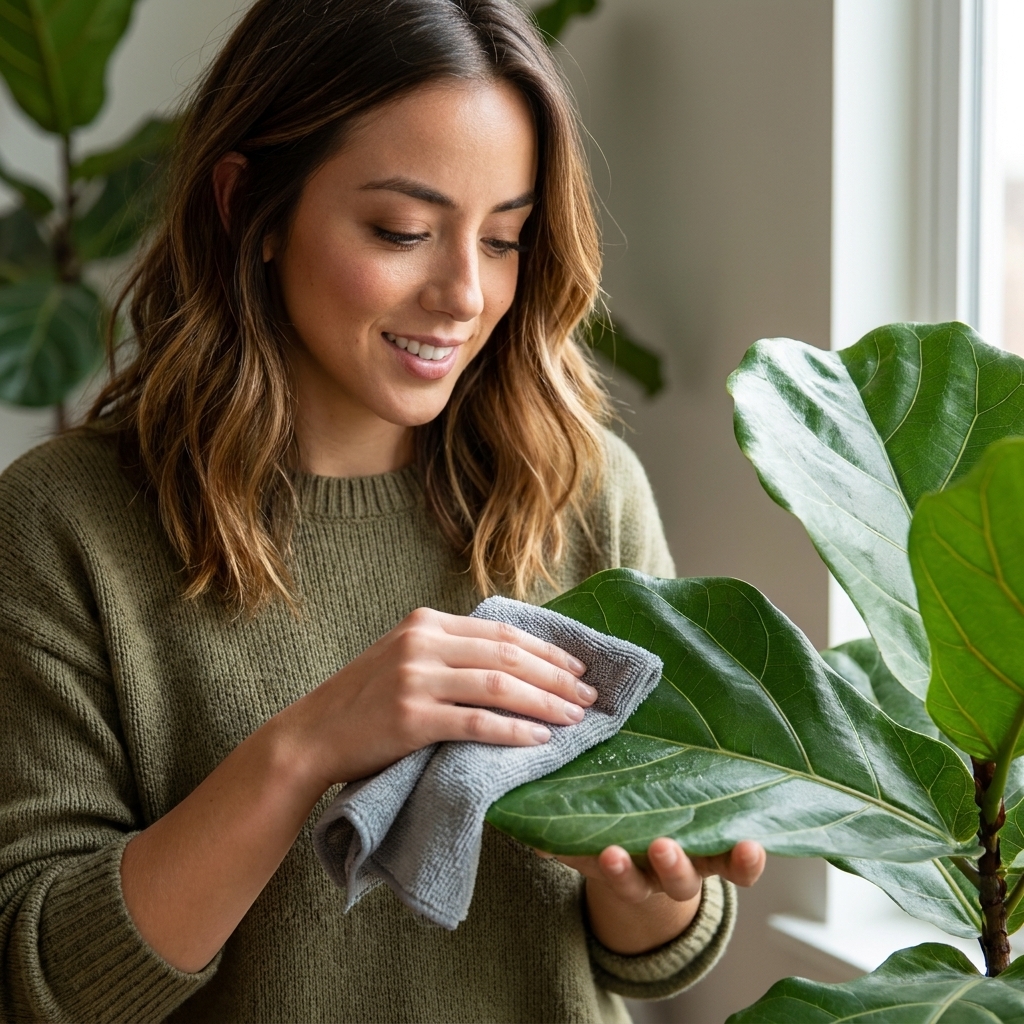
1) Damp microfiber cloth (my go-to)
For broad-leaf plants like Monstera, Philodendron, Rubber Plant, Fiddle Leaf Fig, Bird of Paradise, and many Hoyas, a simple wipe is perfect.
- Wet a microfiber cloth with plain lukewarm water and wring it so it is damp, not dripping.
- Support the leaf from underneath.
- Wipe from the base toward the tip in one direction, then flip the cloth and do a final pass.
- If there is stubborn grime, rinse the cloth and repeat rather than scrubbing hard.
Tip: Use a second dry microfiber cloth to lightly buff. This reduces water spots without adding any “shine” products.
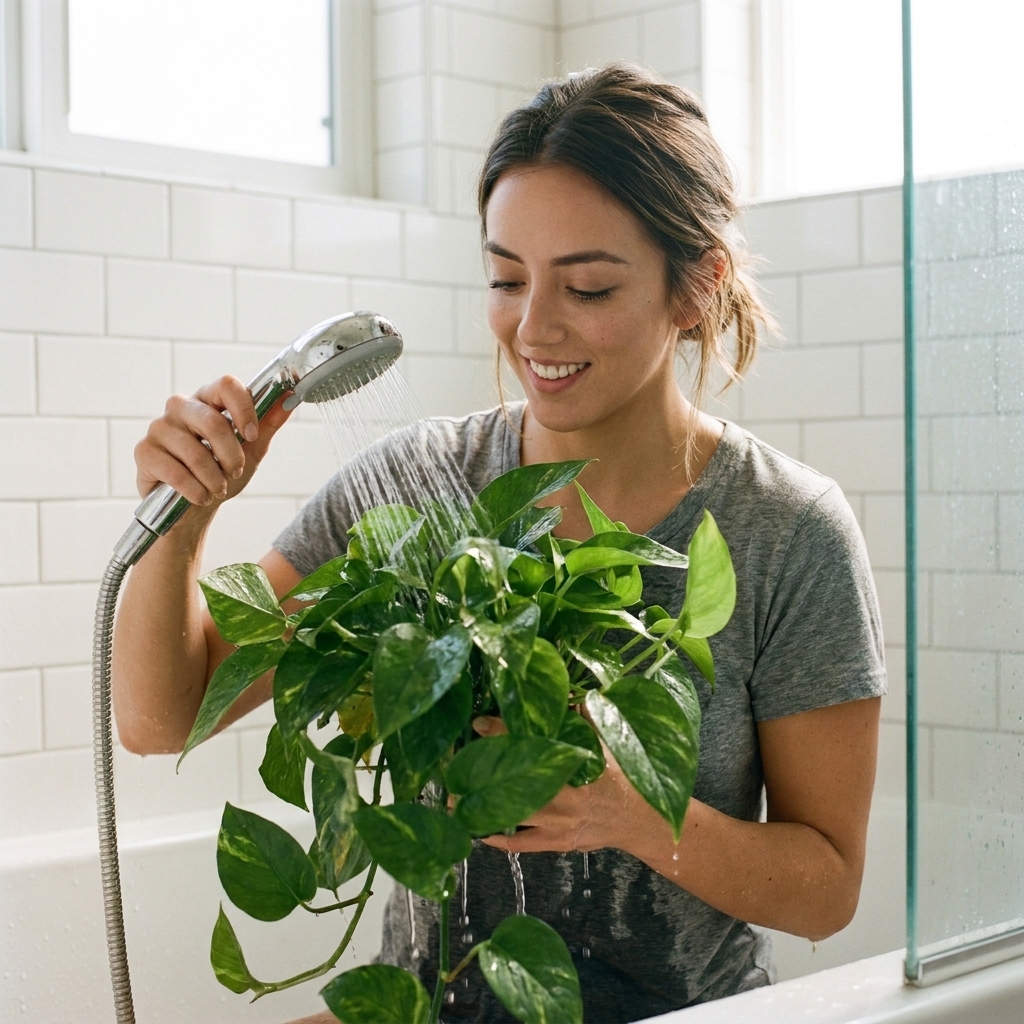
2) Shower rinse (best for dense foliage)
For plants with lots of small leaves like Pothos, Schefflera, Spider Plant, Ferns, and Peperomia, wiping every leaf is a whole afternoon. Shower rinses are a lifesaver.
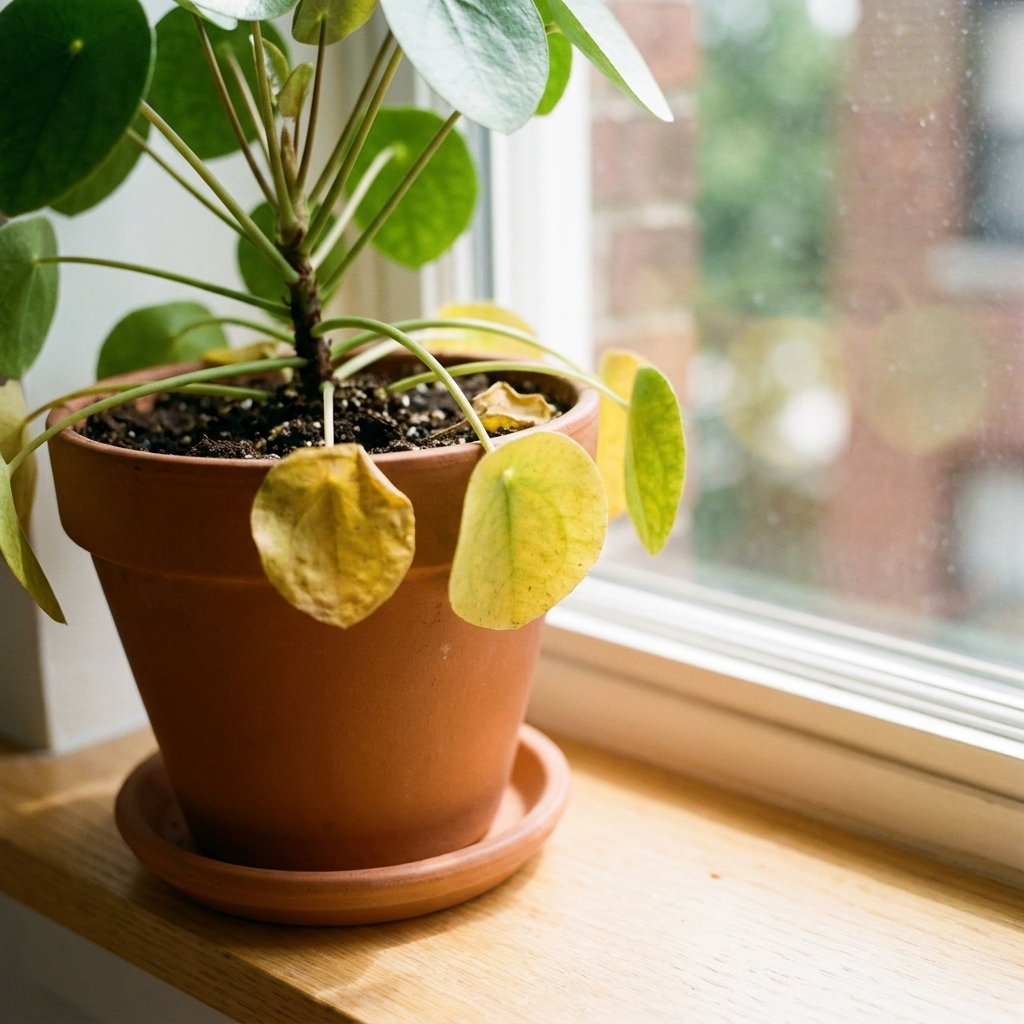
- Cover the soil with plastic wrap if you are worried about overwatering, especially for plants prone to root rot. It helps, but it is not perfect, so plan to let the pot drain well afterward.
- Use lukewarm water on a gentle setting.
- Rinse from multiple angles to dislodge dust.
- Let the plant drain fully before returning it to its spot.
Extra root-rot-friendly move: If your plant already runs wet, tip the pot slightly after the shower and let it drain for 30 to 60 minutes in the tub.
When to skip a shower rinse: Plants with fuzzy crowns (like African violets), plants that hate water sitting in the center, or anything already struggling with crown or stem rot do better with a brush or careful wiping.
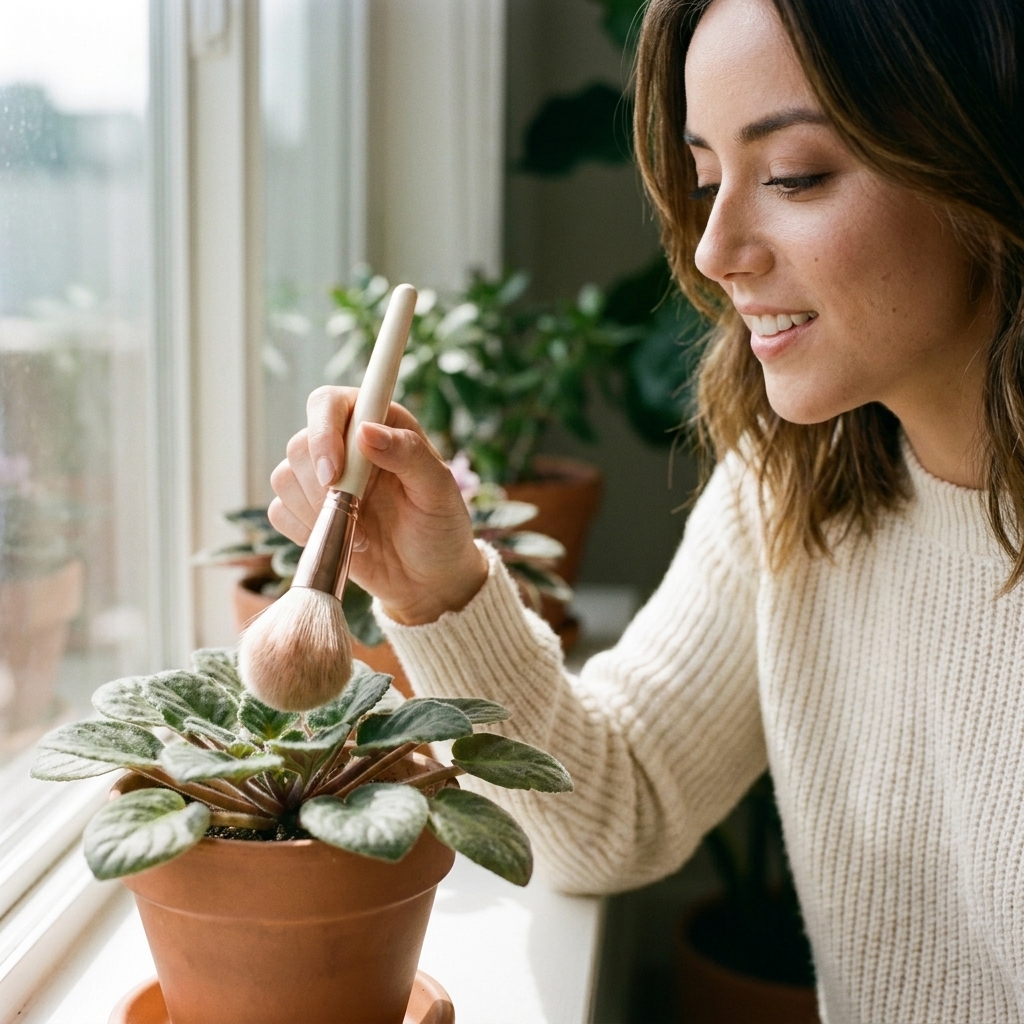
3) Soft brush (for fuzzy or textured leaves)
Some plants hate wiping because their leaves are hairy, velvety, or textured. Think African violets, many begonias, peperomia with fuzzy leaves, and some prayer plant relatives with delicate surfaces.
- Use a clean, soft makeup brush or soft paintbrush.
- Brush gently to lift dust without pressing oils into the leaf.
- For stubborn dust, use the brush dry first. If the plant tolerates it, follow with a very light mist in the air nearby, not a soaking spray directly on the leaf.
Safe DIY sprays
Most of the time, plain water is enough. I only reach for a gentle DIY spray when there is sticky residue (from sap, cooking film, or honeydew after a pest issue) or when the plant is large enough that wiping with only water is not cutting through grime.
Option A: Ultra-gentle wipe spray
Mix: 1 quart (about 1 liter) lukewarm water + 2 to 3 drops of mild liquid castile soap or a very gentle, unscented dish soap.
- Shake gently.
- Spray onto your cloth, not directly onto the plant, then wipe.
- Follow with a second cloth dampened with plain water to remove any soap residue.
Why this works: A tiny amount of surfactant helps lift oily grime, but you are not leaving a film behind.
Option B: Distilled water wipe (for hard water)
If your tap water leaves spots or crusty mineral marks, switch to distilled water for leaf cleaning. No fancy recipe, just distilled water in a spray bottle and wipe. This is especially helpful for plants with dark leaves where spotting shows up fast.
Option C: Post-pest cleanup wipe (after pests)
If you recently dealt with aphids, mealybugs, or scale, you might be cleaning off sticky honeydew or leftover residue.
Mix: 1 quart (about 1 liter) water + 1 teaspoon mild liquid castile soap.
- Wipe leaves thoroughly.
- Rinse by wiping again with plain water.
- Keep the plant out of direct sun until leaves are fully dry.
Important: This is a cleaning step, not a full pest treatment plan. If pests are still present, use a dedicated approach (like insecticidal soap used per label instructions, or targeted alcohol swabs for mealybugs) and then clean leaves once the infestation is under control.
What to avoid
This is where a lot of well-meaning plant parents accidentally cause damage. Here is what to skip and why.
Leaf shine sprays
Leaf shine products often leave a coating that may reduce transpiration and gas exchange and attract dust. Some can also cause spotting or a dull, plasticky look over time.
If you want a naturally prettier finish, a clean leaf with plain water and a microfiber buff is the safest shine.
Mayonnaise, oils, coconut oil, olive oil
These might create temporary gloss, but they can leave a greasy film that collects dust faster and can interfere with normal leaf function. In real homes, oily residue also tends to smear and travel, which usually means even more cleaning later.
Vinegar solutions
Vinegar is acidic. Even diluted, it can irritate leaf tissue, especially on thin-leaf plants and tropicals. Save vinegar for descaling humidifiers, not for leaves.
Rubbing alcohol sprays (as a cleaner)
Alcohol has a role in plant care, but it is a spot treatment tool, not an all-over leaf cleaner. Alcohol can strip protective waxes and dehydrate leaf tissue. If you are treating pests like mealybugs, use alcohol on a cotton swab and target the insects, not the entire leaf surface.
Glass cleaner, all-purpose cleaners, disinfectant wipes
These can contain harsh surfactants, fragrances, or disinfectants that damage leaves. If it is meant for countertops, it is not meant for living plant tissue.
Milk sprays
Milk can leave residue and odors indoors and may encourage microbial growth on the leaf surface. It is not worth the risk for a cosmetic shine.
Plant-specific tips
Glossy, thick leaves (Rubber Plant, Monstera, Philodendron, ZZ plant)
- Best method: damp microfiber wipe
- Optional: tiny-drop soap solution on cloth for stubborn grime, then plain-water wipe
- Bonus: wipe undersides occasionally, since pests love to hide there
Matte, delicate leaves (Calatheas, Marantas)
- Best method: plain water on a very soft cloth
- Avoid: frequent soapy wiping, harsh pressure, or direct sun while wet
Hairy or velvety leaves (African violet, some begonias)
- Best method: soft dry brush
- Avoid: wet wiping, heavy misting, and oils
Tiny leaf clusters (Ferns, asparagus fern, some peperomia)
- Best method: gentle shower rinse or careful sink rinse
- Aftercare: increase airflow until dry to reduce fungal issues
Cacti and succulents
- Best method: soft brush or gentle paintbrush
- Optional: compressed air used carefully from a distance, keeping the can upright so you do not blast cold propellant onto tissue or force debris into the crown
- Avoid: oily leaf products and frequent wetting, especially in low light
How often to clean leaves
There is no universal schedule, but here is a simple rhythm that works in real homes:
- Every 2 to 4 weeks: quick wipe for large-leaf plants in living areas
- Monthly: shower rinse for dense foliage plants
- Any time you notice dullness: spot clean the most visible leaves
- After a pest issue: clean once pests are controlled to remove residue and inspect recovery
If you cook a lot, burn candles, or live near a busy road with open windows, your plants may need more frequent cleaning because airborne oils and fine particles settle faster.
My leaf spa routine
- Move the plant to a sink, tub, or towel-covered surface.
- Dry dust first with a soft brush or dry microfiber, especially for very dusty plants.
- Wipe with plain water (or spray water onto the cloth) and support each leaf.
- Handle sticky spots using the ultra-gentle wipe spray, then wipe again with plain water.
- Check undersides of leaves for pests while you are there.
- Let it dry in bright, indirect light with decent airflow.
If cleaning goes wrong
Brown or black spots appeared after cleaning
- Possible cause: sun exposure while wet, or a product that irritated tissue
- Fix: move to bright indirect light, stop all sprays, and use only plain water wiping going forward
Leaves look dull or streaky
- Possible cause: soap residue or hard-water minerals
- Fix: wipe again with distilled water and a clean microfiber cloth
Leaves feel sticky days later
- Possible cause: leftover honeydew from pests or a residue-forming product
- Fix: inspect for pests closely (especially leaf joints and undersides), then wipe with mild soap solution and follow with a plain-water wipe
Leaf edges curled after a shower rinse
- Possible cause: plant got chilled or sat wet in a draft
- Fix: keep it warm, improve airflow, and avoid cold water next time
FAQ
Can I use dish soap to clean leaves?
Yes, but use very little, keep it gentle and unscented if possible, and do not leave it sitting on the leaf. I recommend spraying it onto your cloth and then following with a plain-water wipe to remove residue.
Is neem oil okay for making leaves shiny?
No. Neem is a pest management tool, not a cosmetic leaf product. Used incorrectly, neem can burn leaves and leave a film that collects dust. If you use neem for pests, follow label directions carefully and do not apply in bright sun.
Should I clean both sides of the leaf?
For most broad-leaf plants, yes, at least occasionally. Many pests hang out on undersides, and dust can build there too. Just be extra gentle, since undersides can be more delicate.
Do I need to clean new leaves?
Usually no. New leaves are still hardening off. I focus on mature leaves, and I only wipe a new leaf if it is visibly dusty or sticky.
What about banana peels?
I skip them. Banana peels can leave sugary residue that attracts dust and can encourage microbial growth. A damp cloth works better and stays cleaner.
A final pep talk
If you are reading this and realizing your plants have not had their leaves cleaned in… a while, you are in excellent company. Leaf cleaning is one of those quietly powerful habits that feels optional until you do it once and see the difference.
Start with your dustiest plant, use plain water and a microfiber cloth, and call it a win. Your plant does not need perfection. It just needs you to notice what it is asking for.