A clear, practical guide to bright indirect light: how to spot it, measure it, and choose plants that will truly thrive indoors.
Calatheas have a reputation for being dramatic, but in my experience they are mostly just honest. Give them the wrong light and they will tell you quickly, usually with faded patterns, slow growth, or those dreaded crispy brown edges.
The goal is simple: bright, indirect light. Not dark corners, not sunbeams on the leaves, and not “whatever my other plants tolerate.” In this guide, I will help you find that sweet spot in a real home, even if you are working with a low light apartment.
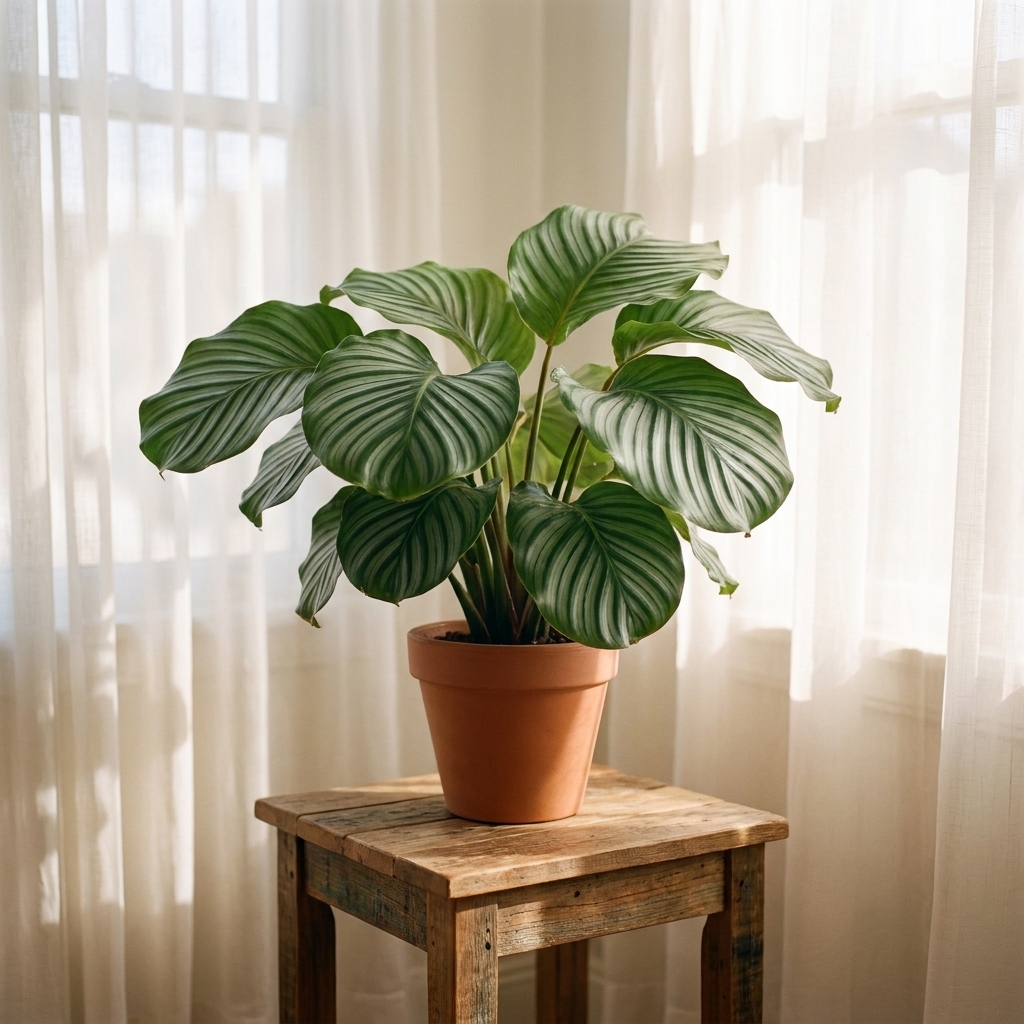
What “bright, indirect light” means
Plant care advice loves vague phrases, so let’s ground this in something you can actually use.
The shadow test (fast and free)
Stand where your Calathea will live and hold your hand about 12 inches above a white surface.
- Soft, blurry shadow: ideal bright indirect light for most Calatheas.
- Sharp, crisp shadow: the light is strong, often too direct unless it is filtered by a light-filtering curtain.
- Hardly any shadow: low light. Your Calathea may survive, but patterns often dull and growth slows.
Direct sun versus bright indirect
Direct sun means sun rays hit the leaves. Calatheas can scorch quickly in hot midday sun, especially through unobstructed glass in summer and on thinner-leaved varieties like roseopicta types (Medallion, Dottie) and pinstripe.
Bright indirect means the room is well lit, but the sun itself is not landing on the foliage. Think of light bouncing around the space, filtered through a sheer curtain, or coming from a bright window that is a few feet away.
One more thing people forget: light changes with seasons. A spot that feels perfect in winter can become too intense in summer, especially near south and west windows. Recheck your setup when the seasons shift.
Best window placement
Windows are not created equal. Below is how I place Calatheas in typical homes with the smallest number of burnt leaves and the best pattern retention.
Consider the distances as starting points, not rules. Room size, window size, tree cover, blinds, and your climate all matter. Use the shadow test and give the plant a week or two to tell you if you nailed it.
East-facing windows
This is often the easiest Calathea window. Morning sun is gentler, and many Calatheas can handle a little of it if it is mild or filtered.
- Starting placement: 1 to 3 feet back from the glass.
- If the sun hits the leaves: add a sheer curtain, tilt blinds to diffuse, or move the plant slightly to the side of the window.
North-facing windows
North light is typically indirect all day, but can be dim depending on season and window size.
- Starting placement: as close as 1 to 2 feet from the window.
- Watch for: slow growth and fading patterns in winter. A small grow light can be a game changer here.
South-facing windows
South windows are wonderful for many houseplants, but for Calatheas they usually need filtering or distance.
- Starting placement: 4 to 8 feet back, or closer behind a light-filtering curtain.
- Best setup: bright room, Calathea not in the beam. If you can read comfortably most of the day without turning on a lamp, you are in the right neighborhood.
West-facing windows
West light can be the trickiest. Afternoon and evening sun tends to be hot and harsh, especially in summer.
- Starting placement: 6 to 10 feet back if possible, or well off to the side of the window if you are in a smaller space.
- Must-do: diffuse the light with a sheer curtain, blinds angled up, or a frosted privacy film so the room stays bright without sun stripes hitting leaves.
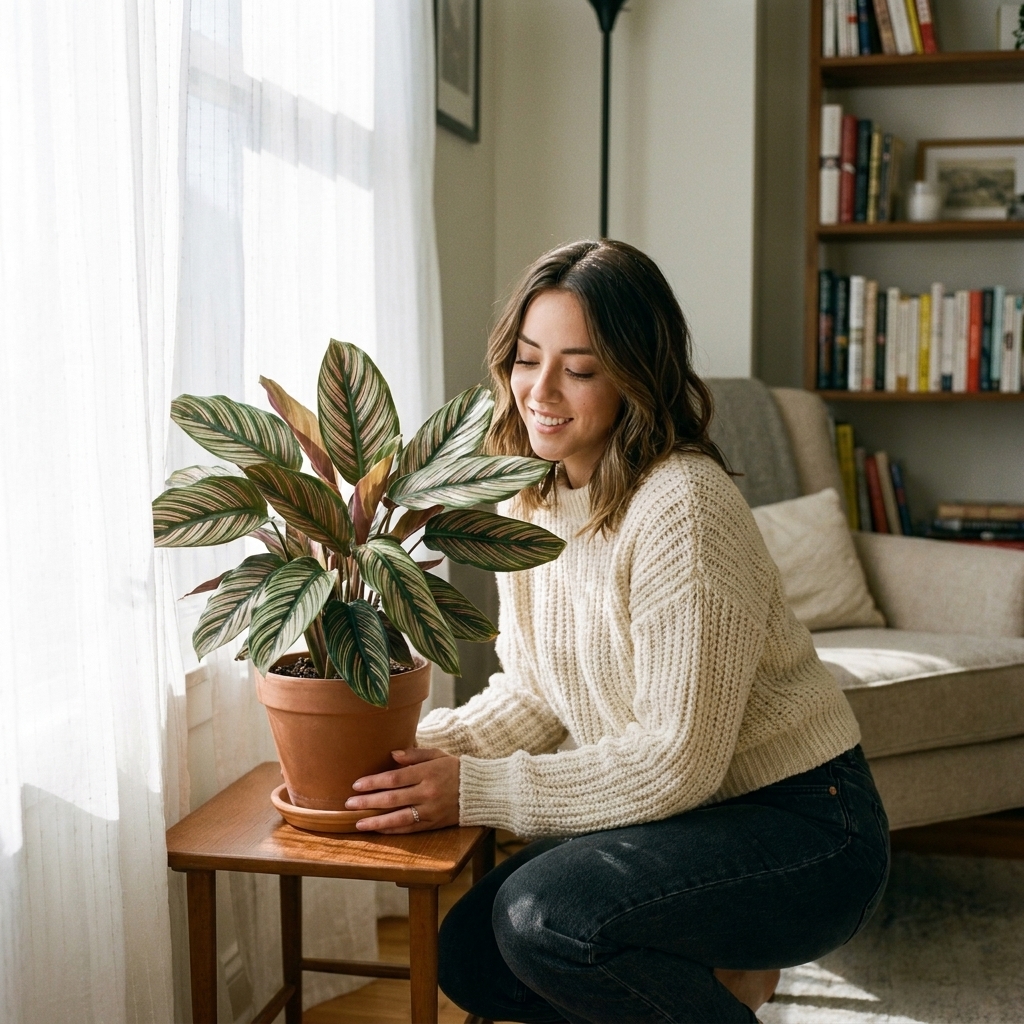
Signs your Calathea has too much light
Too much light usually shows up as damage rather than just “not thriving.” If your Calathea was fine and suddenly looks rough after a move, lighting is a top suspect.
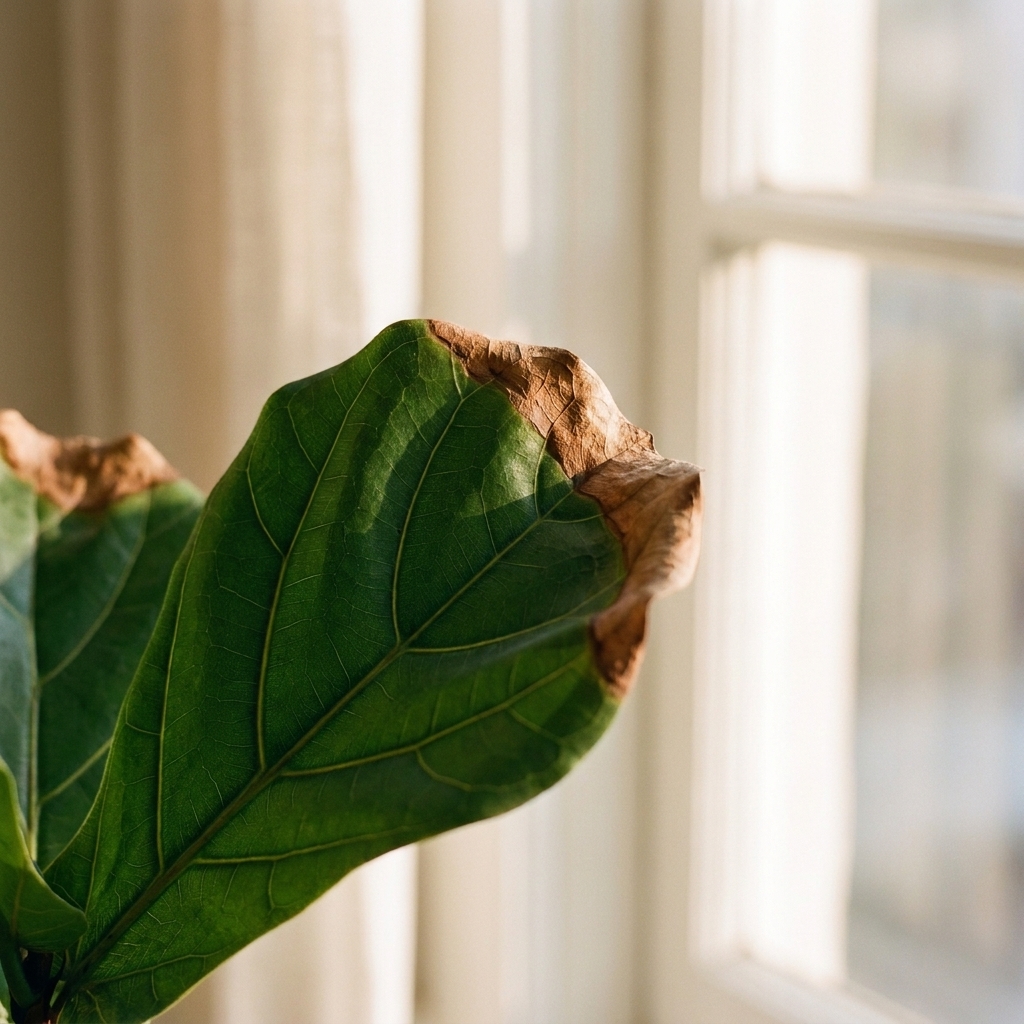
- Crispy brown patches or edges that feel dry and papery
- Bleaching or washed-out areas, especially on lighter variegation
- Leaf curl during the day, especially on hot bright days
- Rapid droop on bright days that improves at night
Note: curl and droop are not exclusive to high light. They can also show up with low humidity, underwatering, heat from a nearby vent, or root stress. If you see curl plus bone-dry soil, treat it like a watering issue first.
Common surprise: reflected sun
You can get burn even if the plant is not on the windowsill. Mirrors, glossy white walls, light floors, and nearby glass doors can reflect sun onto leaves for short bursts. If the damage shows up on the side facing the room rather than the window, look for reflected light.
Signs your Calathea needs more light
Low light is more subtle. Calatheas can hang on for a long time, but the plant slowly loses that crisp, vibrant look we bought it for.
- Fading patterns and dull, flat color
- New leaves smaller than older ones
- Leaning growth or leaves reaching toward the window
- Soil stays wet too long, raising the risk of root rot
If you are fighting fungus gnats, mushy stems, or recurring root rot, improving light often helps because the pot dries more predictably. Pair that with letting the top layer of mix dry slightly between waterings and avoiding constantly soggy soil.
Vibrant leaves without crispy edges
Light and leaf edges are connected, but not always in the way people assume. Direct sun can burn leaves, yes. But crispy edges are often a combo problem: slightly too much light plus low humidity, inconsistent watering, mineral-heavy water, or a plant that is still adjusting to a new spot.
Use light to support steady moisture
- In brighter indirect light: Calatheas drink faster. This is great if you like a routine, but the soil must not swing bone dry.
- In dimmer light: they drink slowly. Overwatering becomes easier, and stressed roots cannot support perfect foliage.
Aim for a pot that dries a little between waterings, not a pot that stays wet for 10 days or turns to dust in 24 hours.
Filter, do not hide
If your only good window is too sunny, do not banish the plant to a dark corner. Instead:
- Hang a sheer, light-filtering curtain to diffuse rays.
- Move the plant back from the glass.
- Shift it to the side of the window so it gets brightness without the beam.
Acclimate when you change light
Calatheas do best with gradual moves. If you are taking one from a dim shelf to a much brighter room, step it closer in stages every week or two. The plant adapts, and you avoid the shock that can trigger scorch or dramatic curling.
Rotate for even growth
Turn the pot a quarter turn every 1 to 2 weeks. This keeps the plant from leaning and helps leaves size up more evenly.
Grow lights for Calatheas
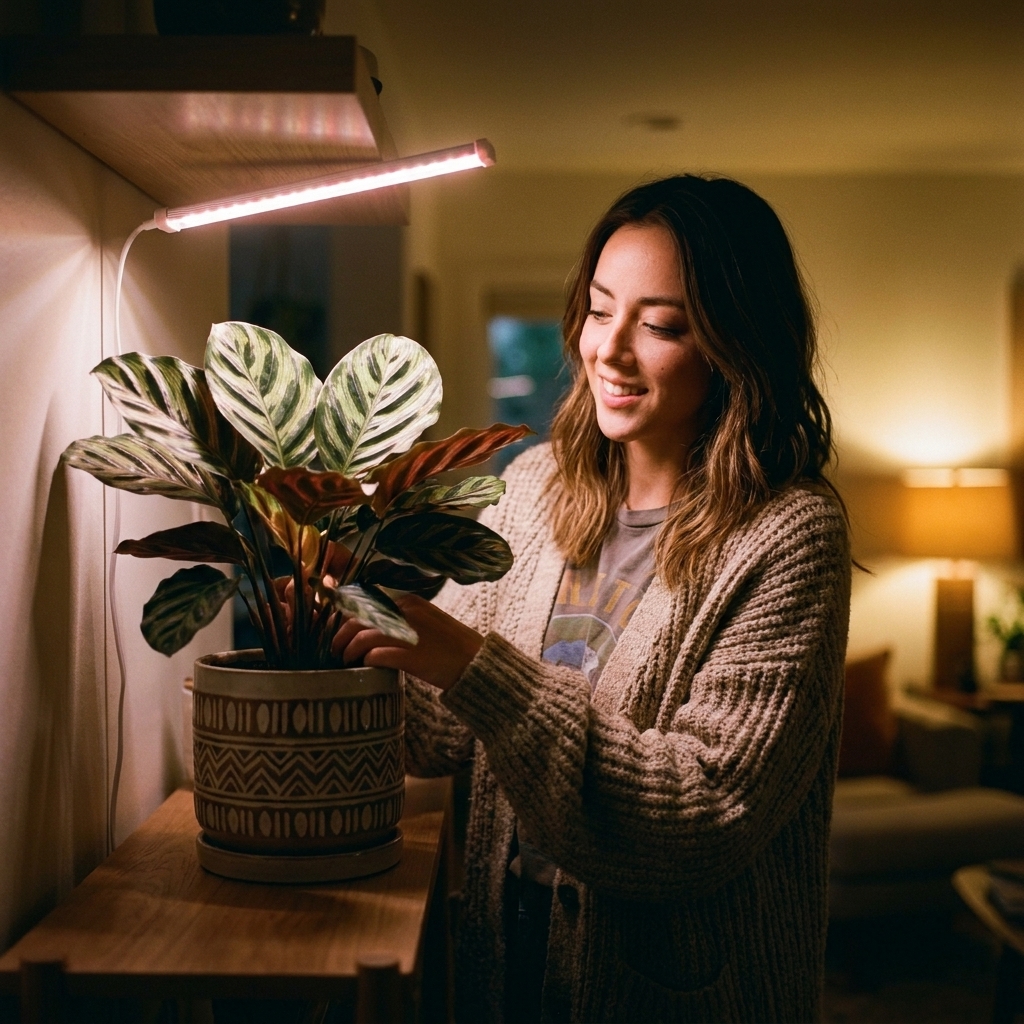
If your home is short on bright windows, a grow light can be the most stress-free option. You do not need a complicated rack system. A single LED grow bulb in a nearby lamp often does the trick.
What kind of grow light works best
- LED grow bulb or LED grow bar (low heat, efficient)
- Neutral or full spectrum is comfortable in living spaces
- Timer helps you stay consistent
If you like specs, look for a light designed for houseplants that provides moderate intensity at 12 to 18 inches. Manufacturers often list PPFD at distance. Use it as a guide, then adjust based on your plant’s response.
How long to leave it on
Aim for 10 to 12 hours per day. Calatheas like a predictable day and night rhythm, so keep lights off at night.
How close should the light be
Distance depends on the strength of the light, but a safe starting point is 12 to 18 inches above the leaves. If you see bleaching or new crisp spots, raise the light or shorten the duration.
Quick fixes for burning
If you suspect sun damage, you do not need to panic. You do need to adjust quickly so the next leaves come in clean.
- Step 1: Move it out of direct sun immediately. Bright shade counts.
- Step 2: Add a sheer curtain or increase distance from the window.
- Step 3: Check moisture. A plant in brighter light may be drying faster than before.
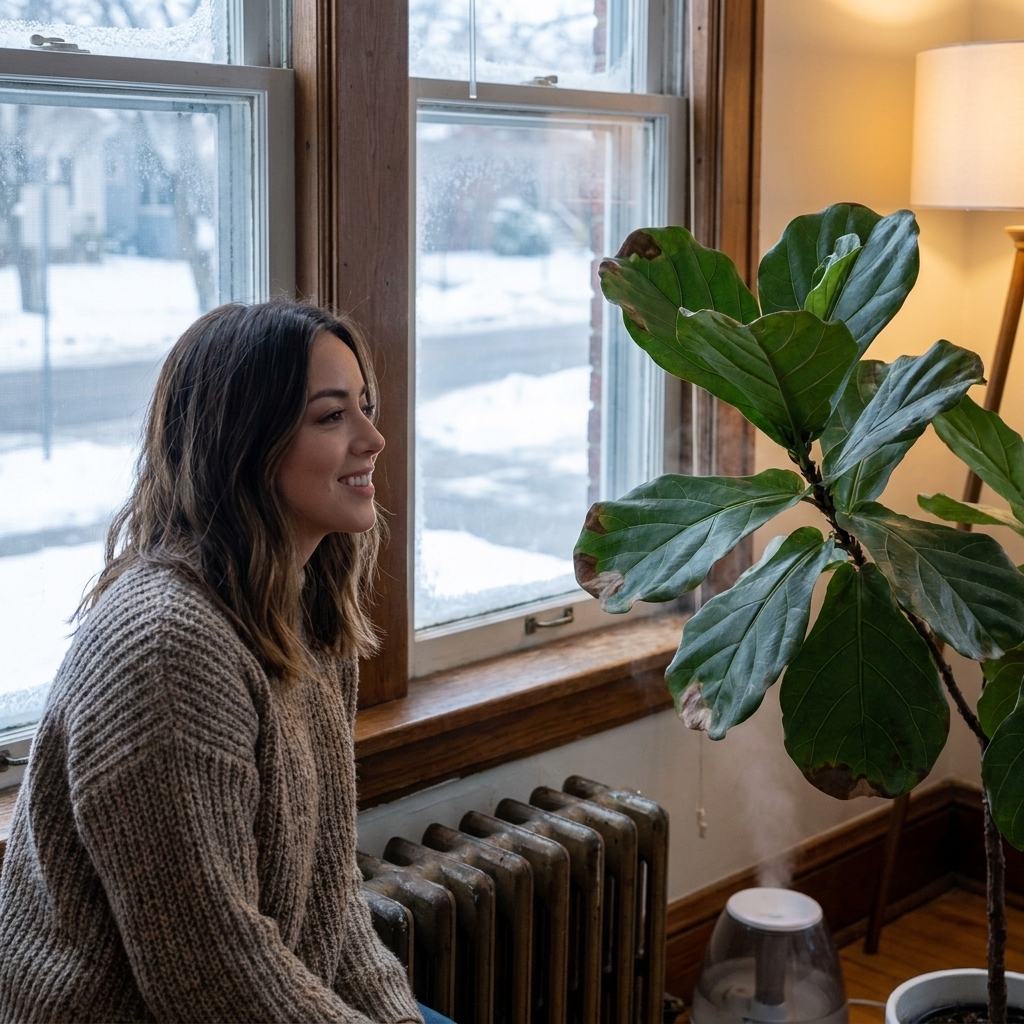
- Step 4: Stabilize humidity if you can (humidifier nearby, pebble tray for a small boost, group plants together).
Already-burnt areas will not turn green again. If the leaf is mostly damaged, you can trim it off at the base so the plant puts energy into fresh growth. If it is just a small patch, I usually leave it until the plant has plenty of new leaves.
Quick fixes for dull leaves
When patterns fade, the answer is usually “more light,” but in a gentle, gradual way.
- Step 1: Move it 1 to 2 feet closer to the brightest window that does not deliver direct sun.
- Step 2: Give it 2 weeks to respond before moving again.
- Step 3: If you still cannot get crisp patterns, add a grow light on a timer.
Pro tip from my own too-dark apartment years: the difference between “surviving” and “thriving” can be as small as moving a Calathea from across the room to a spot near the window where you would actually sit and read.
Varieties and light sensitivity
All Calatheas prefer bright indirect light, but some show stress faster than others. Also, many plants still sold as “Calathea” are now classified as Goeppertia. Care is basically the same, so do not let the name change throw you.
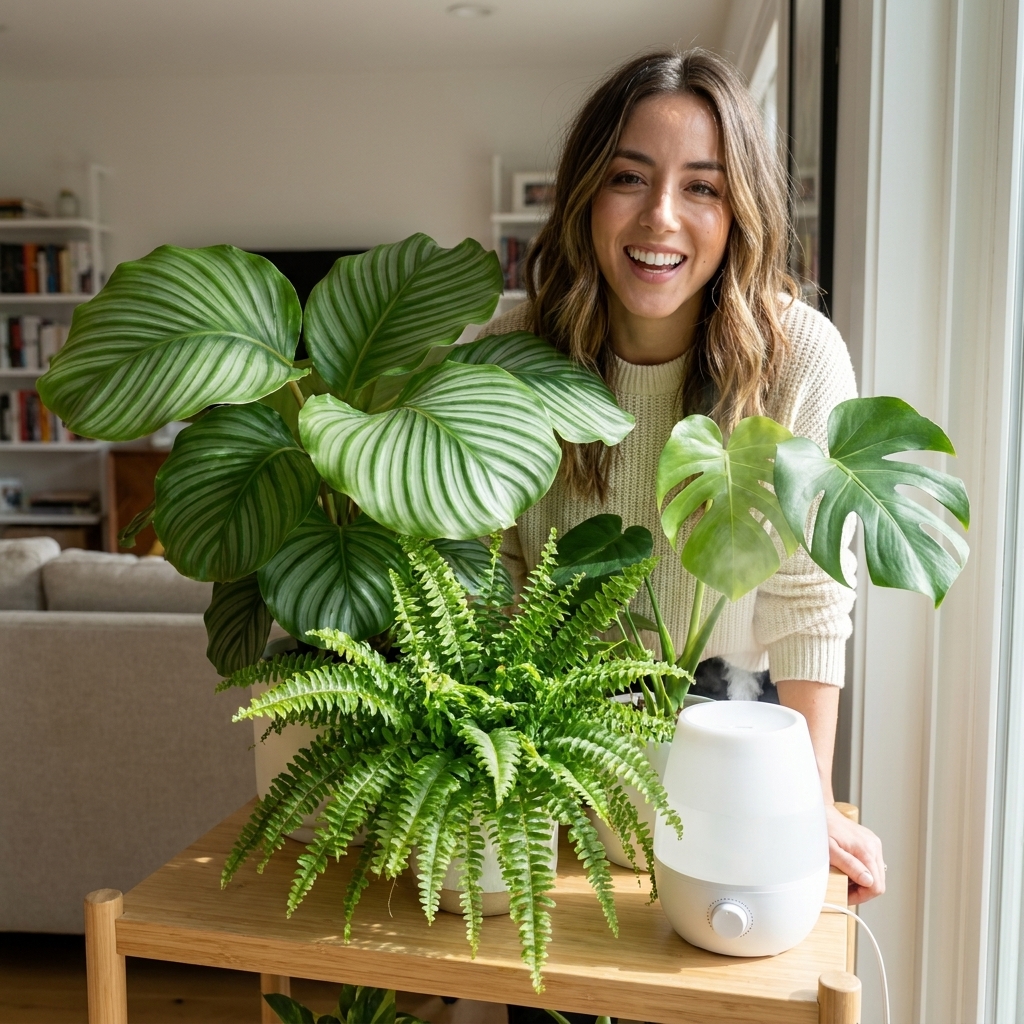
- Calathea orbifolia: Loves bright indirect light. Too dim and it becomes less crisp. Too much and the large leaves show damage quickly.
- Calathea roseopicta (Medallion, Dottie): Great pattern in brighter indirect light, but more prone to scorch in direct sun.
- Calathea lancifolia (Rattlesnake): Often a bit more forgiving in slightly lower light, but color is best when brighter.
- Goeppertia (Calathea) makoyana (Peacock): Shows fading in low light and edge crisping in overly bright, dry spots.
If your variety has thinner, velvety, or more delicate leaves, treat it as more sun-sensitive.
FAQ
Can Calatheas take direct sunlight?
Some plants can tolerate brief, gentle morning sun, especially if it is filtered. Still, I do not consider direct sun a goal for Calatheas. If sun rays land on the leaves regularly, expect a higher chance of scorch and crispy patches, particularly in summer.
Is low light okay for a Calathea?
Low light is usually okay for survival, not for peak looks. You may see slower growth, smaller new leaves, and dull patterns. If you are committed to a low light room, add a grow light for a few hours a day.
Why are my Calathea edges brown if the light is indirect?
Brown edges can come from a few sources that often stack together: air that is too dry, soil drying too far between waterings, mineral-heavy tap water, and roots that are stressed from staying wet too long. Light matters because it changes how quickly the pot dries and how hard the plant is working.
Should I mist my Calathea?
Misting gives a very short-lived humidity bump. It can help you clean leaves, but it is not a reliable fix for crispy edges. A small humidifier or a better light and watering rhythm tends to make a bigger difference.
How do I know if my Calathea is getting enough light without a meter?
If it holds strong patterning, puts out new leaves during the growing season, and the plant does not lean dramatically toward the window, you are close. The shadow test is also surprisingly accurate for day-to-day placement decisions.
The sweet spot
If you take one thing from this guide, let it be this: Calatheas want a bright room, not a sunny leaf. Place yours where the space feels airy and well lit, filter harsh rays, and then let the plant settle. Once the light is right, everything else gets easier, including watering, humidity management, and keeping those leaf edges smooth.
If you are deciding between two spots in your home, choose the one with the softer shadow and the least direct sun on the leaves, then reassess after a couple of weeks. Calatheas give honest feedback.