
Step-by-step peace lily rebloom tips: dial in light, fertilizer, watering, temperature, and a gentle reset to coax fresh white spathes indoors.
I used to think African violets were “mysterious bloom divas.” Then I realized they are actually just extremely consistent communicators. If your plant is pumping out healthy-looking leaves but refusing to flower, it is most often because one of its bloom basics is slightly off, usually light first, then feeding, then pot size. Other common (but less talked about) blockers include a plant that is not mature yet, stressed roots or crown, or pests that target buds. The good news is that once you correct the bottleneck, violets tend to respond pretty quickly.
Quick diagnosis
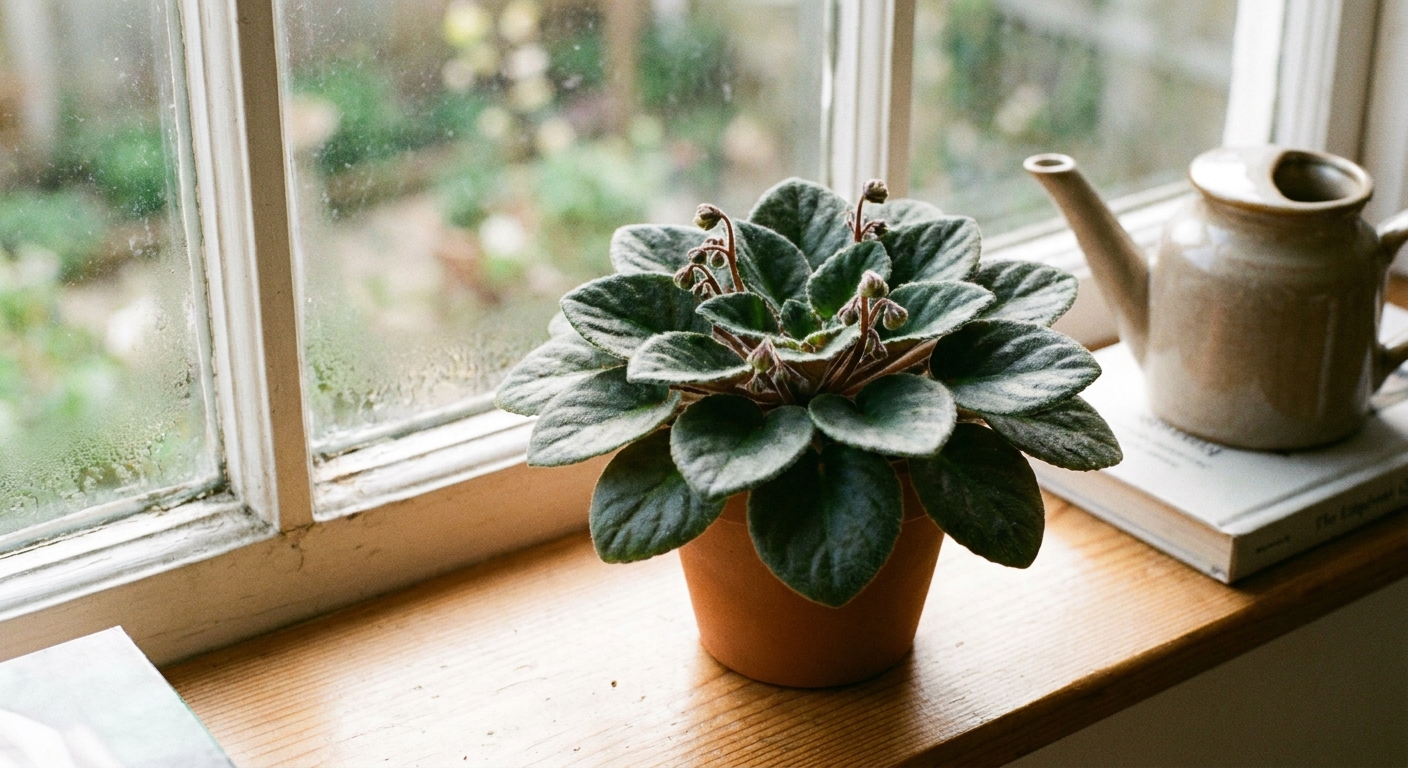
African violets will keep making foliage in conditions that are “okay,” but they typically bloom in conditions that are “bright and steady.” Start here:
- Stretched rosette, long petioles: too little light.
- Compact plant with dark leaves but no buds for months: often fertilizer balance, pot too large, or suckers stealing energy.
- Intermittently limp leaves or a tight-looking crown: cold water, water in the crown, or uneven moisture stressing the plant.
- Lots of small crowns in one pot: suckers, which can reduce blooming.
- New growth looks distorted, tight, or “off,” or buds fail to open: consider pests (especially cyclamen mites or thrips) and isolate the plant.
- Young plant from a leaf start: it may simply need time to reach blooming size.
Light first
If I could only change one thing to get an African violet to bloom, I would change the light. Violets need bright, indirect light for many hours a day. In low light they survive, leaf out, and quietly refuse to flower.
What enough light looks like
- Best windows: an east window (gentle morning sun), or a few feet back from a south or west window behind a sheer curtain.
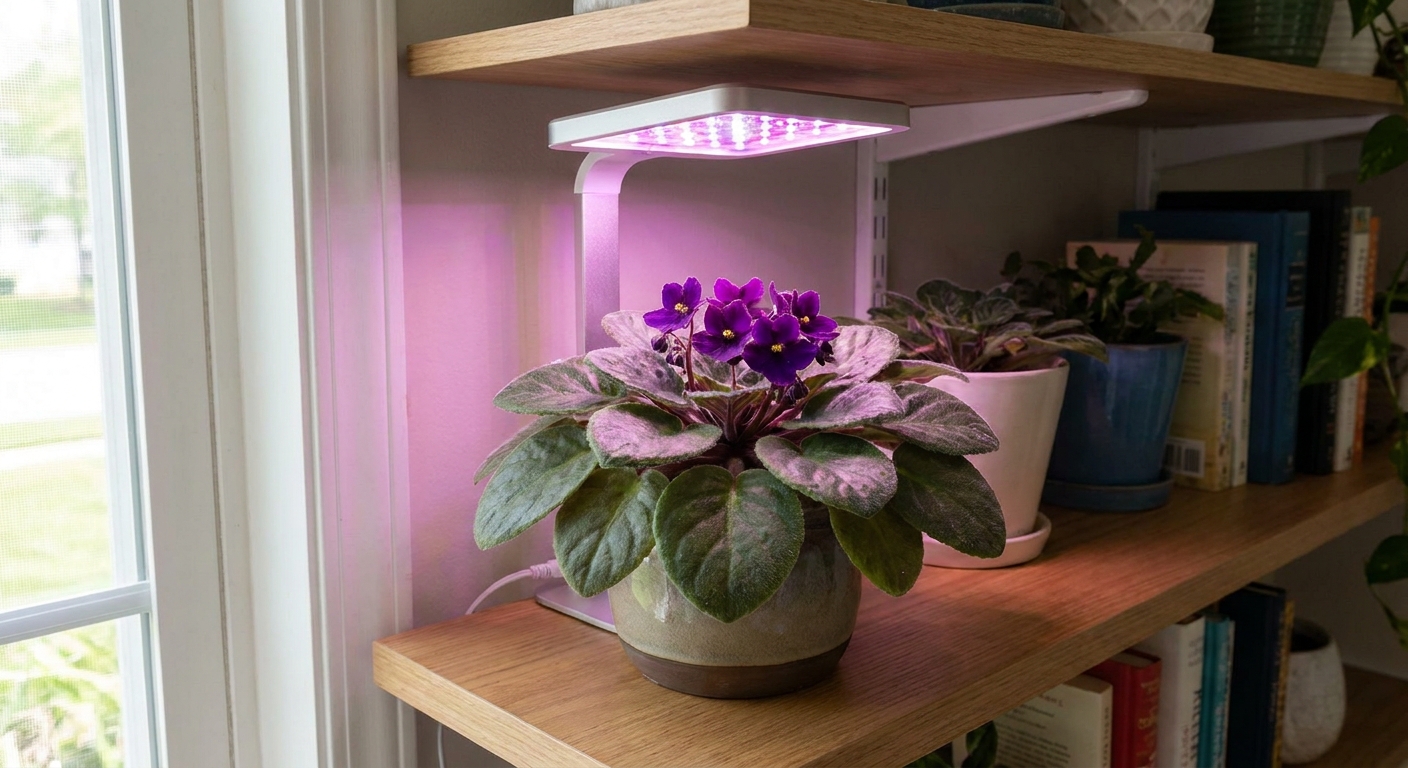
- Duration: at a window, think “as bright as you can give it without hot direct sun,” and keep it consistent day to day. Under grow lights, many violets do well with 10 to 14 hours on a timer.
- Rotation: turn the pot a quarter turn weekly so the rosette stays even and the crown does not lean away from the light.
Signs it wants more light
- Leaves reaching upward instead of forming a flat, tidy rosette
- Longer petioles and wider spacing between leaves
- No buds after several weeks of otherwise good care
Can it be too bright?
Yes. Harsh direct sun can bleach or scorch leaves, especially through hot afternoon glass. If you see pale patches, crispy edges, or a washed-out look, pull the plant back from the window or filter the light.
Feeding basics
African violets are reliable bloomers when they get regular, gentle feeding. The most common mistake I see is either not fertilizing at all, or using a houseplant fertilizer that pushes foliage more than flowers.
What to use
- Choose a fertilizer labeled for African violets or blooming houseplants.
- Look for a balanced formula (numbers close together) or a bloom-friendly violet fertilizer you trust. The bigger goal is steady nutrition, including micronutrients, not chasing one magic ratio.
How often to feed
I like a “weakly, weekly” approach during active growth: feed at a lower dose more often, rather than big, infrequent hits. If you prefer less fuss, feeding every 2 to 4 weeks at label strength can work too, but consistency still matters. One important caution: do not fertilize bone-dry soil. Water first (or feed as part of your normal watering) so roots are not shocked.
Salt buildup
If you have been fertilizing and your violet still will not bloom, it can help to flush the pot occasionally. Water thoroughly until excess drains out, then let it drain completely. This helps wash away fertilizer salts that can stress roots and slow flowering.
Pot size matters
This one surprises people. Many houseplants like room to expand, but African violets tend to bloom better when they are a bit pot-bound. A pot that is too large encourages roots and leaves, not flowers, and it also stays wet longer, raising the risk of root rot.
Signs the pot is too big
- The plant looks small compared to the pot rim
- Soil stays damp for many days after watering
- You see lots of leaf growth but no bloom cycle
A simple sizing rule
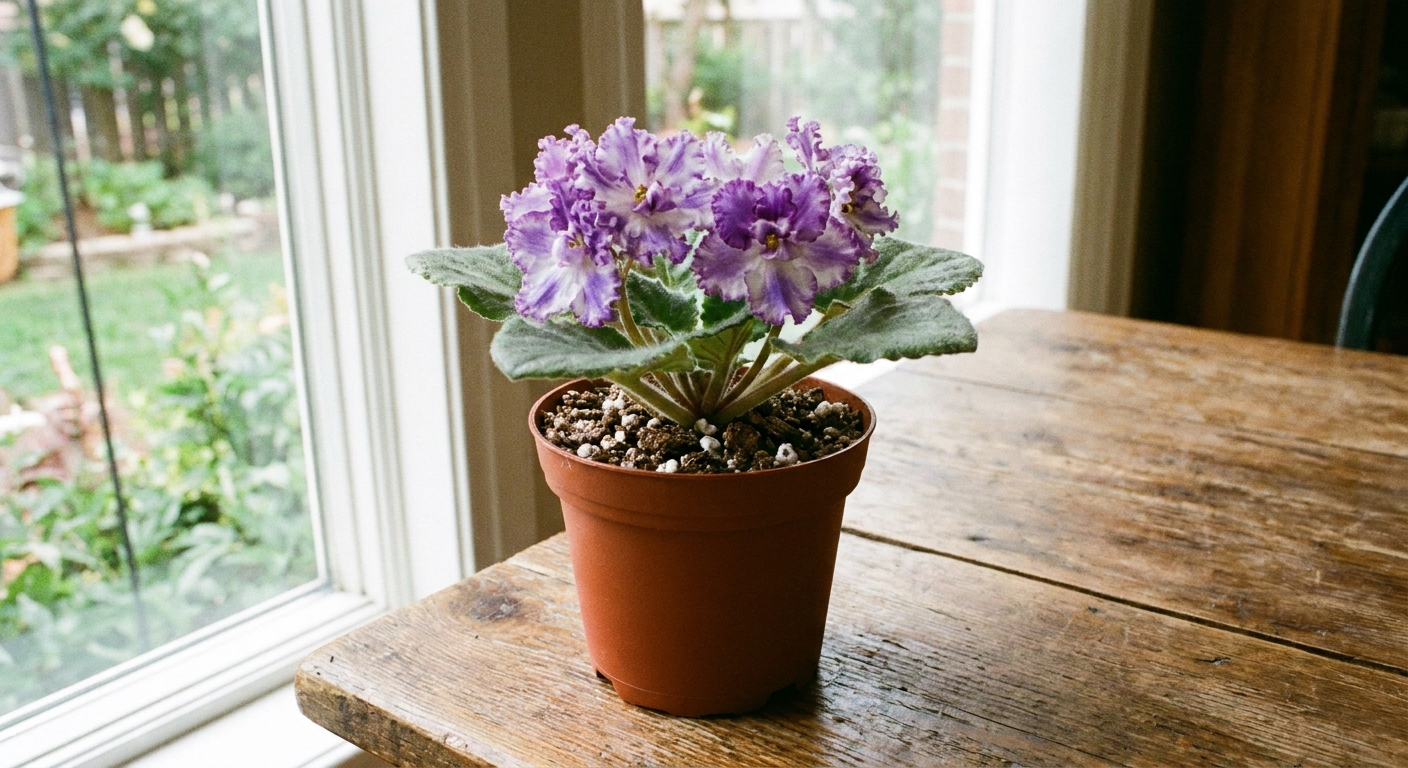
A common guideline is that the pot diameter should be about one-third the width of the leaf span. Many thriving, blooming violets live happily in 3 to 4 inch pots for a long time.
Soil texture
Use a light, airy African violet mix so roots get oxygen. If your mix feels heavy or holds water like a sponge, cut it with perlite to improve drainage and reduce wet feet.
Suckers and crowns
African violets naturally try to create extra crowns, often called suckers. In one pot, multiple crowns compete for light and nutrients. The result is often a plant that looks busy and healthy, but blooms less because energy is split between growth points.
How to spot a sucker
Look at the center. A healthy violet usually has one main crown forming a symmetrical rosette. A sucker appears as a smaller rosette emerging from the leaf axils near the main stem, creating a lumpy or off-center shape.
What to do
- If you want more plants: gently remove the sucker and pot it up separately once it has enough leaves to handle on its own.
- If you want more blooms: keep one crown per pot whenever possible.
Go slowly. Violet leaves snap easily, and a calm, careful hand is better than any special tool.
Watering pitfalls
African violets are sensitive to watering style, not because they are fragile, but because their fuzzy leaves and tight crowns make them prone to stress if water is cold, splashed into the center, or allowed to swing between very dry and very wet.
Common issues that delay blooms
- Cold water shock: very cold tap water can stress roots and sometimes cause spotting on leaves. Room-temperature water is the easy fix.
- Water sitting in the crown: can lead to crown rot. Water the soil, not the center.
- Soil cycling bone-dry to soggy: causes stop-and-go growth and can pause flowering.
- Constant wet soil: reduces oxygen at the roots and can lead to rot, which often shows up as “no blooms” long before a full collapse.
A steady approach
Water when the top of the mix feels slightly dry to the touch, then water thoroughly and let all excess drain. If you bottom-water, let the pot soak briefly, then drain it well so it is not sitting in water for hours.
Routine that works
If your violet has been stuck in leaf mode, this is the routine I use to nudge it back into bloom without drama.
Windowsill routine
- Light: place in an east window, or bright filtered light near a south window.
- Rotate: quarter turn weekly.
- Water: room-temperature water, keep evenly moist but never soggy.
- Feed: light, regular fertilizer during active growth.
- Temperature: normal indoor comfort is ideal. Prolonged cool rooms can slow or pause blooming.
Grow-light routine
- Timing: set a timer for 10 to 14 hours per day.
- Distance: start with the light a safe distance above the plant and adjust gradually if leaves reach upward (move closer) or look bleached (move farther).
- Consistency: the timer is the magic. Violets like predictable days and nights.
When buds show up
Once the main issue is corrected, African violets will often show tiny buds at the crown within about 4 to 8 weeks. If the plant is recovering from root stress, was recently repotted into a much larger pot, is still maturing, or has been living in low light for a long time, it may take closer to 8 to 12 weeks of steady conditions.
A helpful mindset: you are not “forcing” blooms. You are simply restoring the conditions where flowering is a normal part of the plant’s rhythm.
Checklist
- Light: bright, indirect, steady day to day
- Fertilizer: gentle, consistent feeding, do not fertilize dry soil, occasional flush
- Pot: slightly snug, airy mix, not staying wet for days
- Crown: one main crown per pot, remove or separate suckers
- Water: room temperature, avoid wet crown, even moisture
- Other: check for pests and distorted new growth, keep temps comfortable
FAQ
My African violet has tons of leaves. Is it happy?
It means it is alive and growing, which is a win. But flowering usually requires a bit more: brighter light, consistent care, and often a snug pot. Leaf growth alone can happen in lower light and with nitrogen-heavy feeding.
Should I remove old leaves to make it bloom?
You can remove the oldest, lowest leaves if they are damaged or crowding the pot rim. Do not strip the plant. Violets use leaves to power blooms, so you want a healthy rosette, not a sparse one.
Do African violets need darkness to bloom?
They do not need a special long dark period, but they do best with a consistent day and night rhythm. Avoid running grow lights 24/7. A timer that provides a predictable “daytime” and a regular nightly rest tends to produce steadier blooming.