Identify and eliminate common indoor plant pests naturally using practical, non-toxic methods you can do at home.
If you have ever brushed past a houseplant and found your fingers tacky, you are not alone. Sticky droplets can be totally normal or a quiet sign that sap-sucking pests have moved in. The trick is to look at where the droplets sit, when they appear, what the leaf surface looks like, and whether there is any insect evidence nearby.
This guide will help you sort out the three most common causes:
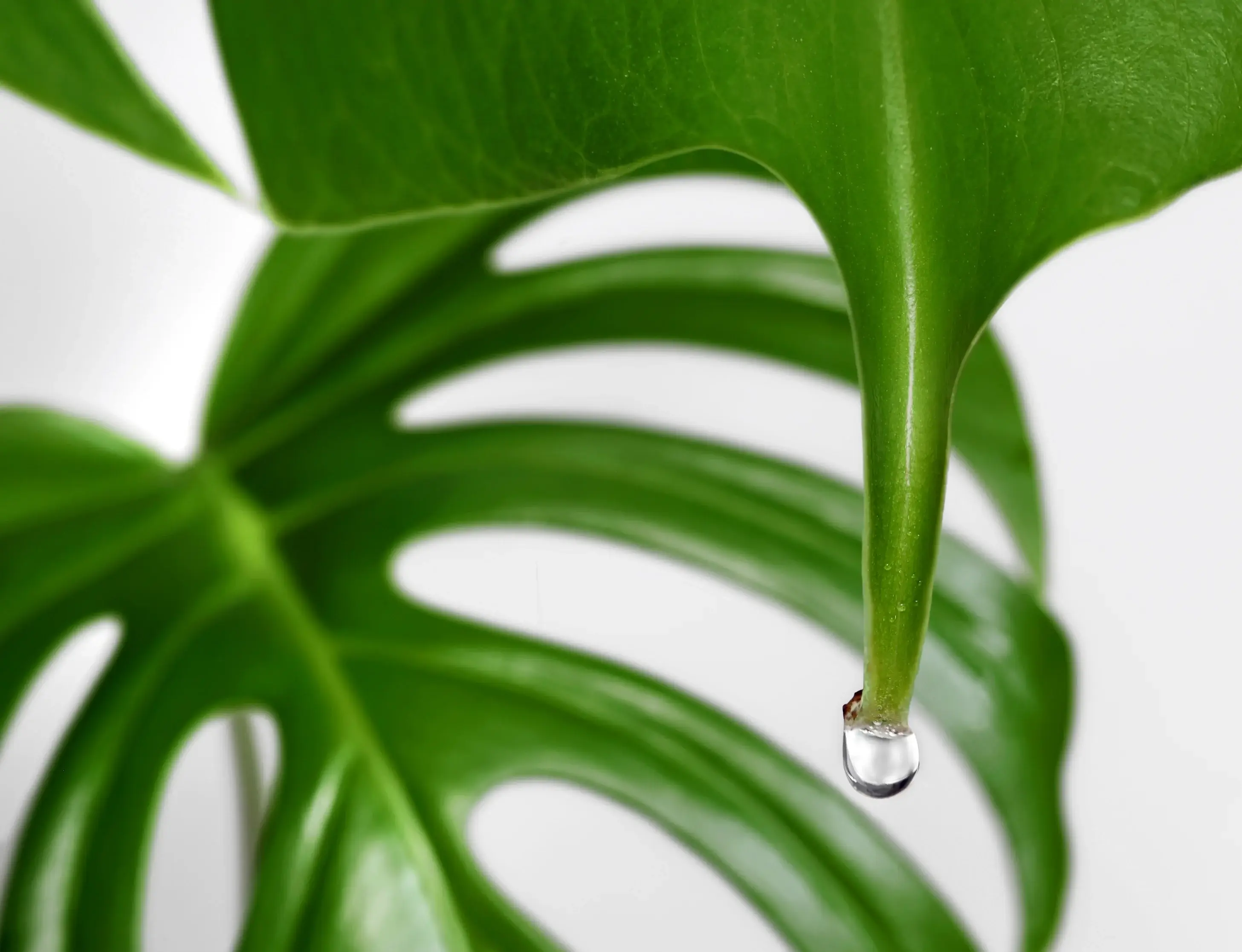
- Guttation: xylem sap pushed out through hydathodes by root pressure, usually overnight when transpiration is low.
- Nectar (extrafloral nectar): sugary droplets some plants produce outside the flowers, sometimes as part of a defense strategy.
- Honeydew: sticky waste left behind by pests like aphids, mealybugs, soft scale, and whiteflies.
Fast triage: 60-second sticky check
If you want the quickest path to an answer, do these in order.
1) Check the timing
- Mostly in the morning, then fades as the day goes on: often guttation.
- Any time of day and keeps coming back: could be nectar or honeydew.
- Sudden stickiness after moving plants indoors for winter or after a growth spurt: honeydew becomes more likely, because pests love tender new growth.
2) Check the droplet location
- Leaf tips and edges (especially pointed tips): classic guttation.
- Along the midrib, at the base of leaves, on petioles, or on stems: more often consistent with nectar or honeydew.
- On the table, floor, or lower leaves beneath the plant: often honeydew dripping down from pests feeding above.
3) Look for specks, shed skins, or residue
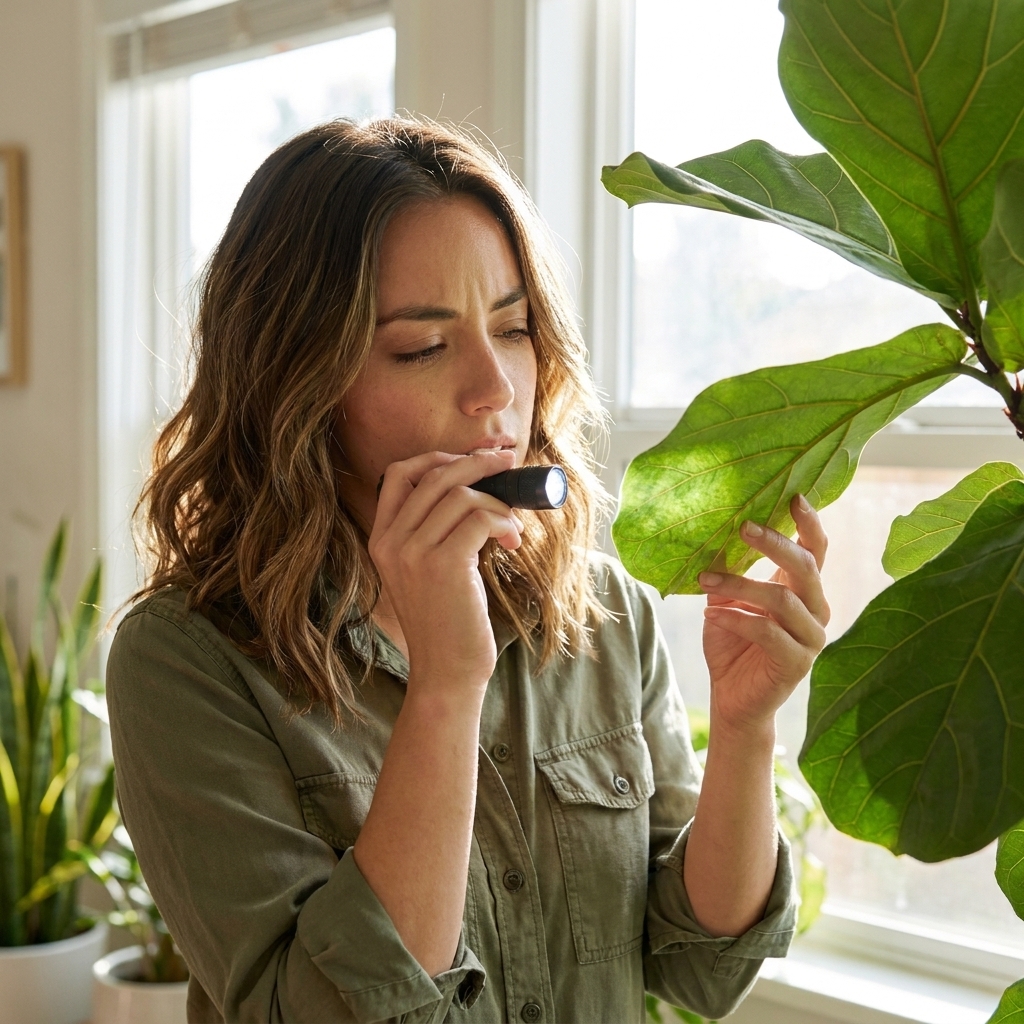
Use your phone flashlight and look at the undersides of leaves and the joints where leaf meets stem.
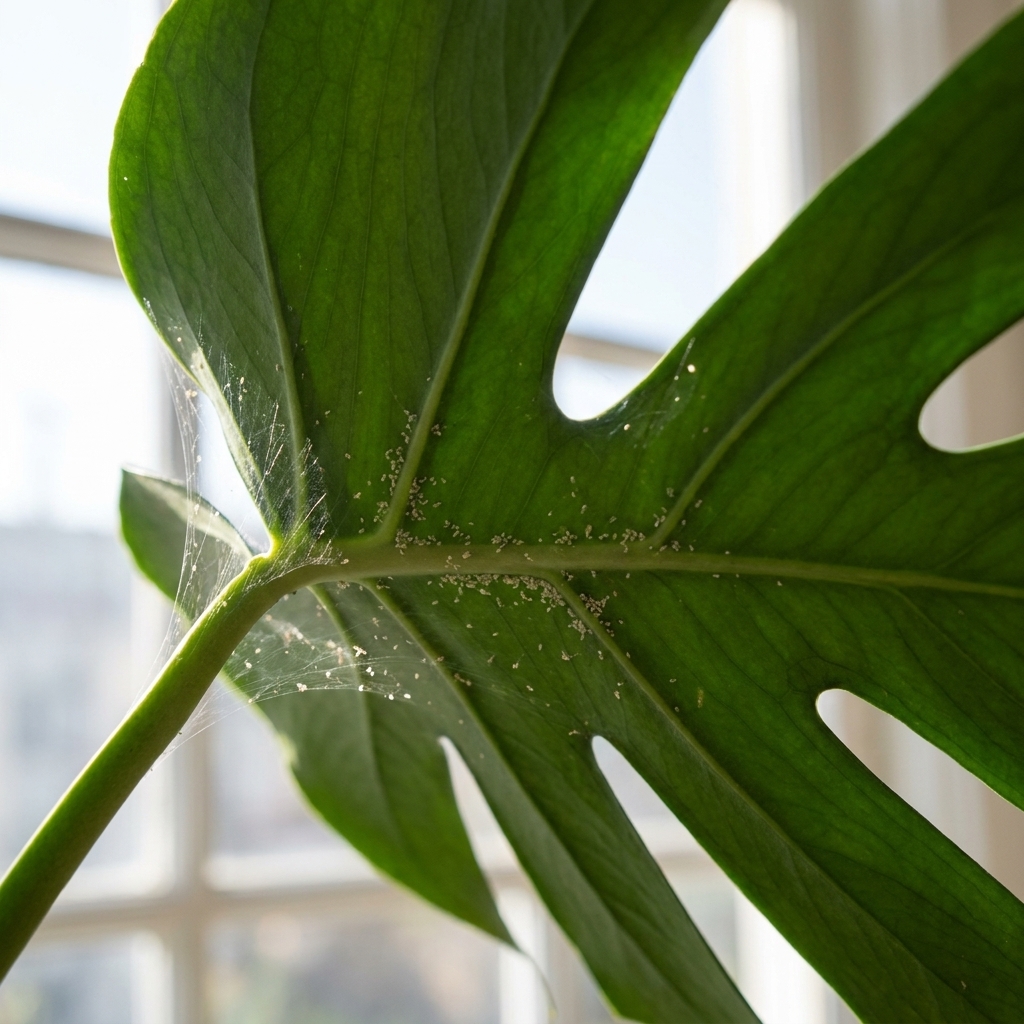
- Any tiny pale shed skins, cottony tufts, brown bumps, clusters of soft insects, or tiny dark specks (frass) points strongly to honeydew.
- If the plant looks clean and the droplets are neat and predictable, you are likely seeing guttation or nectar.
What guttation looks like
Guttation is when root pressure pushes xylem sap out through specialized pores called hydathodes. It is most common when:
- Soil is evenly moist or freshly watered
- Nights are cool
- Humidity is higher
- Airflow is low
- The plant is actively growing
Clues it is guttation
- Droplets form at leaf tips or edges, often evenly spaced.
- It happens overnight and is most noticeable in the morning.
- The leaf itself looks healthy, not speckled, puckered, or distorted.
- Sticky can happen because guttation fluid can contain minerals and trace sugars. When it dries, it can leave a faint residue or tiny crystals.
What to do if it is guttation
Most of the time, you can simply wipe the droplets away and move on. If it is happening constantly and you dislike the mess:
- Let the top inch or two of soil dry a bit more between waterings (for plants that tolerate it).
- Increase gentle airflow nearby.
- Empty saucers so the pot is not sitting in water.
One caution: On some plants, dried guttation can leave mineral spots. Wiping in the morning prevents crusty edges and leaf spotting.
When sticky droplets are nectar
Some houseplants produce extrafloral nectar, meaning nectar that shows up on leaves or stems, not just flowers. Outdoors, this can attract ants and other insects that may discourage herbivores. Indoors, it mostly just confuses us, and it is more common in some species than others.
Clues it is nectar
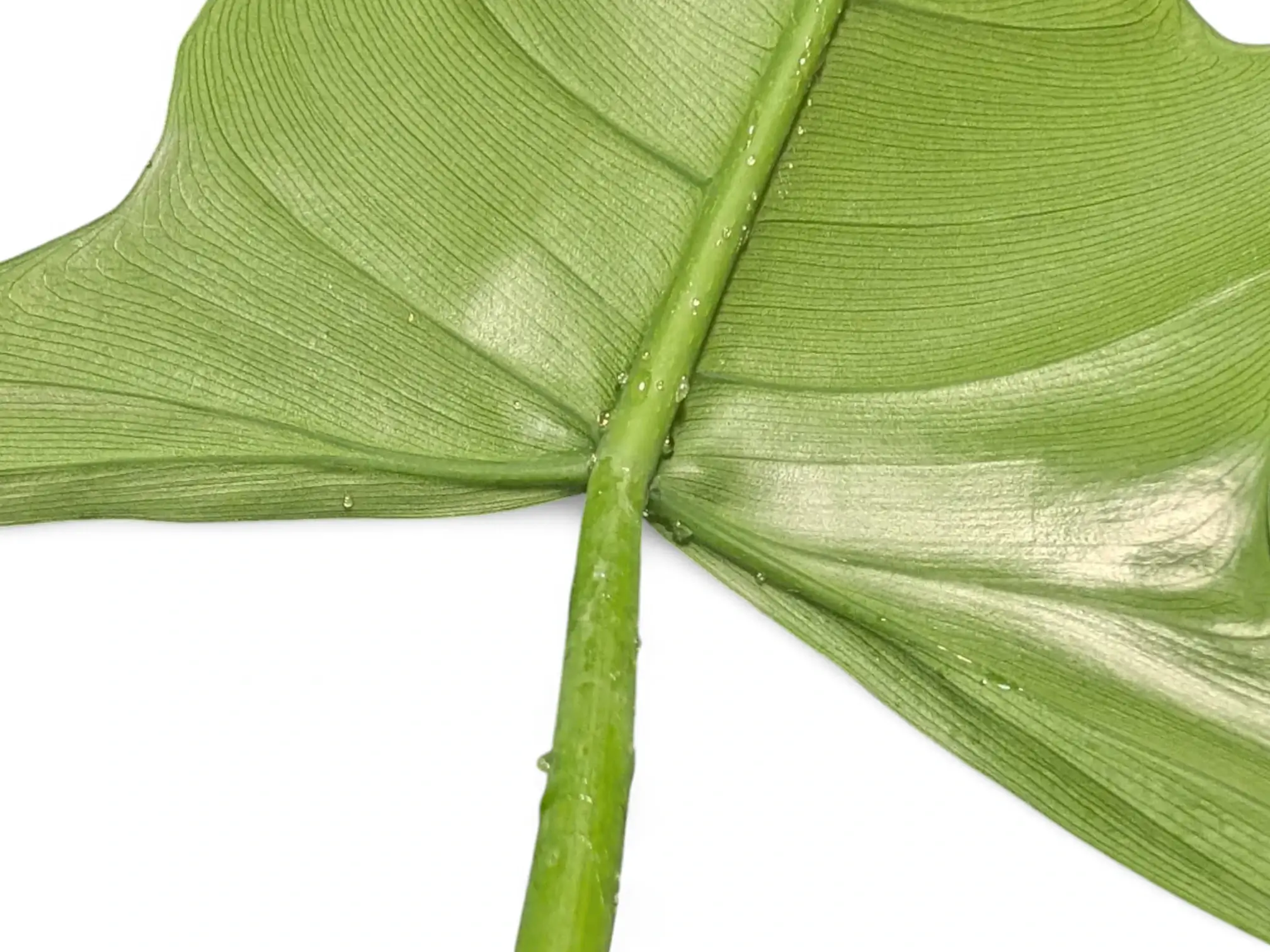
- Droplets appear near leaf bases, on petioles, along stems, or at specific nodes.
- They can show up even when the plant is not freshly watered.
- The pattern is often repeatable, like the same few spots producing tiny beads.
- You do not see insect clusters, cottony residue, hard bumps, or shed skins.
Plants where it is common
You do not need to memorize a list, but extrafloral nectar is often noticed on some aroids, including certain Philodendron and Anthurium types, plus a few other fast growers. The important part is confirming there is no pest evidence and the plant looks otherwise strong.
What to do if it is nectar
- Wipe with a soft damp cloth so the surface does not stay tacky and collect dust.
- Keep an eye out for ants. Ants indoors are not a guarantee of pests, but they love sugar and can lead you to the source.
How to recognize honeydew
Honeydew is a sugary waste product produced by sap-sucking insects. If your plant is sticky and you also notice dust clinging to leaves, shiny patches, or weird spotting, honeydew jumps to the top of the suspect list.
Clues it is honeydew
- Sticky residue is messy rather than neat. It may coat large areas of leaf.
- It appears below the feeding site, meaning lower leaves, the pot rim, nearby furniture, or the floor can feel sticky.
- You see pests or their telltale signs (or both).
Here is what to look for:
- Aphids: clusters of tiny pear-shaped insects, often on new growth and flower stems.
- Mealybugs: white cottony tufts tucked into leaf joints and undersides.
- Soft scale: brown or tan bumps that look like part of the stem or leaf vein.
- Whiteflies: tiny white moth-like insects that flutter up when you disturb the plant.
A second giveaway: sooty mold
Honeydew often leads to sooty mold, a black, dusty-looking film that grows on the sugar. Sooty mold is not the pest itself, but it is a strong hint that honeydew has been sitting around for a while.
Quick note on thrips: thrips usually do not produce honeydew. If you are seeing silvery scarring, stippling, or black specks but no sticky residue, thrips may be a better fit than honeydew pests.
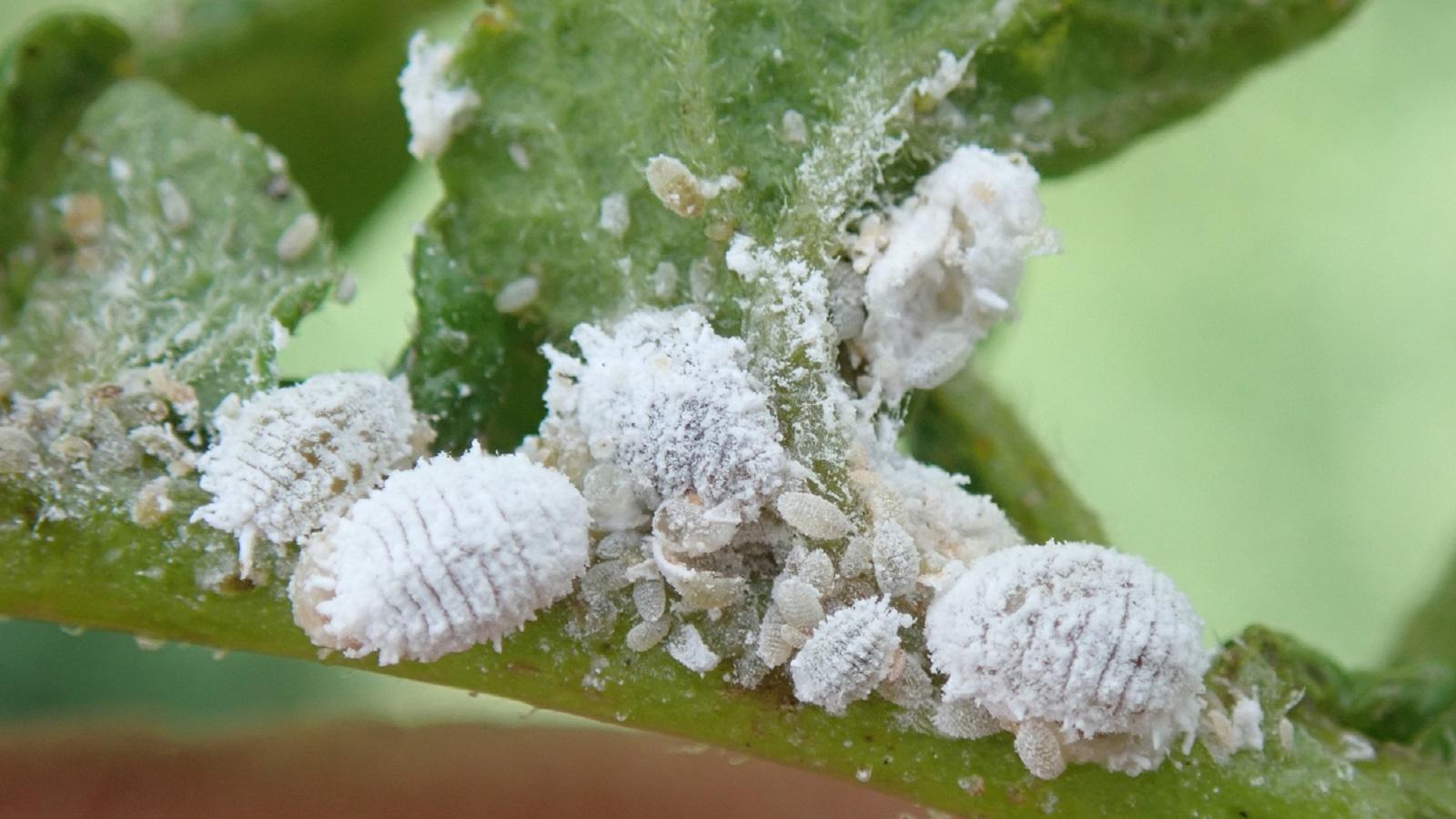
If it is honeydew: next steps
If you confirm (or strongly suspect) honeydew, think in rounds. The goal is to remove as many insects as possible today, then keep knocking down new hatchlings.
Step 1: Isolate and inspect
- Move the plant away from others, ideally to a separate room.
- Check undersides, nodes, petioles, and new growth with a flashlight.
- Look over nearby plants too. Honeydew pests rarely respect personal space.
Step 2: Physically remove pests
- Rinse the plant in the shower or sink (lukewarm water), focusing on undersides.
- For mealybugs and scale you can see, remove them manually. A cotton swab lightly dampened with isopropyl alcohol can work on the insects themselves, but avoid soaking delicate foliage.
Step 3: Treat, then repeat
- Use insecticidal soap or horticultural oil according to the label, covering leaf undersides and joints.
- Repeat as directed on the product label. Often that means every 7 to 10 days for several rounds, since eggs and juveniles can be missed.
Step 4: Deal with ants
If ants are present, treat the ant problem too. Ants love honeydew and can protect pests, which makes eradication feel impossible.
When to consider stronger options
If the infestation is heavy, persistent, or on a large plant that is hard to clean thoroughly, a systemic insecticide may be appropriate where it is legal and you can use it safely. For some situations, the kindest option is to discard a severely infested plant rather than risking the rest of your collection.
Safe cleaning steps
Whether you are dealing with guttation, nectar, or honeydew, cleaning the leaves makes it easier to monitor what comes back.
Step 1: Wipe gently
- Use a soft microfiber cloth or cotton pads with lukewarm water.
- Support the leaf with your hand to avoid creasing.
Step 2: If it is very sticky, use mild soap
Mix a few drops of gentle liquid castile soap or fragrance-free dish soap into a bowl of water. Wipe, then wipe again with plain water to remove soap residue.
Step 3: Clean below the plant
Sticky residue on shelves and windowsills is a useful clue. Clean it, then you can tell if new droplets are dripping again.
What to avoid
- Leaf shine products: they can coat leaves, block stomata, attract dust, and make diagnosis harder.
- Alcohol on delicate leaves: it can scar thin or fuzzy foliage. If you are treating pests, use targeted methods, not a whole-plant wipe-down with alcohol.
Patch-test first
If you are using soaps or oils, test on one leaf first and wait 24 hours. Avoid treating in hot temperatures or bright, direct sun to reduce the risk of leaf burn.
Lookalikes to rule out
If nothing adds up, consider the non-bug possibilities:
- Fertilizer splash or runoff: can dry sticky or leave a shiny residue, especially after feeding day.
- Kitchen aerosols: cooking oils can settle on nearby leaves and feel tacky.
- Household sprays: cleaning products, air fresheners, and fragrance sprays can leave residue on leaf surfaces.
- Outdoor sap: if the plant sits near an open window or goes outside seasonally, tree sap or pollen can land on leaves.
Observation checklist
After cleaning, give yourself 48 to 72 hours of calm observation. Here is what to log:
- Time of day droplets reappear
- Exact spot (tip, edge, node, underside, stem)
- Which leaves (newest growth vs older leaves)
- Leaf condition: curling, stippling, yellow speckling, or distorted new leaves
- Any insects, especially on undersides and at nodes
If the pattern is “morning only” and “leaf tips only,” you can usually breathe easy. If the pattern is “random” plus “leaf undersides” plus “insect evidence,” treat it as honeydew until proven otherwise.
When to isolate right away
I am very pro calm troubleshooting, but there are a few moments when isolation is the kindest thing you can do for the rest of your plant collection.
Isolate your plant right away if you notice any of the following:
- Visible mealybugs, scale bumps, aphid clusters, or whiteflies
- Sticky residue on multiple nearby plants
- Sooty mold forming on leaves
- New growth that is severely distorted or stunted along with stickiness
Move it a few feet away at minimum, ideally into a separate room, and wash your hands after handling. Then you can decide on a targeted treatment plan without the pressure of pests spreading.
Quick Q and A
Are sticky droplets always a bad sign?
No. Guttation and nectar can both be normal. The deciding factor is whether you also see pests or plant stress signs that match sap-sucking damage.
Why are the droplets clear sometimes and amber other times?
Clear droplets are common with guttation. Nectar and honeydew can dry slightly amber or feel more syrupy. Lighting also plays tricks on us, so focus on location and insect evidence.
My plant is sticky, but I cannot find bugs. Now what?
Clean everything, then use a flashlight to check undersides and nodes daily for a week. Early scale and mealybugs can be surprisingly easy to miss. If stickiness keeps returning and you still cannot find the source, isolate the plant as a precaution and inspect any plants nearby.
Will sticky leaves hurt my plant?
The stickiness itself is not usually harmful. The concern is what it signals. Honeydew can invite sooty mold and reduce photosynthesis, and pests can weaken the plant over time.
The gentle bottom line
Sticky droplets are one of those houseplant mysteries that feel ominous, but they are often solvable with a few calm observations. If the droplets are tidy, appear in the morning, and sit at leaf tips, you are likely looking at guttation. If they show up in consistent little spots at nodes with no bugs, it may be nectar. If the stickiness is messy, spreading, and paired with any insect signs or sooty mold, assume honeydew and isolate.
And please do not feel guilty. Sticky leaves are not a moral failing. They are just your plant communicating in the only way it can, and now you know how to listen.