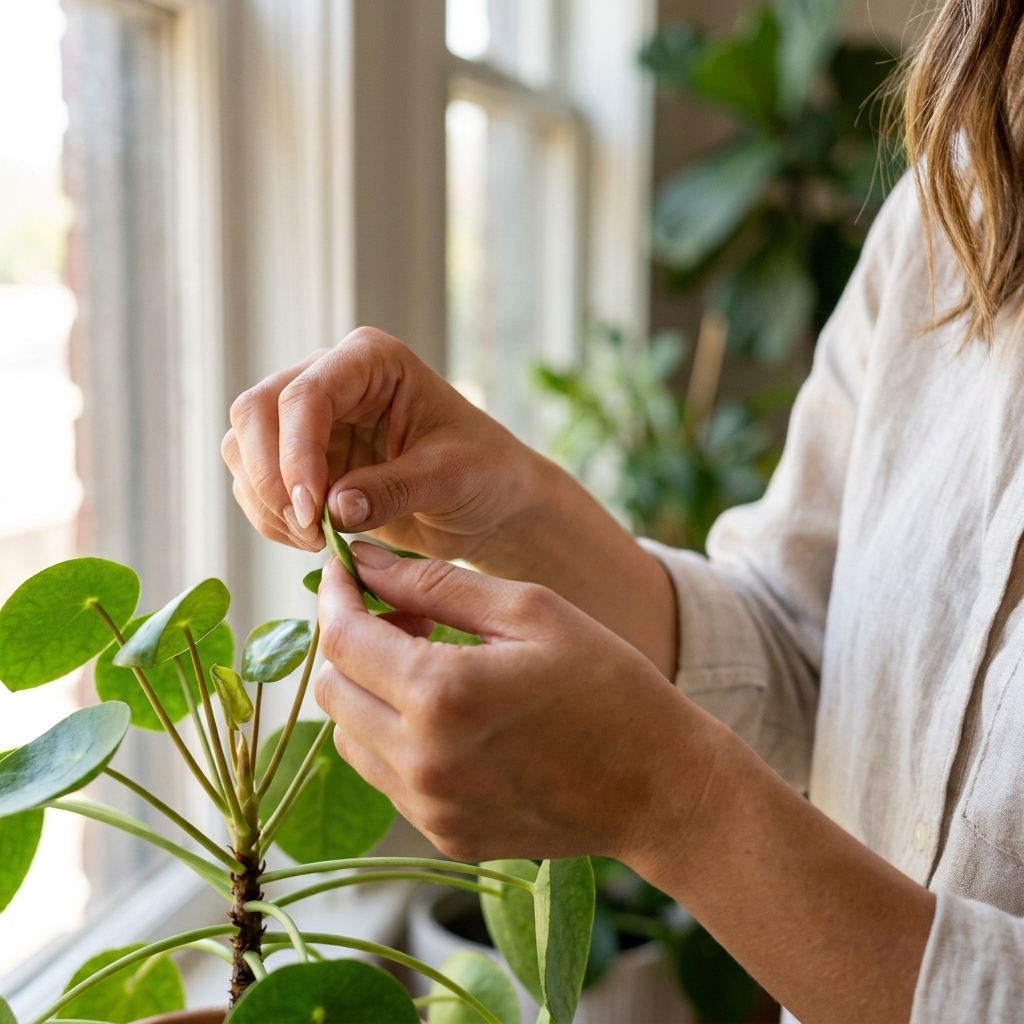
A plant-parent friendly breakdown of rooting cuttings in water vs. soil, including success rates, best plants for each method, and step-by-step instructions.
If you have a fiddle leaf fig you love, propagating it can feel equal parts exciting and intimidating. I get it. Ficus lyrata has a reputation for being dramatic, and the idea of cutting it on purpose can make your palms sweat.
The good news: there are two of the most common and usually most reliable ways to propagate a fiddle leaf fig indoors, and each has a time and place. Stem cuttings are simpler and great for smaller pieces. Air layering is slower and a little fussier, but it is my top pick when you want a bigger, more instantly tree-like baby plant and you want roots in place before you make the final cut.
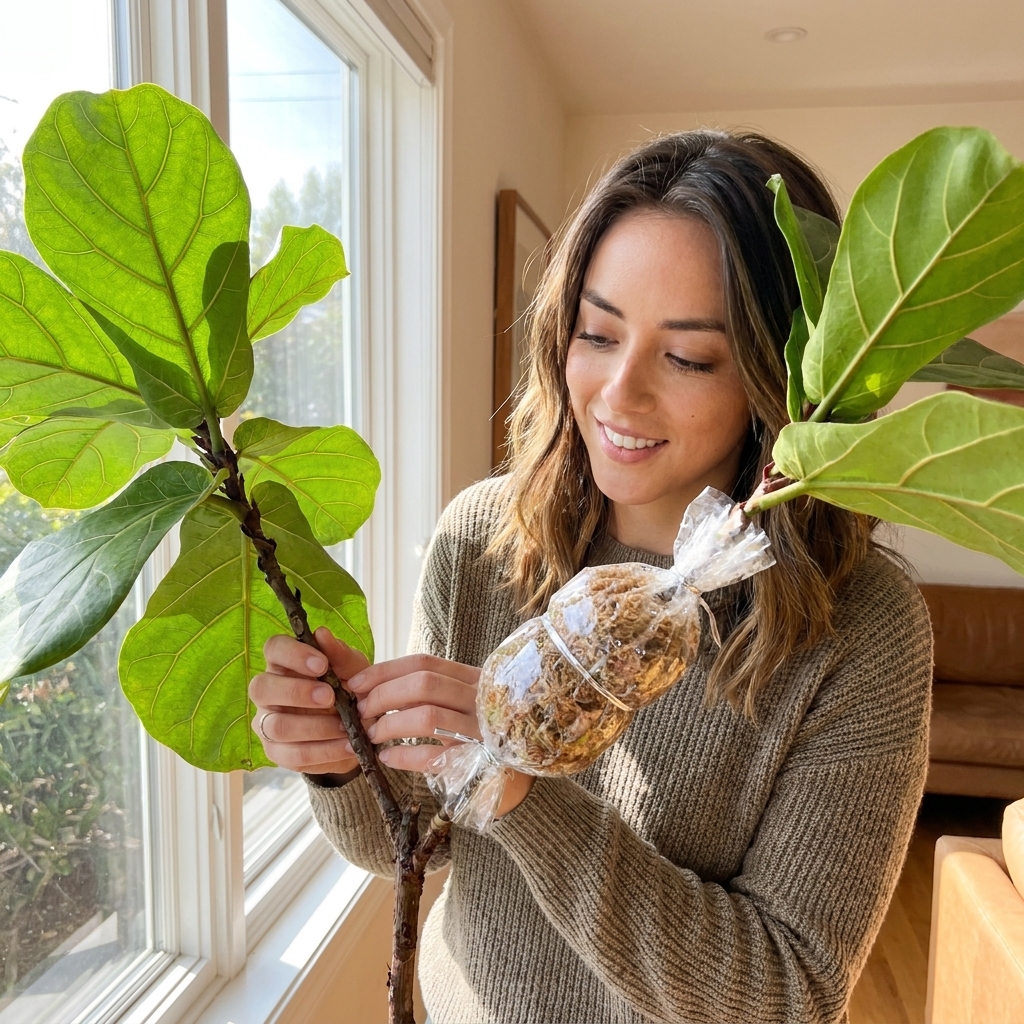
Below, I will walk you through both methods step by step, plus what to do if your cutting stalls, rots, or drops leaves. No guilt, no panic. Just plant science made practical.
Stem cuttings vs. air layering
- Best for beginners: Stem cuttings (fewer materials, easier setup)
- Best for a larger new plant: Air layering (roots form before you cut)
- Fastest setup: Stem cuttings (minutes to take, weeks to root)
- Often best for thick stems: Air layering
- Best time of year: Spring through early summer for both (active growth helps)
If you are deciding right now, use this rule: If you would be devastated to lose that piece of plant, choose air layering. If you have a flexible stem and can take a few tries, stem cuttings are totally doable.
Before you propagate
Pick the right season and conditions
Propagation is easiest when your plant is already growing. Indoors, that usually means spring into early summer, with longer days and brighter windows.
- Light: bright, indirect light is ideal (near an east or south window with a sheer curtain is a great starting point). Gentle morning sun is usually fine.
- Temperature: aim for 70 to 80°F if you can.
- Humidity: moderate humidity helps reduce leaf loss while roots form.
Choose a healthy stem
The best candidate is a stem that is:
- Firm, not mushy or wrinkled
- Free of pests (check the undersides of leaves and the nodes)
- Actively growing or recently grew a new leaf
About nodes: nodes are the little “joints” where leaves attach and where roots can form. If your cutting does not include a node, it cannot root.
Tools and supplies
- Clean pruning shears or a sharp knife
- Rubbing alcohol to disinfect blades
- A clean jar (for water rooting) or a small pot (for medium rooting)
- Well-draining potting mix, or sphagnum moss and perlite
- Optional: rooting hormone (helpful, not mandatory)
- For air layering: sphagnum moss, plastic wrap, twist ties or tape
- Optional: gloves and something to protect your countertop
Quick hygiene note: wipe your blades with alcohol before every cut. If you are water rooting, wash your jar with hot soapy water first, and rinse well. Clean containers really do cut down on rot.
Quick sap note: fiddle leaf figs bleed a sticky latex sap when cut. It can irritate skin and it loves to stain fabric, so I like to protect surfaces and wash up right after.
Method 1: Stem cuttings
Stem cuttings are exactly what they sound like: you cut a piece of stem that includes at least one node, then encourage it to grow roots in water or a rooting medium.
Best cutting size
For fiddle leaf figs, I get the most consistent results with:
- Length: 6 to 10 inches
- Nodes: 1 to 3 nodes
- Leaves: 1 to 2 leaves kept, with any extra removed
More leaves mean more water loss, and cuttings do not have roots yet to replace it. Keeping one healthy leaf is usually the sweet spot.

Step-by-step
Disinfect your tools. Wipe blades with rubbing alcohol and let them dry.
Identify a node. Find a spot just below a leaf attachment point.
Make a clean cut. Cut just below the node, ideally at a slight angle.
Remove lower leaves. Any leaves that would sit in water or be buried in medium should come off.
Optional: Dip the cut end in rooting hormone. Tap off excess. Do not dip into the original container. Pour a little into a separate cap or dish so you do not contaminate it.
Option A: Rooting in water
How to do it:
- Place the cutting in a clean jar of room-temperature water with the node submerged.
- Keep it in bright, indirect light.
- Top off water as needed. If it gets cloudy or starts to smell, do a full change and rinse the jar. As a general rhythm, a full change about once a week works well in many homes.
Timeline: You may see swelling at the node in 2 to 4 weeks. True roots often take 4 to 10 weeks indoors, sometimes longer.
When to pot up: Wait until roots are 2 to 4 inches long and you have a few roots, not just one skinny strand.
Option B: Rooting in a medium
Water rooting works, but fiddle leaf fig cuttings sometimes struggle when moved from water to soil because water-formed roots can be less adapted to the lower-oxygen conditions in potting mix. Rooting directly in a medium can reduce that transition stress.
Good rooting mixes:
- Sphagnum moss + perlite
- Light potting soil + perlite + orchid bark
How to do it:
- Moisten your mix so it is damp like a wrung-out sponge.
- Insert the cutting so at least one node is under the mix.
- Firm the mix gently around the stem for contact, not compaction.
- Create a humid microclimate by loosely covering with a clear bag (do not let plastic touch the leaf).
- Vent for a minute every day or two to reduce mold risk. If you see mold, vent more and keep the mix on the airy side.
Timeline: often 4 to 12 weeks. Tug very gently after a month. Resistance suggests roots.
Method 2: Air layering
Air layering is propagation with a safety net. Instead of cutting first and hoping roots form, you encourage roots to grow while the branch is still attached to the mother plant. Once you have roots, then you cut.
This method often shines when:
- You want to propagate a thicker, woodier stem
- You want a taller new plant right away
- Your fiddle leaf fig is leggy and you want to chop and restart the top
- You have tried stem cuttings before and had rot issues
Supplies
- Sphagnum moss (the long-fiber kind is easiest)
- Plastic wrap
- Twist ties, plant tape, or soft wire
- A clean, sharp knife
- Optional: rooting hormone
Step-by-step
Pick your spot. Choose a section of stem below a leaf node where you would be happy to cut later. Many people do this 8 to 18 inches below the top.
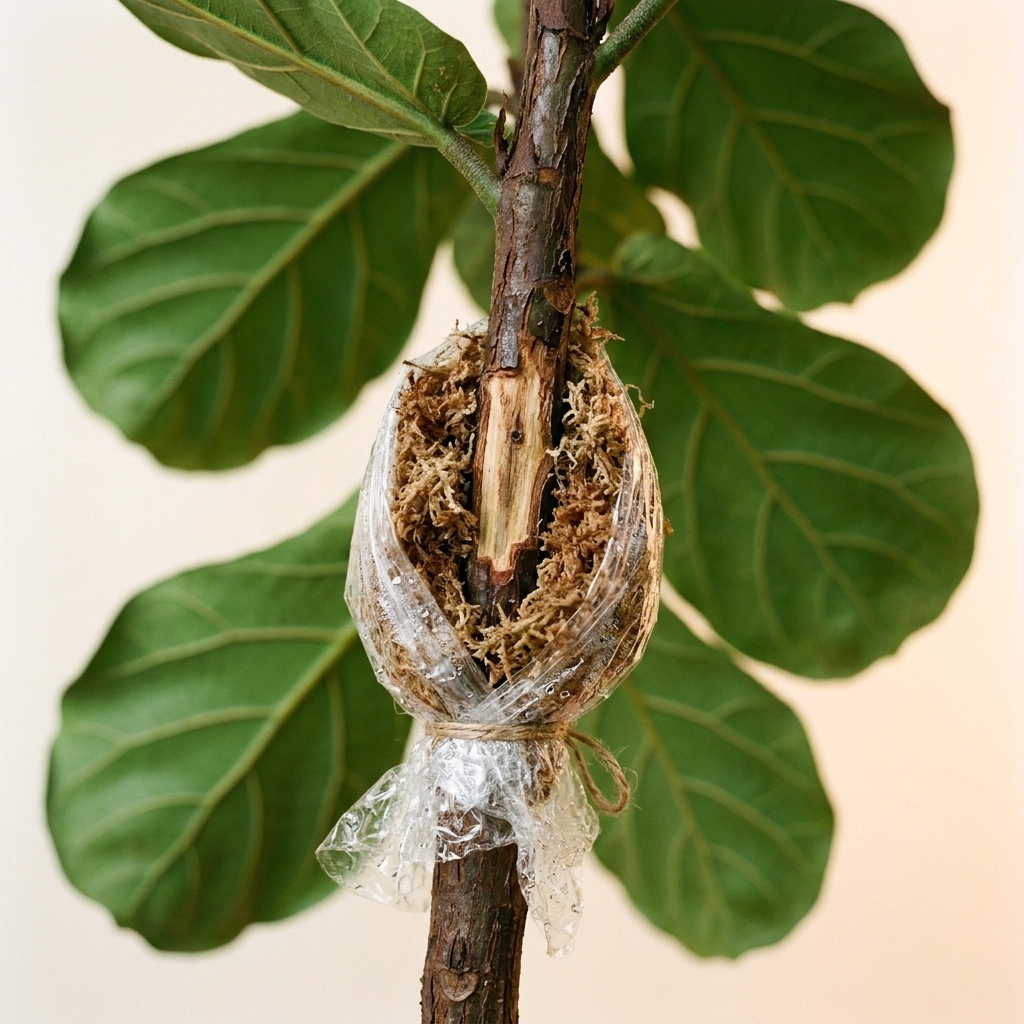
Make the wound (girdle method). Using a clean knife, remove a thin ring of bark around the stem, about 1/2 inch wide. On woody stems, this tends to be more reliable than a small notch because it more clearly interrupts the phloem, which slows the downward flow of sugars and signals. That build-up above the wound helps encourage root initiation.
Optional: Dust a little rooting hormone on the wound.
Pack with damp moss. Soak sphagnum moss, then squeeze it out well. Wrap a generous handful around the wound. You want it moist, not dripping or waterlogged.
Seal it. Wrap plastic around the moss like a little burrito and secure both ends so moisture stays in. A good seal matters. If it is leaky, the moss dries out and rooting slows down.
Wait and monitor. Keep the plant in bright, indirect light. Check every 1 to 2 weeks to make sure the moss is still damp. If it dries out, open and remoisten. If you see a lot of condensation and the moss feels soggy, open it briefly to air out.
When to cut
Once you see a healthy cluster of roots pressing against the plastic and running through the moss, you are ready. For most indoor fiddle leaf figs, that is typically 6 to 12 weeks, sometimes longer depending on light and temperature.
Potting the air layered section
- Prepare a pot with drainage holes and a chunky, well-draining mix.
- Cut the stem just below the rooted moss ball.
- Remove plastic gently, but keep the moss around the new roots.
- Plant it so the moss ball sits in the pot and is lightly covered and supported.
- Water thoroughly, then let excess drain.
For the first 2 to 3 weeks, treat it like a recovering plant: stable light, no harsh direct sun, no heavy fertilizing, and consistent moisture (not soggy).
Which method to choose
Choose stem cuttings if:
- You want the simplest method with minimal supplies
- Your plant has flexible green stems, not thick woody trunks
- You are okay with a smaller start and a longer “baby plant” phase
Choose air layering if:
- You want the best odds on an important branch
- You want a taller, more established new plant immediately
- Your fiddle leaf fig is leggy and you want to prune and propagate at once
If you are on the fence, here is my honest take: air layering is slower, but it is often the most confidence-boosting method because you do not have to gamble on whether your cutting will root after it is separated.
Aftercare for new plants
Light
Give bright, indirect light. If you only have one great window, prioritize the new plant for the first month so it can establish.
Water
New roots are tender and hate extremes.
- Water when the top 1 to 2 inches of soil feels dry.
- Never let the pot sit in standing water.
- If you rooted in water, keep soil lightly moist for the first 1 to 2 weeks after potting, then transition to your normal watering rhythm.
Humidity and leaf drop
Some leaf droop or even a dropped leaf can happen. It does not mean you failed. It usually means the cutting is balancing water loss with limited root capacity. A humidifier nearby (not blasting directly on the plant) can help. So can a loose humidity cover, as long as you vent it regularly to avoid fungus.
Fertilizer
Hold off for 4 to 6 weeks after potting. Fertilizing too early can stress fresh roots.
A simple potting mix
You do not need a fussy recipe, but you do want air around the roots. Look for a mix that drains fast and does not stay dense. An easy option is potting soil with extra perlite and some orchid bark mixed in so it feels chunky and springy, not heavy and muddy.
Care for the mother plant
It is normal to worry you “ruined” your fiddle leaf fig. You did not. In many cases, pruning actually encourages branching.
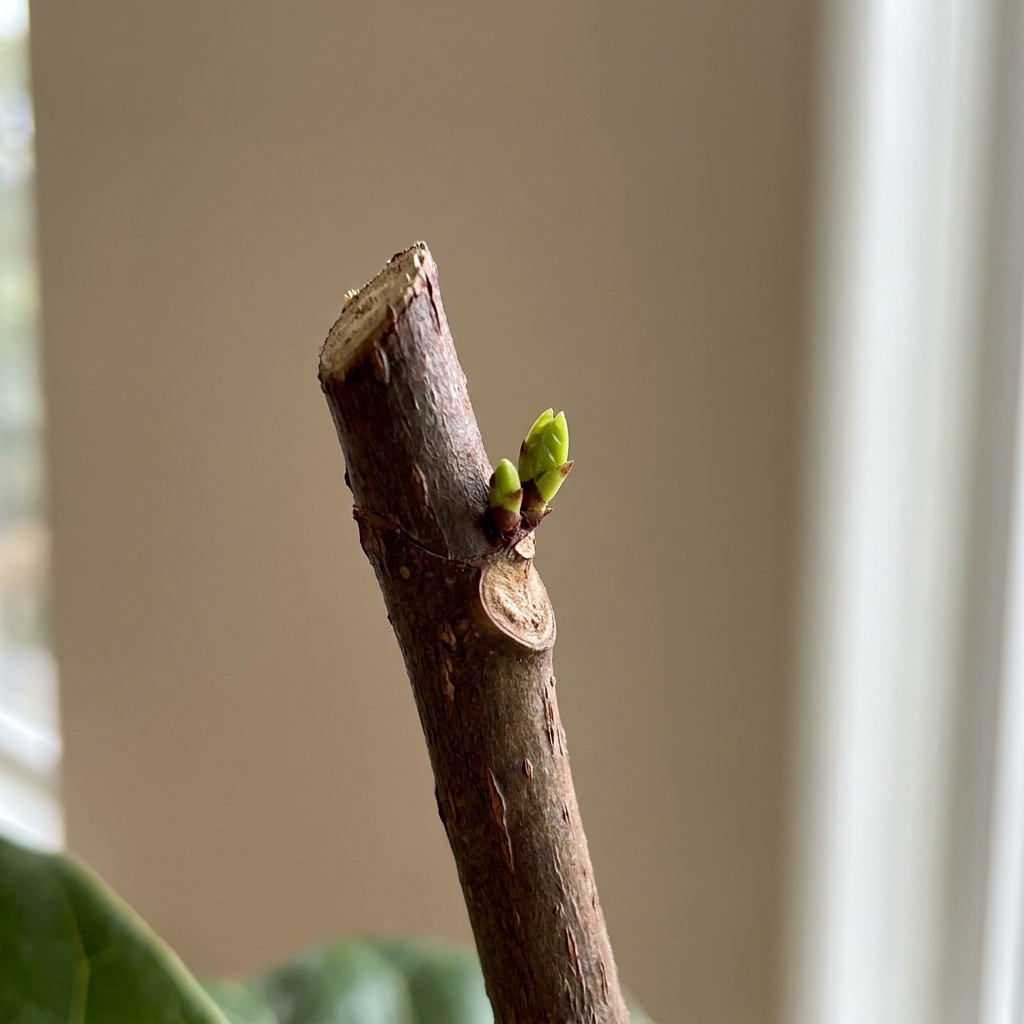
- Cut placement matters. When you take a top cutting, aim to cut just above a node on the mother plant. That leaves a node in place that can push new growth.
- Put it in steady light. Avoid moving it around a lot while it adjusts.
- Do not overwater to compensate. With fewer leaves, the plant may use water more slowly.
- Expect new buds. Over the next several weeks, you may see little bumps at nodes below the cut. Those can become new branches. Patience is part of the deal.
Troubleshooting
My cutting turned black or mushy
That is rot, and it happens fast with Ficus in cool or low-light conditions.
- Cut back to firm, healthy tissue with a sterilized blade.
- Remove any leaves that would sit in water or wet medium.
- Switch to fresh water or a fresh rooting mix in a clean container.
- Move to brighter light and warmer temperatures.
It is not rooting, but it is not rotting
This is the “stuck” phase. It is frustrating, but not unusual.
- Increase light (closer to a bright window, but still indirect).
- Warmth helps. A consistently warm room often speeds rooting.
- Be patient. Some cuttings take 12+ weeks.
The leaf is drooping or curling
Usually hydration imbalance, not a mystery disease.
- If rooting in water, make sure the node is submerged and water is reasonably fresh.
- If rooting in medium, check that the mix is damp but airy, not soggy.
- Add a humidity tent if you do not have one, and vent it regularly.
The cutting dropped its leaf
A leafless cutting can still root if the node is alive, but it will be slower. Keep it in bright light, keep the medium lightly moist, and resist the urge to constantly disturb it to check.
Mold is forming on moss or soil
- Vent your humidity cover more often.
- Remove obvious mold gently and replace the top layer of moss if needed.
- Make sure the setup is warm and bright enough. Cold, dim conditions invite fungus.
- Dial back moisture. Damp is the goal, not wet.
FAQ
Can I propagate from a single leaf?
A single leaf without a node will not grow into a new plant. It may stay alive in water for a while, but it cannot form a new stem system. For true propagation, you need at least one node.
Do I need rooting hormone?
No, but it can help, especially with thicker cuttings or slower indoor conditions. Good light and warmth matter more than rooting hormone.
How long does it take?
Expect 4 to 12 weeks for roots in many indoor setups. Air layering commonly lands in the 6 to 12 week range before you can cut and pot, sometimes longer.
Can I propagate in winter?
You can, but success rates often drop because growth slows and indoor light is weaker. If you have strong grow lights and warm temperatures, it is more doable.
Is fiddle leaf fig sap dangerous?
Ficus sap can irritate skin and can cause oral irritation and stomach upset if pets chew or ingest plant parts. If you have curious cats or dogs, keep cuttings out of reach and clean up drips promptly.
My recommendation
If this is your first time propagating a fiddle leaf fig, start with either:
- A small stem cutting from a flexible branch you can spare, or
- Air layering if you want the most dependable results on a larger piece
And remember, even experienced plant people lose a cutting sometimes. It is not a sign you have a black thumb. It is just plant parenting with a learning curve.