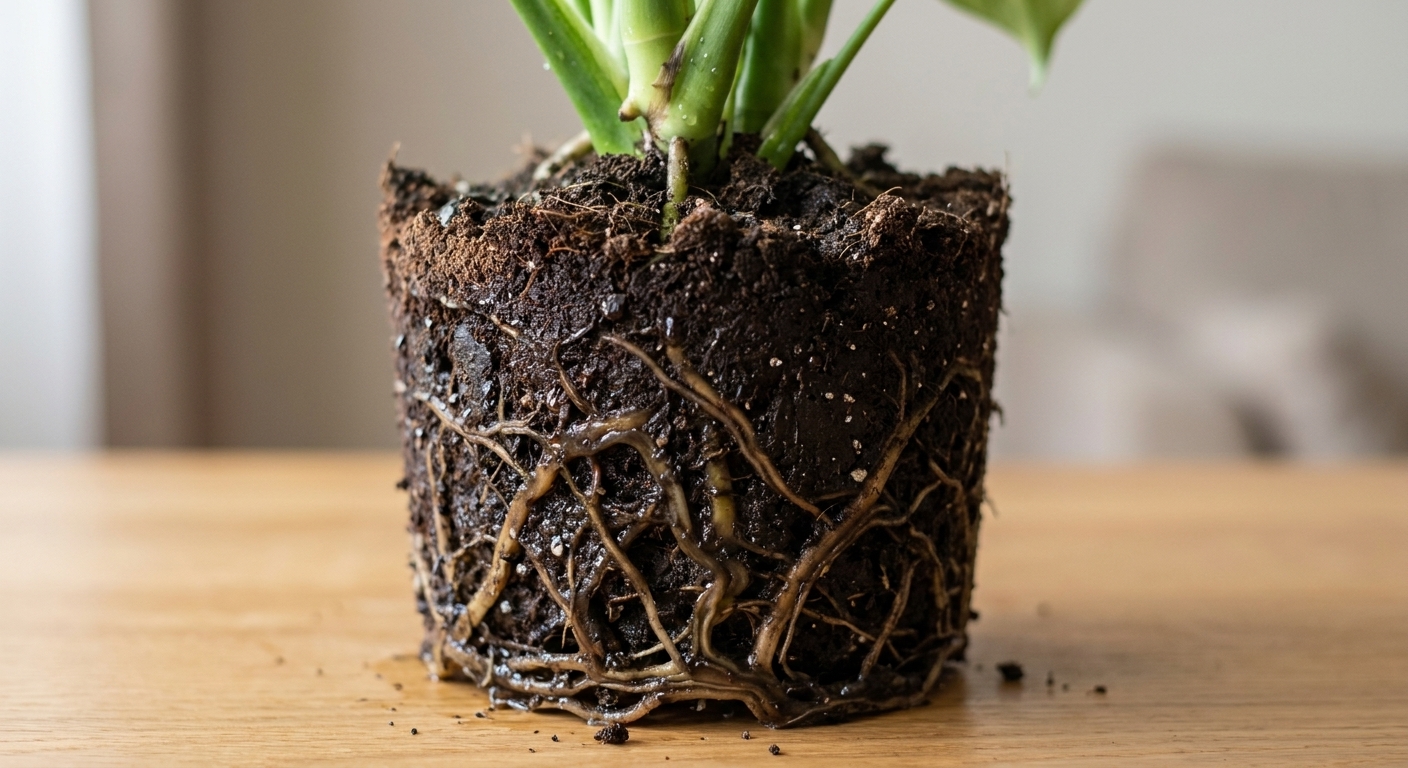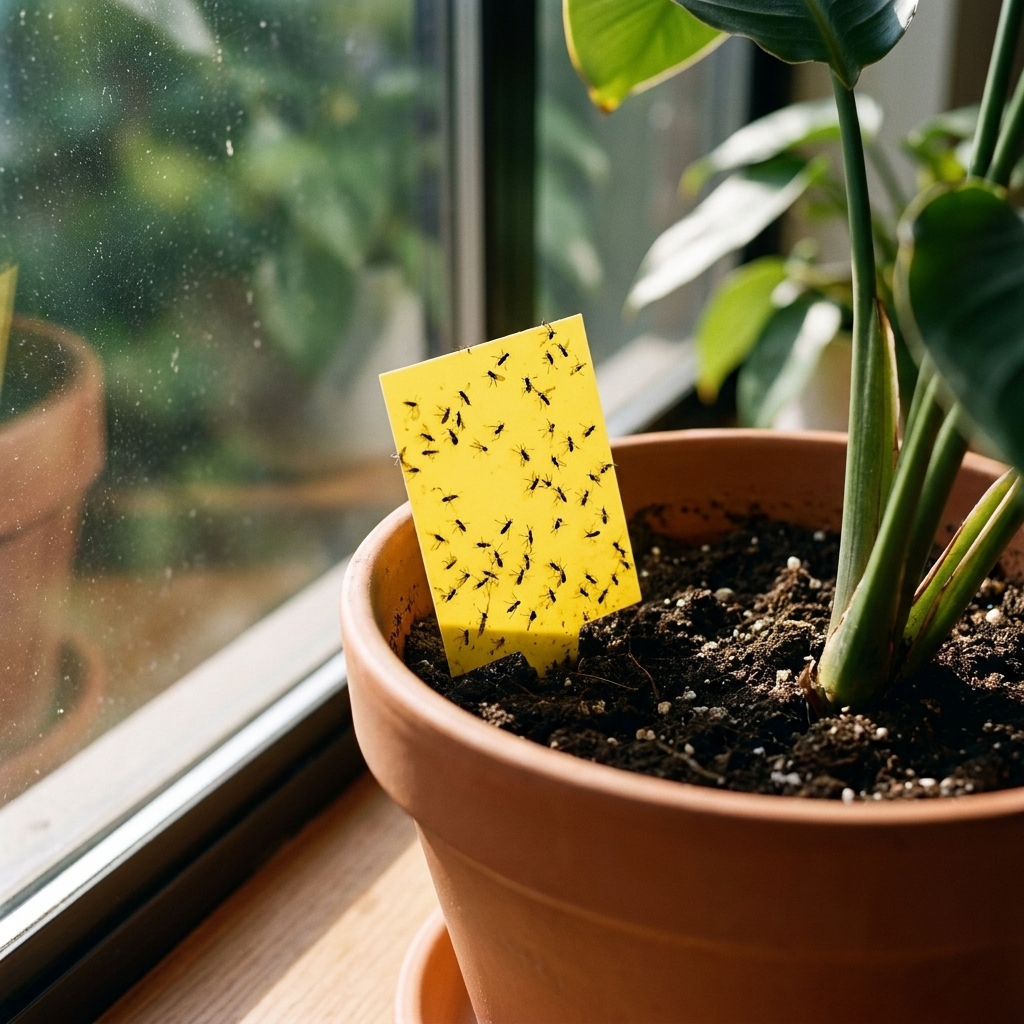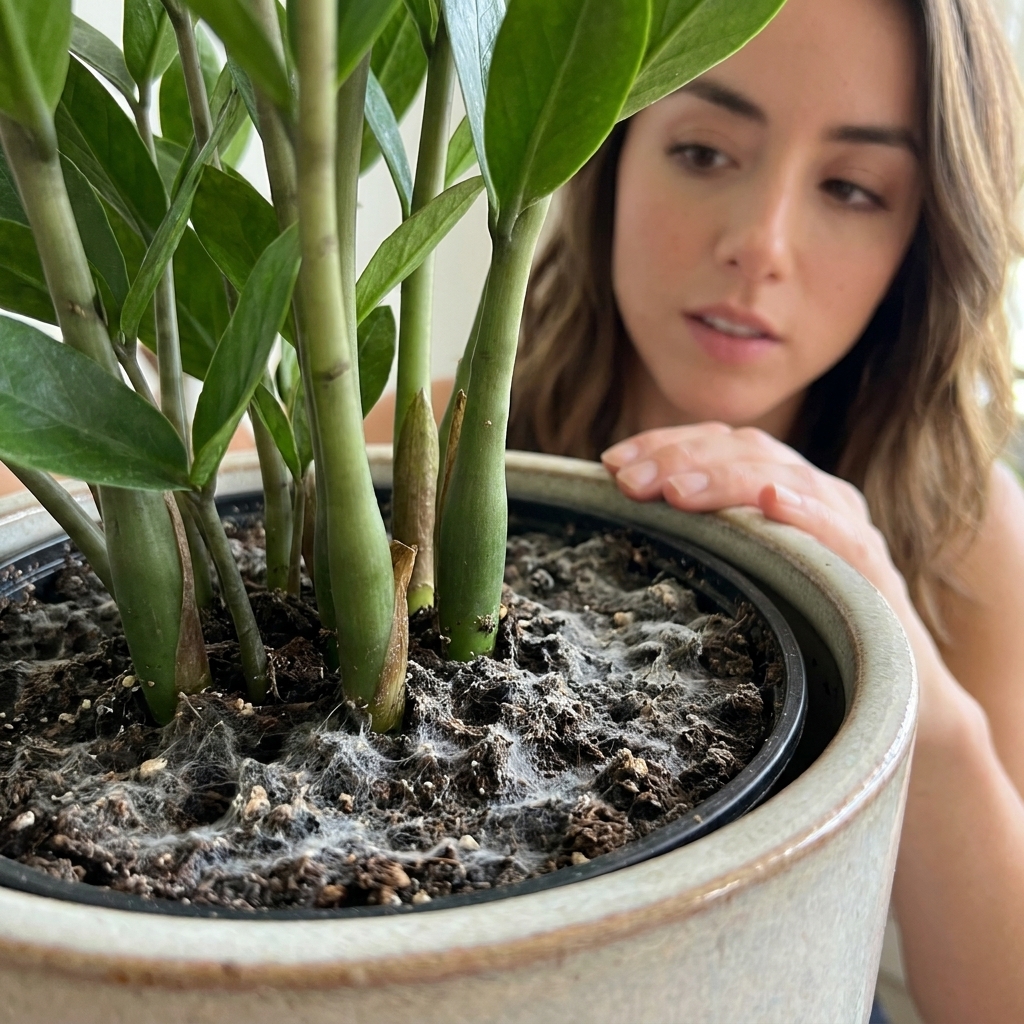
A step-by-step, plant-safe way to remove white mold from potting soil, plus the real reasons it keeps coming back and how to prevent it for good.
The first time you spot a little mushroom popping up in your houseplant soil, it can feel like your pot has turned into a tiny forest overnight. Take a breath. In most homes, mushrooms are not a sign your plant is doomed. They are a sign your potting mix is staying consistently damp and has plenty of organic material for fungi to feed on.
I am going to walk you through how mushrooms differ from surface mold, why they show up, how to remove and dispose of them safely (especially if you have kids or pets), and when repeat appearances mean it is time to review moisture and drainage. No pressure to repot a healthy plant just because you saw one mushroom.
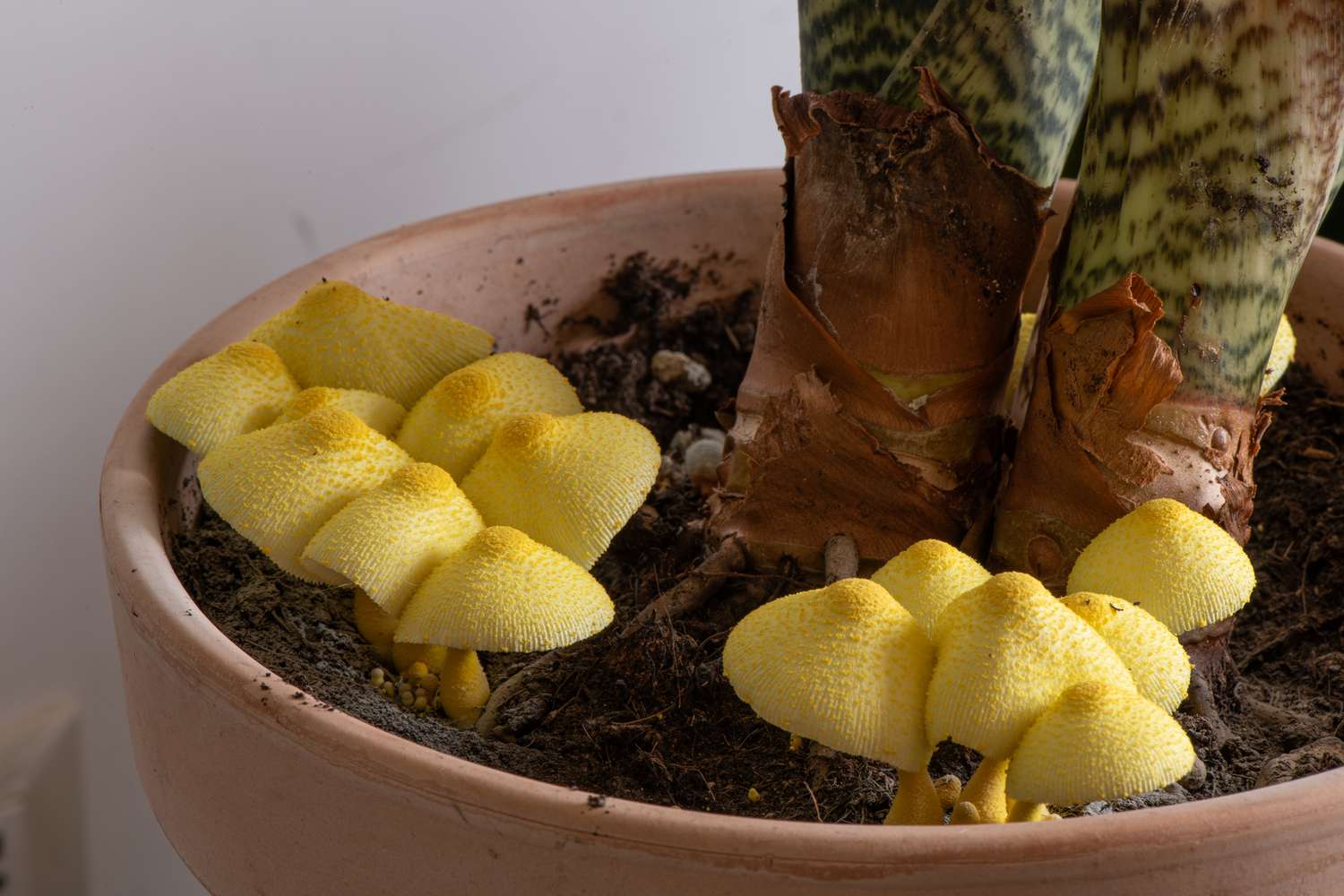
Mushrooms vs. mold
Both mushrooms and mold are fungal growth, but they look and behave differently on the soil surface.
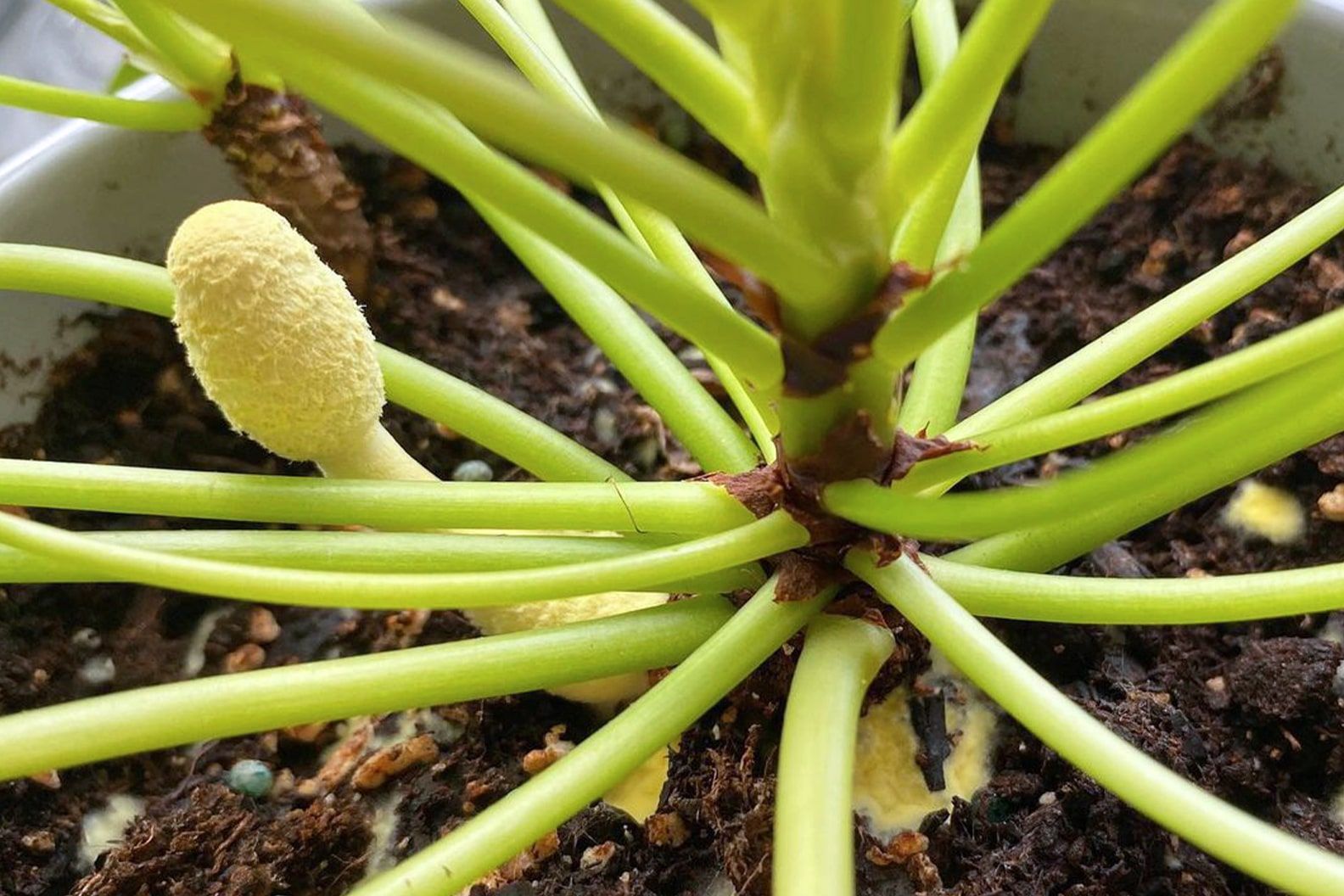
What mushrooms look like
- Distinct shapes: little caps, stems, or button-like nubs pushing up from the soil.
- They appear fast: often overnight after watering, especially in warm rooms.
- They are temporary: many collapse within a day or two after releasing spores.
What surface mold looks like
- Fuzzy or powdery coating: white, gray, or sometimes greenish film on the top layer of soil or on bits of bark.
- Spreads like a blanket: it creeps outward across the surface rather than forming a stem and cap.
- Often linked to poor airflow: common when soil stays wet and the room is still.
If you are seeing a fuzzy mat rather than a clear mushroom shape, your fix is still similar: remove the worst of it, improve airflow, and adjust moisture habits. But mushrooms specifically are fruiting bodies, basically the “flower” of a fungus that already lives in the potting mix.
Why mushrooms appear
Mushrooms do not appear out of nowhere. The fungal network (mycelium) is often already present in bagged potting soil, compost, bark-based mixes, or in organic amendments like worm castings. When conditions are right, it produces mushrooms.
- Consistently moist soil: the number one trigger. If the top stays damp most days, fungi feel right at home.
- Organic material to break down: potting mixes with bark, peat, coco coir, compost, and leaf litter are basically fungal snacks.
- Warmth and humidity: common indoors, especially near kitchens, bathrooms, or humidifiers.
- Lower light and slower drying: in low light apartments, soil can stay wet longer than you expect.
Important reassurance: fungi in soil are not automatically “bad.” In nature, they recycle organic matter and help create healthy soil ecosystems. The issue indoors is less about the fungus itself and more about what it reveals about your moisture, airflow, and drying rhythm.
Are mushrooms bad for plants?
Usually, mushrooms growing in the pot are not directly harming the plant. Most of the time they are feeding on decaying organic material in the mix, not healthy roots. That said, fungi are a big category, and if your plant is declining at the same time, treat mushrooms as a clue to look closer at moisture and root health.
What you do want to watch for is the bigger picture: if mushrooms keep appearing, it can be a sign your soil is staying wetter than your plant prefers. That is when you can run into problems like weak growth, fungus gnats, and sometimes root stress from overwatering. The mushroom is not the villain. Excess moisture is the real plot twist.
Safety and disposal
I do not recommend trying to identify mushrooms for eating. Even if something looks familiar, indoor pot mushrooms can be hard to ID confidently, and ingestion is where risk lives.
Also worth noting: mushrooms release spores. For most people this is not a big issue, but if you have allergies or asthma, it is a good reason to remove them promptly and improve ventilation.
If you have kids or pets
- Treat all mushrooms as potentially toxic if eaten. Keep curious hands and mouths away.
- Remove them promptly so they are not tempting.
- Wash hands after handling, especially before touching faces or food.
How to remove mushrooms
- Put on gloves if you have them.
- Pinch and twist the mushroom at the base, or use a spoon to lift it out with minimal soil disturbance.
- Bag and seal the mushrooms in a small plastic bag and place in the outdoor trash.
- Wipe the rim and surrounding area if you see soil bits or spores.
Try not to “mulch” them back into the pot. Composting is great outdoors, but indoors you are trying to reduce repeat fruiting and keep things less interesting for pets.
Do you need to repot?
My rule of thumb: one mushroom is information, not an emergency. If your plant is otherwise healthy, you can usually remove the mushroom, tweak care, and move on.
Skip repotting if this is true
- Your plant is growing normally (new leaves, stable color).
- The soil is drying at a reasonable pace for that plant.
- You do not smell a strong sour or swampy odor from the pot.
- The pot has a drainage hole and excess water can escape.
Repotting is stressful. It breaks roots, disrupts the plant, and can lead to more problems when it is done out of panic. Most of the time, mushrooms are handled with simple top-of-soil cleanup and a moisture reset.
What to do now
Here is the exact sequence I use when I find mushrooms in a client’s pot or in my own jungle at home.
- Remove visible mushrooms. Bag and trash them.
- Scoop off the top layer. Remove up to the top 1 to 2 inches of soil if you can do it without tearing through roots. In small pots or shallow-rooted plants, just skim what is loose and easy, then stop.
- Top-dress with fresh mix. Add a thin layer of fresh potting mix appropriate for your plant.
- Let the pot dry more between waterings. For most plants, the top 2 inches should dry before you water again. For succulents and cacti, let much more of the pot dry.
- Increase airflow. A small fan across the room, a bit more space between plants, or moving the pot away from a stagnant corner helps a lot.
- Fix saucer habits. Empty runoff water soon after watering, usually within about 10 to 15 minutes, so the pot is not reabsorbing it.
If you are tempted to spray fungicide, pause. Fungicides are rarely necessary for a simple mushroom pop-up, and the better long-term fix is moisture control.
When repeats are a clue
If mushrooms keep coming back every week or two, that is your cue to look at why the soil is staying damp long enough to fruit.
Do a drainage check
- Confirm a drainage hole. Decorative cachepots are fine, but the inner nursery pot needs a hole.
- Check for compacted soil. If water sits on top and drains slowly, the mix may be too dense or broken down.
- Look at pot size. A small plant in a huge pot holds moisture for a long time.
- Consider the mix. Many tropical houseplants do better with added aeration like perlite, pumice, or orchid bark.
Do a watering check
- Are you watering on a schedule? Try watering based on dryness instead.
- Are you watering lightly and often? A deep watering followed by proper drying is usually healthier than frequent sips.
- Is light low? In low light, plants use less water. Soil needs longer to dry.
Repeated mushrooms do not necessarily mean your plant has root rot. They mean your setup is consistently moist. Adjusting that variable usually stops the show.
When repotting helps
Repotting can help if mushrooms are part of a bigger pattern that points to a mix that is staying too wet or has broken down. Here are the times I consider it reasonable.
Repot if you notice these
- Soil stays wet for a long time (think 7 to 10+ days for many common tropicals in average home conditions).
- Musty, sour odor that does not improve as the pot dries.
- Compacted, shrinking, or hydrophobic mix (water runs down the sides or the surface turns crusty and hard).
- Fungus gnats are thriving and moisture tweaks are not helping.
- No drainage hole and you cannot change that without repotting.
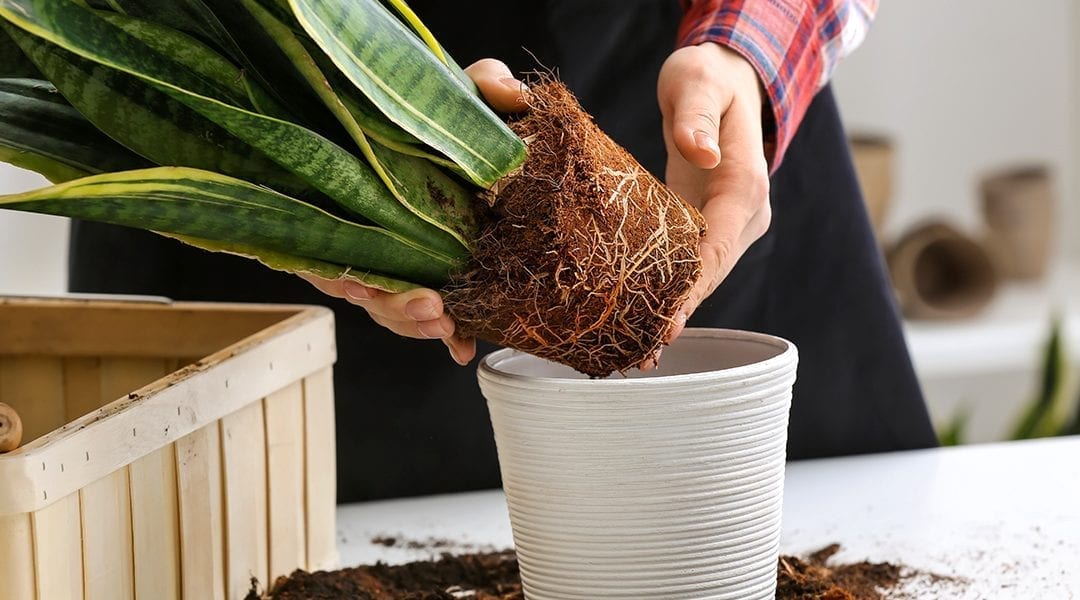
If you do repot
You do not need to scrub roots or aggressively remove every crumb of old soil for a mushroom situation. Aim for a calmer reset:
- Choose a pot with drainage and only go up one size if needed.
- Use a well-aerated mix suited to your plant type.
- Disturb roots as little as possible.
- Water once to settle the mix, then let it dry appropriately.
When to worry
Mushrooms are usually just a care signal, but sometimes the pot is telling a bigger story. I would take a closer look or get help if:
- Your plant is rapidly declining: mushy stems, sudden leaf drop, widespread yellowing, or blackened roots.
- The pot smells foul (strong sour, sewage-like, or swampy) even after it has had time to dry.
- Someone might have eaten a mushroom. If a child or pet may have ingested any amount, contact a medical professional, your veterinarian, or a pet poison helpline right away. If you can do it safely, bring a sealed sample or clear photos to help with identification.
Common questions
Will mushrooms spread to my other plants?
Fungal spores can travel, but mushrooms popping up in multiple pots is usually about similar conditions across your collection: consistently moist soil, organic-rich mix, and warm indoor air. Focus on drying cycles, airflow, and drainage rather than worrying about “contagion.”
Can I just sprinkle cinnamon on the soil?
Cinnamon is often suggested online, but it is not a reliable fix for mushrooms. It might slightly discourage some surface growth, but it will not change the underlying moisture level that causes fruiting. If you like using it, keep it light and use it as a bonus, not your main strategy.
Are mushrooms a sign my soil is high quality?
They can indicate the mix has lots of organic matter, which is not a bad thing. Indoors, though, it also means the soil is staying damp long enough for fungi to fruit. “Good soil” still needs the right air and drying rhythm for your specific plant and light level.
What if the mushroom is bright yellow?
Bright colors can be especially tempting to kids and pets, so remove them right away and dispose of them in a sealed bag. Bright yellow houseplant mushrooms are often reported as toxic if eaten, so treat it as an urgency even if you do not know the exact species. The care response stays the same: remove, skim the surface if you can, and correct moisture.
The calm takeaway
Mushrooms in houseplant soil are usually a moisture signal, not a plant health verdict. Remove the fruiting bodies, keep them away from kids and pets, and use the moment as a gentle check-in on your watering habits, light, airflow, and drainage. If mushrooms keep returning, that is your cue to improve drying conditions. Repotting is a tool, not a reflex.