A clear, practical guide to bright indirect light: how to spot it, measure it, and choose plants that will truly thrive indoors.
If you have ever stared at your Monstera deliciosa and thought, “You are gorgeous, but where are the dramatic splits?”, you are not alone. Monsteras are famously forgiving, but fenestration (those iconic holes and deep cuts) is a reward for consistent, correct conditions over time. The good news is you do not need a greenhouse or a perfect sunroom. You just need to understand what your plant is trying to tell you.
This guide walks you through the core care basics that matter most indoors, plus the practical tweaks that help leaves size up and start splitting.
Quick care snapshot
- Light: Bright, indirect light for best growth and fenestration
- Water: When the top 2 to 3 inches of soil are dry
- Soil: Chunky, airy mix that drains fast but holds slight moisture
- Humidity: Average home humidity works, higher can help leaf size
- Support: Moss pole or plank for larger leaves and stronger stems
- Pet safety: Toxic if chewed (calcium oxalate crystals)
Meet Monstera deliciosa
Monstera deliciosa is a climbing aroid. In nature, it starts on the forest floor and then climbs up tree trunks toward brighter light. That “climb toward the canopy” instinct explains almost everything you see indoors: aerial roots reaching outward, leaves turning toward windows, longer internodes in low light, and bigger, more fenestrated leaves once it is mature and well supported.
Two important notes that save a lot of frustration:
- Fenestration is tied to maturity and conditions. A young plant can be perfectly healthy and still produce solid leaves for a while.
- “Swiss cheese plant” gets used for multiple plants. Monstera deliciosa is different from Monstera adansonii. This guide is for deliciosa.
Light for split leaves
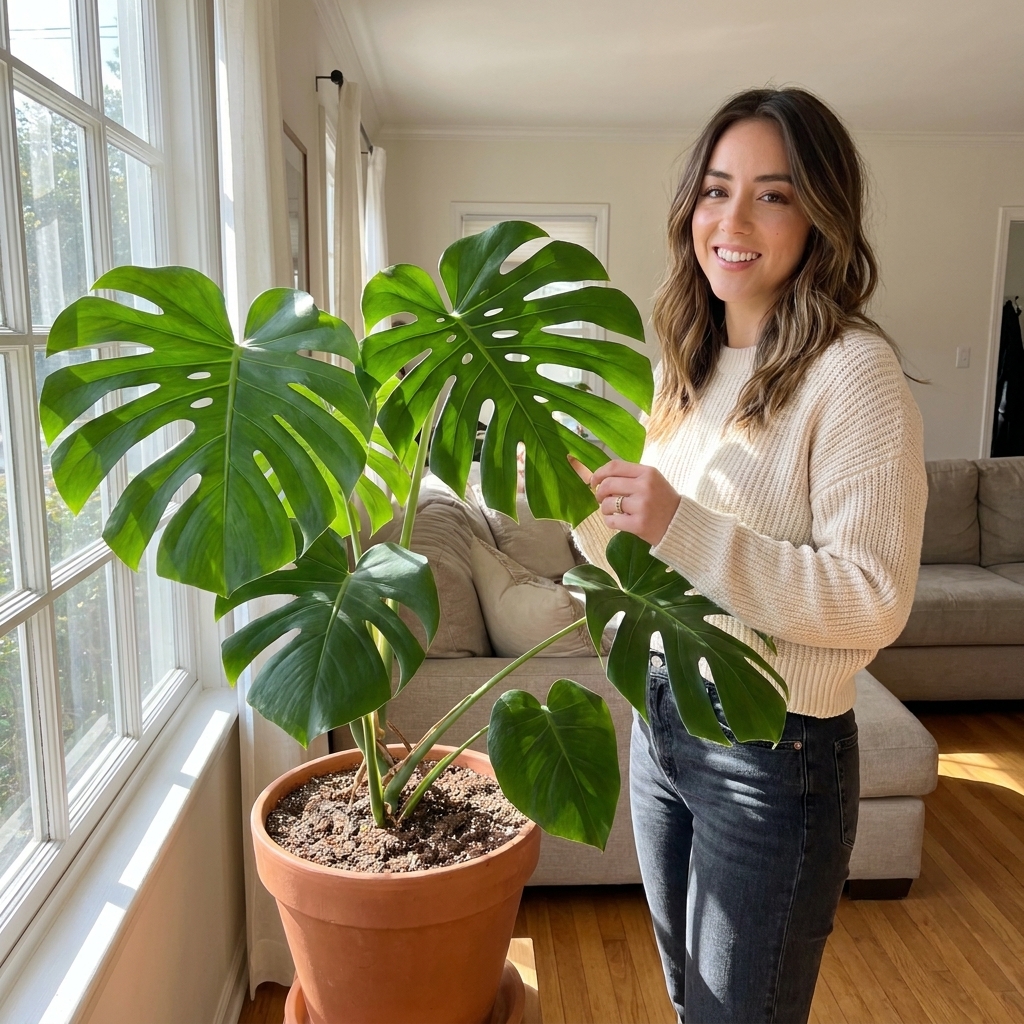
If I could only adjust one thing for a struggling, non-splitting Monstera, it would be light. Strong filtered light fuels faster growth, thicker stems, shorter spacing between leaves, and larger leaf size, which is where splits and holes become more likely.
Best placement
- Near an east window: Gentle morning sun is usually perfect.
- Near a south or west window: Great light, but use distance or a sheer curtain to prevent harsh afternoon burn.
- North window: Often too dim for strong fenestration unless the window is very large and unobstructed.
Acclimate to brighter light
If you are moving your plant closer to a brighter window, do it gradually. Shift it a little closer every few days (or add a sheer curtain at first) so leaves can adjust without sunscald.
Signs your Monstera needs more light
- New leaves are smaller than older ones
- No splits on new growth after several leaves
- Leggy growth (long bare stem between leaves)
- Leaves slowly turning to face the window more and more
Signs of too much direct sun
- Bleached patches or tan, crispy spots (sunscald)
- Edges drying out quickly even when watering is reasonable
- Wilting during the hottest part of the day
If your space is naturally dim, a grow light can be a game changer. Many people have success with about 10 to 12 hours daily, but intensity matters as much as hours. As a starting point, place the light roughly 12 to 18 inches from the foliage and adjust based on the fixture and how your plant responds.

Watering without rot
I used to “love” plants with constant water, so I say this with deep empathy: Monsteras would rather be a little dry than a little soggy. Most indoor problems trace back to watering habits meeting the wrong soil.
When to water
Water when the top 2 to 3 inches of soil are dry. That guideline fits many typical indoor pots, but scale it to your setup. In smaller pots, check closer to 1 to 2 inches. In large pots, use a skewer or chopstick to test deeper, because the top can feel dry while the center stays wet.
How to water correctly
- Water slowly until it runs out of the drainage holes.
- Empty the saucer or cachepot so the pot is never sitting in water.
- Do not “sip water” on a schedule. Let soil dryness lead the decision.
Common watering questions I get all the time
- “How often should I water?” It depends on light, pot size, season, and soil. In strong light, you might water weekly. In winter, it may be every 2 to 3 weeks.
- “Can I bottom water a Monstera?” Occasionally, yes. But top-watering is better for flushing salts and evenly hydrating chunky mixes.
- “Should I mist it?” Misting is not a reliable humidity strategy. It is fine for dust control, but it will not replace steady moisture in the air.
Red flags for overwatering
- Yellowing lower leaves paired with soft stems
- Soil that stays wet for many days
- A sour smell from the pot
- Black, mushy roots if you check
If you suspect root rot, pause watering and assess the soil and pot. A Monstera in dense, water-retentive soil often needs a repot into an airier mix more than it needs “less water.”
Soil and potting
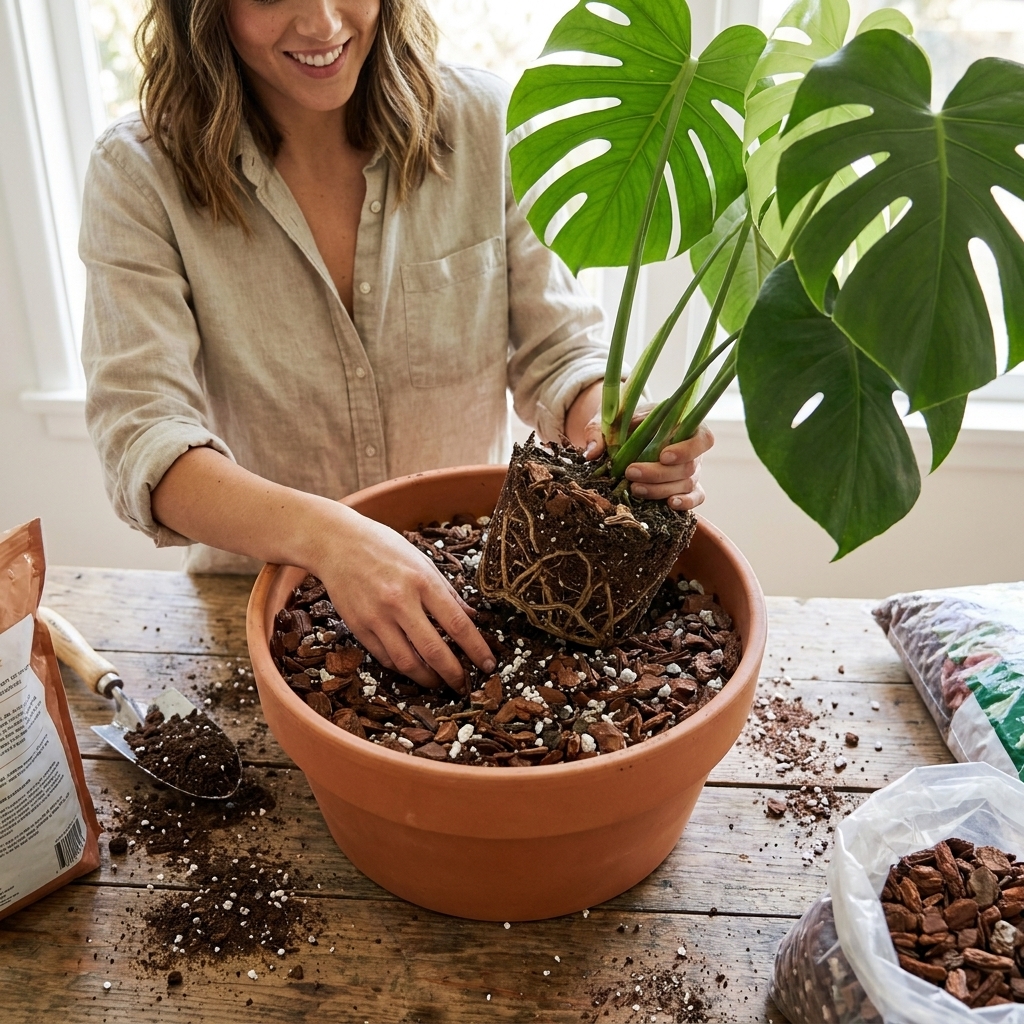
Monsteras like moisture, but they hate stagnation. The goal is a mix that holds some water while still breathing.
A dependable Monstera soil mix
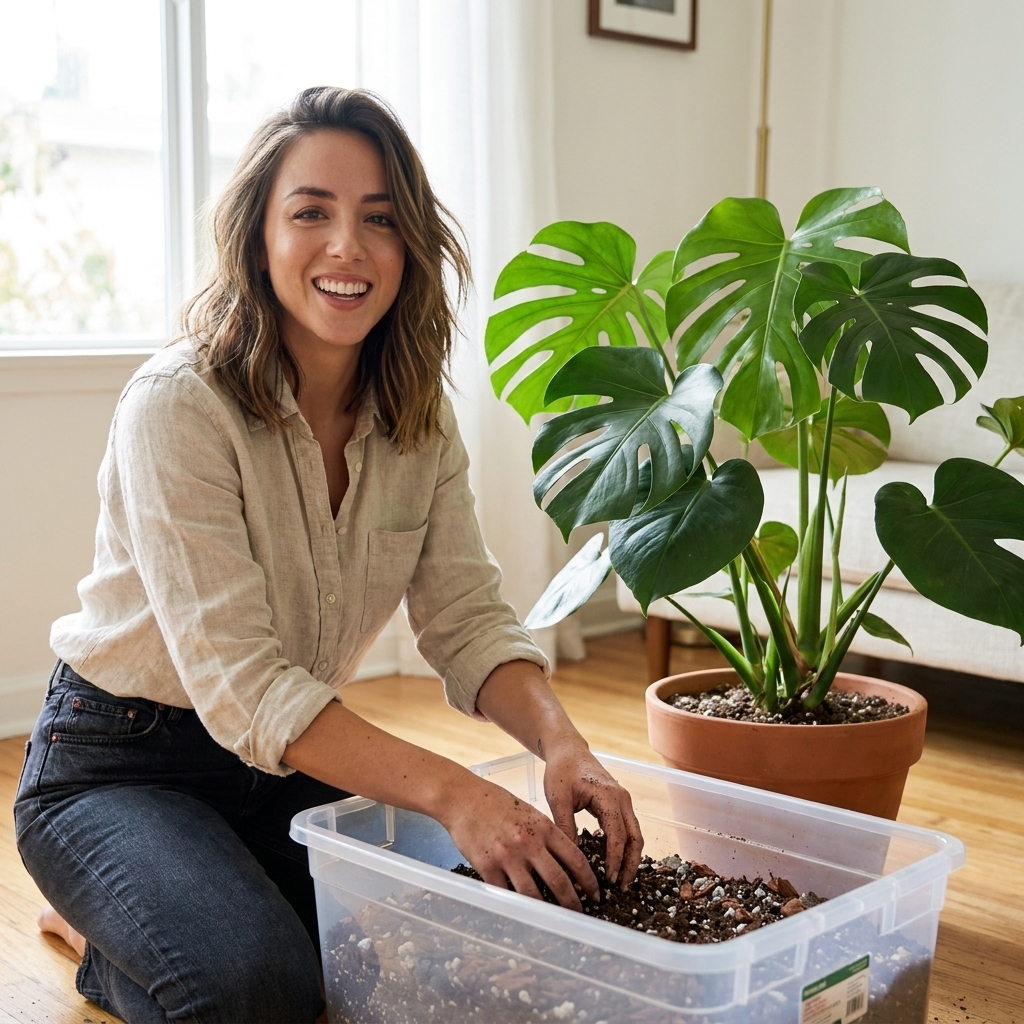
You can buy an aroid mix or blend your own. A simple DIY option:
- 2 parts high-quality indoor potting mix
- 1 part orchid bark
- 1 part perlite or pumice
- Optional: a small handful of horticultural charcoal for freshness
Choose the right pot
- Drainage holes are non-negotiable.
- Size up gradually. Going 1 to 2 inches wider than the current pot is usually ideal.
- Material matters. Terracotta dries faster. Plastic retains moisture longer. Neither is “better,” but it affects watering frequency.
When to repot
- Roots circling the pot or coming out the drainage holes
- Soil drying out extremely fast (root bound)
- Noticeable slowdown in growth during the active season
- Soil has broken down and stays wet too long
Support and training
Here is the part many people miss: Monstera deliciosa is built to climb. When you give it support, you are not just making it look tidy. You are unlocking its natural growth pattern, which often means larger leaves and more fenestration over time.
Best support options
- Moss pole: Excellent for aerial root attachment and training. If you keep it lightly damp, it also gives aerial roots a moist surface to grow into.
- Coco coir pole: Lower maintenance than moss, less moisture-holding.
- Wood plank or cedar board: A favorite for strong, clean training and very stable growth.
How to stake without stressing the plant
- Identify the back of the plant (where aerial roots emerge). Position the pole there.
- Use soft plant ties or Velcro ties to secure the main stem loosely.
- Do not force bends. Adjust over weeks as it grows.
Once your Monstera starts climbing, keep the support in place and extend it as the plant grows. A tall Monstera with no support often flops, stretches, and stalls on leaf size.

Fenestration tips
Let’s talk about the big goal: fenestration. Those splits are not random. They usually show up when the plant has enough energy and maturity to build larger leaves, and when it is growing in a way that mimics its natural climb.
What actually helps fenestration
- Brighter indirect light: Most important factor.
- Consistent watering rhythm: Dry slightly, then water thoroughly.
- Climbing support: Promotes stronger growth and larger leaf development.
- Nutrition during active growth: Fertilizer supports bigger leaves.
- Time and maturity: Baby plants often need several nodes before splits appear.
What to expect as splits start
Early fenestration can be subtle. Some plants start with a few inner slits before you see the dramatic edge splits. Holes versus deep cuts can also vary by genetics and growing conditions, even when care is excellent.
What does not reliably create fenestration
- Cutting leaves: Pruning does not force splits. It can redirect growth, but it is not a fenestration button.
- Leaf shine products: They can leave residue that attracts dust and may reduce light absorption and gas exchange.
- Constant misting: Not harmful in moderation, but it will not substitute for light.
If your Monstera is growing but still not splitting
Use this quick checklist:
- Is it close enough to a bright window, or under a grow light that is actually strong enough?
- Are new leaves getting smaller? That is usually a light issue.
- Is it unsupported and sprawling sideways? Add a pole or board.
- Is it root bound and drying out too fast? Consider a repot.
- Have you been under-fertilizing during spring and summer? Add gentle feeding.
Fertilizer basics
Monsteras are not heavy feeders like some flowering plants, but they do appreciate nutrients when they are actively growing.
Simple feeding routine
- Spring through early fall: Fertilize about once a month with a balanced houseplant fertilizer at half strength.
- Late fall and winter: Pause or reduce significantly unless you use strong grow lights and your plant is actively pushing new leaves.
If you see crusty white buildup on the soil surface or pot rim, that can be mineral or fertilizer salt buildup. Flush the pot with water (let it drain fully) and consider switching to a gentler routine.
Humidity and temperature
Monstera deliciosa can adapt to average indoor humidity, but higher humidity often supports larger, prettier leaves and fewer crispy edges.
- Humidity target: Around 40 to 60 percent is a comfortable indoor sweet spot. Many homes sit outside that range, and your plant can still do well, but leaf size and edge crisping can change.
- Temperature: Aim for 65 to 85°F. Protect from cold drafts and heat vents.
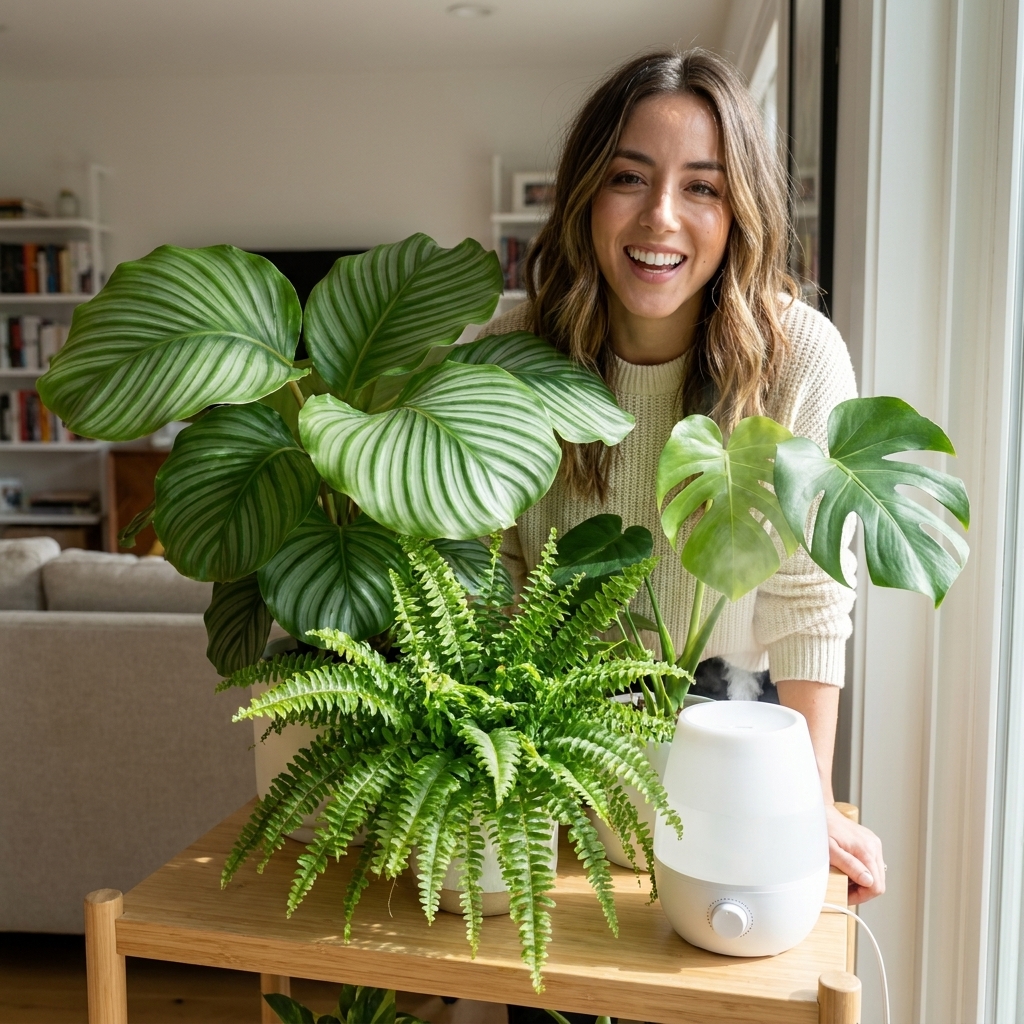
If your air is very dry, a small humidifier near the plant is more effective than misting. Grouping plants together also helps a bit.
Pruning and cleaning
Monsteras can get big. A little maintenance keeps them healthy and living-room friendly.
Pruning basics
- Remove yellowing or damaged leaves at the base of the leaf stem using clean snips.
- To control height, you can cut the main stem just above a node. That node can produce new growth, but it can also change the plant’s overall shape.
- If your goal is bigger leaves, try training upward on support before reaching for the pruners.
- Always sanitize tools, especially if you have dealt with rot or pests.
Leaf cleaning
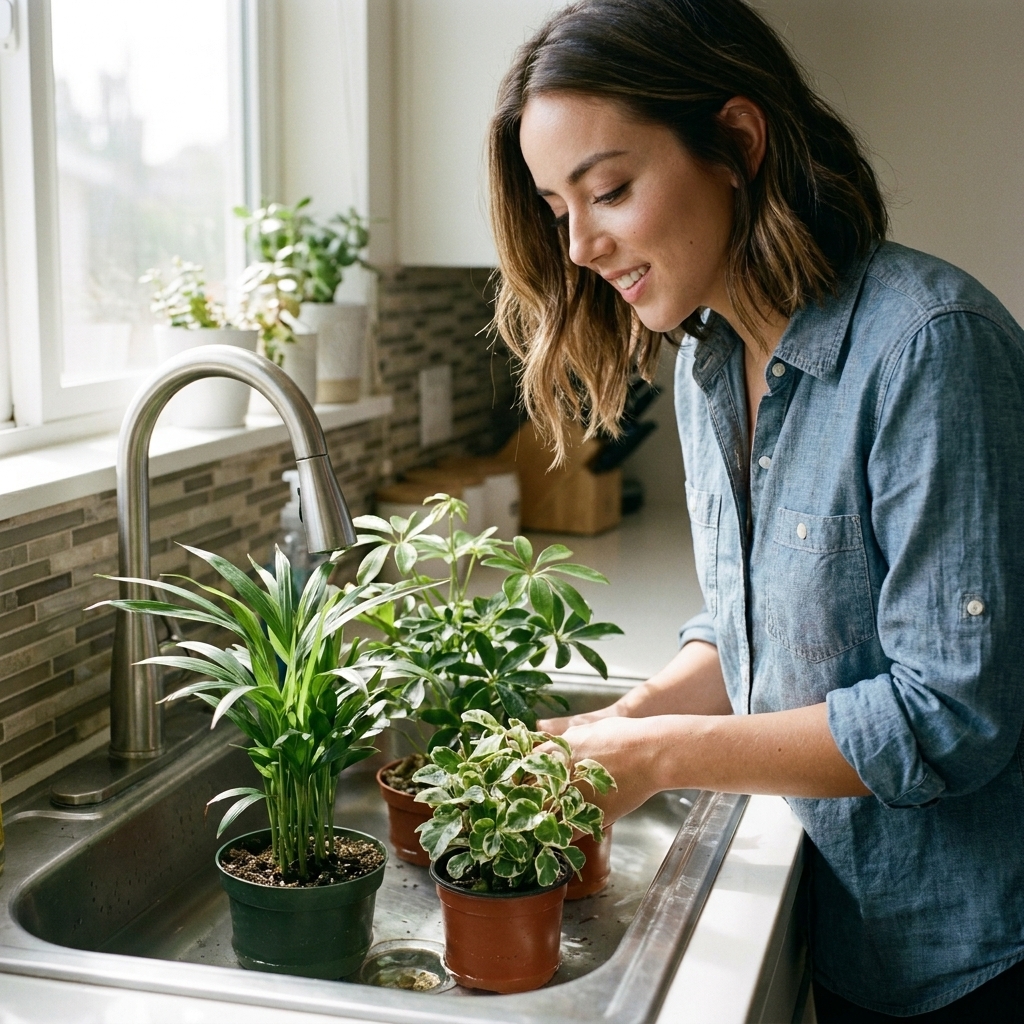
Dust blocks light, and light is your fenestration fuel. Wipe leaves with a soft damp cloth every few weeks. If you shower your plant, use lukewarm water and let it drain completely.

Propagation basics
Monstera propagation is straightforward once you know what to cut. You need a node. A leaf stem without a node will not grow roots.
Where to cut
- Look for a node, which is a small bump or joint on the main stem, often near an aerial root.
- Make a clean cut just below the node.
Water or moss propagation
- In water: Submerge the node, keep the leaf above water, refresh water weekly.
- In sphagnum moss: Keep moss lightly moist and provide warmth and bright indirect light.
Pot up once roots are a few inches long and branching. If you pot too early, cuttings can stall.
Common problems
Yellow leaves
- Most common cause: Overwatering or soil staying wet too long
- Next step: Check soil moisture, improve drainage, consider repotting into a chunkier mix
Brown, crispy edges
- Common causes: Underwatering, low humidity, salt buildup, hot sun
- Next step: Confirm your watering rhythm, move out of harsh direct sun, flush the soil if needed
Drooping stems
- Common causes: Thirst, root issues, or lack of support
- Next step: Check soil dryness and root health, add a stake or pole
No growth for months
- Common causes: Not enough light, winter slowdown, root bound pot, low temps
- Next step: Increase light, keep warm, check roots, resume light feeding in spring
Pests (thrips, spider mites, mealybugs)
Monsteras are not magnets for pests, but they are not immune either. Check the undersides of leaves and along the stems.
- First response: Isolate the plant, rinse leaves, wipe down stems
- Treatment: Insecticidal soap or neem-based products can work with consistent repeat applications. Always follow label directions.
- Consistency matters: Many treatments are repeated every 5 to 7 days, but timing depends on the pest and product. Thrips, in particular, can take more persistence, and some households choose a systemic option where it is appropriate and available.
FAQ
How long does it take for Monstera leaves to split?
It varies by plant age and conditions. In bright indirect light with good watering, feeding, and support, you may see fenestration within a few new leaves. Younger plants can take longer, and that is normal.
Should I rotate my Monstera?
Yes, but gently. Rotating a quarter turn every week or two helps balanced growth. If you have it on a pole, you may rotate less often because you want the plant oriented with its back to the support.
Can Monstera deliciosa live in low light?
It can survive in lower light, but growth will slow and new leaves often stay smaller and un-split. If your goal is big fenestrated leaves, stronger light is the path.
Do I need a moss pole to get fenestration?
Not strictly, but it helps a lot. Support encourages climbing behavior, which often leads to larger leaves over time. Think of it as giving your Monstera the lifestyle it evolved for.
Why are my new leaves smaller than the old ones?
This is usually a light issue, sometimes combined with inconsistent watering or a plant that needs feeding. Move it closer to a bright window or add a grow light and keep care consistent for the next few leaves.
Do variegated Monsteras need different care?
Variegated Monstera deliciosa cultivars (like albo forms) usually need brighter light to grow well because parts of the leaf lack chlorophyll. They can also grow a bit slower, so fenestration may take more patience, even with great care.
My split-leaf routine
If you want the most practical, no-guilt plan to follow, here is what I use when I am trying to level up a Monstera:
- Place it in bright, indirect light (or add a grow light).
- Water only when the top 2 to 3 inches dry, then soak thoroughly.
- Repot into a chunky aroid mix if the soil stays wet too long.
- Add a moss pole or plank and train the stem upward.
- Feed monthly in spring and summer at half strength.
- Wipe leaves clean so they can actually use the light.
And then the hardest part: give it time. Monsteras do not flip a switch into fenestration overnight, but when the conditions are right, the progression is incredibly satisfying. One day you will unfurl a new leaf and there they are, those first perfect splits, like your plant is finally exhaling.