A calm, step-by-step root rot rescue: how to unpot, trim mushy roots, repot in fresh mix, and prevent future rot in any houseplant.
I killed my first three succulents in college by loving them to death with water. Jades were on my “never again” list for a while, until I learned the trick: treat Crassula ovata like a tiny drought plant that just happens to live in a pot. When you give it enough sun and let the soil dry down properly, it becomes one of the easiest, most confidence-building houseplants you can grow.
This guide will walk you through the three things that make or break a jade plant indoors: sunlight, dry-downs (letting the potting mix dry fully between waterings), and reading the leaves, especially when they get wrinkled.
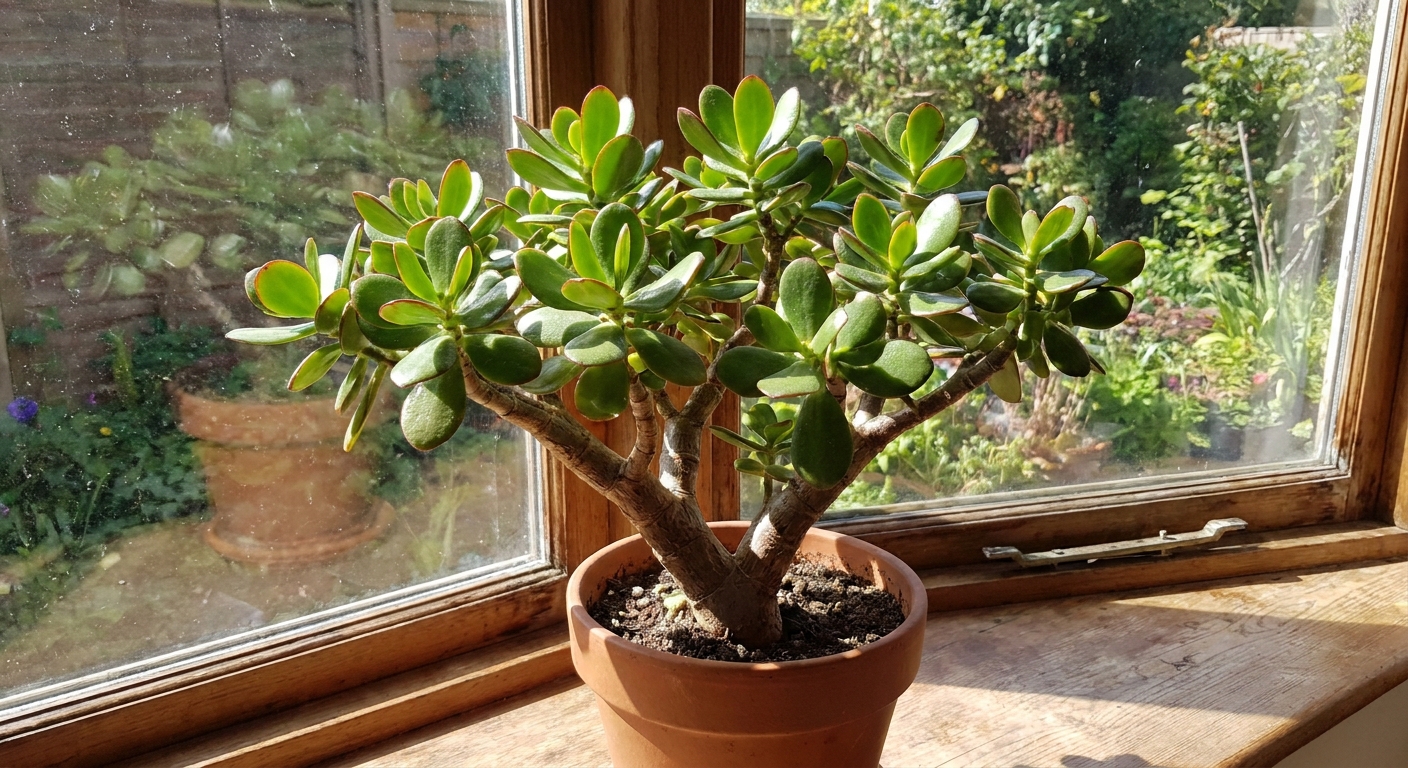
Meet the jade plant (Crassula ovata)
Jade plants are succulents native to arid and semi-arid parts of South Africa (and Mozambique). Indoors, they behave like a long-term houseplant tree: slow-growing, woody over time, and happiest with a steady routine. The big misunderstanding is thinking it wants small sips of water on a schedule. What it really wants is a cycle: thorough soak, then a real dry period.
When jade care is off, the plant usually tells you through its leaves first. That is good news. Leaves are your dashboard.
Sunlight: keep jade compact
If I could pick only one upgrade for an indoor jade plant, it would be more light. Light is what keeps growth tight and sturdy, instead of stretched and floppy.
The best window
- South-facing window: usually the strongest indoor light (in the Northern Hemisphere) and often the best long-term spot for jade.
- West-facing window: excellent too, with bright afternoon sun. This can be intense in summer, so watch for scorching during heat waves.
- East-facing window: workable if it is bright and unobstructed, but you may see slower growth and slightly looser spacing between leaves.
- North-facing window: typically too dim for compact jade growth. The plant may survive, but it often stretches.
What “enough sun” looks like
A jade getting good light will have:
- Short spaces between leaf pairs (compact growth)
- Thick, firm leaves
- Strong stems that do not lean hard toward the window
A jade that needs more light will show:
- Long, bare stretches of stem between leaves
- Leaning and top-heavy growth
- Smaller, thinner leaves over time
How to prevent sun scorch
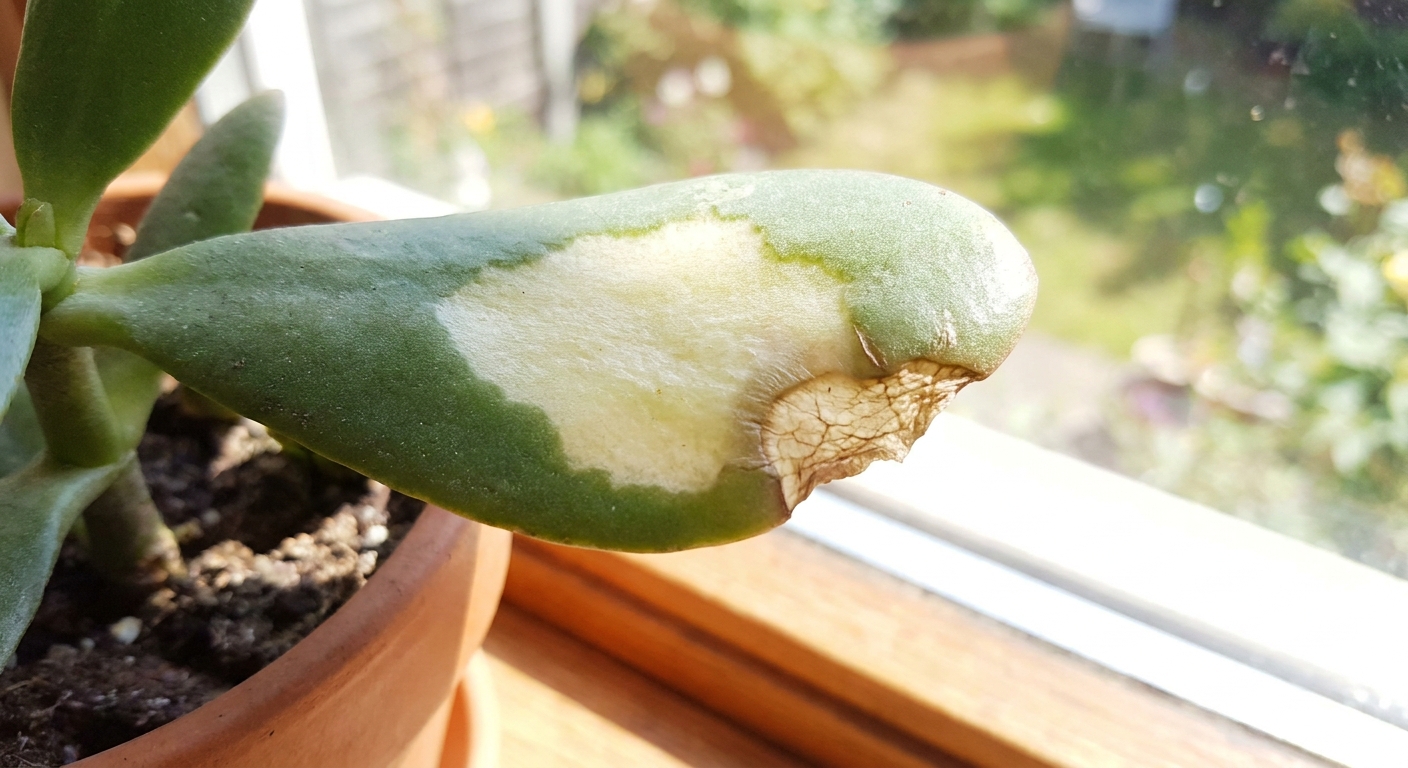
Yes, jades love sun, but they can burn if they go from low light to intense direct sun too fast, especially behind glass in midsummer.
Use this simple “sun ramp”:
- Move the plant closer to the bright window in stages over 7 to 14 days.
- Start with bright indirect light for a few days, then introduce 1 to 2 hours of direct sun, then increase.
- If afternoon sun is fierce, set the pot a foot or two back from the glass or use a sheer curtain during the hottest part of the day.
Signs of scorch: pale, bleached patches or crispy tan spots on the sun-facing leaves. Scorched tissue will not turn green again, but you can stop further damage by easing the light increase.
Soil and potting: fast dry-down
Indoors, the number one enemy of jade is not forgetting to water. It is soil that stays wet too long. A jade’s roots need oxygen. If the pot holds moisture for days and days, roots struggle, then rot follows.
What a jade-friendly mix feels like
A good jade mix is:
- Gritty and airy when you pinch it
- Fast draining when watered
- Quick to dry compared to typical houseplant soil
If your mix feels like a sponge or stays dark and damp for a week or more after watering, it is probably too moisture-retentive for a jade in an average home.
Pot choice matters
- Drainage hole is non-negotiable. If water cannot escape, roots sit in it.
- Terracotta helps because it breathes and speeds drying. Plastic can work too, but you must be more disciplined about dry-downs.
- Choose a pot that fits the root ball. Oversized pots hold extra wet soil that roots cannot use quickly, which slows dry-down.
When to repot
I usually repot a jade when the mix has broken down and stays wet too long, when roots are crowding the pot, or when the plant feels unstable and top-heavy. For many indoor jades, that works out to roughly every few years, not every season.
Watering: soak and dry
Here is the routine I use for indoor jades at home and the one we leaned on at the nursery: water deeply, then wait until the mix is truly dry.
How to water a jade
- Take the plant to a sink or shower (or use a tray).
- Water slowly until water runs freely out of the drainage hole.
- Let it drain completely. Do not leave it sitting in runoff.
- Put it back in its bright spot.
How to tell when to water again
Forget calendars. Indoors, dry-down speed changes with season, light, pot type, and how warm your home is.
Instead, check one or more of these:
- Finger test: the top couple inches should feel dry, not cool and damp.
- Skewer test: slide a wooden skewer down near the edge of the pot. If it comes out dark or damp, wait. If it is dry, you are closer.
- Pot weight: learn the feel of “just watered” vs “bone dry.” This is my favorite once you get the hang of it.
What “dry” means for jade: not just a dry surface crust. You want the pot to be dry enough that the roots can breathe for a while before the next soak.
As a loose example, some jades in bright light might need water about every 2 to 4 weeks during active growth, and less often in winter. Your timing can be faster or slower depending on your conditions, so let the pot dryness lead.
Read the leaves: wrinkled vs mushy
Jade leaves are storage tanks. When something is off, they change texture. This is where jade plants are wonderfully honest.
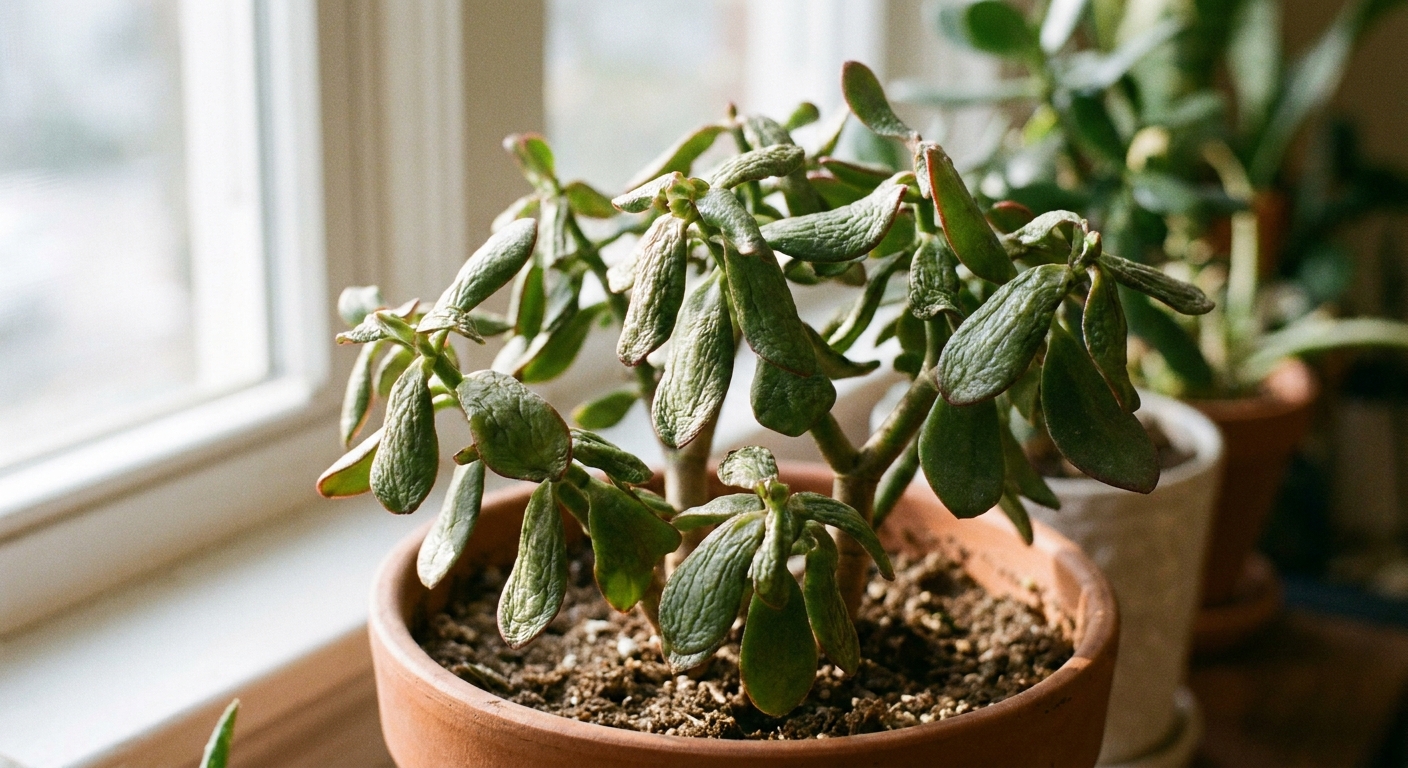
Thin and wrinkled leaves
What it looks like: leaves lose their plumpness, look slightly deflated, and develop wrinkles or a puckered texture. The plant may look a bit droopy, but the leaves often still feel firm, not slimy.
What is happening: the plant used up stored water and has not had a deep soak in a while.
How to fix it:
- Give a full soak until water runs out the bottom.
- Let it drain thoroughly.
- Over the next 2 to 7 days, leaves should gradually re-plump if roots are healthy.
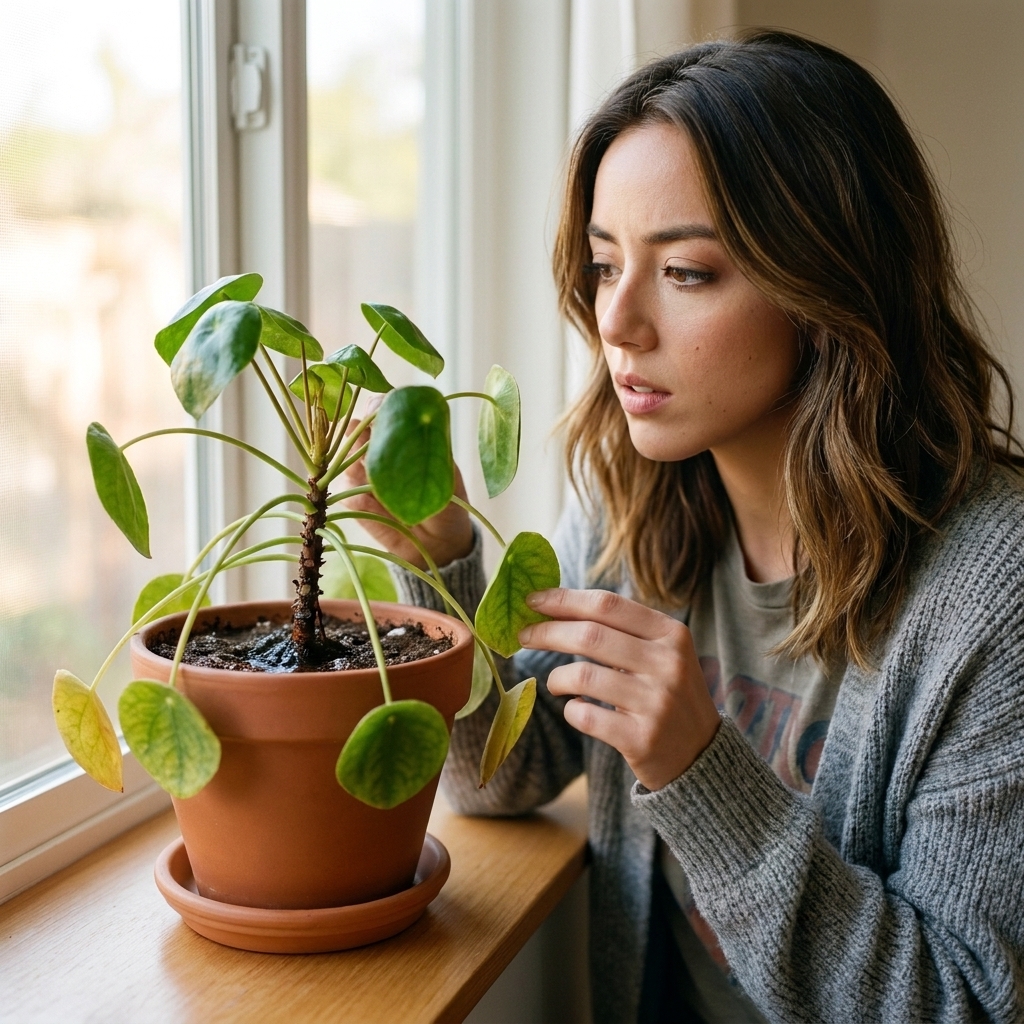
If wrinkles do not improve after watering: that is your clue to check roots. A jade can look “thirsty” even in wet soil if roots are damaged and cannot take up water.
Soft, mushy, or translucent leaves
What it looks like: leaves feel squishy, may look translucent or yellowing, and can drop easily. Stems may darken near the soil line. The potting mix often feels damp for a long time.
What is happening: roots are not getting enough oxygen. The plant is overwatered, or more commonly, it is underlit and slow-drying so the soil stays wet too long.
How to fix it:
- Stop watering immediately. Do not “balance it out” with more water later.
- Move it to brighter light (gradually if it has been in low light) to speed drying and strengthen growth.
- Assess the soil. If the mix is heavy and staying wet, plan to repot into something grittier.
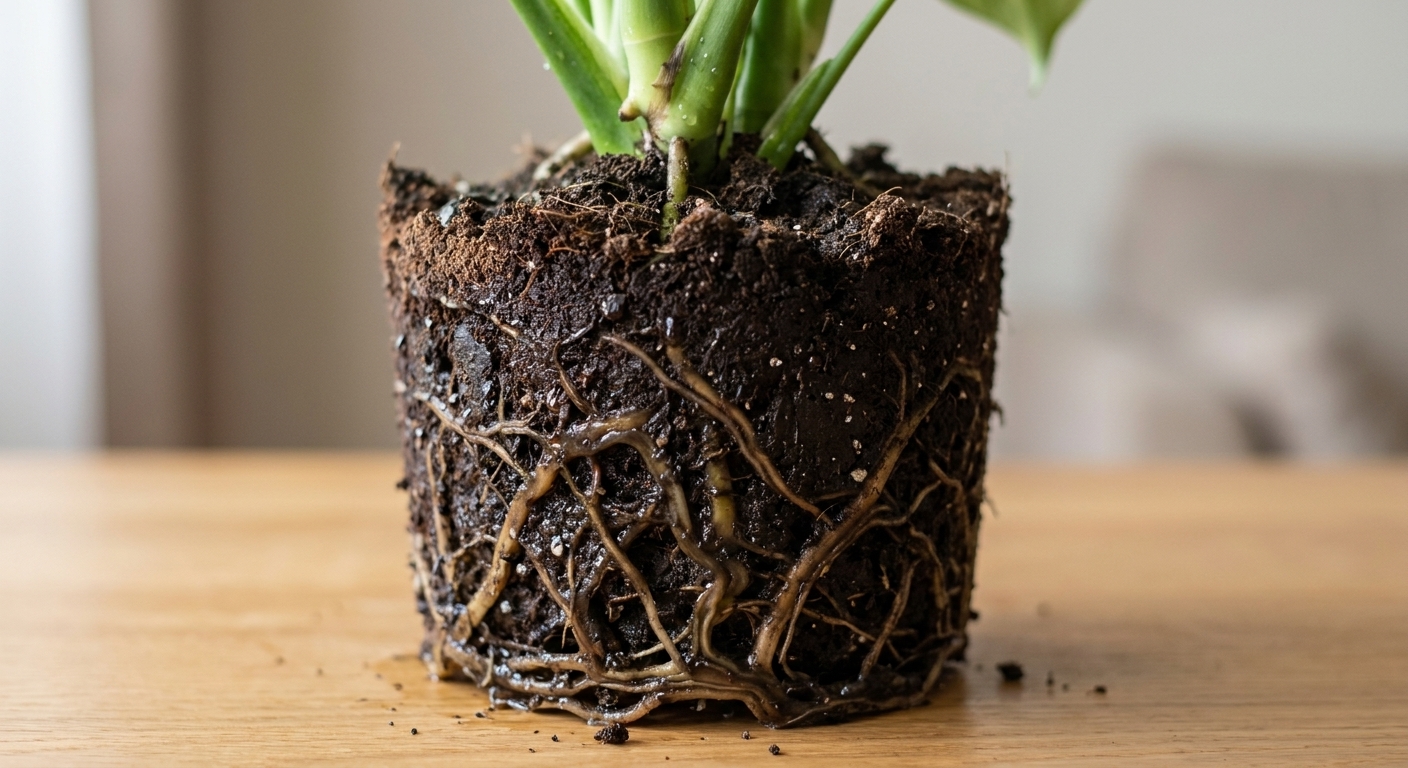
- Check the roots if symptoms are advancing. Slide the plant out gently. Healthy roots are firm and pale. Rotting roots are dark, mushy, or hollow.
- Remove dead roots. Trim back to firm tissue using clean scissors.
- Let cuts dry before repotting. In a typical home, letting the plant sit out for about a day can help cut root ends callus. If your air is very humid, give it a bit longer.
- Repot into a fast-draining mix in a pot with drainage. Then wait several days before watering again, especially if many roots were removed.
The goal is simple: restore oxygen to the root zone and prevent repeat sogginess.
Wrinkled leaves but wet soil
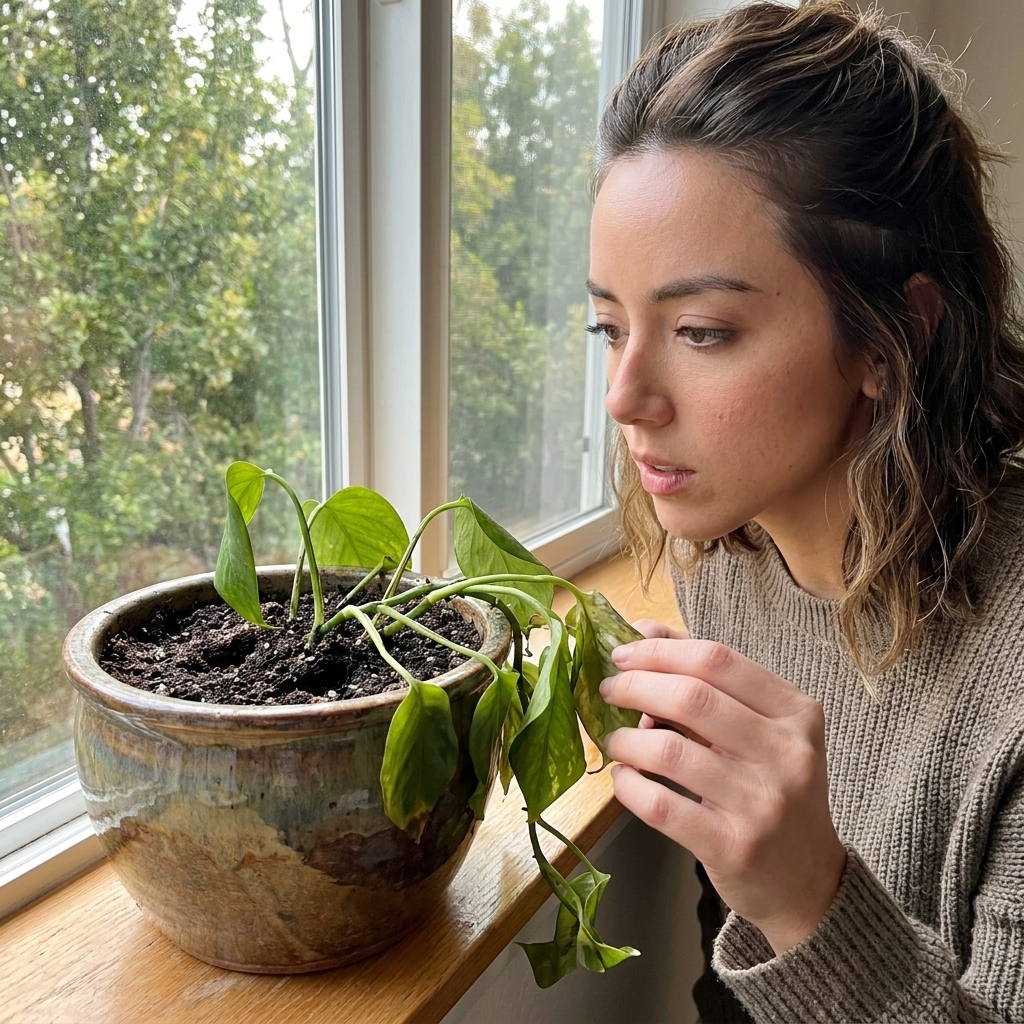
This one trips up even careful plant parents. Sometimes you see wrinkles and think “water,” but the pot is already damp. In that case, the plant is not thirsty. It is unable to drink.
Common causes:
- Early root rot from slow-drying soil
- Cold windowsills that keep soil wet longer
- Low light reducing water use
What to do: if soil is not drying within a reasonable time for your home, prioritize more light and a faster-drying setup. Wrinkles should be interpreted alongside soil moisture, not on their own.
Seasonal care: winter basics
Indoors, jade plants usually slow down in winter because days are shorter and light intensity drops. Even if your home stays warm, the plant often uses water more slowly.
Winter adjustments
- Water less often and only after a full dry-down.
- Keep it in your brightest spot. Winter sun is gentler and usually safer.
- Avoid cold drafts and cold glass contact. Cold roots plus wet soil is a fast track to rot.
Temperature note
Typical indoor temperatures are fine for jade. What it does not tolerate is prolonged cold, and it is not frost-hardy. If a window gets icy at night, pull the pot back a few inches.
Pruning and shaping
Good light does most of the work for a compact, tree-like jade. But pruning can help shape it and reduce top-heaviness.
Simple pruning rules
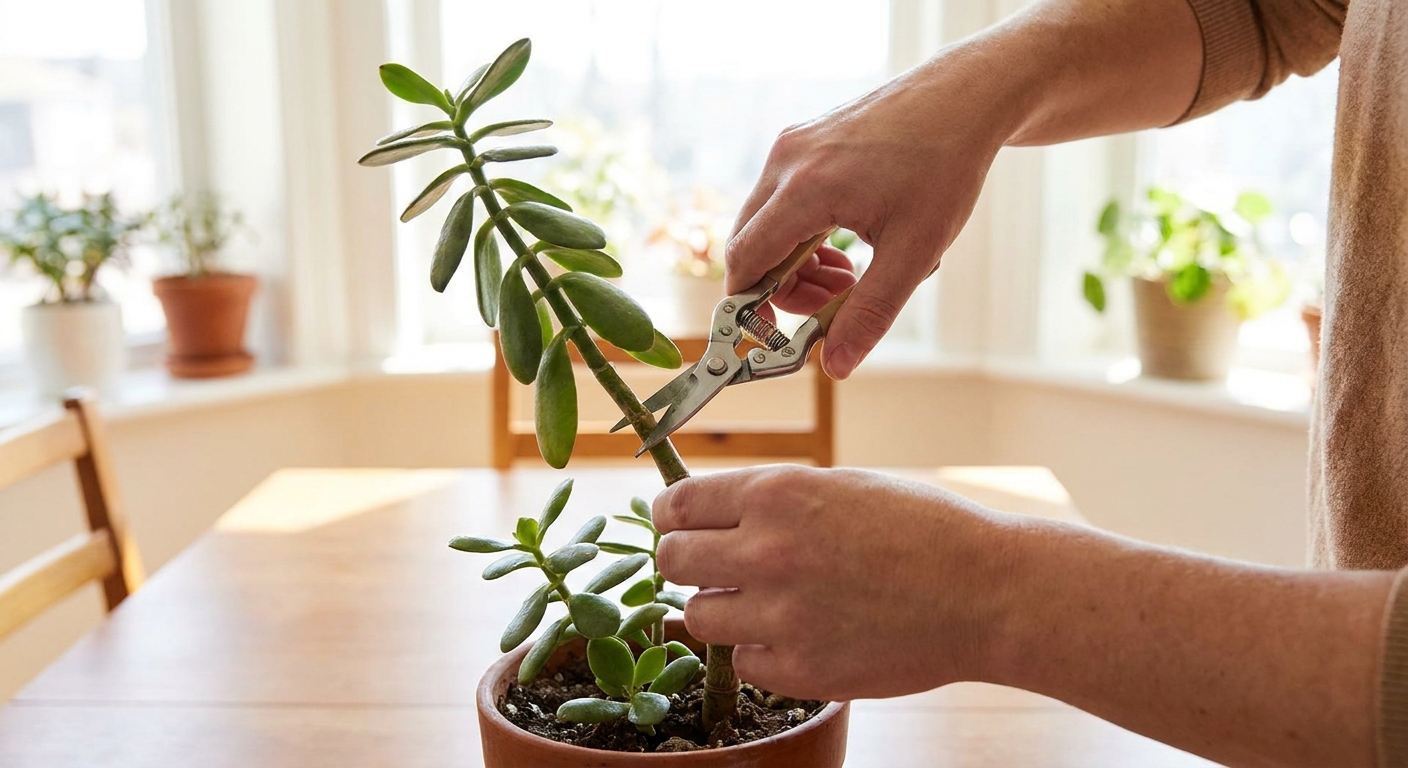
- Prune in brighter months when the plant is actively growing.
- Use clean snips and cut just above a leaf pair or branch junction.
- If your jade is leaning, rotate the pot every week or two so it grows evenly toward the light.
And yes, you can root many healthy cuttings after the cut end dries for a bit, but even if you do nothing with them, pruning alone can make an indoor jade look dramatically better.
Quick troubleshooting
Leaves dropping
- Most common reasons: sudden overwatering, prolonged wet soil, or a big environment shift (light change, temperature swing).
- Do this: check soil moisture, increase light gradually, and confirm the pot drains freely.
Leggy, stretched growth
- Cause: not enough light.
- Do this: move to a south or west window, ramp up sun exposure, then prune once new growth is coming in tighter.
Black spots or stem darkening at the base
- Cause: often rot-related.
- Do this: stop watering and inspect roots and lower stem. Consider repotting into a faster mix.
White residue on leaves
- Often: mineral deposits from hard water, salts from sprays, or other residue that dries on the leaf surface. Sometimes it can also be dried sap from normal plant processes.
- Do this: wipe with a damp cloth and focus on consistent soak-and-dry watering. If you see cottony clusters in leaf joints, investigate for mealybugs.
Sticky leaves or small bumps
- Often: pests like scale (and sometimes mealybugs), especially along stems and leaf joints.
- Do this: isolate the plant, inspect closely, and remove pests mechanically (a cotton swab works well). Improve light and airflow so the plant can recover.
Jade care checklist
- Light: bright south or west window for compact growth, increase sun exposure gradually.
- Soil: gritty, fast-draining mix that dries predictably.
- Pot: drainage hole, not oversized.
- Water: soak thoroughly, then let it dry down well before watering again.
- Leaves tell the story: wrinkled and thin means it stayed dry too long, soft and mushy means it stayed wet too long.
If you take nothing else from this: always pair leaf symptoms with soil moisture. A jade is a storage plant. Its leaves can look thirsty for more than one reason, and your job is simply to figure out which one is true in your pot, in your light, in your home.