A clear, confidence-boosting guide to propagating Ficus lyrata. Compare stem cuttings and air layering, then follow the exact steps for strong roots and new ...
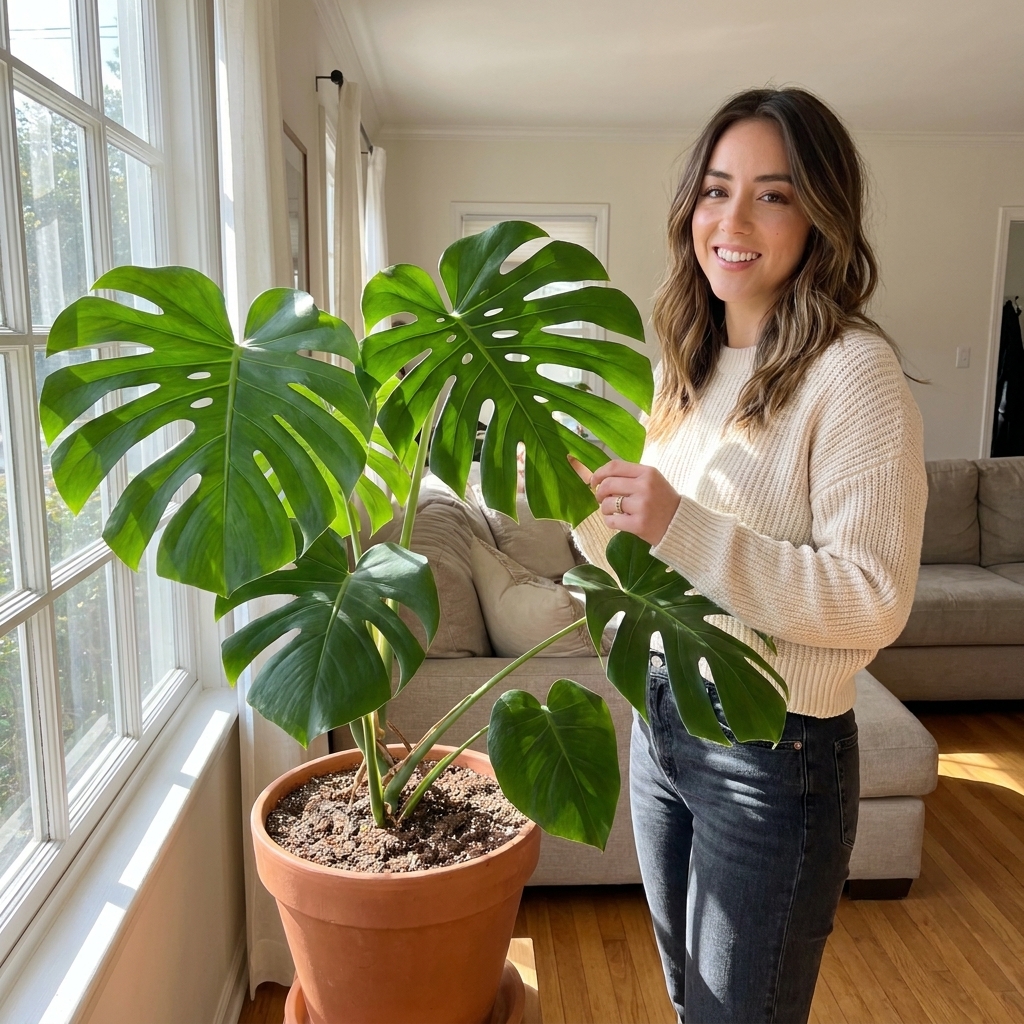
There is a specific kind of heartbreak that comes from staring at a gorgeous, overgrown Monstera or a towering Ficus and knowing it needs a haircut, but also fearing the aftermath. If you have ever taken a “brave” cutting and watched it stall, wilt, or rot before it ever rooted, air layering is about to feel like a cheat code.
Air layering lets you grow roots while the stem is still attached to the mother plant. That means the cutting stays hydrated and supported the whole time, which is exactly why this technique shines for thick stems, canes, and indoor trees that do not love being rushed.
What it is
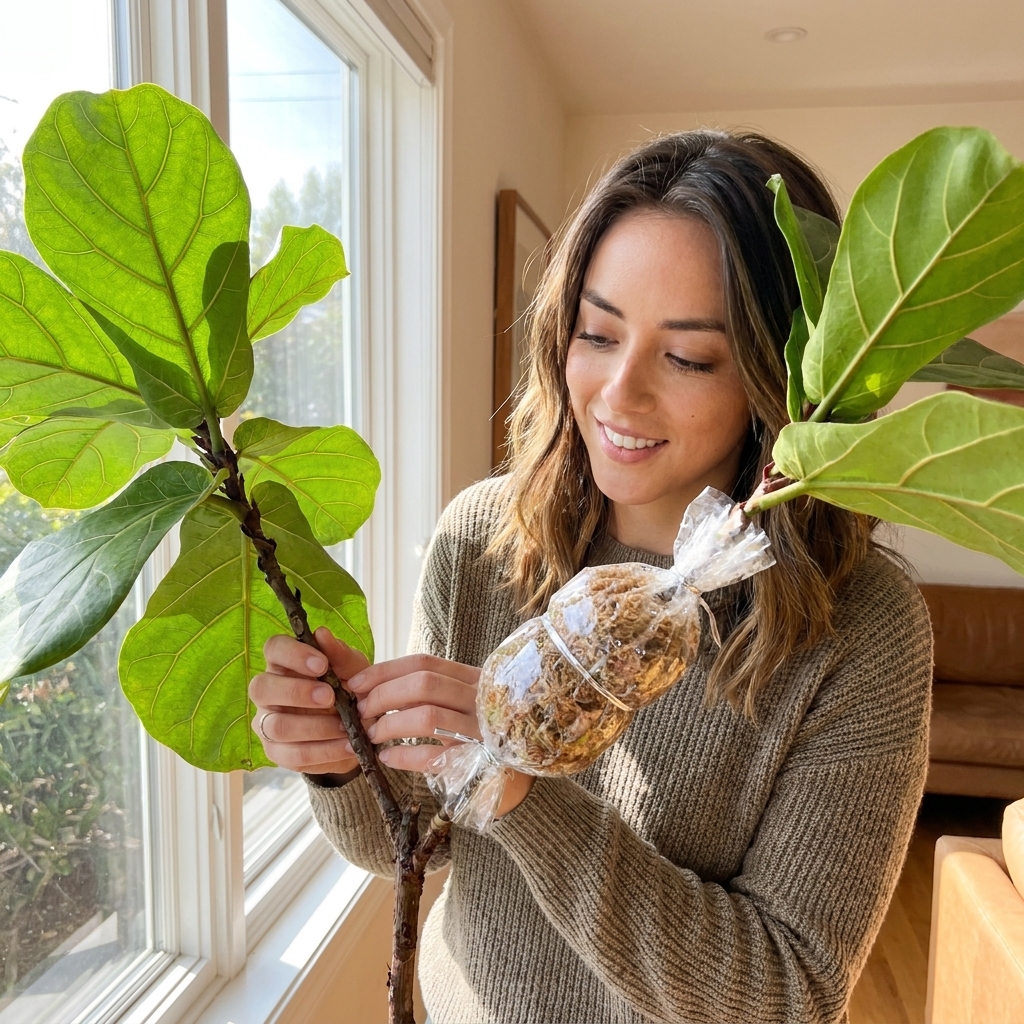
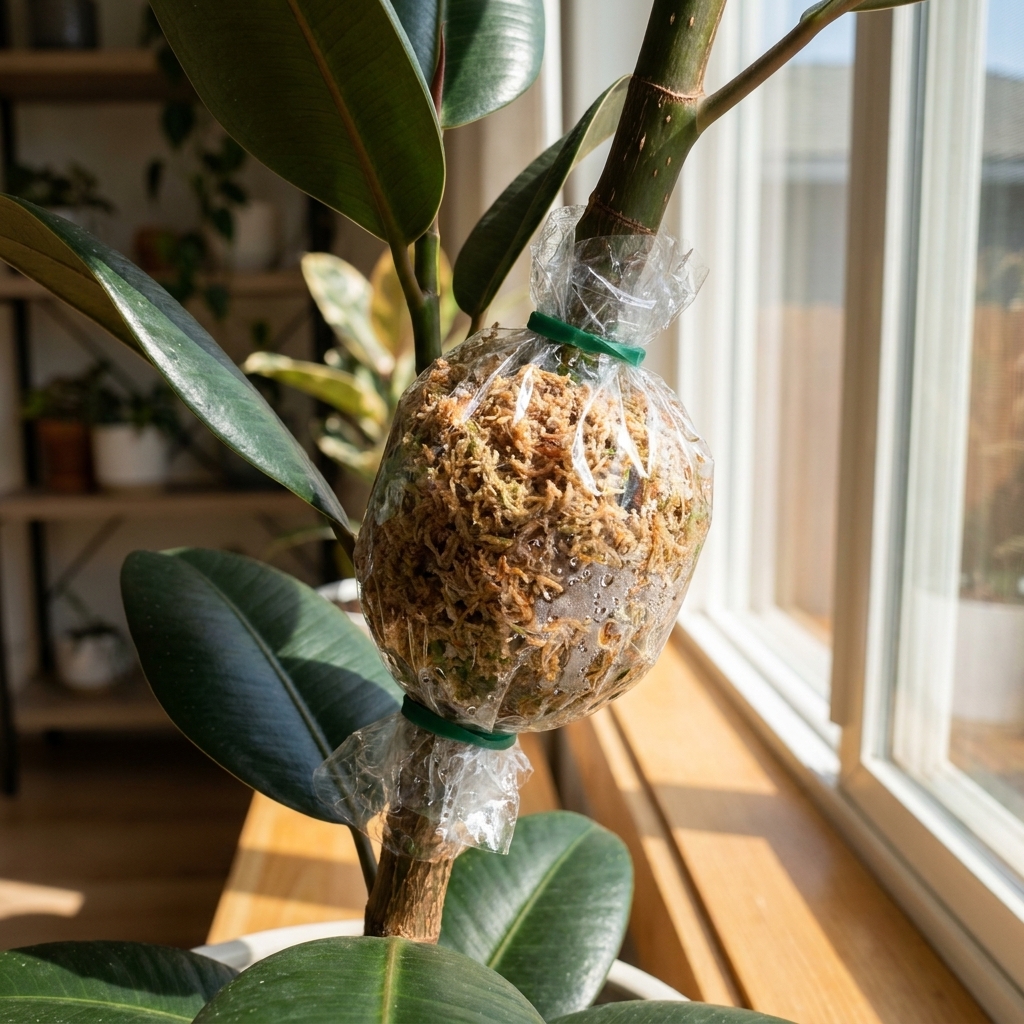
Air layering is controlled “encouraged rooting” on a stem that is still living on the plant. You make a small wound in the right spot, keep that area gently moist with sphagnum moss (or another medium), and seal it up so it stays humid. In a few weeks to a few months, roots form inside the moss ball. Then you cut below the new roots and pot up a ready-to-live baby plant.
Why it works for Monsteras and Ficus
- Less shock: The top stays connected to water and nutrients while roots form.
- Better odds on woody stems: Ficus can be slow to root from cuttings, especially thick branches.
- Instantly fuller plants: You can turn one lanky plant into two good-looking plants without starting from a tiny cutting.
- Great for leggy Monsteras: You can root a top section with mature leaves and aerial roots already forming.
Best indoor plants
Air layering is most useful for plants with thicker stems or canes, and plants that you want to propagate as a larger piece.
Great candidates
- Monstera deliciosa (and large-form Monstera varieties)
- Ficus elastica (rubber plant)
- Ficus benjamina (weeping fig)
- Ficus lyrata (fiddle leaf fig)
- Dracaena (canes air layer beautifully)
- Schefflera (umbrella tree)
When to choose it
- Your plant has a thick, woody stem and cuttings have failed before.
- You want to propagate a large top (not a tiny node).
- You are trying to fix a plant that is leggy or too tall for your space.
- You are nervous about losing the top if it does not root. Air layering reduces that risk.
Quick stem reality check: Very thin, tender stems dry out faster and can struggle under a wrap. Very thick, older stems can absolutely work, but they usually take longer to root. If you are new to this, pick something in the “firm and mature” middle ground.
Tools and materials
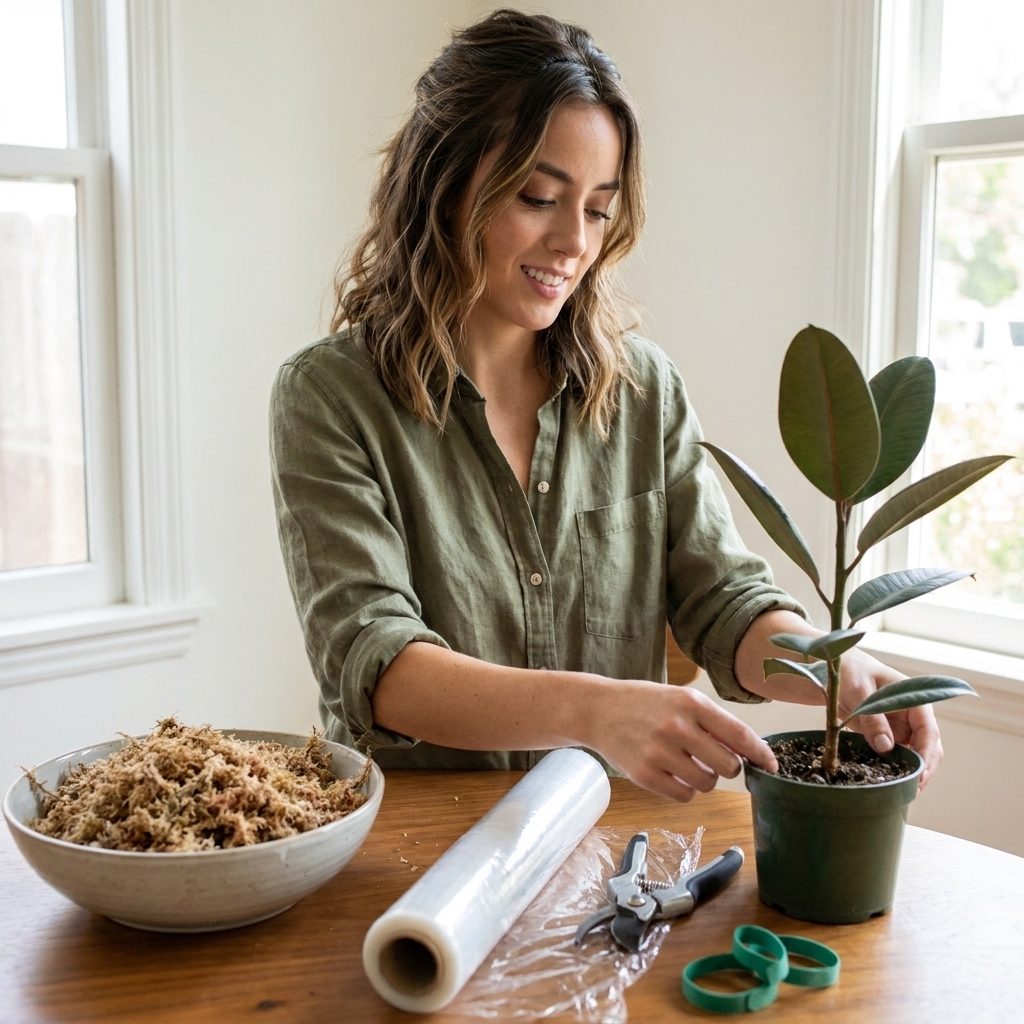
You do not need fancy gear, but you do need clean cuts and steady moisture. Here is what I reach for.
- Sharp pruning shears or a clean knife (a grafting knife is lovely, but not required)
- Rubbing alcohol (70% is fine) and a paper towel to sanitize tools
- Sphagnum moss (long-fiber is easiest to work with)
- Plastic wrap or a small clear plastic bag
- Plant ties, twist ties, or soft wire
- Optional: rooting hormone (powder or gel)
- Optional: a chopstick or bamboo skewer to help pack moss
- Optional: black plastic or foil to cover the wrap (helps block light and algae growth)
Indoor tip: Rinse and soak sphagnum in clean water before using it, then squeeze it out well. It helps rehydrate the moss evenly and can cut down on hitchhikers like dust and debris.
Safety note: Ficus sap can irritate skin and it is sticky. Wear gloves if you are sensitive, and keep pets away from drips and fallen leaves.
Best timing
For most indoor plants, the best window is spring through early summer, when growth hormones and light levels are naturally higher. You can air layer in other seasons, but expect it to take longer, especially for Ficus.
How long it takes
- Monstera deliciosa: often 3 to 8 weeks, sometimes faster in very warm, bright conditions and sometimes longer in low light
- Ficus elastica: often 6 to 12+ weeks indoors, and it can take longer
- Ficus lyrata / benjamina: often 8 to 16+ weeks, sometimes longer
Warmth matters. If your home runs cool, you can still succeed, but it will move slower. Many plants root more reliably in the 70 to 80°F range. Keep the plant out of harsh, hot direct sun that could overheat the moss ball.
Monstera steps
Monsteras are my “confidence builder” for air layering because they often give you a head start in the form of aerial roots.
1) Pick the spot
Look for a section of stem with:
- At least one node (the swollen bump where a leaf and aerial root emerge)
- Preferably an aerial root nub already present
- A top portion that you want to keep as a new plant (often 2 to 5 leaves is a nice size)
Avoid air layering a weak, recently unfurled leaf section. Choose a mature, sturdy stem.
2) Prep the moss
Soak sphagnum moss in water, then squeeze until it is damp like a wrung-out sponge. If it drips when you squeeze, it is too wet.
3) Make the wound
Sanitize your blade. Then do one of these:
- Option A (gentler): Make a shallow upward cut just below the node, about 1/3 into the stem. Make sure the node is on the top section you are planning to separate later.
- Option B (more aggressive, faster): Carefully remove a thin strip of outer stem tissue around the node area (not usually needed for Monstera if there is an aerial root starting).
If you are using rooting hormone, dust a small amount onto the wound.
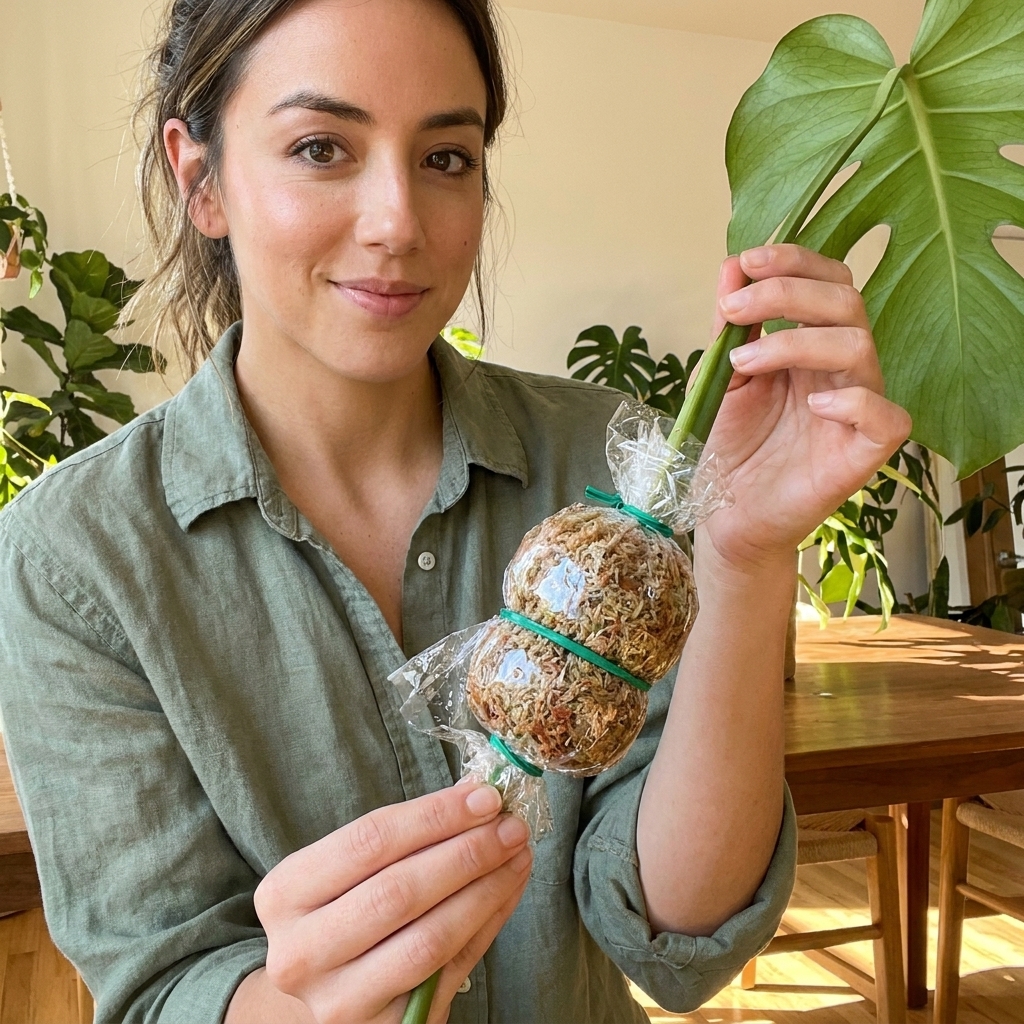
4) Pack the moss
Wrap your damp moss around the wound and node area, forming a firm ball. You want full contact with the stem, not a loose fluff cloud.
5) Wrap and seal
Wrap the moss ball tightly with plastic wrap or a clear bag, then secure the top and bottom with ties. Your goal is a sealed humid pocket that still allows you to peek at root progress.
If your plant sits in bright light, cover the plastic with foil or a layer of dark plastic to block light. Seal it fully. If it ever dries out, briefly open, mist lightly, and reseal.
Ficus steps
Ficus are totally air-layerable, but they usually need a more intentional wound because they do not have convenient aerial roots like Monsteras. Take your time here. Clean cuts matter.
1) Choose the stem
- Pick a section with firm leaves and active growth.
- Aim for a stem thickness you can comfortably cut. Pencil-thick to broom-handle-thick can work.
- Plan your “new plant” size. On a tall rubber tree, I often air layer 12 to 24 inches below the top to get a nicely proportioned new plant.
2) Choose your cut
Notch cut (simpler): Make a slanted upward cut about 1/3 to 1/2 through the stem. Insert a tiny piece of plastic (like a sliver from a plant label) to keep it from sealing shut.
Ring method (often more reliable on woody ficus): Remove a complete ring of bark around the stem, usually about 1/2 to 1 inch wide. Then gently scrape the exposed surface to remove the slick living layer just under the bark so the plant cannot simply heal over the gap.
Do not go overboard: A ring that is too wide can increase the risk of dieback above the cut, especially indoors. Aim for “clean and complete,” not “massive.”
Expect milky sap. Blot it with a paper towel, and give it a minute to slow before you wrap moss.
3) Rooting hormone (optional)
Lightly apply rooting hormone to the exposed area. With Ficus, this can speed things up, especially indoors.
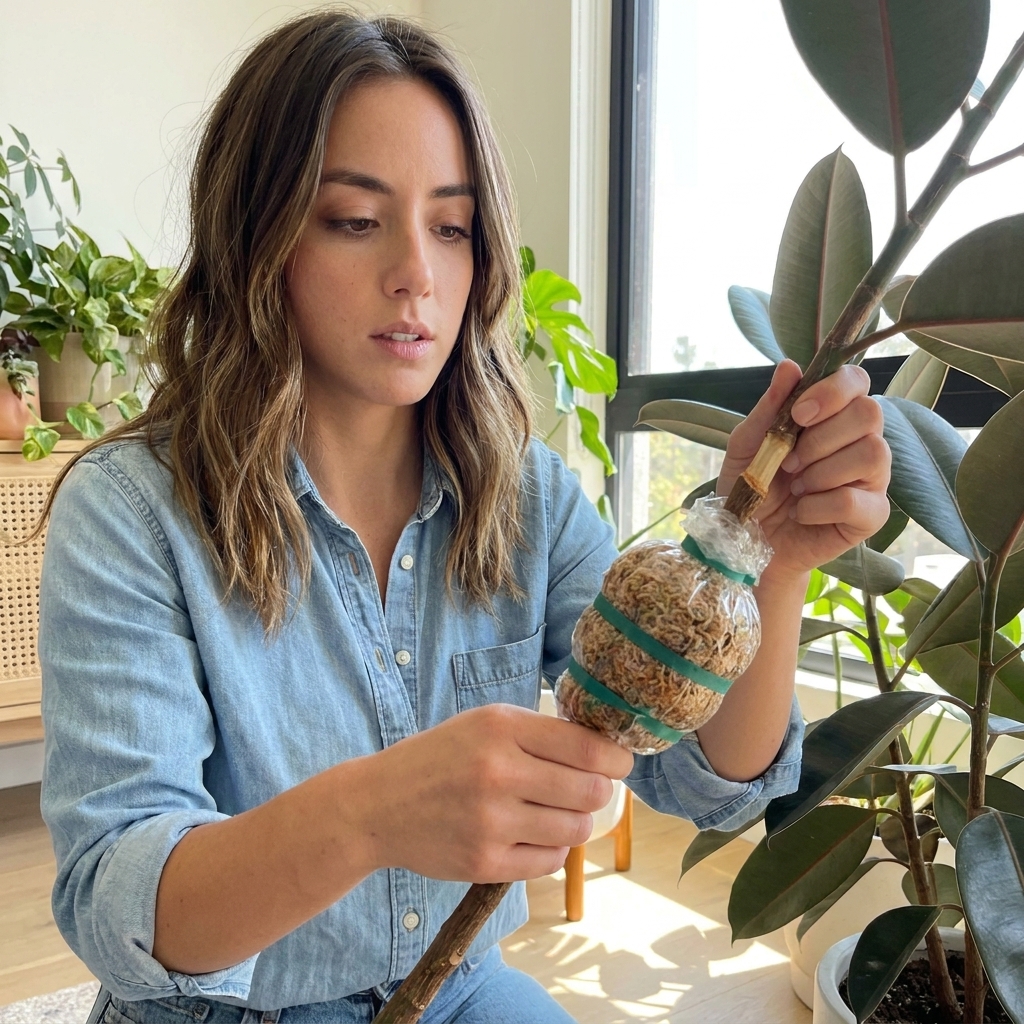
4) Wrap and seal
Pack damp moss around the wound, then wrap tightly with plastic. Secure both ends firmly. You want it snug enough that the moss stays in contact and does not slump.
If your ficus is in a bright window, consider an outer layer of foil or dark plastic to keep roots happier and reduce algae.
Care while rooting
Keep things steady
- Light: Bright, indirect light is ideal. Avoid harsh direct sun that could cook the moss ball.
- Water: Water the plant as you normally would. Do not overcompensate.
- Humidity: Nice, but not mandatory if your moss ball is sealed well.
- No big stress: Avoid repotting, heavy pruning elsewhere, or moving the plant repeatedly while it is rooting.
Check moisture without hovering
Peek every week or two. If the moss looks dry, open a small section, mist lightly, then reseal. The moss should be damp, not soggy.
How to tell it is ready
You are looking for a solid network of roots, not just one or two early strands. As a general rule, wait until you see multiple roots circling or filling the moss ball.
- Monstera: visible white or tan roots branching in several directions
- Ficus: thicker, pale roots that start to hold the moss ball together
Separate and pot
1) Make the cut
Sanitize your pruners. Cut just below the rooted moss ball. Support the top with your free hand so it does not tear as the cut finishes.
2) Remove the wrap, keep the moss
Unwrap the plastic carefully. Do not peel moss off the roots. Fresh roots are tender and happiest when they are left alone.
3) Pot size and mix
Pick a pot that is only slightly larger than the rooted moss ball, with a drainage hole.
- For Monstera: a chunky aroid mix (potting soil plus orchid bark plus perlite or pumice). Airy is the goal.
- For Ficus: a well-draining indoor mix (potting soil cut with perlite or pumice). You want moisture retention, but no swamp.
4) Plant and water once
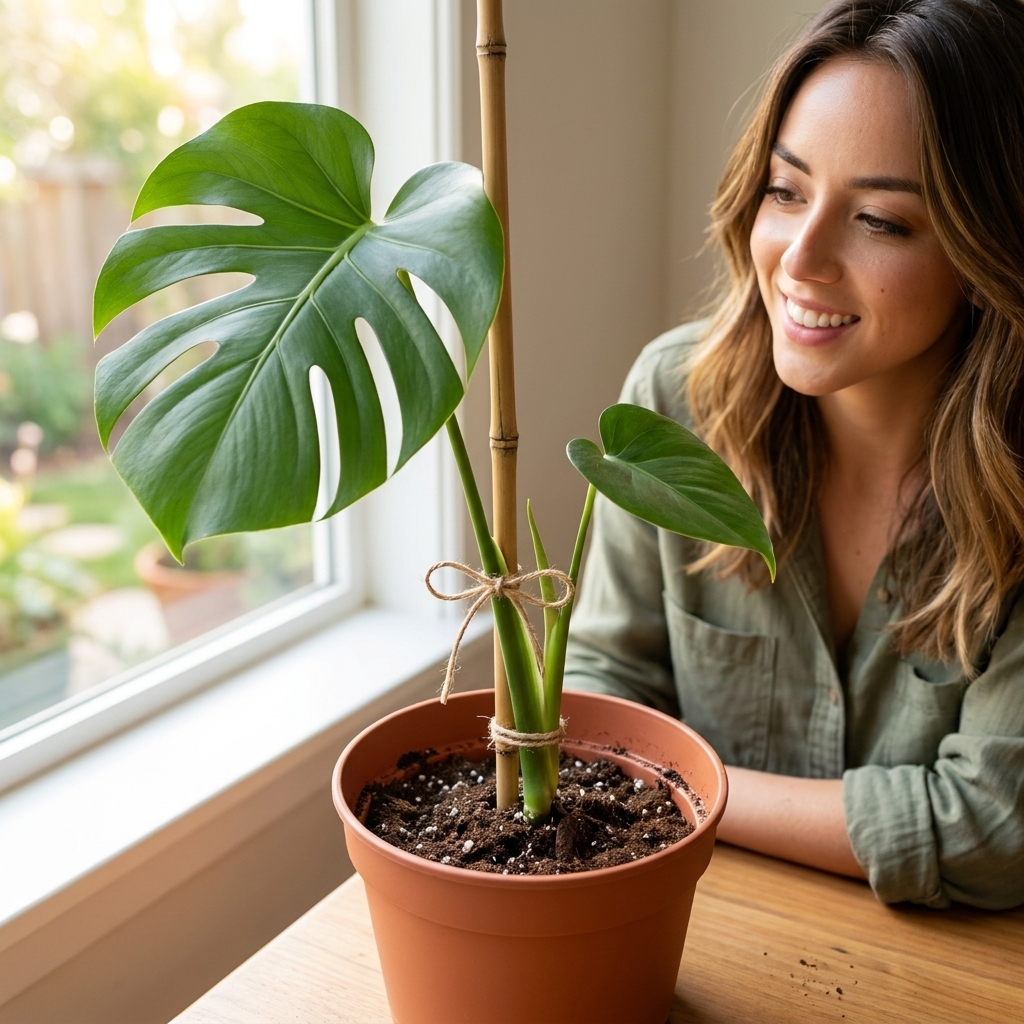
Set the moss ball in the pot, backfill gently, and water thoroughly until water drains out. Then let it drain completely.
5) Aftercare (first 4 weeks)
- Light: Bright, indirect light. Avoid midday direct sun for the first couple of weeks.
- Water: Keep evenly moist, not soaked. The goal is to support new root growth without inviting rot.
- Support: Monsteras often need a stake or moss pole right away to prevent wobble.
- Optional humidity bump: If your air is very dry, a clear bag loosely draped over the plant for 7 to 14 days (not sealed to the soil) can ease the transition. Vent daily.
- No fertilizer yet: Wait 4 to 6 weeks, then start lightly.
What to do with the stump
This is the fun part. Air layering can make your original plant look better, not worse.
Monstera
- Leave at least one healthy node on the remaining stem.
- Keep the plant in good light and normal care.
- New growth often sprouts from a node below the cut, giving you a fuller base over time.
Ficus
- Expect branching near the cut point as dormant buds wake up.
- Keep care consistent. Ficus hate dramatic changes and may drop some leaves if stressed.
- If the plant is very tall, you can plan a second air layer later, but let it recover first.
Troubleshooting
The moss keeps drying out
- Wrap tighter and seal the ends more securely.
- Use slightly more moss so it holds moisture longer.
- Move the plant a little farther from heating vents or very hot sun.
The moss is soggy or smells off
- You likely over-misted, or water is pooling inside the wrap.
- Open it up, squeeze out excess moisture, replace any slimy moss, and rewrap.
- Make sure the moss is damp, not dripping, before you seal it.
No roots after weeks
- Check timing: in low light seasons, it can simply take longer.
- For Ficus, consider switching to the ring method if you only did a small notch.
- Increase light (bright indirect), and keep temperatures warm and steady.
- Be patient. Woody plants can be slow and still succeed.
Leaf drop or stress (especially Ficus)
- Confirm your regular watering routine is appropriate. Stress plus overwatering is a classic root rot setup.
- Keep conditions stable. Do not move it room to room.
- Air layering is gentler than a full cutting, but Ficus can still sulk.
FAQs
Do I need rooting hormone?
No. Monsteras often root readily without it. For Ficus, rooting hormone can help, especially indoors where light and heat are less intense than outdoors.
Can I air layer with potting soil instead of sphagnum?
You can, but sphagnum is easier because it holds moisture while staying airy. Potting soil tends to compact and can get sour inside a sealed wrap.
Should the moss ball be in light or dark?
Roots generally prefer darkness. Clear wrap is useful for checking progress, but covering it with foil or dark plastic often improves results and reduces algae.
How many layers can I do on one plant?
One at a time is safest, especially indoors. If the plant is extremely vigorous, you can do more, but each layer asks the mother plant to support extra work.
Is this safe for variegated Monsteras?
Yes, with the same method. Just be conservative about plant stress: strong light (not harsh sun), warm temps, and steady watering make a big difference.
If you are nervous
If the idea of cutting into your beloved plant makes your palms sweat, start with your Monstera. Choose a section with an aerial root nub, wrap it neatly, and then walk away for a week. Air layering rewards calm, steady care, not constant checking.
And if you have a tall Ficus that has become more tree than houseplant, air layering is one of the kindest ways to bring it back down to size while keeping that beautiful canopy alive. You are not ruining your plant. You are giving it a reset and a second life, twice.